 Thai Images are for illustrative purposes only, may be inaccurate, and do not guarantee the presence or absence of specific ingredients.
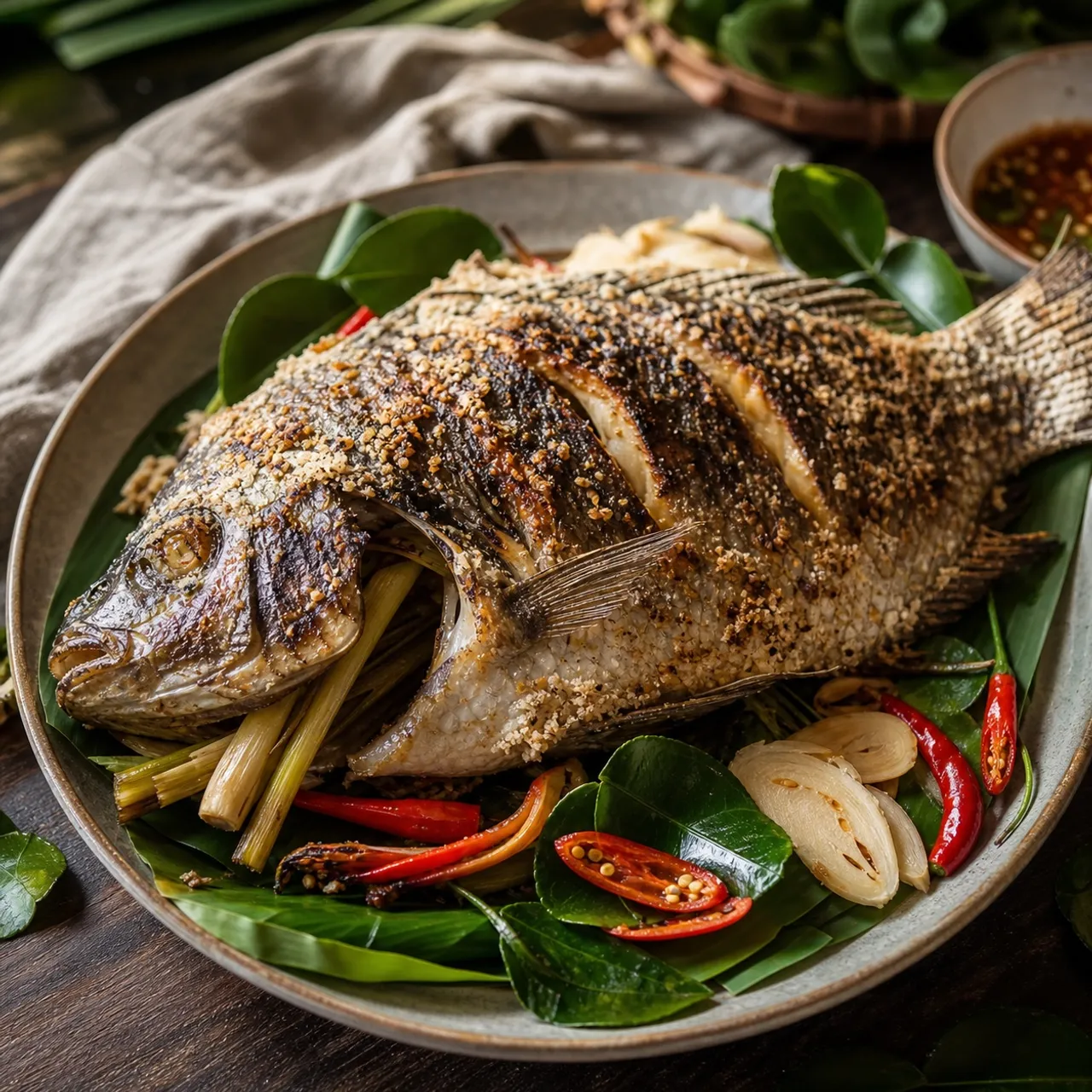
 Pla Pao
A whole salt-crusted fish stuffed with lemongrass and grilled until the skin is crackling and the flesh is silky.
Contains common allergens
In the app, Listahan checks these against your household automatically.
Instructions
5 steps- 1
Rinse and pat the fish dry, then stuff the cavity tightly with the bruised lemongrass, kaffir lime leaves, galangal, and pandan to perfume the flesh from the inside.
- 2
In a bowl, mix the coarse salt with the egg white until it resembles wet sand, then pack this mixture firmly all over the outside of the fish to form an even crust.
- 3
Heat a grill to medium (about 375°F) and grill the fish for 12-15 minutes per side, until the salt crust hardens, browns, and the flesh reaches an internal temperature of 145°F.
- 4
Let the fish rest for 5 minutes, then crack and peel away the salt crust, which lifts off the skin and reveals moist, fragrant meat.
- 5
Serve with a Thai seafood dipping sauce of lime, garlic, chili, and fish sauce.
Listahan Family Score™
60/100
Works for many families
Score reflects how well this recipe fits a typical busy household. In the app, your Family Score is personalized to your household's allergens, kids, and pantry.
Nutrition
per serving50
Calories
2 g
Protein
15 g
Carbs
0 g
Fat
Estimated per serving. Actual values depend on the brands and portions you use.
Listahan cooking guide
Chef notes & practical guide
Technique notes, ingredient swaps, serve-alongside ideas, storage guidance, and equipment for this recipe.
Cultural context
Pla pao is closely tied to Thai outdoor cooking, especially market stalls where whole fish are packed in salt and turned slowly over charcoal. The salt crust protects the flesh from direct heat while the lemongrass and herbs inside scent the fish without turning it into a saucy dish.
Listahan note
This version keeps the seasoning method simple and lets the grill do the work. The priority is a firm salt shell, fragrant steam inside the fish, and clean flakes that can be dragged through a sharp lime-chili dipping sauce.
Technique cues
- Pack the salt mixture firmly and evenly, especially around the belly and thin tail end, so the fish steams inside instead of drying at the edges.
- Bruise the lemongrass before stuffing it into the cavity; broken fibers release more aroma than neatly sliced stalks.
- Rest the fish before cracking the crust. A few minutes off the grill helps the juices settle and makes the salt layer easier to lift away cleanly.
Kitchen flow
- Parallel prep
- Light the grill first, then mix the salt crust and stuff the fish while the grates heat to medium.
- Make-ahead
- Bruise the aromatics and mix the dipping sauce earlier in the day; pack the salt crust onto the fish right before grilling.
- Leftover move
- Flake leftover fish into jasmine rice with cucumber, herbs, and a spoonful of lime-chili sauce.
- Cleanup rhythm
- Crack the crust onto a rimmed sheet pan or platter, then discard the salt shell before it scatters across the counter.
Ingredient brief
Role, handling, and swap guidance for each key ingredient.
Whole tilapia or sea bass
Centerpiece protein
Purpose: A whole fish holds moisture well on the grill and gives the herbs time to perfume the flesh from the inside.
Handling: Rinse, pat very dry, and make sure the cavity is open enough to hold the aromatics snugly.
Adaptation: Branzino or snapper can work if they are similar in size; very thick fish may need more time over steadier heat.
Egg white
Salt-crust binder
Purpose: It helps the coarse salt cling to the fish and set into a shell as it cooks.
Handling: Mix it into the salt until the texture feels like wet sand that packs together in your hand.
Adaptation: A splash of water can moisten the salt in a pinch, but the crust will be looser and may fall away sooner.
Lemongrass
Main aromatic
Purpose: It gives the fish the grassy citrus scent that defines the dish without adding liquid to the cavity.
Handling: Trim the dry ends, smash the stalks with the back of a knife, and fold or cut them to fit inside the fish.
Adaptation: Lemon peel with a little ginger gives a related brightness, though it will not have lemongrass's herbal edge.
Kaffir lime leaves
Citrus perfume
Purpose: The leaves add a deep lime aroma that comes through the steam as the fish cooks.
Handling: Tear or lightly crush the leaves before stuffing them in so their oils release more easily.
Adaptation: Wide strips of lime zest can stand in when the leaves are hard to find, with a cleaner and less floral flavor.
Galangal
Earthy aromatic heat
Purpose: Galangal adds a piney, peppery note that keeps the fish from tasting only citrusy.
Handling: Slice it thinly so more surface area is exposed inside the cavity.
Adaptation: Fresh ginger is more familiar and sweeter; use it knowing the final aroma will be softer and less resinous.
Pandan leaves
Optional sweet aroma
Purpose: Pandan brings a gentle vanilla-grassy scent that shows up quietly in the steam around the fish.
Handling: Tie or fold the leaves so they fit inside the cavity without poking through the salt crust.
Adaptation: Skip it if unavailable; the lemongrass, lime leaves, and galangal still carry the dish.
Technique notes
- Keep the grill at medium rather than blasting it hot. The crust needs time to harden while the fish cooks through gently.
- Do not oil the outside of the fish before adding the salt crust. A dry surface helps the packed salt grip instead of sliding off.
- When removing the crust, peel with a light hand so most of the skin comes away with the salt and the flesh stays in clean pieces.
Ingredient swaps
- Fish counter choice
- Choose tilapia for a milder, softer result or sea bass for a slightly firmer, richer flake.
- No pandan path
- Leave out the pandan and add an extra kaffir lime leaf if you want the aroma to stay bright and herbal.
- Indoor grill pan route
- Use a heavy grill pan over medium heat and turn the fish carefully with two spatulas; the crust may brown less evenly than it does outdoors.
- Sauce heat control
- Serve the Thai seafood dipping sauce on the side and adjust the chili level there instead of changing the fish itself.
Serve alongside
- Jasmine rice
- Som tam Thai
- Khanom jeen rice noodles
- Cucumber and herb platter
- Thai iced tea
- Lime soda
- Cold lager
Serving suggestions only — check pairings for your household's allergens.
Storage & reheating
- Refrigerate leftover flakes with any juices in a sealed container for up to 2 days.
- Reheat gently in a covered skillet with a splash of water, or eat the flakes at room temperature in a rice or noodle bowl.
- Freeze only the picked fish, not the salt crust; thaw overnight and use in fried rice or soup where the texture matters less.
Equipment
- Charcoal or gas grill
- Rimmed sheet pan
- Large mixing bowl
- Two wide spatulas
Make this household-aware
Listahan Pro checks this recipe against your household's allergens, finds pantry-aware swaps, builds the shopping list, and helps you plan the week around it.
Plan it in Listahan
Add Pla Pao to your week, check it against your household's allergens, and build the shopping list automatically.
More Thai recipes
 Thai Lens Verified Images are for illustrative purposes only, may be inaccurate, and do not guarantee the presence or absence of specific ingredients.
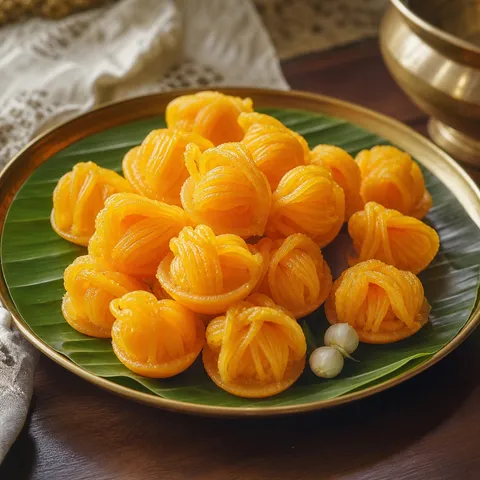
 Thong Yip
Petite golden flowers pressed from egg yolk and sugar, simmered in jasmine-scented syrup until set — a centuries-old Thai royal confection as beautiful as it is sweet.
 Thai Lens Verified Images are for illustrative purposes only, may be inaccurate, and do not guarantee the presence or absence of specific ingredients.
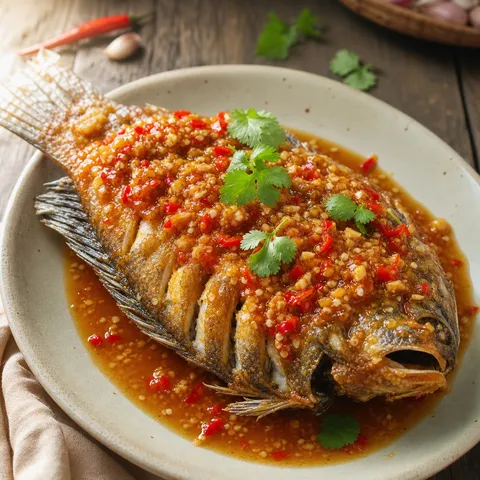
 Pla Rad Prik
Whole fish fried to a shatteringly crisp shell, then blanketed in a sticky, sweet-hot chili-tamarind sauce with garlic and basil — dramatic, punchy, and made for sharing.
 Thai Lens Verified Images are for illustrative purposes only, may be inaccurate, and do not guarantee the presence or absence of specific ingredients.
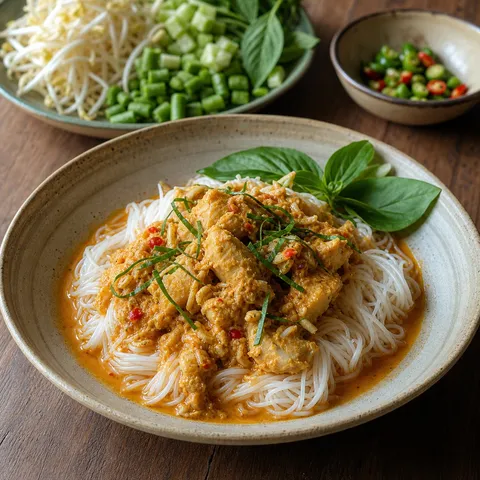
 Khanom Jeen Nam Ya
Fermented rice noodles topped with a fragrant fish curry sauce thick with galangal and lemongrass — a Southern Thai breakfast ritual eaten with fresh vegetables and herbs.