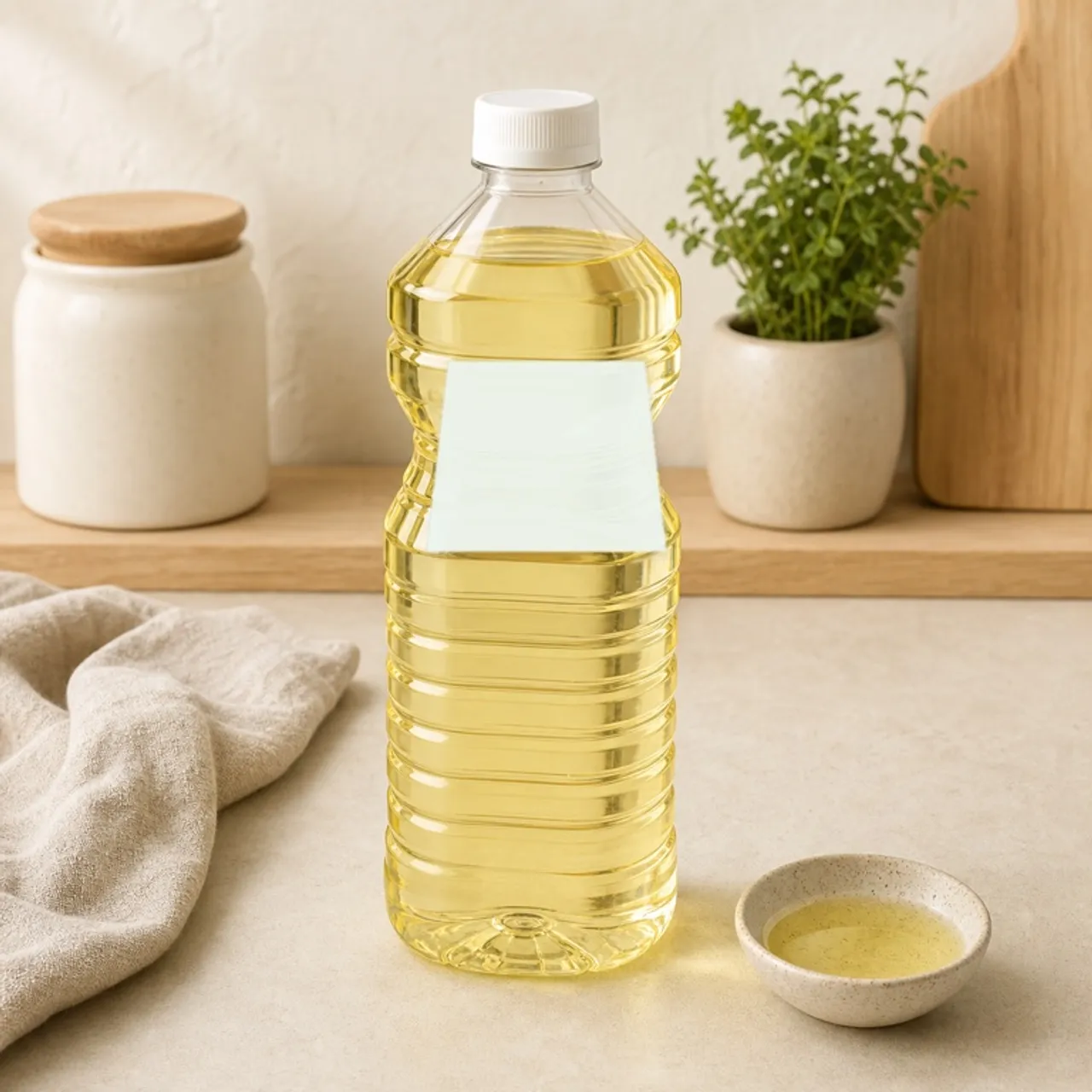
 Food Lens Images are for illustrative purposes only, may be inaccurate, and do not guarantee the presence or absence of specific ingredients.
 Food Lens · Pantry
Cooking oil
Neutral to nutty depending on source; rich and mouth-coating.
Lens VerifiedCooking oil transfers heat, prevents sticking, carries flavor, and shapes texture. Neutral oils let the food lead; flavorful oils become part of the dish.
Where it comes from
Everyday cooking oils vary by region, from canola and corn oil in North America to coconut, mustard, peanut, and sesame oils in other traditions.
Varieties — Canola, vegetable, corn, soybean, peanut, avocado, coconut, mustard, sesame, and olive oils differ in flavor and heat tolerance.
Neutral oil is a North American pantry default, while coconut, mustard, peanut, sesame, and olive oils carry strong regional identities.
In a modern kitchen — For Shop and Kitchen, oil type matters for allergens and flavor; generic cooking oil should not imply peanut/sesame safety.
Buying it
Keep a neutral oil for high-volume cooking and a flavorful oil for finishing. Check labels if avoiding peanut, sesame, soy, or tree nut oils.
Storing it
Store tightly closed away from light and heat. Discard oil that smells painty, bitter, or rancid.
Keeps about 1 year in the pantry.
Smoke point
400–450°F
Commonly cited around 400-450°F for a typical refined neutral cooking oil.
Out of cooking oil? Good swaps
- Canola oil — Neutral everyday choice.
- Avocado oil — Neutral and heat-tolerant.
- Olive oil — More flavor; best for moderate heat or finishing.
General cooking guidance — always check the labels on the products you use. Listahan’s allergen checks run automatically when you plan a recipe in the app. Not medical advice.
Recipes that use cooking oil
Common questions about cooking oil
Is cooking oil gluten-free?
Cooking oil is generally gluten-free, but processing and added ingredients vary between brands — check the label if you're cooking for a gluten allergy or coeliac disease.
Is cooking oil vegan?
Cooking oil is generally plant-based and suitable for a vegan diet, but brands differ — confirm on the label.
What can I use instead of cooking oil?
Good swaps include Canola oil, Avocado oil, Olive oil. Each behaves a little differently — see the swaps above for notes, and always check labels for allergens.
How do I store cooking oil?
Store tightly closed away from light and heat. Discard oil that smells painty, bitter, or rancid. It keeps about 1 year in the pantry.
More pantry
See all


Make cooking oil about your kitchen — with Listahan Pro
Everything above is free, forever. Pro adds the Household Lens — the same food, seen for your family:
-
Checked for each member
Flags cooking oil per person against your household's allergies and school rules — not just a generic "contains" tag.
-
Pantry-aware
Knows whether you already have it, what is running low, and the best swap from what is in your kitchen tonight.
-
What it costs near you
A real price from the Presyo community index, so you can plan the budget — not guess.
-
Your household memory
Who likes it, plus your own private notes — brand, where you keep it, who skips it.
Allergen safety is always free — Pro adds the automation, never the safety.
Cook with cooking oil — safely
Plan a recipe in Listahan and the household allergen check runs automatically — every plan, every swap, every lunchbox. Safety is never paywalled.