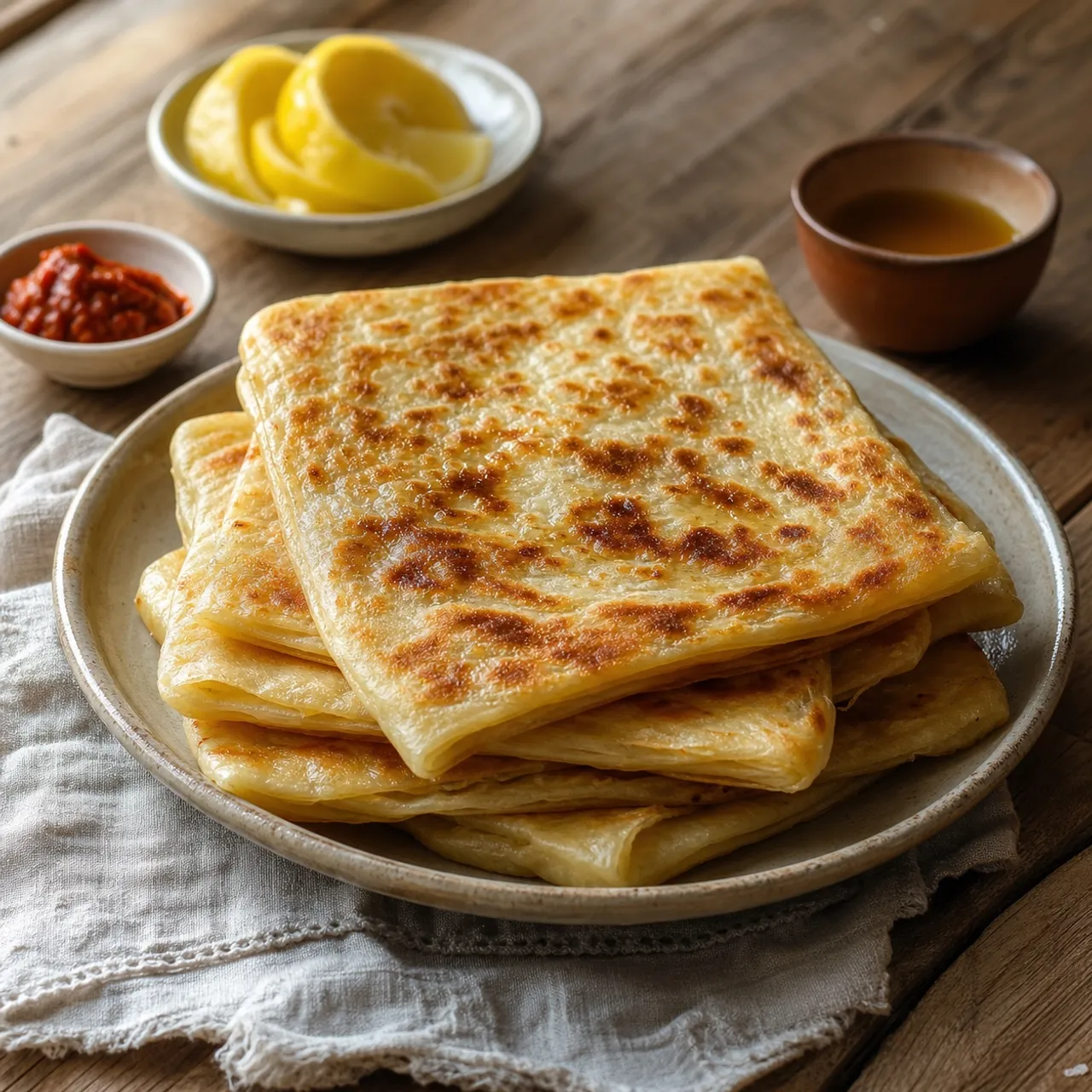
 North African Images are for illustrative purposes only, may be inaccurate, and do not guarantee the presence or absence of specific ingredients.
 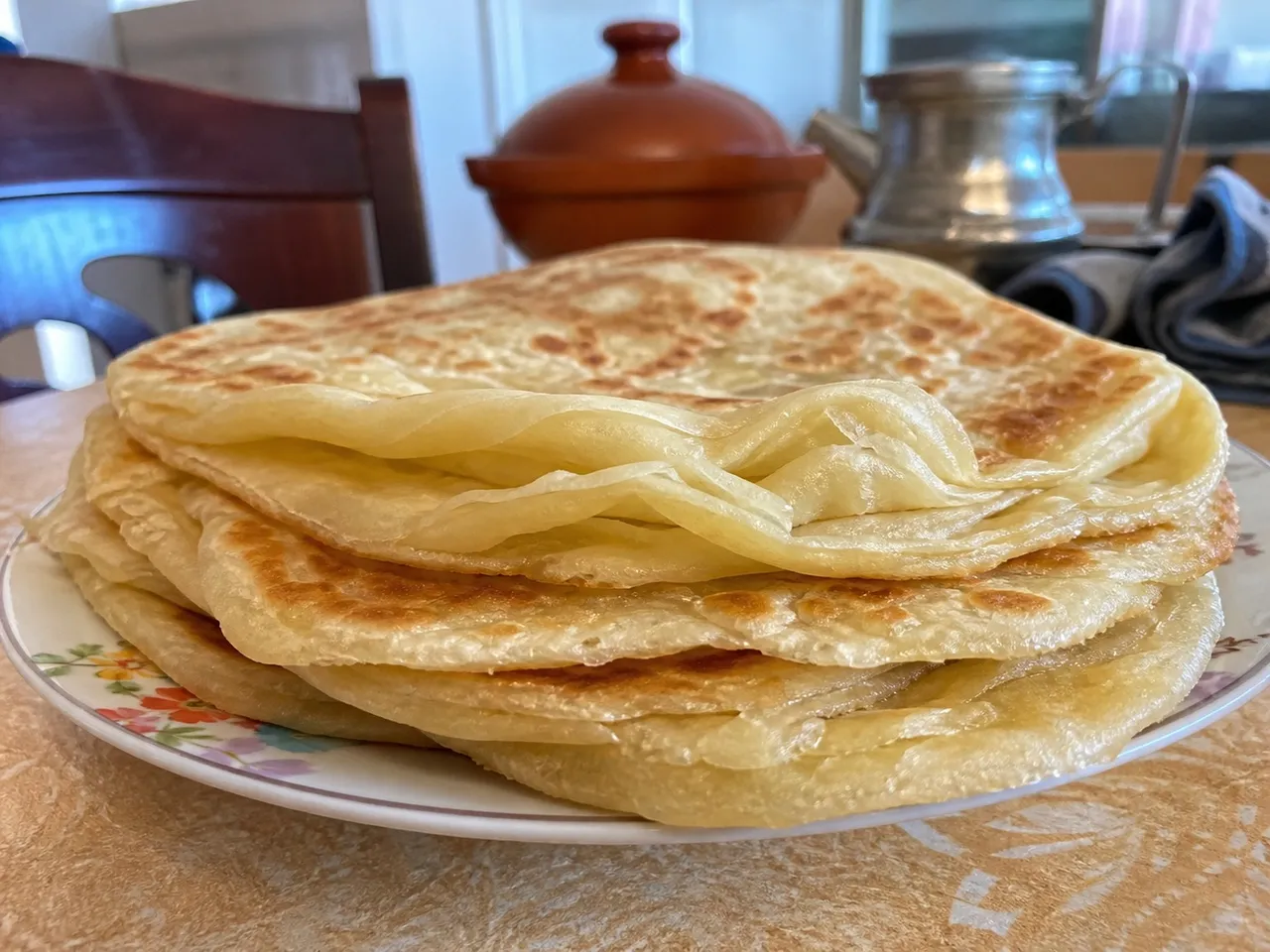 Serving Images are for illustrative purposes only, may be inaccurate, and do not guarantee the presence or absence of specific ingredients.
 Msemmen
Layered and folded semolina flatbread cooked on a griddle until the outside crisps and the inside stays wonderfully chewy — perfect with honey or harissa.
Contains common allergens
In the app, Listahan checks these against your household automatically.
Good to know
- Crispy
Matched from this dish's own ingredients and timing. Browse more: crispy recipes
Instructions
5 steps- 1
Make Dough: Mix flour, semolina, salt, and yeast. Gradually add warm water and knead for 10 minutes until the dough is smooth, elastic, and slightly sticky.
- 2
Form Balls: Coat your hands with oil. Divide the dough into small balls (about the size of a plum). Place on an oiled tray, cover, and rest for 15 minutes.
- 3
Flatten & Fold: On a well-oiled surface, flatten a dough ball into a very thin, almost translucent circle. Brush with melted butter and sprinkle with a pinch of semolina. Fold the edges inward to form a square.
- 4
Cook: Heat a heavy skillet or griddle over medium-high heat. Lightly flatten the square again. Place on the hot skillet.
- 5
Flip: Cook for 2-3 minutes, turning multiple times, until both sides are golden brown, flaky, and puffed. Serve warm with honey or cheese.
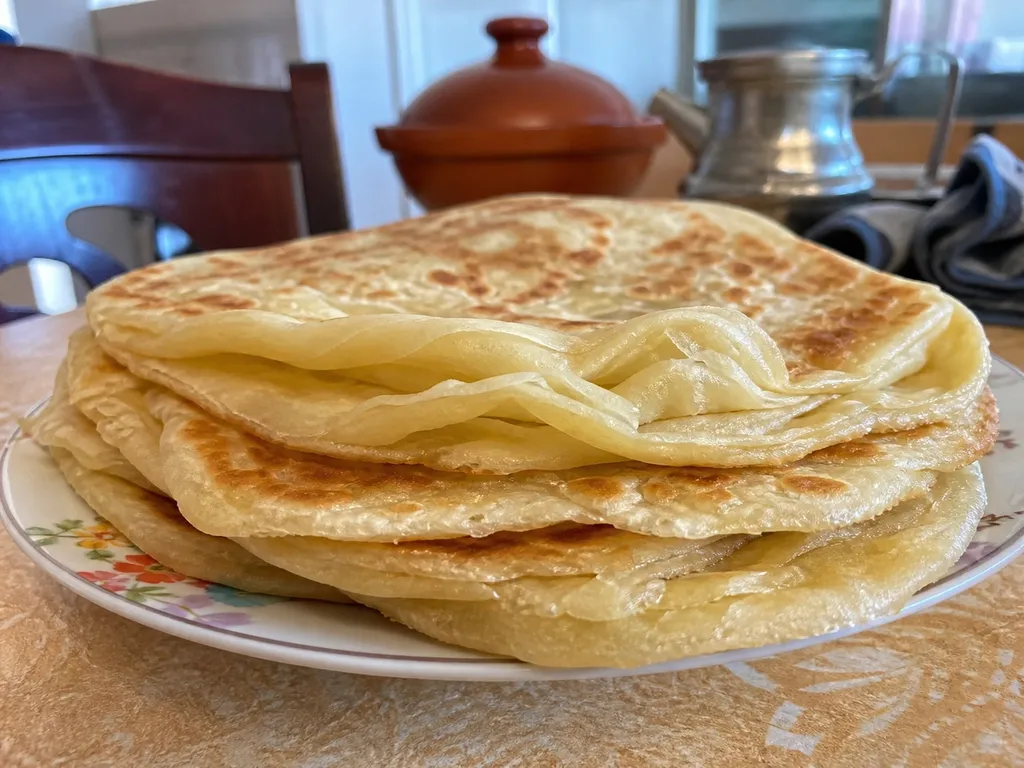 Images are for illustrative purposes only, may be inaccurate, and do not guarantee the presence or absence of specific ingredients.
 Listahan Family Score™
68/100
Works for many families
Score reflects how well this recipe fits a typical busy household. In the app, your Family Score is personalized to your household's allergens, kids, and pantry.
Nutrition
per serving825
Calories
12 g
Protein
78 g
Carbs
51 g
Fat
Estimated per serving. Actual values depend on the brands and portions you use.
Listahan cooking guide
Chef notes & practical guide
Technique notes, ingredient swaps, serve-alongside ideas, storage guidance, and equipment for this recipe.
Cultural context
Msemmen are Morocco's and Algeria's answer to the layered flatbread tradition found across the Maghreb, the Middle East, and South Asia. The lamination technique, stretching and folding fat into the dough, creates a flaky, multi-layered texture similar to Malaysian roti canai or Indian paratha, likely reflecting centuries of trans-Saharan and Mediterranean trade routes. They are the bread of the morning meal in North African households, served warm with argan oil, honey, or butter alongside mint tea.
Listahan note
This version uses a combination of fine semolina and all-purpose flour, which gives the Msemmen its characteristic slightly coarse, chewy interior while the butter-oil lamination layer keeps the outside flaky and crisp.
Technique cues
- The lamination happens during the stretch-and-fold step, not during mixing; once the dough is rested and pliable, you stretch each ball almost paper-thin, coat the surface with a mixture of oil and melted butter, then fold it into thirds twice, producing the distinct square shape and the internal flaky layers.
- A long rest after mixing is not optional: the gluten in the flour needs 20-30 minutes to relax fully before the dough will stretch thin without tearing, because pulling underrested dough causes it to snap back and the layers compress.
- Cook on a completely dry (ungreased) cast-iron or heavy skillet over medium heat; the fat already inside the folded layers is enough to crisp the exterior, and additional oil in the pan makes the surface greasy rather than crispily golden.
Kitchen flow
- Parallel prep
- Mix and knead the dough first and let it rest covered; use the 30-minute rest to prepare your skillet, melt the butter-oil mixture, and set up a clean, oiled stretch surface.
- Make-ahead
- Laminate and fold the Msemmen into their final square shape, then refrigerate raw between layers of parchment for up to 24 hours; cook them straight from the fridge, adding 1-2 extra minutes per side.
- Leftover move
- Leftover cooked Msemmen reheat beautifully in a dry skillet for 1-2 minutes per side; they can also be torn into pieces and used as the base for Rfissa.
- Cleanup rhythm
- The main mess is the oiled work surface; lay down parchment or a silicone mat before the stretching step and throw it away afterward for easy cleanup.
Ingredient brief
Role, handling, and swap guidance for each key ingredient.
2 cups all-purpose flour
gluten structure
Purpose: All-purpose flour provides the gluten network that lets the dough stretch paper-thin without tearing during the lamination step.
Handling: Combine with semolina and salt before adding liquid; no need to sift, but mix the dry ingredients evenly first.
Adaptation: Bread flour gives slightly more chew and a little more elasticity, which makes stretching easier; whole-wheat flour changes the color and flavor but works with a longer rest.
1 cup fine semolina
texture and bite
Purpose: Fine semolina adds a slightly gritty, toothsome quality to the interior crumb that distinguishes Msemmen from a plain flour flatbread.
Handling: Mix into the flour dry before adding water; lumps hydrate during kneading.
Adaptation: Coarse semolina can be used but makes the dough harder to stretch smoothly; corn flour (finely ground) is not a direct substitute as it lacks gluten.
1/2 cup butter (melted)
lamination fat and flavor
Purpose: Butter creates the flaky, distinct layers when spread over the stretched dough before folding; it also gives the Msemmen its rich, slightly nutty flavor.
Handling: Melt and cool slightly, then mix with the vegetable oil to create a spreadable lamination mixture that is easy to distribute without tearing the thin dough.
Adaptation: All vegetable oil can replace butter for a dairy-free version; the layers will be slightly less flaky and less rich-tasting.
1/2 cup vegetable oil
lamination fat and pan release
Purpose: Combined with butter for the lamination, oil lowers the melting point of the mixture so it stays liquid and spreadable even as the dough is stretched.
Handling: Mix with the melted butter to form the lamination fat; also use a small amount on your hands and the work surface to prevent the dough from sticking while stretching.
Adaptation: Neutral oils like canola, sunflower, or light olive oil all work equally well.
Technique notes
- Oil your hands and the work surface generously for the stretching step, not flour; flour stiffens the dough and makes the layers stick together rather than staying separate.
- If the dough tears while stretching, ball it back up, let it rest another 10 minutes, and try again; patience during this step determines whether your Msemmen has proper layers.
- Cook over medium rather than high heat so the center has time to cook through and the layers separate before the outside burns; a properly cooked Msemmen should puff slightly when pressed.
Ingredient swaps
- Dairy-free option
- Replace the melted butter entirely with a neutral vegetable oil; the layers will be slightly less pronounced but the texture will still be flaky.
- Gluten-free direction
- A 1:1 GF flour blend can be used but the dough will not stretch thin; shape into small rounds and fold without stretching for a thicker, denser result.
- Savory filling
- Spread the stretched dough with a thin layer of minced herbs and mild cheese before folding to make a filled version for a heartier breakfast.
Serve alongside
- amlou dip (argan oil, almond, honey paste)
- runny honey and fresh butter
- Moroccan mint tea for a full breakfast spread
- sweet Moroccan mint tea (atay)
- warm cafe au lait
Serving suggestions only — check pairings for your household's allergens.
Storage & reheating
- Stack cooled Msemmen with parchment between each and refrigerate for up to 3 days.
- Reheat in a dry skillet over medium heat for 1-2 minutes per side; do not microwave as it makes them rubbery.
- Freeze uncooked folded squares in a single layer, then transfer to a bag; cook from frozen over medium-low heat with a lid for the first 3 minutes.
Equipment
- large heavy cast-iron skillet or griddle
- clean smooth work surface or large silicone mat
- pastry brush for the lamination fat
- bench scraper for portioning dough
Make this household-aware
Listahan Pro checks this recipe against your household's allergens, finds pantry-aware swaps, builds the shopping list, and helps you plan the week around it.
Plan it in Listahan
Add Msemmen to your week, check it against your household's allergens, and build the shopping list automatically.
More North African recipes
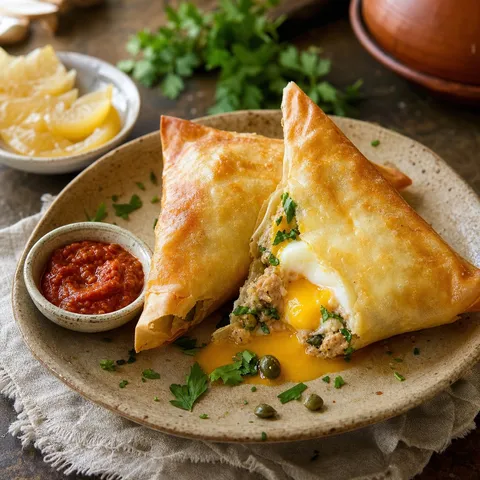 North African Lens Verified Images are for illustrative purposes only, may be inaccurate, and do not guarantee the presence or absence of specific ingredients.
 Brik
Crispy paper-thin pastry folded around a whole egg, tuna, and parsley then flash-fried until golden — Tunisia's beloved street snack, eaten fast before the yolk escapes.
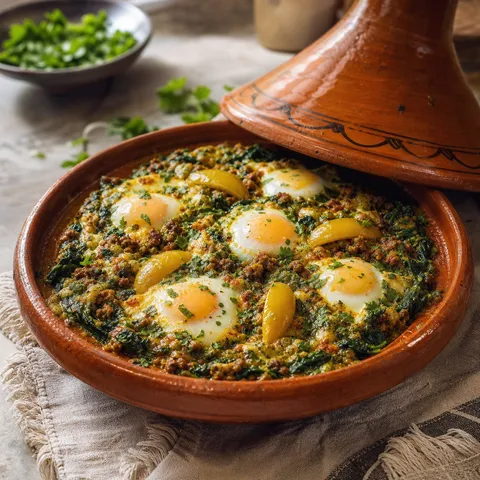 North African Lens Verified Images are for illustrative purposes only, may be inaccurate, and do not guarantee the presence or absence of specific ingredients.
 Tajine El Bey
Tunisia's grand layered bake of spiced lamb, eggs, and cheese baked in a deep crust — a celebration dish with silky, complex layers in every slice.
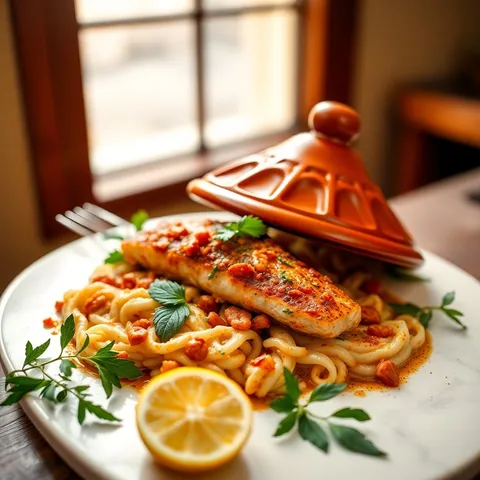 North African Lens Verified Images are for illustrative purposes only, may be inaccurate, and do not guarantee the presence or absence of specific ingredients.
 Chermoula Fish
Fish fillets steeped in a vivid marinade of cilantro, garlic, paprika, and lemon then grilled or baked until flaky — North Africa's most aromatic seafood dish.