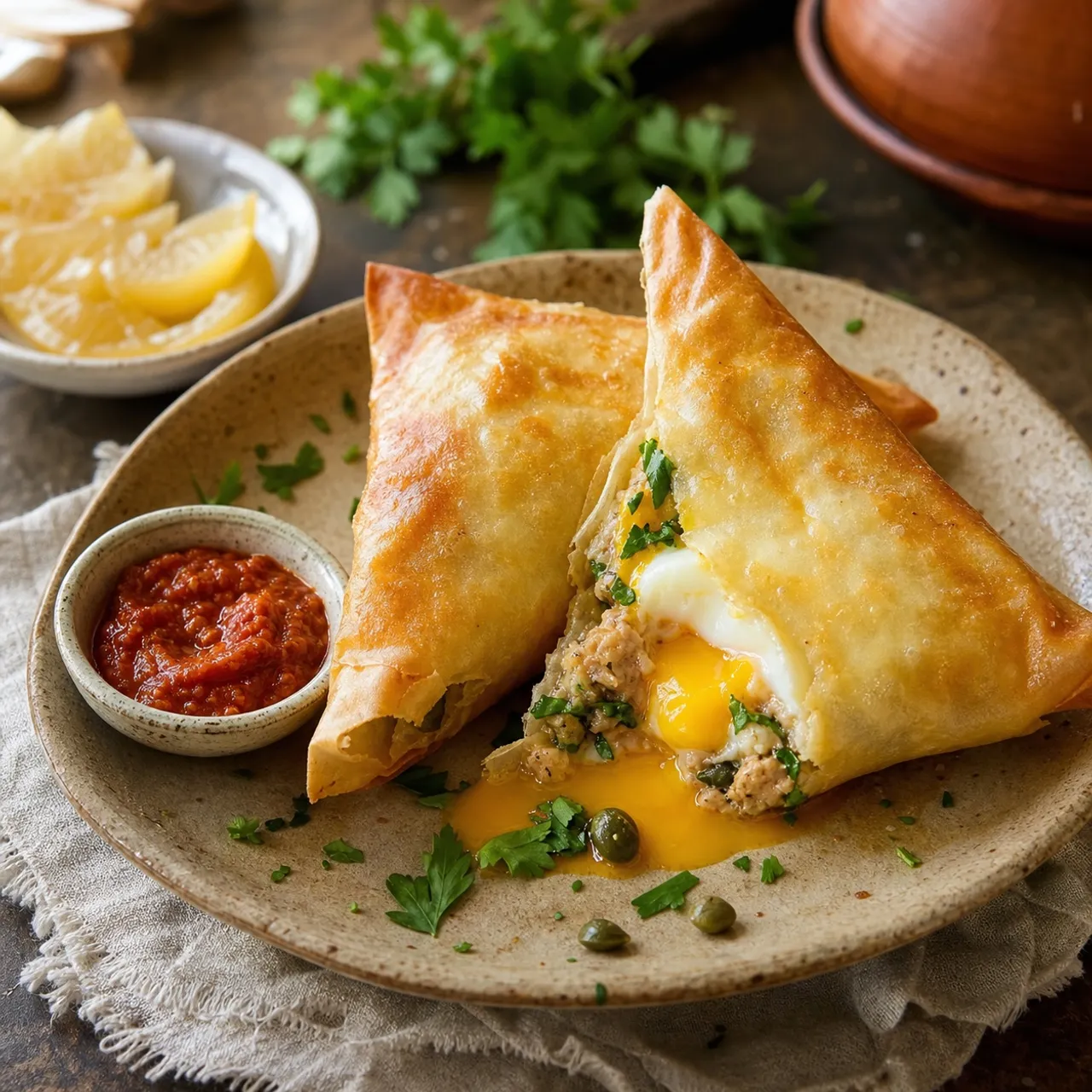
 North African Images are for illustrative purposes only, may be inaccurate, and do not guarantee the presence or absence of specific ingredients.
 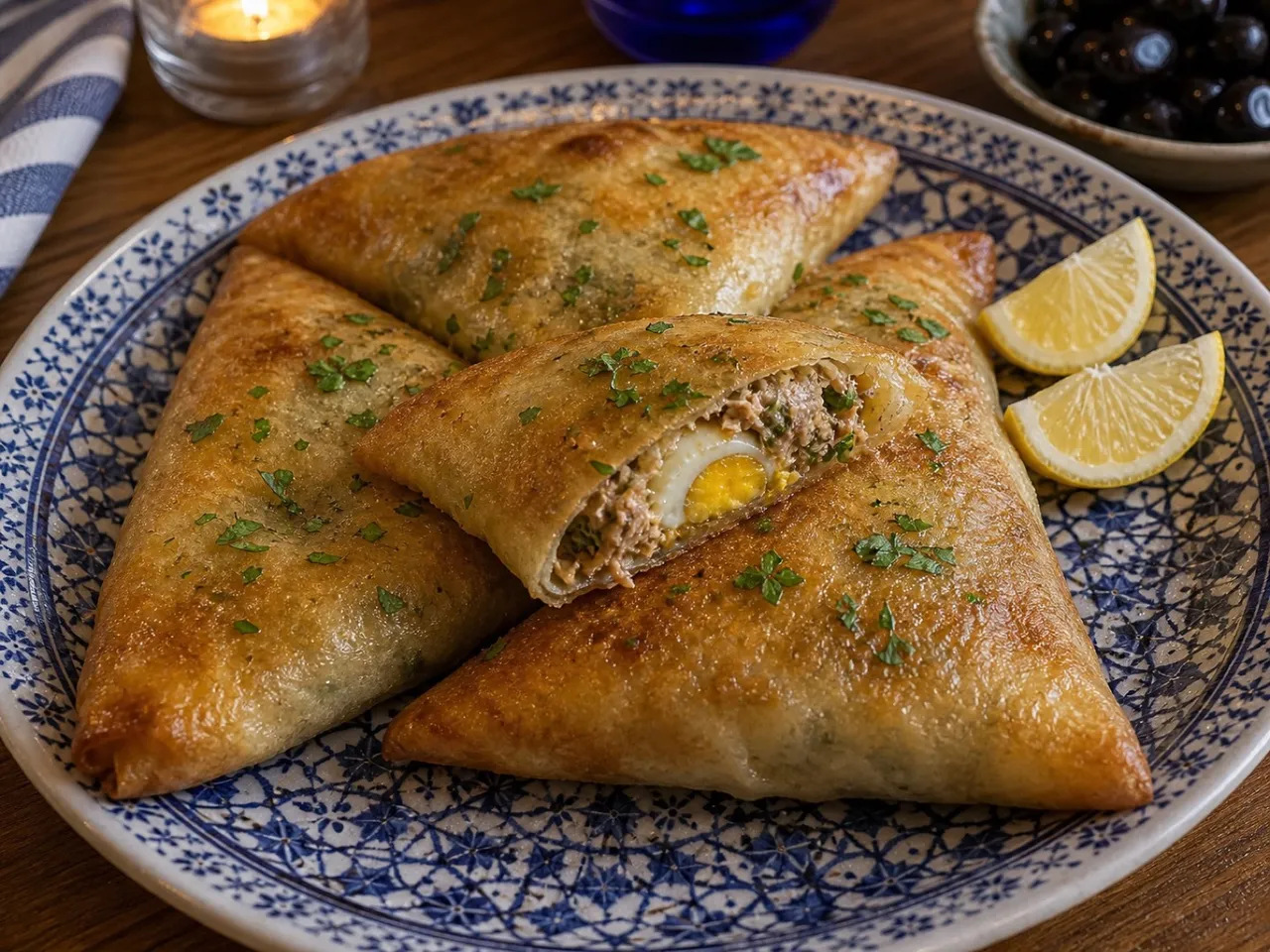 Serving Images are for illustrative purposes only, may be inaccurate, and do not guarantee the presence or absence of specific ingredients.
 Brik
Crispy paper-thin pastry folded around a whole egg, tuna, and parsley then flash-fried until golden — Tunisia's beloved street snack, eaten fast before the yolk escapes.
Contains common allergens
In the app, Listahan checks these against your household automatically.
Good to know
- Crispy
- Ready in under 30 minutes
Matched from this dish's own ingredients and timing. Browse more: crispy recipes30-minute meals
Instructions
5 steps- 1
Prepare Filling: In a small bowl, mix the drained tuna, chopped parsley, and capers. Season lightly with salt and pepper.
- 2
Assemble Brik: Lay one sheet of pastry flat. Place a spoonful of the tuna mixture in the center and create a small well in the middle.
- 3
Add Egg: Carefully crack one egg into the well. Fold the pastry in half to form a half-moon or triangle, sealing the edges.
- 4
Fry: Heat 1/2 inch of oil in a skillet over medium-high heat. Carefully slide the brik into the hot oil.
- 5
Crisp and Drain: Fry for 1-2 minutes per side until golden brown and crispy, ensuring the egg yolk remains runny. Drain on paper towels and serve immediately with lemon wedges.
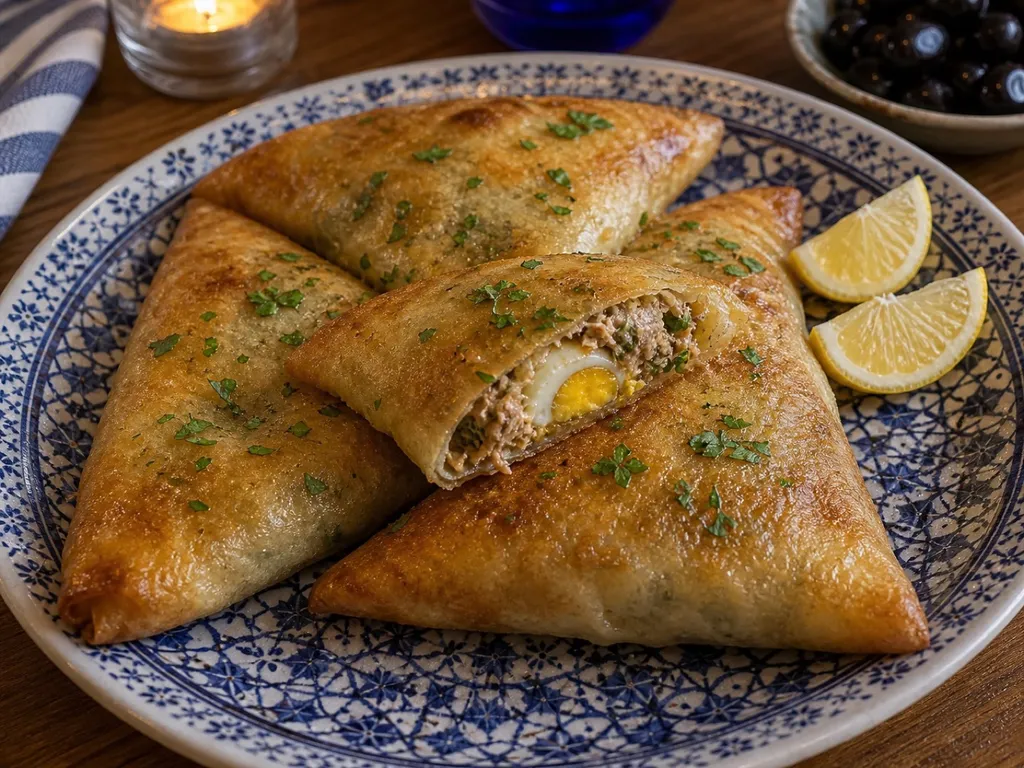 Images are for illustrative purposes only, may be inaccurate, and do not guarantee the presence or absence of specific ingredients.
 Listahan Family Score™
63/100
Works for many families
Score reflects how well this recipe fits a typical busy household. In the app, your Family Score is personalized to your household's allergens, kids, and pantry.
Nutrition
per serving100
Calories
11 g
Protein
1 g
Carbs
6 g
Fat
Estimated per serving. Actual values depend on the brands and portions you use.
Listahan cooking guide
Chef notes & practical guide
Technique notes, ingredient swaps, serve-alongside ideas, storage guidance, and equipment for this recipe.
Cultural context
Brik is a Tunisian street food and home staple: a thin, crispy pastry envelope fried until golden with a whole egg, tuna, capers, and parsley sealed inside. The pastry itself, called malsouka or warkha, is a paper-thin North African dough similar to phyllo but more elastic and forgiving. The defining skill of brik is folding the pastry around the filling and the raw egg so quickly and tightly that the white sets fully in the frying oil while the yolk remains liquid, creating a molten center that runs when the pastry is broken open at the table.
Listahan note
This version uses phyllo dough as a widely available substitute for malsouka, which produces a slightly more delicate, layered crust but works well for home cooking. The technique of sealing and frying quickly is the same, and the filling ratio ensures the egg has room to cook evenly.
Technique cues
- The oil must be deep enough to submerge the folded pastry at least halfway and hot enough (about 350-360F) to set the egg white within 2 minutes; too cool and the pastry absorbs oil and the egg stays raw, too hot and the pastry burns before the egg sets.
- Work quickly when assembling each brik: lay the filling and crack the egg onto one half of the pastry, fold immediately, and seal the edge with gentle pressure before lowering into the oil, because the egg begins to run the moment it leaves the shell.
- A tablespoon of capers provides the acidic brine note that keeps the rich fried pastry and egg from feeling heavy; rinsing the capers first prevents the finished brik from tasting predominantly of vinegar.
Kitchen flow
- Parallel prep
- Prepare all the filling and crack the eggs into individual bowls before heating the oil; once the oil is hot, assembly and frying must happen quickly.
- Make-ahead
- The tuna and caper filling can be mixed up to a day ahead; assemble and fry the brik to order immediately before serving.
- Leftover move
- Brik does not store well; the pastry softens rapidly after frying and the egg is best eaten immediately.
- Cleanup rhythm
- Let the frying oil cool completely before pouring off and discarding; wipe down the pan with paper towels rather than washing hot oil.
Ingredient brief
Role, handling, and swap guidance for each key ingredient.
4 sheets brik pastry (or phyllo dough)
crispy envelope
Purpose: The pastry is both the wrapper and the texture of the dish; its crispness is the defining eating experience of brik.
Handling: Keep phyllo covered with a damp towel while working to prevent drying; use two sheets layered for each brik if using phyllo, as single sheets are too fragile.
Adaptation: Spring roll wrappers or egg roll skins fry to a similar crispness and are more forgiving to work with for first-time brik makers.
4 eggs
molten center
Purpose: The whole egg cracked inside the pastry is the defining feature of brik; the cooked white holding the filling together while the yolk remains runny.
Handling: Crack each egg into a small bowl first so you can quickly tip it onto the pastry without fumbling with the shell.
Adaptation: A scrambled egg can replace the whole egg for younger children who prefer fully cooked yolk, though the signature liquid center is lost.
1/2 cup canned tuna (drained)
savory filling
Purpose: Tuna is the most traditional brik filling in Tunisia, providing a savory, protein-rich base that holds the egg in place.
Handling: Drain thoroughly and break up with a fork; excess moisture from the tuna will make the pastry soggy.
Adaptation: Canned sardines, cooked flaked salmon, or a spoonful of leftover shredded chicken work in the same proportion.
2 tbsp capers
acidic accent
Purpose: Capers provide a briny, acidic note that cuts through the richness of the egg and the fried pastry.
Handling: Rinse and roughly chop if large; small capers can be left whole.
Adaptation: Finely chopped green olives or a small amount of preserved lemon provide a similar salty-acidic function.
Technique notes
- Drain the fried brik on a wire rack rather than paper towels; towels trap steam underneath and cause the bottom of the pastry to soften quickly.
- A half-moon fold rather than a full triangle fold is more secure for containing the runny egg; press the seam firmly but do not wet the pastry edges as moisture prevents a clean seal with this type of pastry.
- Serve immediately with a wedge of lemon on each plate; brik waits for no one, as the pastry begins losing its crispness within 2 minutes of leaving the oil.
Ingredient swaps
- Gluten-free direction
- Rice paper wrappers dampened briefly in warm water can be folded around the filling and fried at a slightly lower temperature for a gluten-free alternative.
- Dairy-free option
- The filling is egg, tuna, parsley and capers, fried in vegetable oil. Check your brik or phyllo pastry — some brands include butter.
- Vegetarian direction
- Replace the tuna with a spoonful of mashed potato mixed with harissa, parsley, and a pinch of cumin for a satisfying vegetarian brik still centered on the whole egg.
Serve alongside
- simple chopped salad with cucumber, tomato, and lemon
- harissa paste for dipping
- pickled turnips
- cold sparkling water with lemon
- mint tea
Serving suggestions only — check pairings for your household's allergens.
Storage & reheating
- Brik must be eaten immediately after frying; it does not store well as the pastry softens within minutes.
- The tuna-caper filling can be refrigerated for up to 1 day and used to assemble and fry brik to order.
- Do not freeze assembled or fried brik.
Equipment
- deep skillet or small saucepan for frying
- kitchen thermometer to monitor oil temperature
- wire rack for draining
- small bowls for pre-cracking eggs
Make this household-aware
Listahan Pro checks this recipe against your household's allergens, finds pantry-aware swaps, builds the shopping list, and helps you plan the week around it.
Plan it in Listahan
Add Brik to your week, check it against your household's allergens, and build the shopping list automatically.
More North African recipes
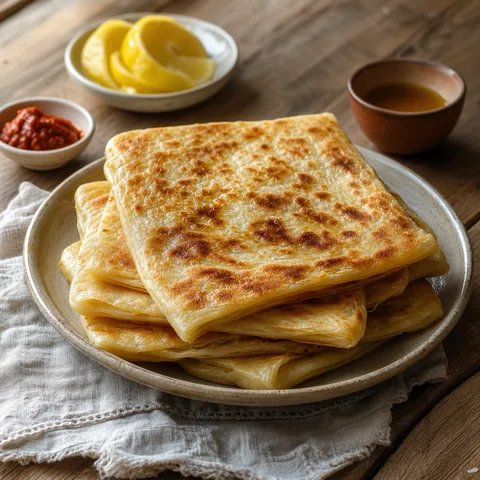 North African Lens Verified Images are for illustrative purposes only, may be inaccurate, and do not guarantee the presence or absence of specific ingredients.
 Msemmen
Layered and folded semolina flatbread cooked on a griddle until the outside crisps and the inside stays wonderfully chewy — perfect with honey or harissa.
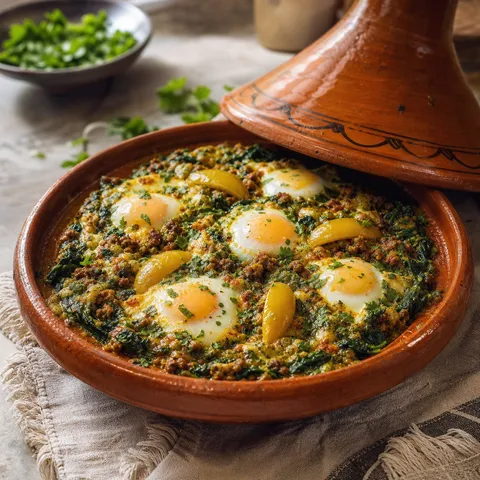 North African Lens Verified Images are for illustrative purposes only, may be inaccurate, and do not guarantee the presence or absence of specific ingredients.
 Tajine El Bey
Tunisia's grand layered bake of spiced lamb, eggs, and cheese baked in a deep crust — a celebration dish with silky, complex layers in every slice.
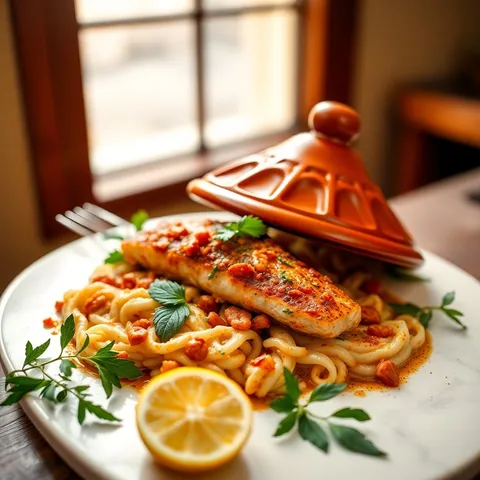 North African Lens Verified Images are for illustrative purposes only, may be inaccurate, and do not guarantee the presence or absence of specific ingredients.
 Chermoula Fish
Fish fillets steeped in a vivid marinade of cilantro, garlic, paprika, and lemon then grilled or baked until flaky — North Africa's most aromatic seafood dish.