 Food Lens Images are for illustrative purposes only, may be inaccurate, and do not guarantee the presence or absence of specific ingredients.
 Food Lens · Pantry
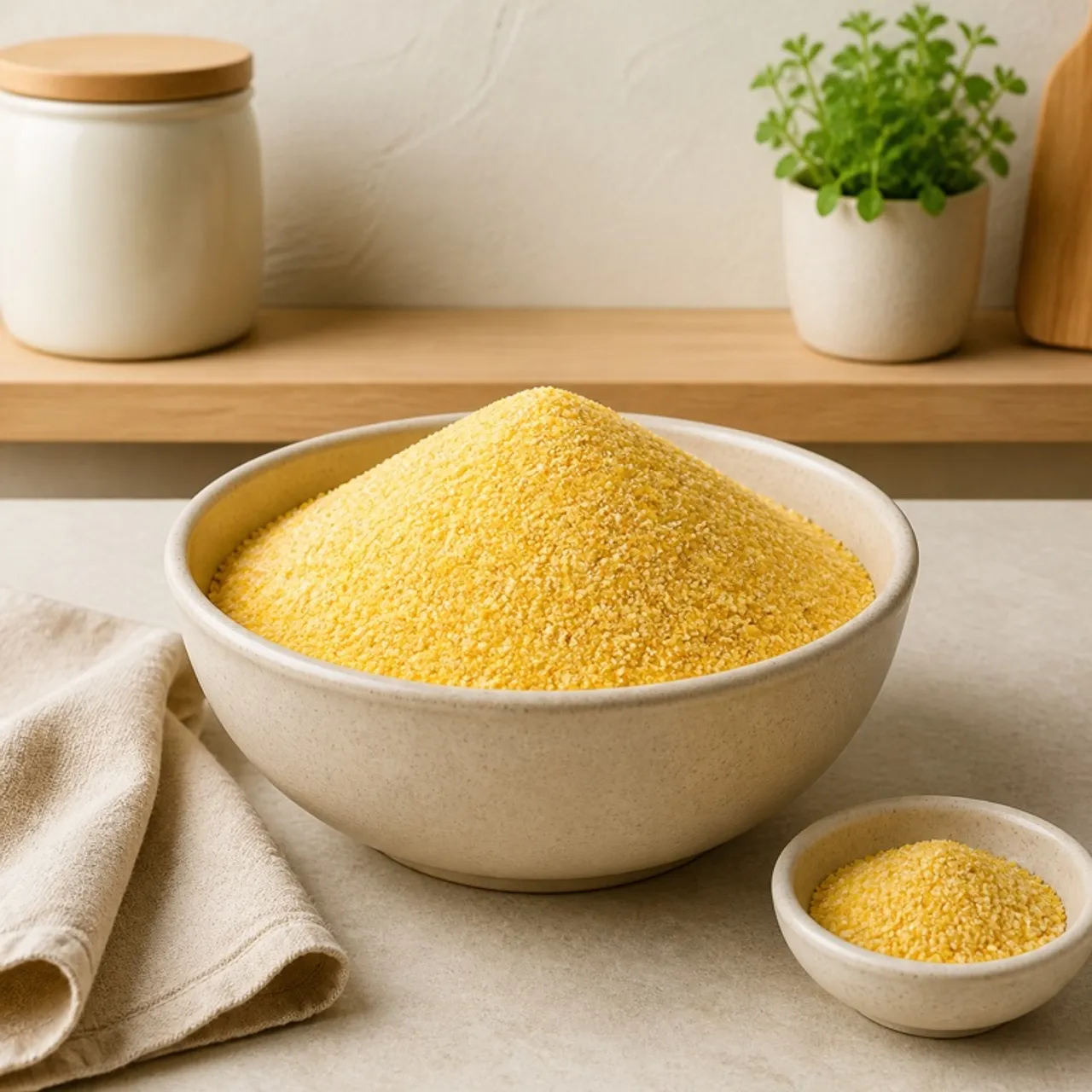
Cornmeal
Mild, sweet, pleasantly grainy, and lightly toasty with a characteristic corn aroma when cooked.
Lens VerifiedCornmeal is dried corn ground to a gritty powder in fine, medium, or coarse grades. It is used for cornbread, polenta, fried coatings, and as a thickener — grind size changes the texture of the finished dish.
Where it comes from
Corn was first domesticated in Mexico thousands of years ago, and ground corn has been a dietary staple of indigenous American peoples ever since. Cornmeal arrived in European and colonial kitchens through trade and settlement, and today it is used from Southern-style grits to Italian polenta to quick-bread batters.
Varieties — Fine cornmeal makes smooth cornbread and light coatings; medium-grind is versatile; coarse grind is best for polenta and grits. Stone-ground retains more corn flavor and aroma.
Polenta is central to Northern Italian cooking; grits are foundational in Southern American cuisine; cornbread spans multiple American regional traditions.
In a modern kitchen — Stone-ground cornmeal has better corn flavor but a shorter shelf life than commercial cornmeal.
Buying it
Match the grind to your recipe: fine for cornbread, medium for all-purpose use, coarse for polenta. Stone-ground cornmeal has more corn flavor but should be used within a few months of milling.
Storing it
Store in an airtight container in a cool, dry spot. Whole-grain cornmeal turns rancid faster than degerminated — a musty or bitter smell means it's past its best.
Keeps about 1 year in the pantry.
Out of cornmeal? Good swaps
- Polenta (coarse cornmeal) — Interchangeable when the grind matches the recipe's needs.
- Semolina — Coarser and wheatier; works as a coating or thickener in a pinch.
- Rice flour — Creates a lighter, crispier coating when used for frying.
General cooking guidance — always check the labels on the products you use. Listahan’s allergen checks run automatically when you plan a recipe in the app. Not medical advice.
Recipes that use cornmeal
Common questions about cornmeal
Is cornmeal vegan?
Cornmeal is generally plant-based and suitable for a vegan diet, but brands differ — confirm on the label.
What can I use instead of cornmeal?
Good swaps include Polenta (coarse cornmeal), Semolina, Rice flour. Each behaves a little differently — see the swaps above for notes, and always check labels for allergens.
How do I store cornmeal?
Store in an airtight container in a cool, dry spot. Whole-grain cornmeal turns rancid faster than degerminated — a musty or bitter smell means it's past its best. It keeps about 1 year in the pantry.
More pantry
See all


Make cornmeal about your kitchen — with Listahan Pro
Everything above is free, forever. Pro adds the Household Lens — the same food, seen for your family:
-
Checked for each member
Flags cornmeal per person against your household's allergies and school rules — not just a generic "contains" tag.
-
Pantry-aware
Knows whether you already have it, what is running low, and the best swap from what is in your kitchen tonight.
-
What it costs near you
A real price from the Presyo community index, so you can plan the budget — not guess.
-
Your household memory
Who likes it, plus your own private notes — brand, where you keep it, who skips it.
Allergen safety is always free — Pro adds the automation, never the safety.
Cook with cornmeal — safely
Plan a recipe in Listahan and the household allergen check runs automatically — every plan, every swap, every lunchbox. Safety is never paywalled.