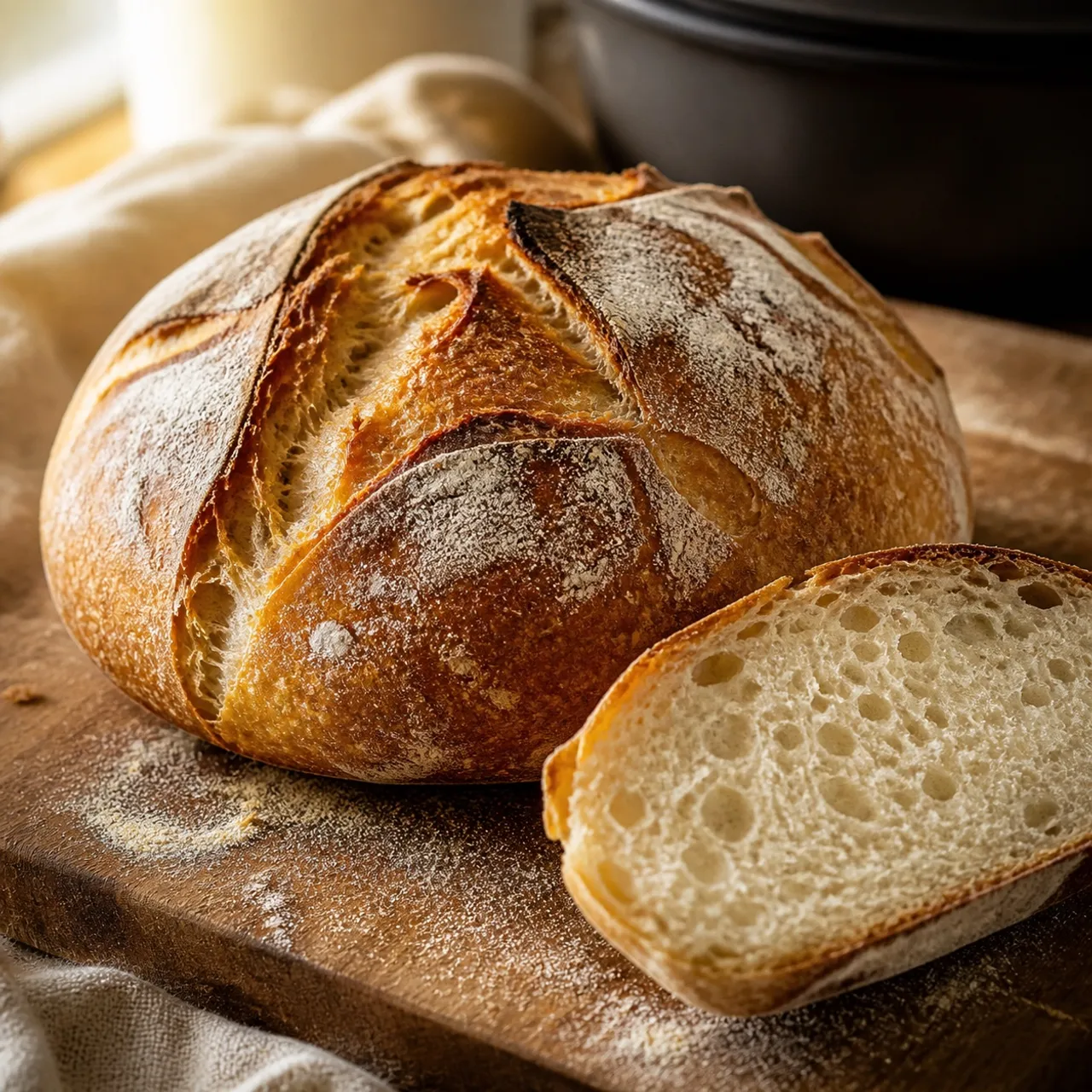
 Breads Images are for illustrative purposes only, may be inaccurate, and do not guarantee the presence or absence of specific ingredients.
 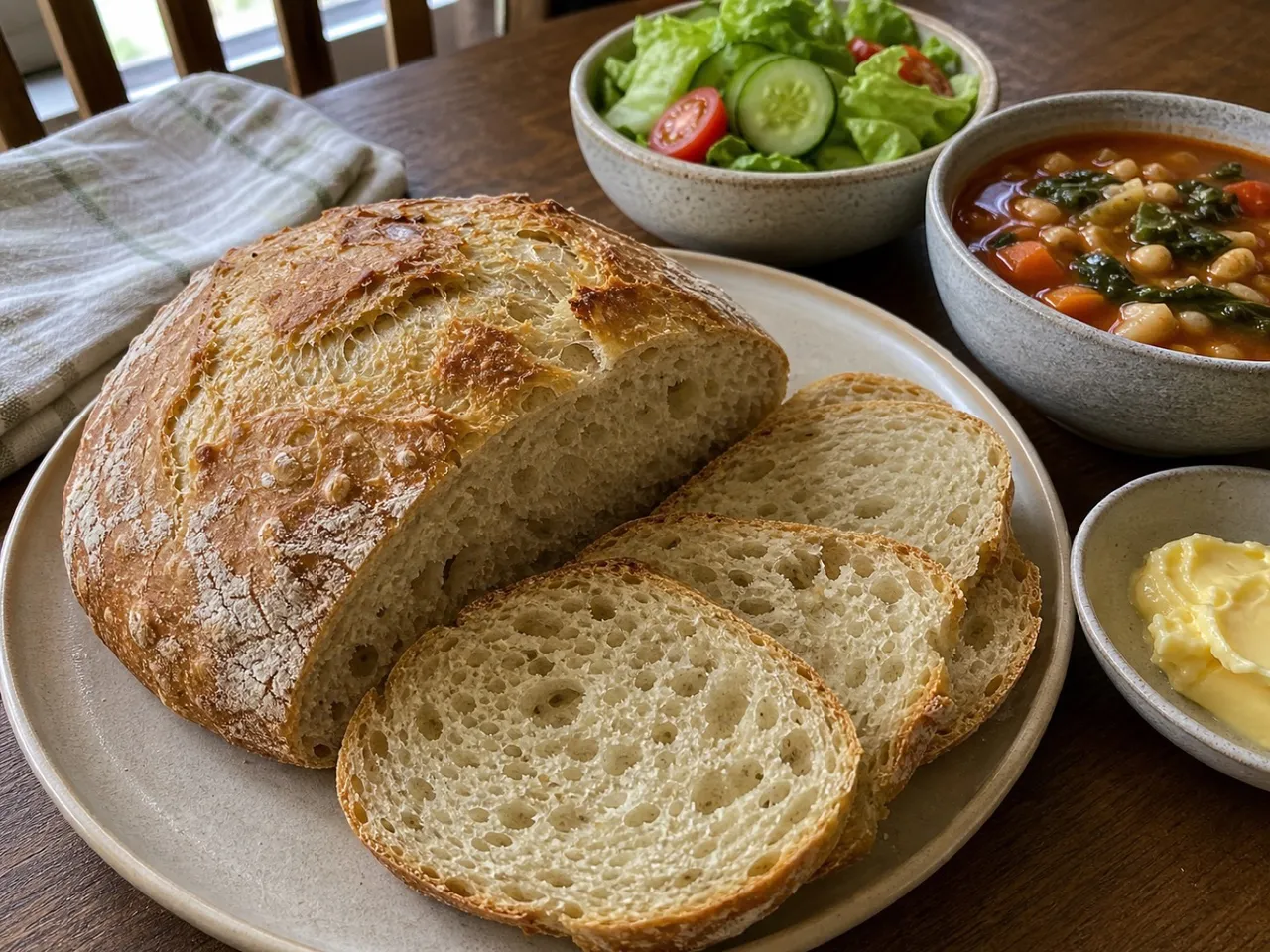 Serving Images are for illustrative purposes only, may be inaccurate, and do not guarantee the presence or absence of specific ingredients.
 No-Knead Dutch Oven Bread
A rustic artisan boule with a deeply caramelized crust and chewy crumb that comes together with almost no effort.
Contains common allergens
In the app, Listahan checks these against your household automatically.
Good to know
- Crispy
Matched from this dish's own ingredients and timing. Browse more: crispy recipes
Instructions
7 steps- 1
In a large bowl, whisk together the flour, yeast, and salt. Add the cool water and stir with a spatula just until a wet, shaggy dough forms and no dry flour remains; do not knead.
- 2
Cover the bowl tightly with plastic wrap and let it sit at room temperature for 12 to 18 hours, until the surface is dotted with bubbles and the dough has more than doubled. The long, slow ferment is what builds the flavor.
- 3
Turn the dough out onto a heavily floured surface. With floured hands, fold it over on itself a few times into a rough ball, then cover with a kitchen towel and rest 15 minutes.
- 4
Shape the dough into a tight ball by tucking the edges underneath, then place it seam-side down on a sheet of parchment dusted with cornmeal. Cover and proof 1 1/2 to 2 hours, until nearly doubled and the dough slowly springs back when poked.
- 5
About 30 minutes before baking, place a covered Dutch oven in the oven and preheat to 450°F so the pot gets screaming hot.
- 6
Carefully lift the parchment with the dough into the hot pot, slash the top with a sharp knife, cover, and bake 30 minutes. Remove the lid and bake another 15 to 20 minutes until the crust is deep golden brown and the internal temperature reaches about 208°F.
- 7
Lift the loaf out by the parchment and cool completely on a wire rack, at least 1 hour, before slicing so the crumb finishes setting.
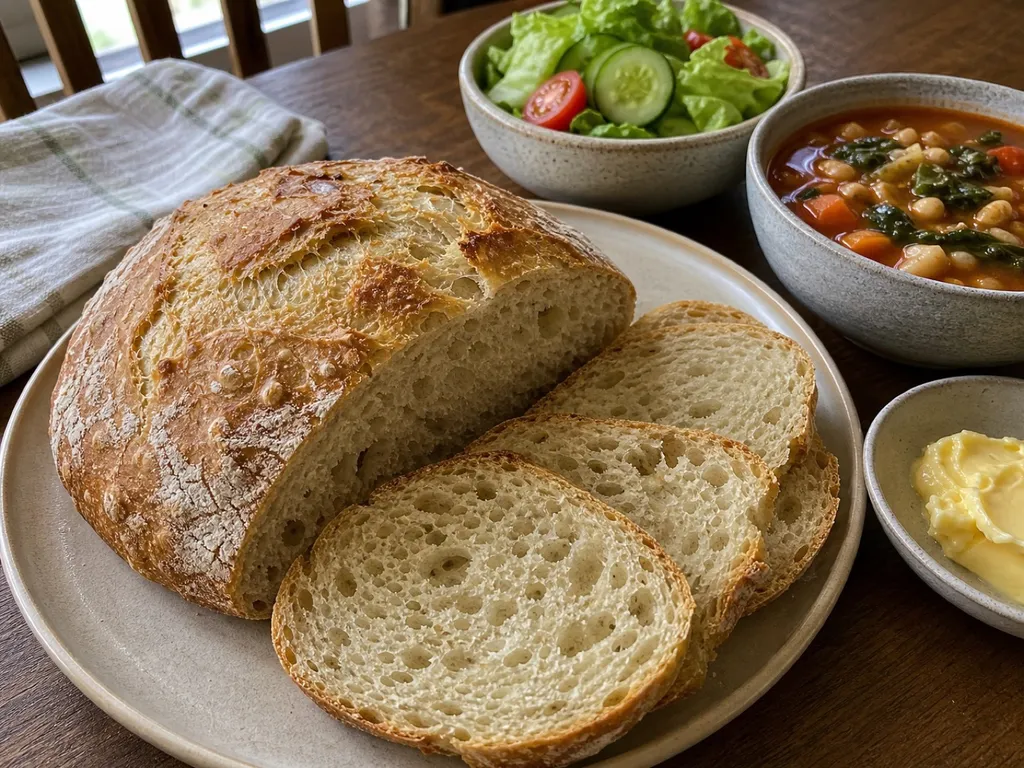 Images are for illustrative purposes only, may be inaccurate, and do not guarantee the presence or absence of specific ingredients.
 Listahan Family Score™
74/100
Good fit for most families
Score reflects how well this recipe fits a typical busy household. In the app, your Family Score is personalized to your household's allergens, kids, and pantry.
Nutrition
per serving135
Calories
4 g
Protein
29 g
Carbs
0 g
Fat
Estimated per serving. Actual values depend on the brands and portions you use.
Listahan cooking guide
Chef notes & practical guide
Technique notes, ingredient swaps, serve-alongside ideas, storage guidance, and equipment for this recipe.
Cultural context
The no-knead method was popularized in the mid-2000s by New York baker Jim Lahey and the food writer who shared it, who showed that a long, slow fermentation could replace kneading entirely. Letting a wet dough rest for many hours lets the gluten organize itself, so a home cook with no mixer or skill can produce a crackly, bakery-style loaf. Baking it inside a covered Dutch oven traps the dough's own steam, which is the trick behind the crisp, blistered crust.
Listahan note
This version relies on time instead of effort, using a long room-temperature rise and a screaming-hot covered pot. It is forgiving enough for a first loaf yet produces an open, chewy crumb.
Technique cues
- Mix until just shaggy and no dry flour remains, then walk away, because the twelve-to-eighteen-hour rest does the gluten-building that kneading normally would.
- Preheat the empty Dutch oven until it is fully blazing hot, since dropping the dough into a hot pot gives the bottom an immediate burst of oven spring.
- Bake covered for the first stretch to trap steam, then uncover to let the crust deepen to a dark, crackling brown.
Kitchen flow
- Parallel prep
- Mix the dough the night before so the long rise happens overnight while you sleep.
- Make-ahead
- After the first rise, refrigerate the dough for up to two days for deeper flavor; bake it the day you want fresh bread.
- Leftover move
- Cube stale slices and toast them into croutons, or blitz them into rustic breadcrumbs for later.
- Cleanup rhythm
- Soak the mixing bowl right after, and let the cooled Dutch oven wipe clean once the baked-on dusting flakes off.
Ingredient brief
Role, handling, and swap guidance for each key ingredient.
bread flour
structure and chew
Purpose: Its strong gluten holds the gas from the long ferment, giving the loaf its open holes and chewy crumb.
Handling: Whisk it with the salt and yeast before adding water so everything hydrates evenly.
Adaptation: All-purpose flour makes a slightly softer, less holey loaf and works fine for everyday bread.
instant yeast
slow leavening
Purpose: Just a small pinch ferments the dough slowly over many hours, building flavor without any kneading.
Handling: Stir it directly into the dry flour; no blooming needed for instant yeast.
Adaptation: Use slightly more active dry yeast dissolved in the water, or a spoon of sourdough starter for a tangier loaf.
warm water
hydration
Purpose: A high water ratio makes a wet, slack dough that ferments into a light, airy crumb without kneading.
Handling: Use lukewarm water so the long rise proceeds at a steady pace rather than stalling.
Adaptation: Replace a splash with beer or whey for extra flavor while keeping the total liquid the same.
salt
flavor and fermentation control
Purpose: It seasons the loaf and reins in the yeast so the long rise does not over-proof and collapse.
Handling: Mix it thoroughly into the flour before the water goes in.
Adaptation: Fine sea salt works one to one; reduce slightly if using a coarser flaky salt by volume.
cornmeal or flour for dusting
release and texture
Purpose: A dusting keeps the sticky dough from welding to the towel or pot and adds a rustic finish to the crust.
Handling: Dust the proofing surface and your hands generously, since this dough is deliberately sticky.
Adaptation: Use semolina, rice flour, or parchment paper to keep the loaf from sticking.
Technique notes
- Score the top of the loaf with a sharp blade just before baking so it expands along a controlled seam instead of bursting randomly.
- Lift the dough on a sheet of parchment to lower it safely into the searing-hot pot without burning your hands.
- Let the loaf cool fully on a rack before slicing, because cutting hot bread leaves the crumb gummy.
Ingredient swaps
- Whole-grain direction
- Replace a quarter of the bread flour with whole wheat and add a splash more water to keep the dough slack.
- Sourdough direction
- Swap the yeast for a half cup of active starter and lengthen the rise to develop a tangy crumb.
- Weeknight shortcut
- Warm the rising spot and double the yeast for a same-day loaf in about four hours.
Serve alongside
- Cultured butter and flaky salt
- Olive oil and balsamic for dipping
- Hearty lentil soup
- Sharp aged cheddar
- Bold red wine
- Farmhouse cider
- Hot black tea
Serving suggestions only — check pairings for your household's allergens.
Storage & reheating
- Store the cooled loaf cut-side down on a board or in a paper bag for two days to keep the crust crisp; a plastic bag softens it. For longer storage, slice and freeze in a sealed bag for up to three months and toast straight from frozen. Refresh a day-old loaf in a hot oven for ten minutes to revive the crackle.
Equipment
- Heavy Dutch oven with lid
- Large mixing bowl
- Bread lame or sharp knife
- Cooling rack
Make this household-aware
Listahan Pro checks this recipe against your household's allergens, finds pantry-aware swaps, builds the shopping list, and helps you plan the week around it.
Plan it in Listahan
Add No-Knead Dutch Oven Bread to your week, check it against your household's allergens, and build the shopping list automatically.
More Breads recipes
Rice Crust for Quiches or Pies
A simple pressed crust made from cooked rice that holds savory quiche and pie fillings beautifully.
 Breads Lens Verified Images are for illustrative purposes only, may be inaccurate, and do not guarantee the presence or absence of specific ingredients.
 Kentucky Biscuits
Tall, flaky Southern-style biscuits with a tender crumb, perfect with butter and jam.
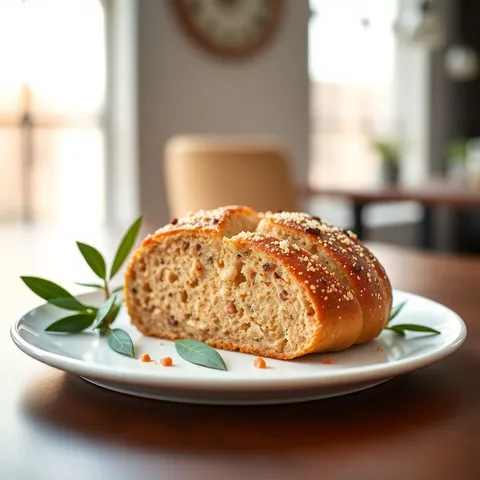 Breads Lens Verified Images are for illustrative purposes only, may be inaccurate, and do not guarantee the presence or absence of specific ingredients.
 Bread Machine Sage-Wheat Bread
A fragrant whole-wheat loaf scented with sage and a hint of cornmeal, made effortlessly in a bread machine.