 South American Images are for illustrative purposes only, may be inaccurate, and do not guarantee the presence or absence of specific ingredients.
  Serving Images are for illustrative purposes only, may be inaccurate, and do not guarantee the presence or absence of specific ingredients.
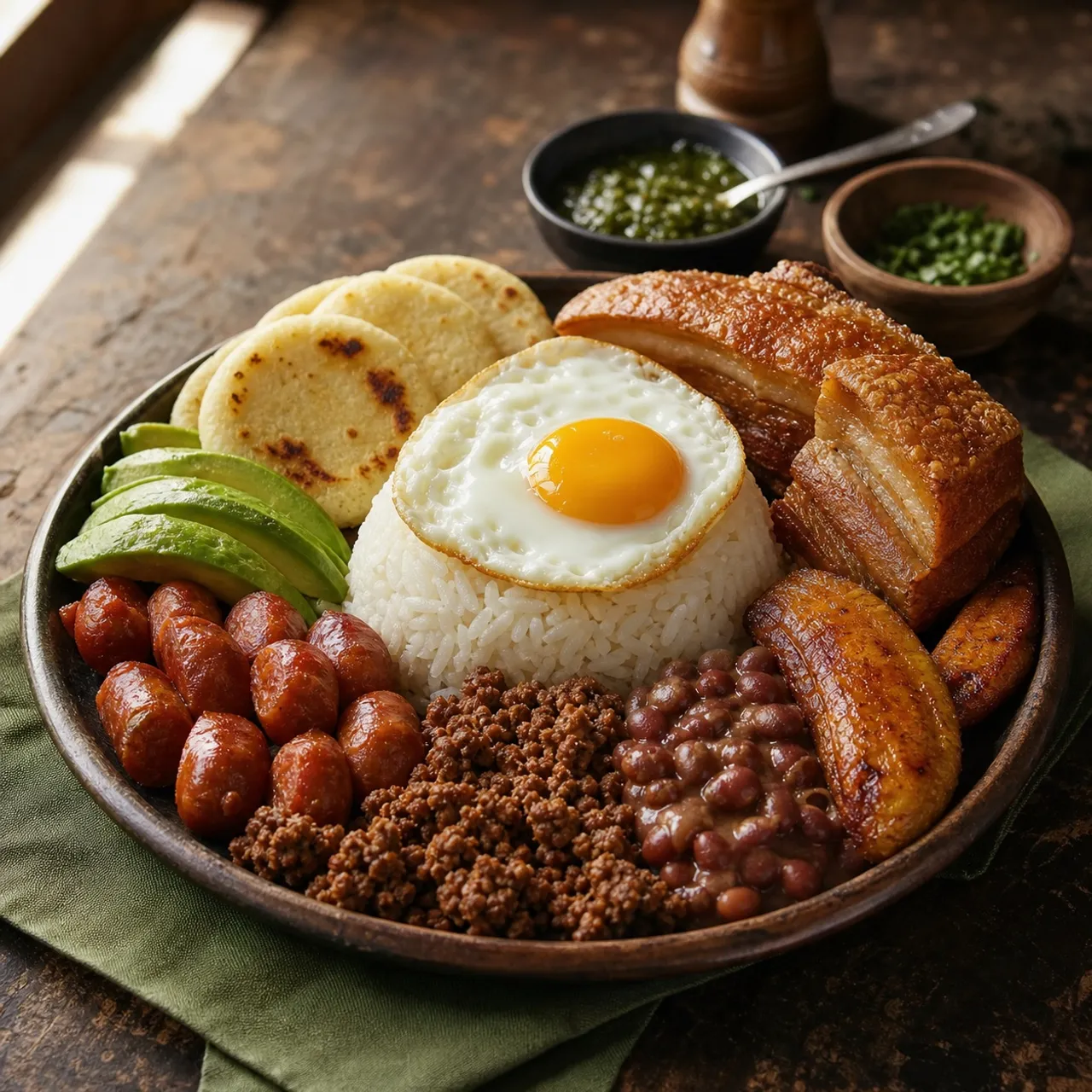
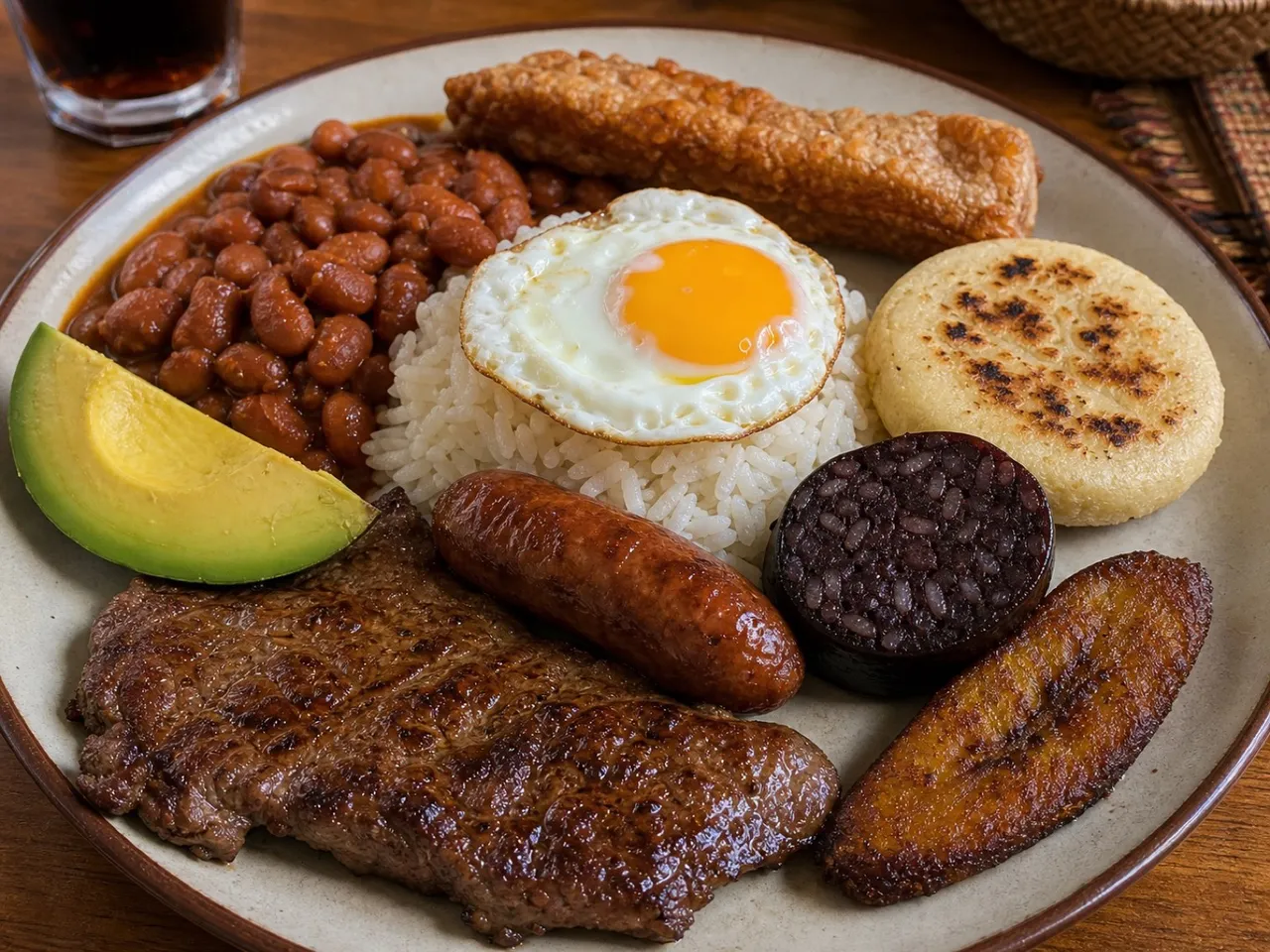
 Bandeja Paisa
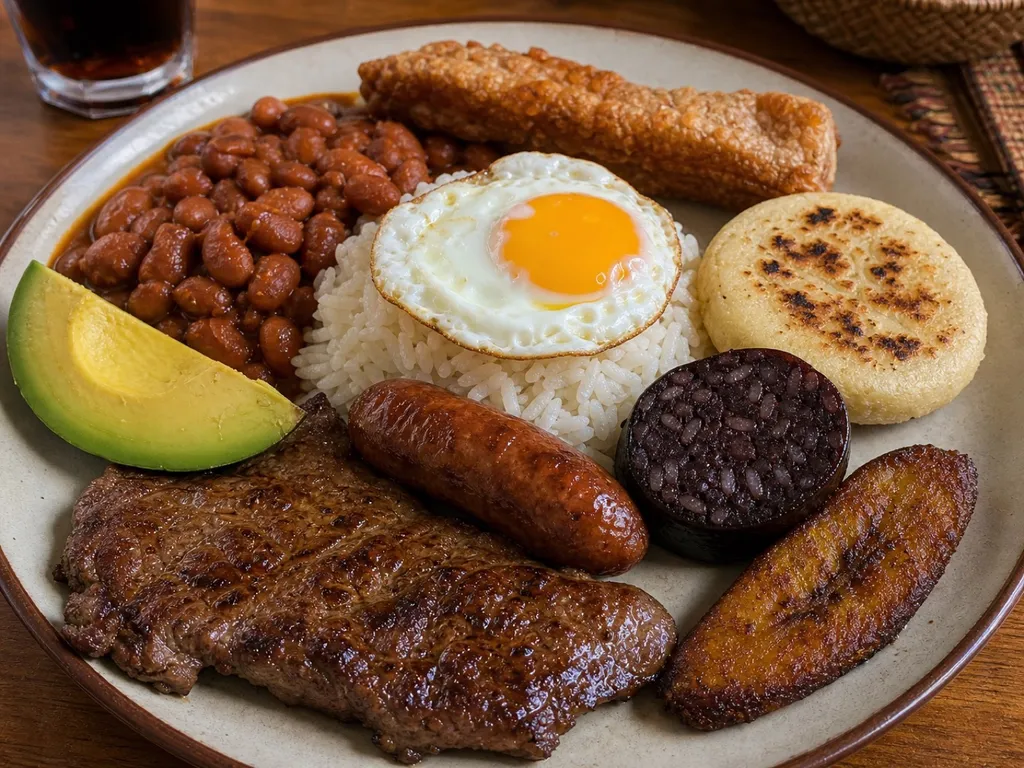
Colombia's legendary tray of abundance — red beans, white rice, chicharrón, chorizo, fried egg, plantains, and avocado all piled high for a satisfying feast.
Contains common allergens
In the app, Listahan checks these against your household automatically.
Good to know
- Crispy
Matched from this dish's own ingredients and timing. Browse more: crispy recipes
Instructions
6 steps- 1
Cook the beans: Soak the beans overnight. Simmer them for 2 hours with diced onions, tomatoes, and a ham hock until very tender and in a thick gravy.
- 2
Prepare the chicharrón: Score the skin of the pork belly. Boil in shallow water with baking soda until the water evaporates, then let it fry in its own rendered fat until the skin puffs and becomes crispy.
- 3
Cook the meats: Sauté the ground beef with onions, cumin, and garlic (hogao sauce). In a separate pan, pan-fry or grill the chorizo sausages until charred.
- 4
Fry the sweet sides: Slice the ripe sweet plantains and fry them in oil until deeply caramelized and soft.
- 5
Fry the eggs: Fry the eggs sunny-side up, leaving the yolk completely runny.
- 6
Assemble the platter: On a very large plate or oval tray, arrange the rice, beans, ground beef, chicharrón, chorizo, plantain, and sliced avocado. Place the fried egg atop the rice, and serve with a small arepa on the side.
 Images are for illustrative purposes only, may be inaccurate, and do not guarantee the presence or absence of specific ingredients.
 Listahan Family Score™
67/100
Works for many families
Score reflects how well this recipe fits a typical busy household. In the app, your Family Score is personalized to your household's allergens, kids, and pantry.
Nutrition
per serving970
Calories
63 g
Protein
94 g
Carbs
37 g
Fat
Estimated per serving. Actual values depend on the brands and portions you use.
Listahan cooking guide
Chef notes & practical guide
Technique notes, ingredient swaps, serve-alongside ideas, storage guidance, and equipment for this recipe.
Cultural context
Bandeja paisa is the hearty signature platter of Colombia's Antioquia region, named for the paisa people of the coffee-growing mountains. It grew out of the food carried by traveling muleteers and farm workers who needed dense, sustaining calories for long days, eventually formalized into a single overflowing tray. The platter is unapologetically abundant, meant to fuel rather than to nibble.
Listahan note
This version assembles the classic components, red beans, rice, ground or grilled beef, chicharron, plantain, egg, and arepa, in a manageable family-sized portion. The trick is staging the parts so everything lands hot at once.
Technique cues
- Cook the beans low and slow until creamy; the pot of red beans is the soul of the platter and rushing them leaves them mealy.
- Fry the ripe plantain slowly so the sugars caramelize to a deep amber rather than scorching, which gives that sweet contrast to the savory plate.
- Score the chicharron and start it in a cold pan so the fat renders gradually and the skin crisps without burning.
Kitchen flow
- Parallel prep
- Get the beans and rice going first since they take longest, then work through the meats, plantain, and egg while they finish.
- Make-ahead
- Beans taste better the next day; cook them and the ground beef ahead, then fry the fresh components at serving time.
- Leftover move
- Spoon leftover beans and rice into a bowl, top with the egg and any meat, and you have a fast next-day plate.
- Cleanup rhythm
- Reuse the chicharron pan for the plantains so the rendered pork fat flavors them and you wash fewer pans.
Ingredient brief
Role, handling, and swap guidance for each key ingredient.
red beans
the anchoring stew
Purpose: Slow-cooked red beans, often with pork, are the heart of bandeja paisa and tie the platter together.
Handling: Soak overnight and simmer with aromatics until thick and creamy.
Adaptation: Pinto beans or canned red beans simmered with seasoning work in a hurry.
ground beef
the savory meat layer
Purpose: Seasoned ground beef, carne molida, is the everyday protein on the tray.
Handling: Brown with onion, tomato, and cumin until well seasoned.
Adaptation: Grilled steak strips or shredded beef are common alternatives.
pork belly (chicharron)
crisp fatty component
Purpose: Crisp-fried pork belly provides the rich crunch that defines the platter.
Handling: Score, salt, and render slowly until puffed and crackling.
Adaptation: Thick bacon crisped hard stands in if pork belly is hard to find.
ripe plantain
sweet counterpoint
Purpose: Fried sweet plantain balances the salty, fatty meats with caramelized sweetness.
Handling: Use very ripe, blackened plantains and fry slowly until golden.
Adaptation: Fried sweet potato gives a similar sweet note.
white rice
the base starch
Purpose: Plain fluffy rice soaks up the bean liquid and rounds out the plate.
Handling: Cook until fluffy and keep warm.
Adaptation: Any long-grain rice; coconut rice adds a regional twist.
egg
richness on top
Purpose: A fried egg crowns the platter and its yolk enriches every bite.
Handling: Fry until the white sets and the yolk stays soft.
Adaptation: Scrambled if you prefer no runny yolk.
Technique notes
- Stagger your cooking by finish time, not start time, so the beans, rice, meat, plantain, and egg all hit the tray hot together.
- Render the chicharron in a cold-start pan; dropping it into hot oil seizes the skin before the fat renders.
- Keep the cooked components warm in a low oven while you finish the last items so nothing sits cold.
Ingredient swaps
- Lighter direction
- Skip the chicharron and use leaner grilled steak with a smaller bean portion for a less heavy plate.
- Weeknight shortcut
- Use quality canned red beans simmered with sofrito to cut hours off the cook.
- Vegetarian direction
- Build a meat-free version with the beans, rice, plantain, egg, avocado, and arepa.
Serve alongside
- Cornmeal arepa
- Sliced avocado
- Fresh tomato and onion salad (hogao)
- Lime wedges
- Colombian coffee
- Fresh lulo juice
- Cold lager
Serving suggestions only — check pairings for your household's allergens.
Storage & reheating
- Store each component separately in the fridge for up to three days, since they reheat at different rates. Warm the beans, rice, and meats in a pan or microwave and fry a fresh egg and plantain. The beans freeze beautifully for two months; the fried items do not.
Equipment
- Large heavy pot for the beans
- Two or three skillets to run components in parallel
- Rice cooker or saucepan
- Large platter or tray for serving
Make this household-aware
Listahan Pro checks this recipe against your household's allergens, finds pantry-aware swaps, builds the shopping list, and helps you plan the week around it.
Plan it in Listahan
Add Bandeja Paisa to your week, check it against your household's allergens, and build the shopping list automatically.
More South American recipes
 South American Lens Verified Images are for illustrative purposes only, may be inaccurate, and do not guarantee the presence or absence of specific ingredients.
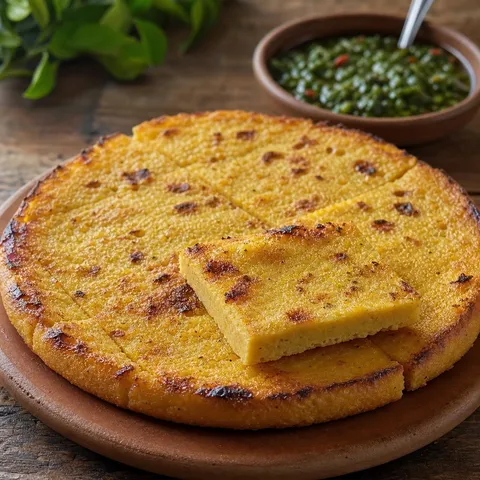
 Fainá
Buenos Aires's thin chickpea flatbread, baked until golden and fragrant — simple, crispy-edged, and traditionally eaten layered right on top of a pizza slice.
 South American Lens Verified Images are for illustrative purposes only, may be inaccurate, and do not guarantee the presence or absence of specific ingredients.
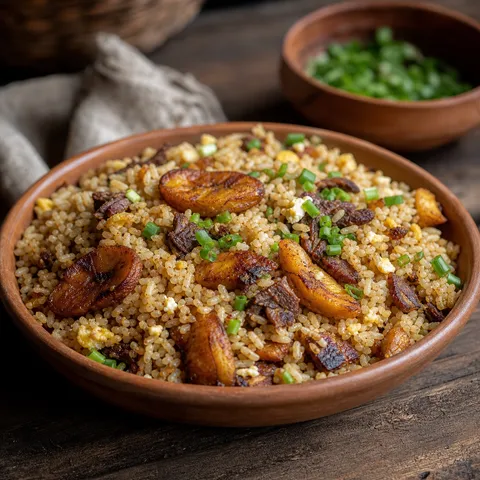
 Majadito
Bolivia's rustic one-pot comfort — dried charque beef simmered down with rice, tomato, and spices into a savory, fragrant dish topped with a fried egg.
 South American Lens Verified Images are for illustrative purposes only, may be inaccurate, and do not guarantee the presence or absence of specific ingredients.
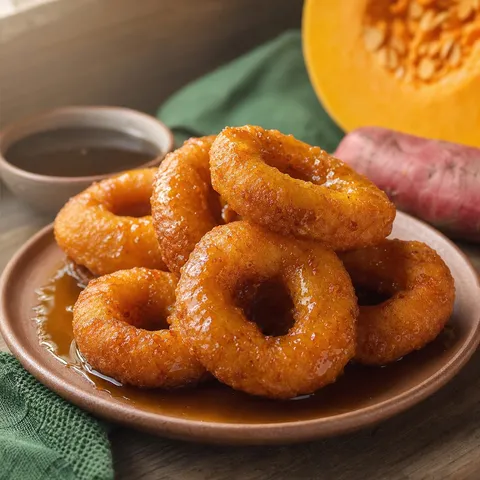
 Picarones
Peru's addictive street doughnuts — rings of sweet potato and butternut squash fried until puffy and golden, then drizzled with warm chancaca spiced syrup.