 Spanish Images are for illustrative purposes only, may be inaccurate, and do not guarantee the presence or absence of specific ingredients.
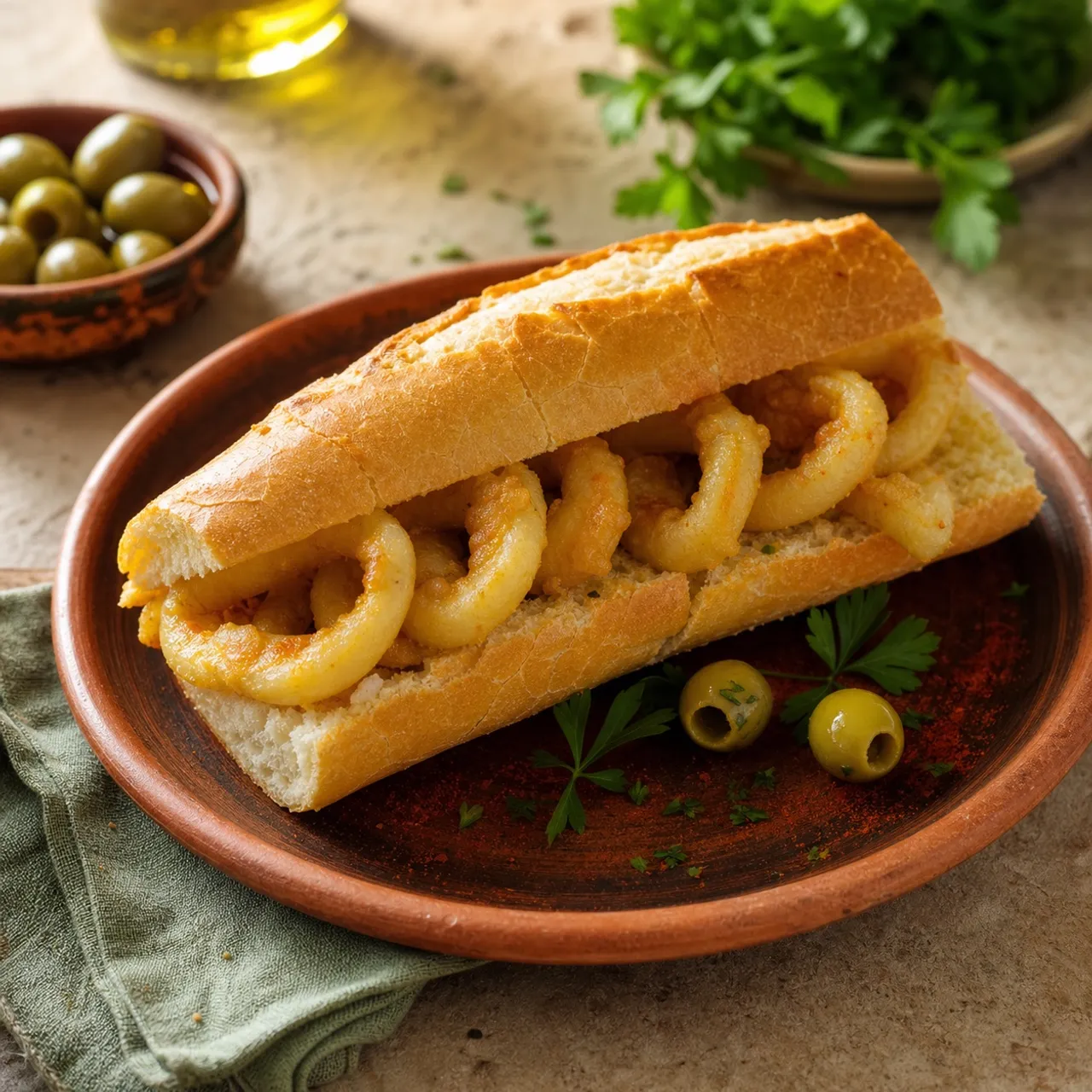
 Bocadillo de Calamares
Madrid's iconic street sandwich stuffing a crusty roll with crispy fried squid rings and a squeeze of lemon.
Contains common allergens
In the app, Listahan checks these against your household automatically.
Good to know
- Crispy
- Ready in under 30 minutes
Matched from this dish's own ingredients and timing. Browse more: crispy recipes30-minute meals
Instructions
5 steps- 1
Pat the squid rings thoroughly dry, season with salt, and dredge them in the flour, shaking off any excess so the coating stays light.
- 2
Heat the vegetable oil in a deep pan to 350°F, then fry the squid in small batches for 1 to 2 minutes until pale golden and crisp, transferring to paper towels to drain.
- 3
While the squid fries, mash the garlic with a pinch of salt and stir into the mayonnaise to make a quick aioli.
- 4
Slice the rolls open and spread a thin layer of aioli inside each.
- 5
Pile the hot fried calamari into the rolls, squeeze fresh lemon over the top, and serve immediately while crisp.
Listahan Family Score™
66/100
Works for many families
Score reflects how well this recipe fits a typical busy household. In the app, your Family Score is personalized to your household's allergens, kids, and pantry.
Nutrition
per serving525
Calories
32 g
Protein
56 g
Carbs
18 g
Fat
Estimated per serving. Actual values depend on the brands and portions you use.
Listahan cooking guide
Chef notes & practical guide
Technique notes, ingredient swaps, serve-alongside ideas, storage guidance, and equipment for this recipe.
Cultural context
Bocadillo de calamares is closely tied to Madrid, especially the bars around Plaza Mayor, even though squid comes from Spain's coasts rather than the inland capital. The sandwich works because it is direct: hot fried squid, crusty bread, lemon, and sometimes a thin swipe of aioli or mayonnaise.
Listahan note
This version keeps the sandwich practical for a home kitchen by using cleaned squid, a simple flour dredge, and a quick garlic mayonnaise. The priority is crisp squid that goes into the bread immediately, before the coating softens.
Technique cues
- Dry squid is the difference between crisp rings and a gummy coating. Press the pieces well with towels before flouring, especially if they were thawed.
- Fry in small batches so the oil temperature stays steady. If too much squid goes in at once, the rings steam before they crisp.
- Keep the aioli layer thin. The sandwich should taste like fried squid and lemon first, with garlic mayonnaise in the background.
Kitchen flow
- Parallel prep
- Make the garlic mayonnaise and split the rolls while the oil heats, then dredge the squid right before frying.
- Make-ahead
- The garlic mayonnaise can be mixed earlier and chilled, but fry the squid just before serving.
- Leftover move
- Chop leftover calamari and tuck it into toasted bread with fresh lemon and a little extra mayonnaise.
- Cleanup rhythm
- Keep a paper-towel-lined plate beside the stove, then let the oil cool fully before straining or discarding it.
Ingredient brief
Role, handling, and swap guidance for each key ingredient.
Cleaned squid, cut into 1/2-inch rings
Main filling
Purpose: Squid cooks very quickly and gives the sandwich its tender, lightly briny center.
Handling: Pat the rings thoroughly dry and keep them evenly sized so they fry at the same pace.
Adaptation: Small squid tentacles can be fried the same way; shrimp changes the sandwich into a sweeter, firmer seafood roll.
All-purpose flour
Light crisp coating
Purpose: A plain flour dredge gives the squid a thin, dry crust without turning the sandwich heavy.
Handling: Shake off excess flour so loose powder does not fall into the oil and burn.
Adaptation: Rice flour makes a lighter, more brittle crust; a half-and-half mix keeps some of the familiar wheat-flour texture.
Crusty bread rolls or baguette sections
Sandwich structure
Purpose: Crusty bread holds up to hot fried squid, lemon juice, and a thin spread without collapsing.
Handling: Split the rolls just before filling and remove a little soft interior if the bread is very dense.
Adaptation: Ciabatta-style rolls work well; very soft sandwich buns make the fried squid feel heavier.
Vegetable oil, for frying
Frying medium
Purpose: A neutral oil lets the squid, bread, lemon, and garlic stay in focus.
Handling: Heat to 350°F and let the oil recover between batches.
Adaptation: Canola or sunflower oil gives a similar clean fry; olive oil brings a stronger flavor and needs closer heat control.
Lemon, cut into wedges
Finishing acid
Purpose: A squeeze of lemon cuts through the fried coating and wakes up the squid.
Handling: Squeeze over the calamari right before serving, not while it sits.
Adaptation: A mild sherry vinegar splash gives a more Spanish bar-style acidity, but use it lightly.
Garlic and mayonnaise
Quick aioli-style spread
Purpose: Garlic mayonnaise adds richness and a little bite without needing a separate sauce.
Handling: Mash the garlic with salt before stirring it into the mayonnaise so it spreads evenly.
Adaptation: Plain mayonnaise keeps the sandwich milder; a little smoked paprika turns the spread warmer and deeper.
Technique notes
- Salt the squid lightly before dredging, but do not let it sit long once salted; moisture will start pulling to the surface.
- Look for pale golden, not dark brown. Squid can turn tough by the time the coating gets deeply colored.
- Build each sandwich as the batches come out of the oil. Waiting to assemble all at once costs you the crisp texture that makes the bocadillo work.
Ingredient swaps
- Gluten-free direction
- Use a gluten-free roll and rice flour or a gluten-free flour blend; the crust will usually be a little lighter and more delicate.
- No-aioli path
- Skip the garlic mayonnaise and lean on lemon only for a cleaner Madrid bar-style sandwich.
- Extra-garlic spread
- Add a second small grated garlic clove to the mayonnaise if you want the sauce sharper, but keep the layer thin.
- Baguette shortcut
- Use one baguette cut into sections instead of individual rolls; warm it briefly so the crust tastes fresh against the hot squid.
Serve alongside
- Patatas bravas
- Pimientos de padron
- Tomato and olive salad
- Spanish tortilla wedges
- Cold cerveza clara
- Sparkling lemon water
- Dry fino sherry
Serving suggestions only — check pairings for your household's allergens.
Storage & reheating
- Refrigerate leftover fried squid and bread separately in sealed containers for up to 1 day.
- Reheat the squid on a rack in a hot oven or air fryer until the coating crisps again, then assemble with fresh lemon.
- Freezing is not ideal for this sandwich because the squid coating softens and the texture turns less tender after thawing.
Equipment
- Deep heavy pan
- Instant-read or frying thermometer
- Spider strainer or slotted spoon
- Paper-towel-lined tray
Make this household-aware
Listahan Pro checks this recipe against your household's allergens, finds pantry-aware swaps, builds the shopping list, and helps you plan the week around it.
Plan it in Listahan
Add Bocadillo de Calamares to your week, check it against your household's allergens, and build the shopping list automatically.
More Spanish recipes
 Spanish Lens Verified Images are for illustrative purposes only, may be inaccurate, and do not guarantee the presence or absence of specific ingredients.
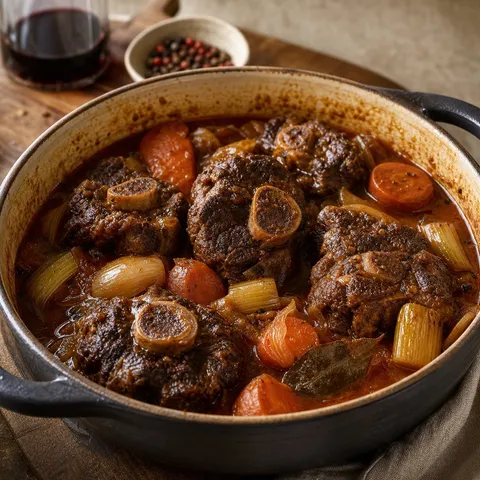
 Rabo de Toro
Oxtail slow-braised for hours with red wine, vegetables, and cloves until the meat falls from the bone in a deeply savoury, velvety Andalusian stew.
 Spanish Lens Verified Images are for illustrative purposes only, may be inaccurate, and do not guarantee the presence or absence of specific ingredients.
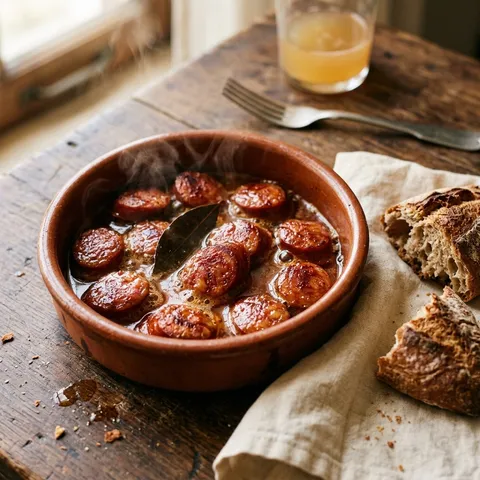
 Chorizo a la Sidra
Sliced Spanish chorizo simmered in dry Asturian cider until the sauce is tangy, smoky, and gloriously red — a quick tapas that pairs beautifully with beer.
 Spanish Lens Verified Images are for illustrative purposes only, may be inaccurate, and do not guarantee the presence or absence of specific ingredients.
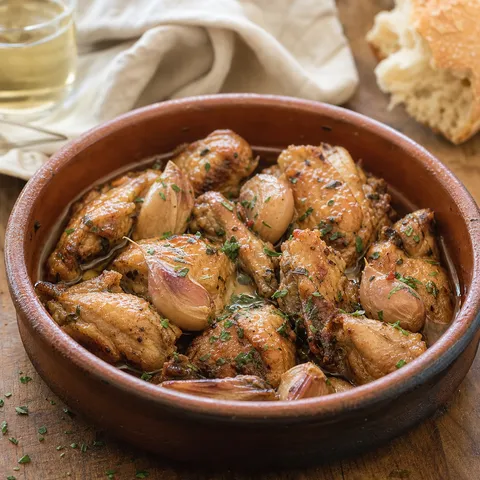
 Pollo al Ajillo
Chicken pieces braised in white wine and a generous amount of garlic until the sauce is sticky, fragrant, and impossible to resist mopping up.