 Spanish Images are for illustrative purposes only, may be inaccurate, and do not guarantee the presence or absence of specific ingredients.
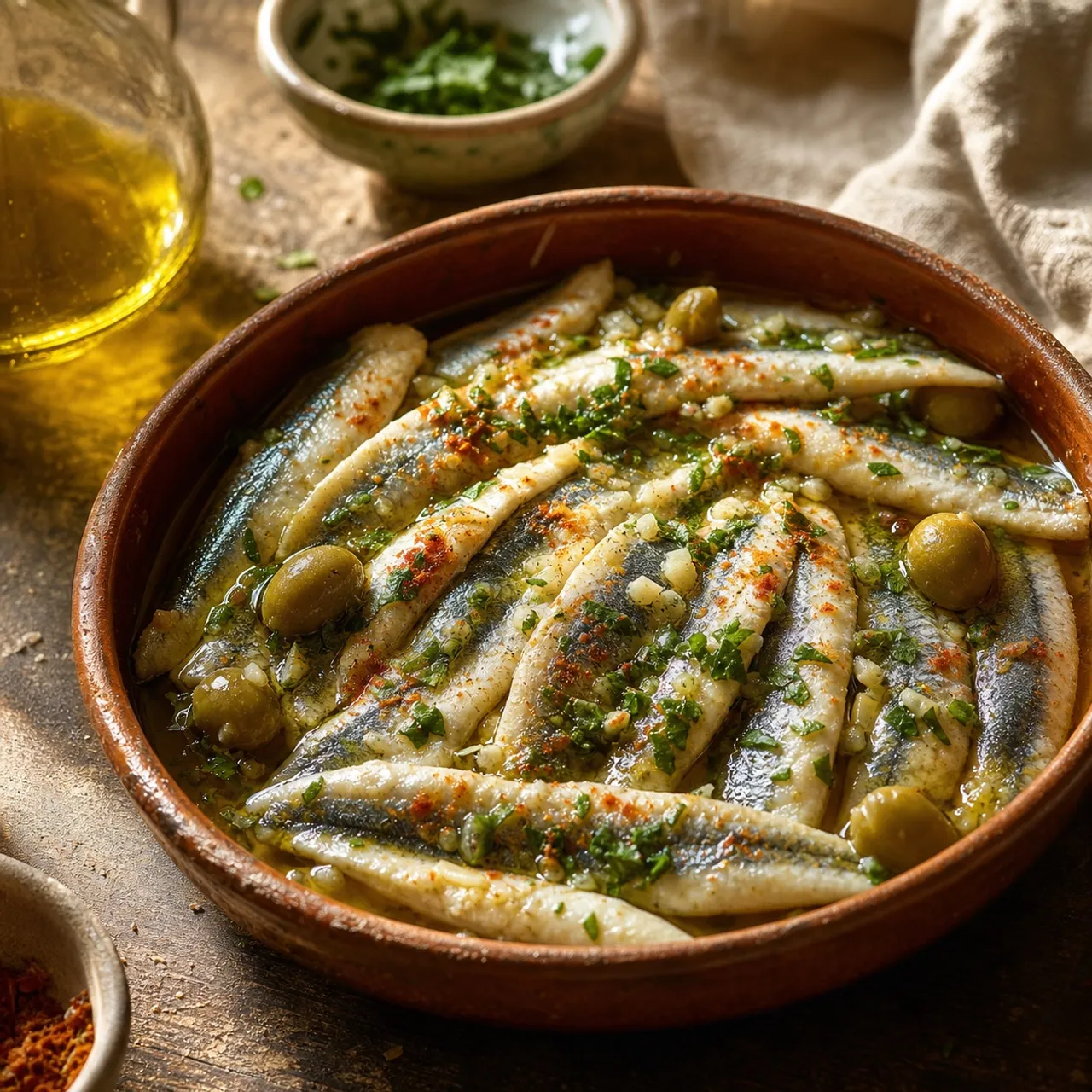
 Boquerones en Vinagre
Fresh anchovy fillets cured in sherry vinegar and dressed with garlic, parsley, and olive oil, a classic tapas-bar staple.
Contains common allergens
In the app, Listahan checks these against your household automatically.
Instructions
5 steps- 1
Rinse the butterflied anchovy fillets under cold water to remove any blood, then pat them dry and arrange skin-side down in a single layer in a shallow dish.
- 2
Sprinkle evenly with the salt and pour over the sherry vinegar until the fillets are just submerged, then cover and refrigerate for 6 to 8 hours until the flesh turns opaque white.
- 3
Drain off the vinegar and gently rinse the cured fillets, then arrange them snugly in a clean serving dish.
- 4
Scatter the minced garlic and chopped parsley evenly over the top.
- 5
Drizzle generously with the olive oil, cover, and chill for at least 1 hour to let the flavors marry before serving cold with crusty bread.
Listahan Family Score™
69/100
Works for many families
Score reflects how well this recipe fits a typical busy household. In the app, your Family Score is personalized to your household's allergens, kids, and pantry.
Nutrition
per serving405
Calories
23 g
Protein
2 g
Carbs
32 g
Fat
Estimated per serving. Actual values depend on the brands and portions you use.
Listahan cooking guide
Chef notes & practical guide
Technique notes, ingredient swaps, serve-alongside ideas, storage guidance, and equipment for this recipe.
Cultural context
Boquerones en vinagre are part of Spain's tapas-bar vocabulary, especially in places where small oily fish are bought very fresh and served simply. The dish uses vinegar to firm and whiten the anchovy flesh, then finishes it with the familiar Spanish trio of garlic, parsley, and olive oil.
Listahan note
This version keeps the work focused on careful curing and a clean finish. The important details are rinsing away any blood, keeping the fillets in one layer, and giving the garlic-parsley oil time to settle into the fish before serving.
Technique cues
- The fillets should turn opaque white after curing; if parts still look translucent, they need more time in the vinegar.
- A shallow dish matters because the anchovies are delicate. Stacking them too deeply can make some fillets cure unevenly and tear when you move them.
- The olive oil is not just a garnish here. It softens the vinegar edge and carries the garlic and parsley across each fillet.
Kitchen flow
- Parallel prep
- While the anchovies cure, mince the garlic, chop the parsley, and slice bread so the final assembly takes only a few minutes.
- Make-ahead
- Cure the anchovies earlier in the day, then dress with garlic, parsley, and olive oil at least 1 hour before serving.
- Leftover move
- Layer leftover fillets on toasted bread with a spoonful of the garlic-parsley oil and sliced tomato.
- Cleanup rhythm
- Rinse the curing dish right after draining the vinegar, then use a clean serving dish for the olive oil finish.
Ingredient brief
Role, handling, and swap guidance for each key ingredient.
Fresh anchovies
Main fish
Purpose: Small fresh anchovies have tender flesh and a clean briny flavor that suits a cold vinegar cure.
Handling: Rinse gently under cold water, remove any visible blood, and pat dry before curing so the finished fillets look clean.
Adaptation: Fresh sardine fillets can be prepared in a similar style, but they are larger, richer, and need more careful trimming.
Sherry vinegar
Curing acid
Purpose: Sherry vinegar gives the anchovies their firm texture, pale color, and rounded Spanish pantry flavor.
Handling: Pour in just enough to submerge the fillets so they cure evenly without floating around loosely.
Adaptation: White wine vinegar gives a cleaner, sharper result; avoid very sweet vinegars because they can make the dish taste flat.
Garlic
Sharp aromatic
Purpose: Minced garlic gives the finished oil its bite and keeps the cold dish from tasting one-dimensional.
Handling: Mince finely so the garlic spreads evenly instead of landing in harsh chunks.
Adaptation: Thinly sliced garlic gives a milder, easier-to-pick-around finish.
Fresh parsley
Fresh herbal finish
Purpose: Parsley brightens the oily fish and vinegar without competing with the anchovy flavor.
Handling: Chop it finely and add it after draining the vinegar so it stays green and fresh-tasting.
Adaptation: A small amount of fresh chives changes the profile to oniony and softer, but parsley is the classic finish.
Extra-virgin olive oil
Finishing fat
Purpose: Olive oil rounds the acidity and gives the fillets the glossy tapas-bar look.
Handling: Drizzle generously enough to coat the anchovies and pool lightly in the dish.
Adaptation: A milder olive oil works if your extra-virgin oil is very peppery, but neutral oils make the dish taste thinner.
Technique notes
- Use a glass, ceramic, or stainless-steel dish for the vinegar cure; reactive metal can give the fish an off taste.
- Handle the cured fillets with your fingers or a small offset spatula rather than tongs, which can tear the flesh.
- Taste the oil around the fish before serving. If it tastes too sharp, add another drizzle of olive oil rather than more salt.
Ingredient swaps
- Softer vinegar path
- Use part sherry vinegar and part white wine vinegar for a slightly lighter cure while keeping the Spanish character.
- Milder garlic finish
- Slice the garlic instead of mincing it, then remove the slices before serving if you want the aroma without a strong raw bite.
- Bread service
- Serve with toasted baguette, pan de cristal, or plain crackers; the point is a crisp base that can catch the oil.
Serve alongside
- Pan con tomate
- Tortilla espanola
- Piquillo peppers with olive oil
- Marinated olives
- Fino sherry
- Spanish lager
- Sparkling water with lemon
Serving suggestions only — check pairings for your household's allergens.
Storage & reheating
- Keep refrigerated in a sealed container with the fillets covered by the seasoned olive oil for up to 2 days.
- Do not reheat; serve cold or let the dish stand briefly at cool room temperature so the olive oil loosens.
- Freezing is not useful after curing and dressing because the fillets become softer when thawed.
Equipment
- Shallow glass or ceramic dish
- Fine cutting board and sharp knife
- Small offset spatula
- Clean serving dish
Make this household-aware
Listahan Pro checks this recipe against your household's allergens, finds pantry-aware swaps, builds the shopping list, and helps you plan the week around it.
Plan it in Listahan
Add Boquerones en Vinagre to your week, check it against your household's allergens, and build the shopping list automatically.
More Spanish recipes
 Spanish Lens Verified Images are for illustrative purposes only, may be inaccurate, and do not guarantee the presence or absence of specific ingredients.
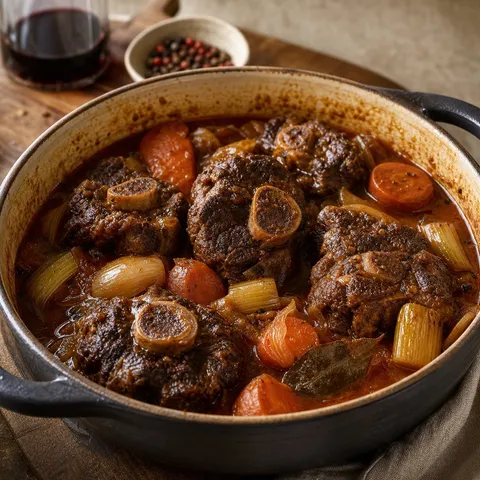
 Rabo de Toro
Oxtail slow-braised for hours with red wine, vegetables, and cloves until the meat falls from the bone in a deeply savoury, velvety Andalusian stew.
 Spanish Lens Verified Images are for illustrative purposes only, may be inaccurate, and do not guarantee the presence or absence of specific ingredients.
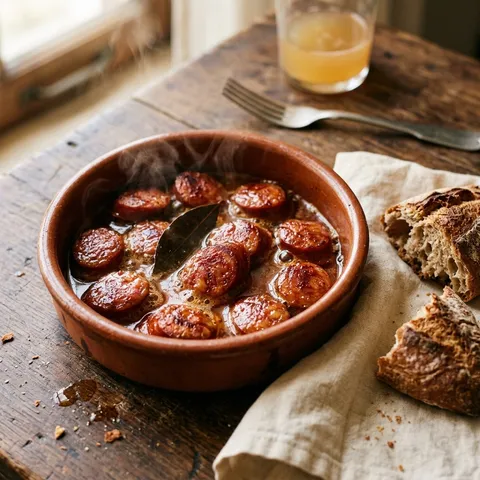
 Chorizo a la Sidra
Sliced Spanish chorizo simmered in dry Asturian cider until the sauce is tangy, smoky, and gloriously red — a quick tapas that pairs beautifully with beer.
 Spanish Lens Verified Images are for illustrative purposes only, may be inaccurate, and do not guarantee the presence or absence of specific ingredients.
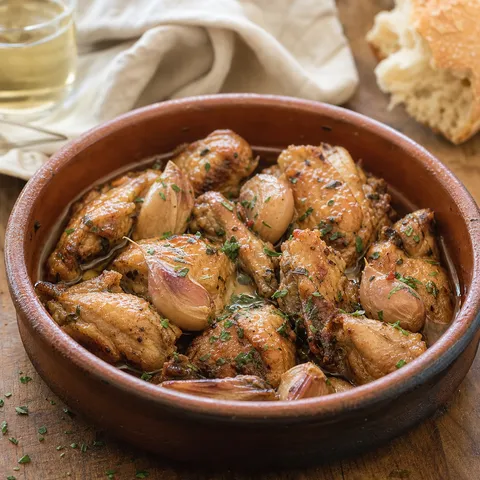
 Pollo al Ajillo
Chicken pieces braised in white wine and a generous amount of garlic until the sauce is sticky, fragrant, and impossible to resist mopping up.