 Spanish Images are for illustrative purposes only, may be inaccurate, and do not guarantee the presence or absence of specific ingredients.
  Serving Images are for illustrative purposes only, may be inaccurate, and do not guarantee the presence or absence of specific ingredients.
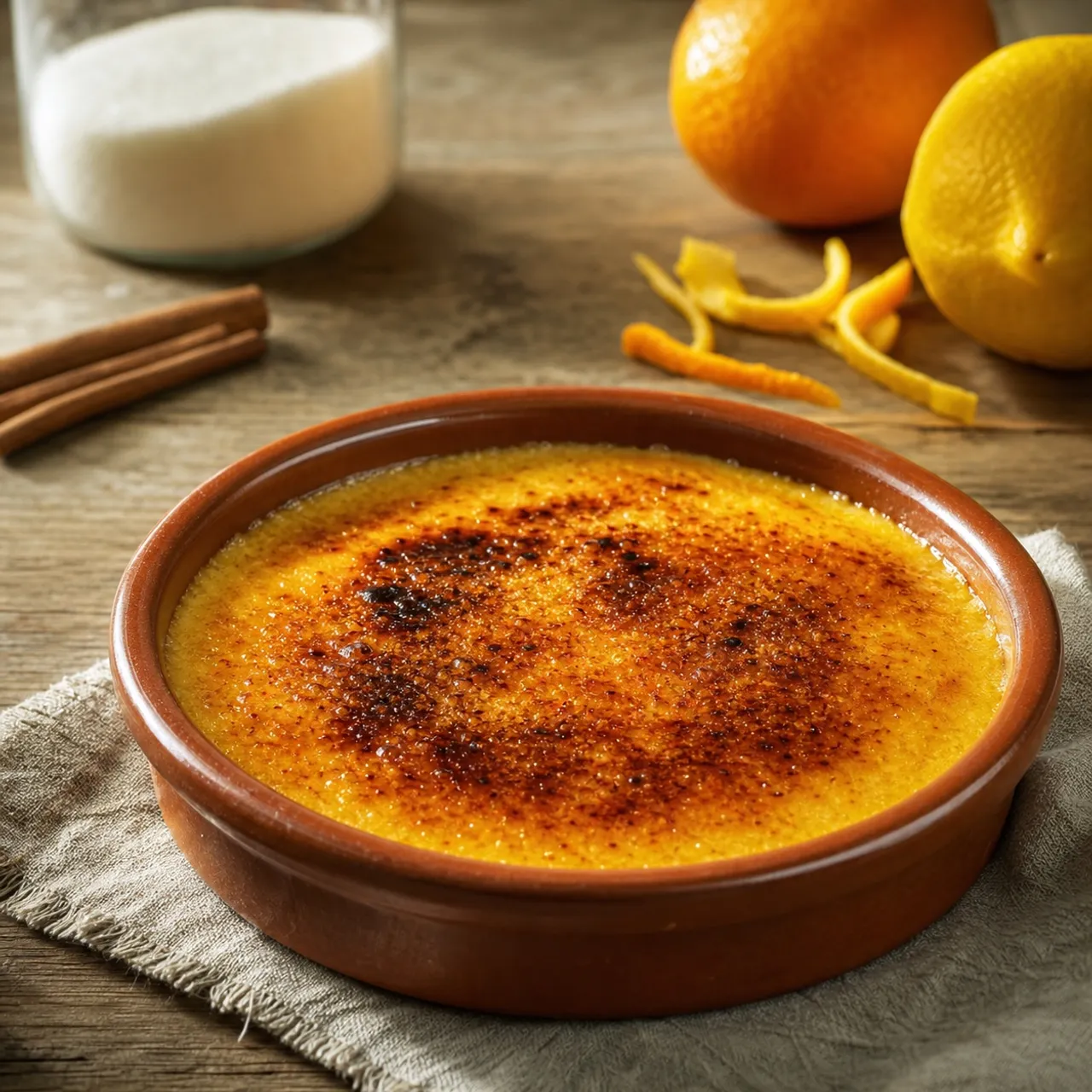
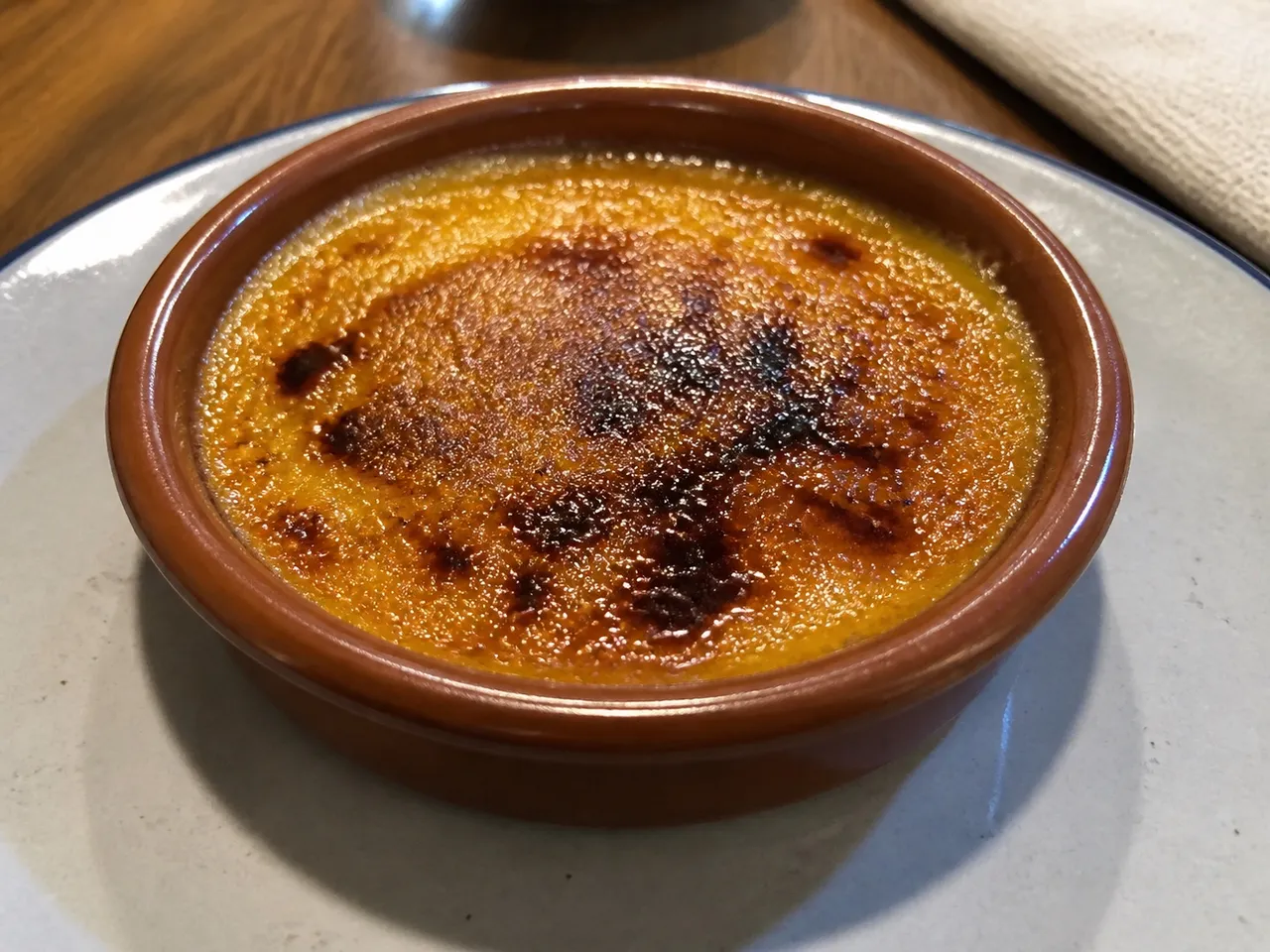
 Crema Catalana
Silky custard scented with citrus zest and cinnamon, finished with a crackly caramelised sugar crust — Catalonia's answer to crème brûlée.
Contains common allergens
In the app, Listahan checks these against your household automatically.
Good to know
- Crispy
Matched from this dish's own ingredients and timing. Browse more: crispy recipes
Instructions
6 steps- 1
Infuse the Milk: In a medium saucepan, combine 400ml of the milk, the cinnamon stick, and the lemon and orange zests. Heat over medium until it just reaches a simmer, then remove from heat. Cover and let it infuse for 20 minutes.
- 2
Prepare the Slurry: In a small bowl, whisk the cornstarch into the remaining 100ml of cold milk until completely smooth.
- 3
Whisk the Yolks: In a separate large bowl, vigorously whisk the egg yolks and 100g of sugar until the mixture becomes pale yellow and slightly thickened. Whisk in the cornstarch slurry.
- 4
Temper and Thicken: Strain the infused milk, discarding the aromatics. Slowly stream the warm milk into the egg yolk mixture while whisking constantly to temper the eggs. Pour the entire mixture back into the saucepan.
- 5
Cook the Custard: Cook over medium-low heat, stirring constantly with a wooden spoon or spatula, making sure to scrape the bottom. Cook for 5-8 minutes until the custard thickens enough to coat the back of the spoon. Do not let it boil.
- 6
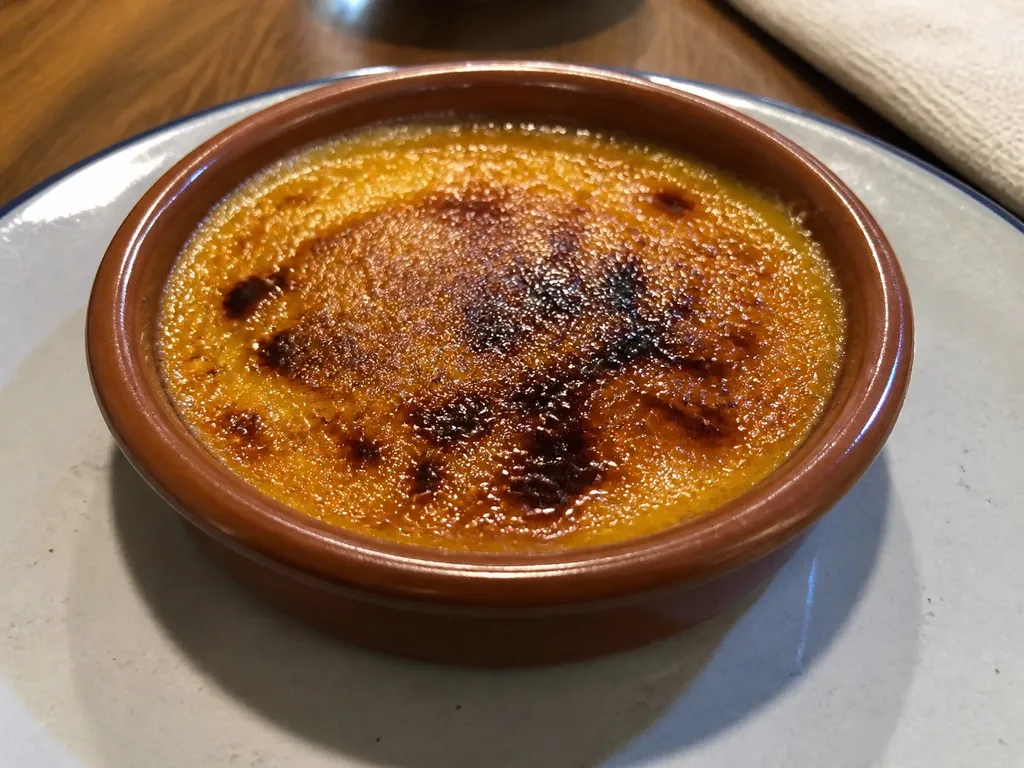
Chill and Caramelize: Pour the custard through a fine-mesh sieve into shallow clay ramekins. Cover with plastic wrap directly touching the surface and chill for at least 4 hours. Just before serving, sprinkle an even layer of granulated sugar over each ramekin and use a culinary torch to melt it into a dark, crispy caramel crust.
 Images are for illustrative purposes only, may be inaccurate, and do not guarantee the presence or absence of specific ingredients.
 Listahan Family Score™
68/100
Works for many families
Score reflects how well this recipe fits a typical busy household. In the app, your Family Score is personalized to your household's allergens, kids, and pantry.
Nutrition
per serving125
Calories
3 g
Protein
18 g
Carbs
4 g
Fat
Estimated per serving. Actual values depend on the brands and portions you use.
Listahan cooking guide
Chef notes & practical guide
Technique notes, ingredient swaps, serve-alongside ideas, storage guidance, and equipment for this recipe.
Cultural context
Crema Catalana is Catalonia's centuries-old custard dessert, often cited as a forerunner of crème brûlée, and traditionally served on Saint Joseph's Day in March. Unlike the French version, it's thickened with a little cornstarch and cooked on the stovetop rather than baked in a water bath, and it's infused with citrus zest and cinnamon rather than vanilla.
Listahan note
This version infuses the milk with cinnamon and strips of lemon and orange zest, then thickens the custard on the stovetop so it sets without baking — the defining Catalan technique.
Technique cues
- Cook the custard over medium-low heat and never let it boil, stirring constantly and scraping the bottom, or the egg yolks will scramble instead of thickening smoothly.
- Peel the citrus zest in wide strips with no white pith, which would turn the custard bitter, and pull them out before thickening.
- Caramelize the sugar top only just before serving — the crackly crust softens within an hour, so a torched-ahead crema goes soggy.
Kitchen flow
- Parallel prep
- Infuse the milk first, then whisk the yolks and dissolve the cornstarch while it steeps so everything is ready to combine.
- Make-ahead
- The custard needs at least 4 hours to chill and set, so make it the day before and torch the sugar tops just before serving.
- Leftover move
- Leftover custard (un-torched) makes an excellent filling for tarts or layered with fruit.
- Cleanup rhythm
- Soak the custard pan in warm water right away — cooked-on custard is much harder to scrub once it dries.
Ingredient brief
Role, handling, and swap guidance for each key ingredient.
Whole milk
custard base
Purpose: Catalan crema uses milk rather than the heavy cream of crème brûlée, giving a lighter custard with a cleaner finish.
Handling: Infuse most of it with the aromatics, reserving a little cold milk to dissolve the cornstarch.
Adaptation: A mix of milk and a splash of cream makes a richer custard closer to crème brûlée.
Egg yolks
thickener and richness
Purpose: The yolks enrich the custard and, with the cornstarch, set it to a spoonable cream.
Handling: Whisk with sugar until pale, then temper slowly with the hot milk so they do not curdle.
Adaptation: There is no good substitute here; the yolks are essential to the texture.
Cornstarch
stabilizing thickener
Purpose: A small amount of cornstarch lets the custard thicken on the stovetop and set firmly without baking.
Handling: Whisk it into cold milk first so it disperses without lumps before it hits the heat.
Adaptation: Rice flour works similarly if cornstarch is unavailable.
Cinnamon stick and citrus zest
aromatics
Purpose: Cinnamon plus lemon and orange zest is the signature Catalan flavor profile, distinct from the French vanilla.
Handling: Steep them in the warm milk and strain them out before combining with the yolks.
Adaptation: A vanilla bean can be added alongside, though it shifts the dessert toward crème brûlée.
Granulated sugar
sweetener and brûlée crust
Purpose: Sugar sweetens the custard and forms the crackly torched crust on top.
Handling: Sprinkle a thin, even layer for the top and torch just before serving.
Adaptation: A fine-grain caster sugar melts most evenly for the crust.
Technique notes
- Strain the custard through a fine sieve as you pour it into the ramekins to catch any bits of cooked egg for a perfectly silky texture.
- Press plastic wrap directly onto the custard surface while it chills to stop a skin from forming.
- If you don't have a torch, a broiler can caramelize the sugar, but watch it constantly and chill the custard well first so it doesn't warm through.
Ingredient swaps
- Citrus-forward direction
- Add a strip of lime zest alongside the lemon and orange for a brighter, more tropical aroma.
- Make-ahead party direction
- Prepare the custards up to 2 days ahead and torch all the tops just before guests arrive.
- No-torch direction
- Skip the brûlée crust entirely and serve as a soft cinnamon-citrus custard with a cookie on the side.
Serve alongside
- Crisp almond cookies
- Fresh berries
- Cava
- Moscatel dessert wine
- Espresso
Serving suggestions only — check pairings for your household's allergens.
Storage & reheating
- Refrigerate the un-torched custards covered up to 3 days.
- Caramelize the sugar tops only just before serving, since the crust softens within an hour.
- Do not freeze — the custard turns grainy and weeps on thawing.
Equipment
- Heavy saucepan
- Fine-mesh sieve
- Shallow ramekins
- Kitchen torch
Make this household-aware
Listahan Pro checks this recipe against your household's allergens, finds pantry-aware swaps, builds the shopping list, and helps you plan the week around it.
Plan it in Listahan
Add Crema Catalana to your week, check it against your household's allergens, and build the shopping list automatically.
More Spanish recipes
 Spanish Lens Verified Images are for illustrative purposes only, may be inaccurate, and do not guarantee the presence or absence of specific ingredients.
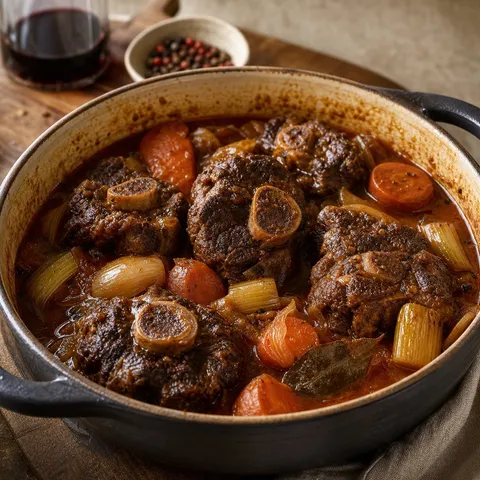
 Rabo de Toro
Oxtail slow-braised for hours with red wine, vegetables, and cloves until the meat falls from the bone in a deeply savoury, velvety Andalusian stew.
 Spanish Lens Verified Images are for illustrative purposes only, may be inaccurate, and do not guarantee the presence or absence of specific ingredients.
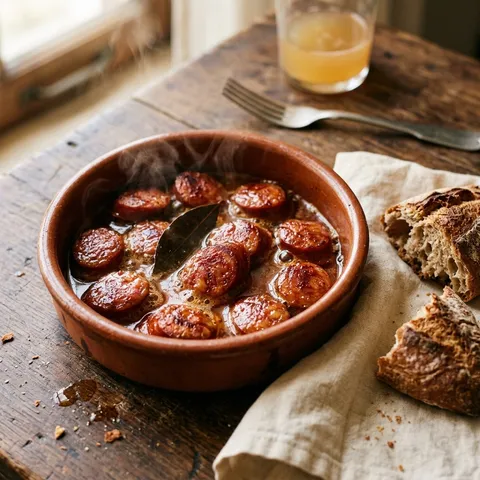
 Chorizo a la Sidra
Sliced Spanish chorizo simmered in dry Asturian cider until the sauce is tangy, smoky, and gloriously red — a quick tapas that pairs beautifully with beer.
 Spanish Lens Verified Images are for illustrative purposes only, may be inaccurate, and do not guarantee the presence or absence of specific ingredients.
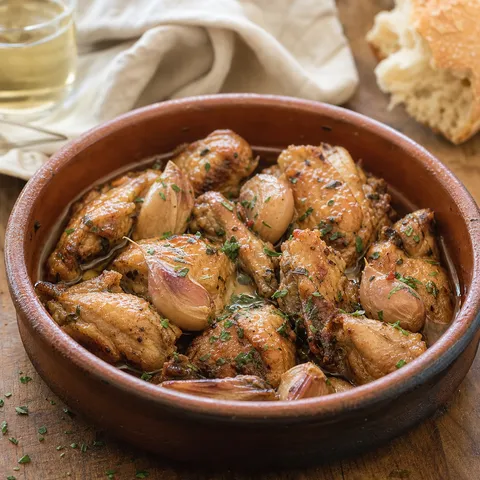
 Pollo al Ajillo
Chicken pieces braised in white wine and a generous amount of garlic until the sauce is sticky, fragrant, and impossible to resist mopping up.