 Spanish Images are for illustrative purposes only, may be inaccurate, and do not guarantee the presence or absence of specific ingredients.
  Serving Images are for illustrative purposes only, may be inaccurate, and do not guarantee the presence or absence of specific ingredients.
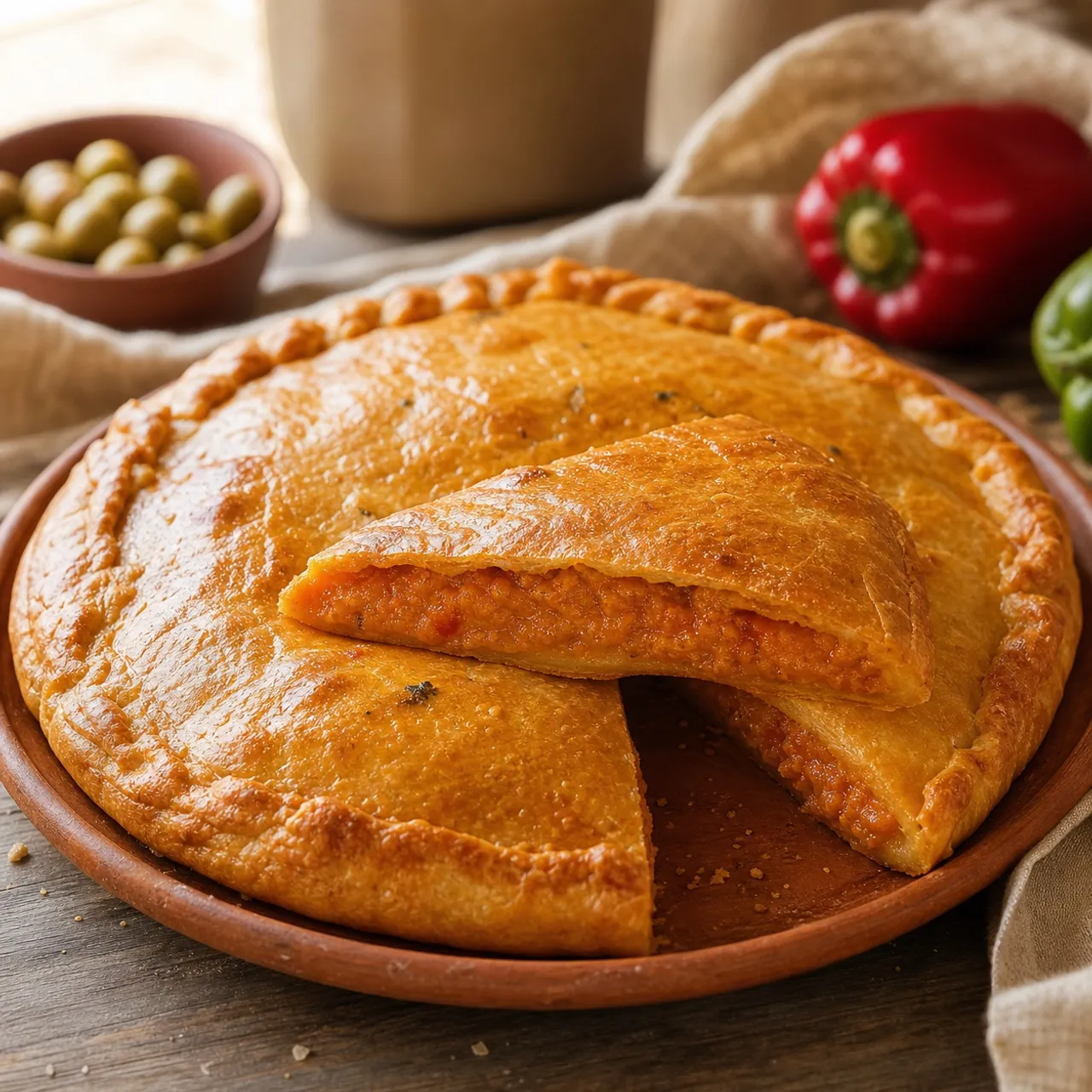
 Empanada Gallega
Golden, flaky pastry folded around a slow-cooked filling of tuna, peppers, and onion — Galicia's beloved savoury pie, ideal for sharing.
Contains common allergens
In the app, Listahan checks these against your household automatically.
Good to know
- Crispy
Matched from this dish's own ingredients and timing. Browse more: crispy recipes
Instructions
6 steps- 1
Cook the Sofrito (Filling): Heat the reserved oil from the tuna in a large skillet over medium-low heat. Add the onions and bell peppers, cooking slowly for 20 minutes until very soft and sweet.
- 2
Finish the Filling: Stir in the smoked paprika and cook for 30 seconds. Add the tomato puree and simmer for 10 minutes until the liquid evaporates. Remove from heat, fold in the drained tuna, and let the mixture cool completely.
- 3
Prepare the Dough: In a large bowl, dissolve the yeast in the warm water. Mix in the 150ml of olive oil (use extra if the tuna didn't yield enough). Gradually add the flour and salt, kneading for 5-8 minutes until smooth and elastic. Let it rest covered for 30 minutes.
- 4
Assemble the Pie: Preheat the oven to 190°C (375°F). Divide the dough in two. Roll out one half on parchment paper to fit a rectangular baking tray. Spread the cooled tuna filling evenly over the base, leaving a 1-inch border.
- 5
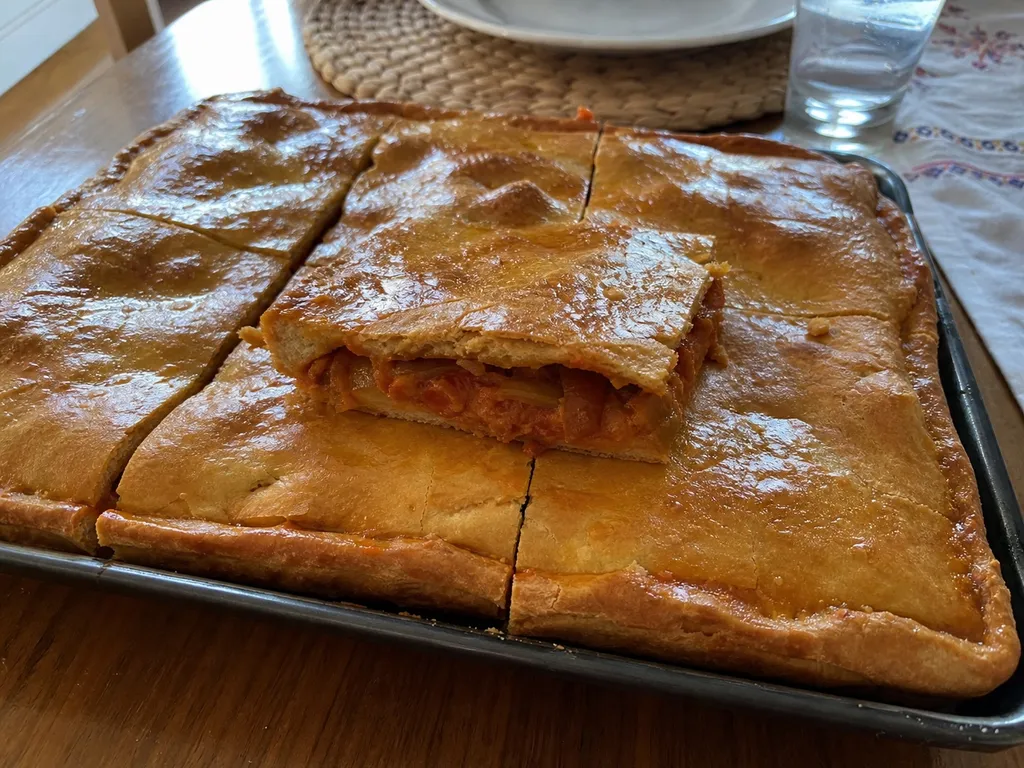
Seal and Glaze: Roll out the second half of the dough and place it over the filling. Fold and crimp the edges tightly to seal (repulgue). Poke a small hole in the center to allow steam to escape. Brush the top generously with the beaten egg.
- 6
Bake: Bake for 35-40 minutes until the crust is deep golden brown and crisp. Serve warm or at room temperature.
 Images are for illustrative purposes only, may be inaccurate, and do not guarantee the presence or absence of specific ingredients.
 Listahan Family Score™
62/100
Works for many families
Score reflects how well this recipe fits a typical busy household. In the app, your Family Score is personalized to your household's allergens, kids, and pantry.
Nutrition
per serving80
Calories
4 g
Protein
13 g
Carbs
2 g
Fat
Estimated per serving. Actual values depend on the brands and portions you use.
Listahan cooking guide
Chef notes & practical guide
Technique notes, ingredient swaps, serve-alongside ideas, storage guidance, and equipment for this recipe.
Cultural context
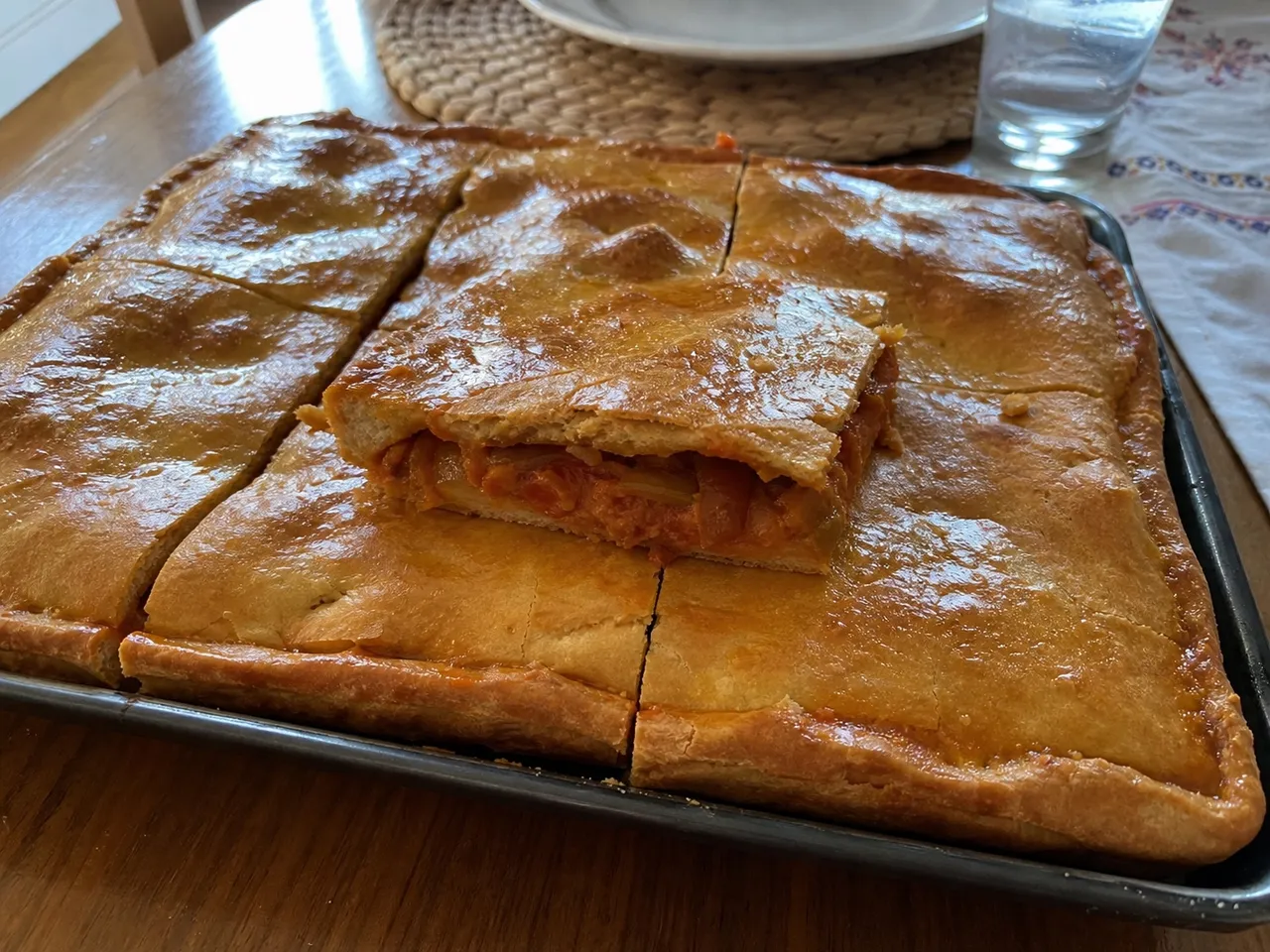
The empanada gallega is the large, flat, pie-style empanada of Galicia, baked in a sheet pan and cut into squares rather than the small individual turnovers found elsewhere. Its defining feature is a slow-cooked onion and pepper sofrito layered between two sheets of yeasted dough, classically filled with tuna or with pork. Galicians have made it for centuries, and it travels well, making it a fixture at picnics and festivals.
Listahan note
This version builds a deeply caramelized sofrito as the flavor base and uses an enriched yeasted dough that bakes up sturdy enough to slice yet tender to eat.
Technique cues
- Cook the onion and pepper sofrito low and slow until jammy; this base carries the whole empanada and should never be rushed.
- Drain the filling well before assembling, since a wet filling will steam the bottom crust into a soggy layer.
- Brush the top with beaten egg and cut a vent hole in the center so steam escapes and the crust bakes evenly golden.
Kitchen flow
- Parallel prep
- Start the dough rising first, then cook the sofrito while it proves so both are ready to assemble together.
- Make-ahead
- The sofrito can be made a day or two ahead and chilled; a fully baked empanada also reheats well the next day.
- Leftover move
- Pack cold empanada squares for lunch or a picnic, exactly as Galicians do; it is excellent at room temperature.
- Cleanup rhythm
- Line the pan with parchment so the empanada lifts out clean, leaving little more than a wipe-down.
Ingredient brief
Role, handling, and swap guidance for each key ingredient.
Yeasted dough
the structure
Purpose: A sturdy enriched dough holds the filling and bakes into a sliceable, golden crust top and bottom.
Handling: Let it rise until doubled, then roll thin so both layers cook through.
Adaptation: Store-bought pizza dough or pie pastry works in a pinch for a quicker version.
Onions
the sofrito base
Purpose: Slow-cooked onions form the sweet, jammy foundation that defines the Galician empanada.
Handling: Slice thin and cook gently for a long time until deeply soft and golden.
Adaptation: No substitute; the caramelized onion is essential to the flavor.
Bell peppers
sweetness and body
Purpose: Peppers add sweetness and substance to the sofrito alongside the onion.
Handling: Cut into strips and cook down with the onion until completely soft.
Adaptation: Roasted piquillo peppers add a sweeter, smokier depth.
Tuna
the classic filling protein
Purpose: Canned tuna is the traditional Galician filling, flaking into the sofrito.
Handling: Drain it well and fold it through the cooled sofrito before assembling.
Adaptation: Shredded cooked pork or chicken makes a meaty alternative; both are traditional.
Smoked paprika
depth and color
Purpose: Pimenton ties the sofrito together with its smoky, earthy warmth.
Handling: Stir it into the sofrito off the heat so it blooms without scorching.
Adaptation: Sweet paprika works for a milder, less smoky filling.
Technique notes
- Cool the sofrito completely before assembling so it does not melt the dough or make it slack.
- Seal and crimp the edges firmly so the juices stay inside and the empanada holds together when sliced.
- Bake until the top is deep golden, not just set; an under-baked crust will be pale and doughy.
Ingredient swaps
- Gluten-free direction
- Use a gluten-free pastry or dough; roll it between parchment since it can be more delicate.
- Vegetarian direction
- Skip the tuna and fill with the sofrito plus roasted vegetables, olives, or hard-boiled egg.
- Dairy-free option
- The dough and filling are naturally dairy-free; use water or oil in the dough rather than butter.
Serve alongside
- Simple green salad
- Pulpo a la gallega
- Mixed olives
- Pimientos de Padron
- Crisp Albarino from Galicia
- Light Spanish red
- Asturian sidra
Serving suggestions only — check pairings for your household's allergens.
Storage & reheating
- Keep at room temperature for a day or refrigerate for up to three days; it is delicious cold or gently reheated. Warm in a low oven to re-crisp the crust rather than microwaving, which softens it. Baked empanada freezes well; thaw and reheat in the oven.
Equipment
- Sheet pan or shallow baking tray
- Rolling pin
- Wide skillet for the sofrito
- Pastry brush for the egg wash
Make this household-aware
Listahan Pro checks this recipe against your household's allergens, finds pantry-aware swaps, builds the shopping list, and helps you plan the week around it.
Plan it in Listahan
Add Empanada Gallega to your week, check it against your household's allergens, and build the shopping list automatically.
More Spanish recipes
 Spanish Lens Verified Images are for illustrative purposes only, may be inaccurate, and do not guarantee the presence or absence of specific ingredients.
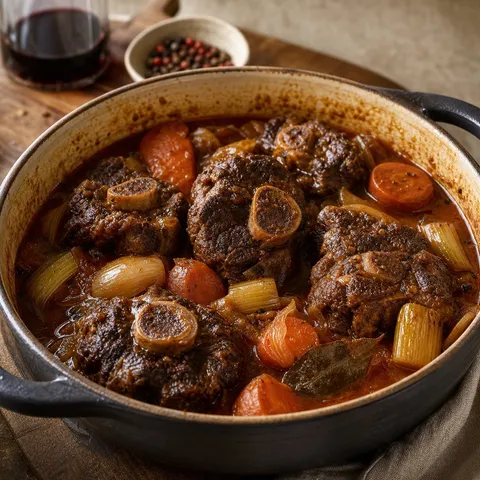
 Rabo de Toro
Oxtail slow-braised for hours with red wine, vegetables, and cloves until the meat falls from the bone in a deeply savoury, velvety Andalusian stew.
 Spanish Lens Verified Images are for illustrative purposes only, may be inaccurate, and do not guarantee the presence or absence of specific ingredients.
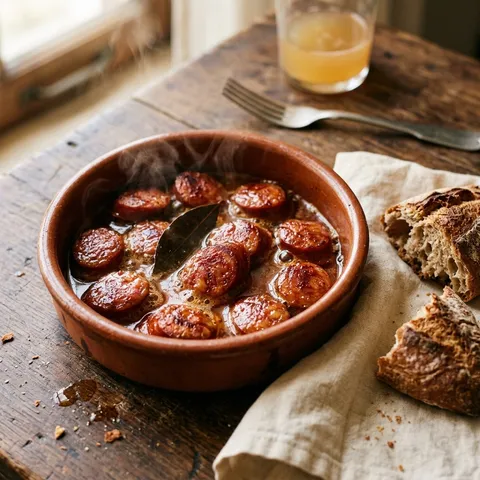
 Chorizo a la Sidra
Sliced Spanish chorizo simmered in dry Asturian cider until the sauce is tangy, smoky, and gloriously red — a quick tapas that pairs beautifully with beer.
 Spanish Lens Verified Images are for illustrative purposes only, may be inaccurate, and do not guarantee the presence or absence of specific ingredients.
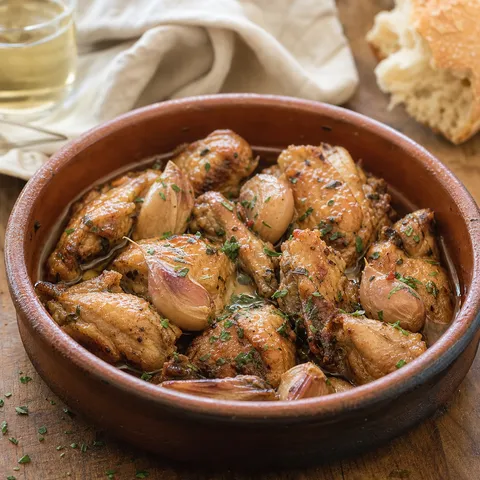
 Pollo al Ajillo
Chicken pieces braised in white wine and a generous amount of garlic until the sauce is sticky, fragrant, and impossible to resist mopping up.