 Spanish Images are for illustrative purposes only, may be inaccurate, and do not guarantee the presence or absence of specific ingredients.
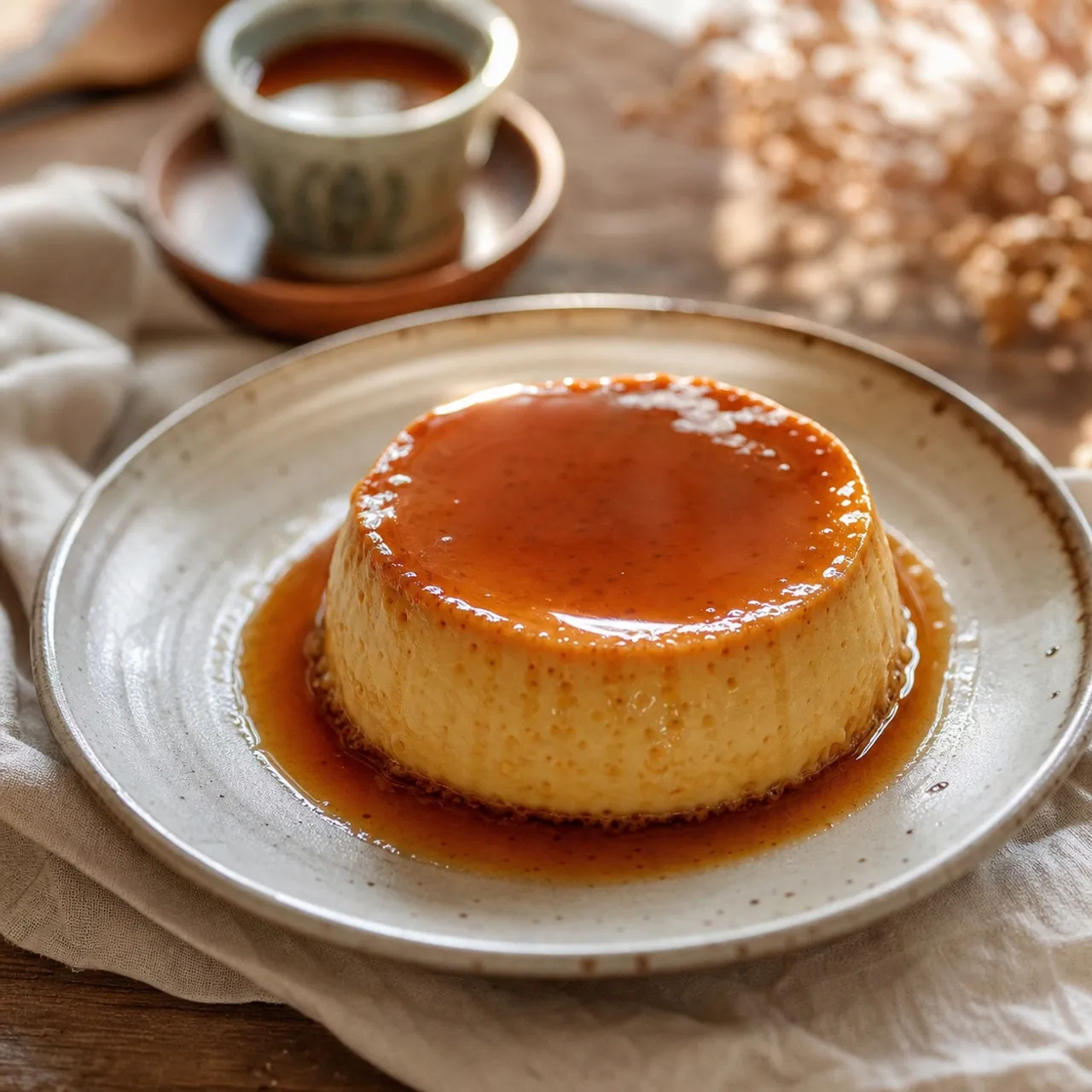
 Flan de Huevo
A silky baked egg custard crowned with a glossy layer of amber caramel, Spain's most beloved dessert.
Contains common allergens
In the app, Listahan checks these against your household automatically.
Instructions
6 steps- 1
Preheat the oven to 350°F and place 1/2 cup sugar in a dry saucepan over medium heat, swirling (not stirring) until it melts into a deep amber caramel, about 6 to 8 minutes.
- 2
Immediately pour the caramel into a 9-inch round flan mold or 6 ramekins, tilting quickly to coat the bottoms before it hardens.
- 3
In a bowl, whisk the eggs, remaining 1/2 cup sugar, vanilla, and salt until smooth, then gradually whisk in the milk until fully blended and strain through a fine sieve to remove any foam.
- 4
Pour the custard over the set caramel, then place the mold in a deep baking pan and add hot water to come halfway up the sides, creating a water bath.
- 5
Bake for 45 to 55 minutes until the custard is just set but still slightly jiggly in the center, then remove and cool to room temperature.
- 6
Chill for at least 4 hours, then run a knife around the edge and invert onto a plate so the caramel cascades over the top.
Listahan Family Score™
80/100
Good fit for most families
Score reflects how well this recipe fits a typical busy household. In the app, your Family Score is personalized to your household's allergens, kids, and pantry.
Nutrition
per serving170
Calories
5 g
Protein
28 g
Carbs
4 g
Fat
Estimated per serving. Actual values depend on the brands and portions you use.
Listahan cooking guide
Chef notes & practical guide
Technique notes, ingredient swaps, serve-alongside ideas, storage guidance, and equipment for this recipe.
Cultural context
Flan de huevo sits in the Spanish family of baked custards, the kind of dessert often made ahead for Sunday lunch, holidays, or a restaurant menu del dia. Its appeal is practical as much as nostalgic: eggs, milk, and sugar become a clean, sliceable custard, while the caramel makes its own sauce when the mold is turned out.
Listahan note
This version keeps the ingredient list spare and puts the focus on texture: a smooth strained custard, a gentle water bath, and enough chilling time for the caramel to loosen. It is the kind of dessert that rewards patience more than fuss.
Technique cues
- Caramel moves quickly once the sugar melts, so have the mold or ramekins ready before the pan goes on the heat.
- Straining the custard matters here. It catches thick bits of egg and foam so the finished flan cuts cleanly instead of looking spongy.
- A slight jiggle in the center is the right stopping point. The custard keeps setting as it cools, and overbaking gives it tiny bubbles and a firmer bite.
Kitchen flow
- Parallel prep
- Set out the baking pan, mold, sieve, and kettle of hot water before making the caramel; once the caramel is ready, there is no pause button.
- Make-ahead
- Bake and chill the flan the day before serving so the custard firms fully and the caramel has time to become sauce.
- Leftover move
- Spoon leftover flan into small bowls with extra caramel from the plate and serve it cold, almost like a soft custard cup.
- Cleanup rhythm
- Fill the caramel saucepan with hot water right after pouring; by the time the flan is in the oven, the hardened sugar will loosen.
Ingredient brief
Role, handling, and swap guidance for each key ingredient.
Granulated sugar
Caramel and sweetness
Purpose: The first portion becomes the amber sauce, while the second sweetens the custard without adding another flavor.
Handling: Melt the caramel sugar in a dry pan and swirl the pan instead of stirring once it starts liquefying.
Adaptation: Light brown sugar can make a deeper, more molasses-like caramel, but it is a little harder to judge by color.
Large eggs
Custard structure
Purpose: Eggs set the milk into a sliceable custard while keeping the texture soft when baked gently.
Handling: Whisk until smooth, but avoid beating in lots of air before adding the milk.
Adaptation: Extra yolks can make the custard richer, but they also make the dessert denser and more egg-forward.
Whole milk
Custard base
Purpose: Whole milk gives the flan a light, clean texture rather than the heavier feel of cream.
Handling: Add it gradually to the egg mixture so the custard blends evenly before straining.
Adaptation: Evaporated milk gives a slightly fuller, more cooked-milk flavor and a firmer set.
Pure vanilla extract
Aromatic flavoring
Purpose: Vanilla rounds out the egg and milk without covering the caramel.
Handling: Whisk it in with the eggs and sugar so it disperses evenly through the custard.
Adaptation: A strip of lemon peel steeped in warm milk gives a more Spanish pantry-style aroma.
Technique notes
- Take the caramel off the heat at deep amber, not black-brown. It should smell toasty, not burnt.
- Pour the hot water into the baking pan after the filled mold is already in place so you are not carrying a sloshing water bath across the kitchen.
- Run a thin knife around the edge before unmolding, then give the plate and mold one confident flip and let gravity release the caramel.
Ingredient swaps
- Dairy-free direction
- Use full-fat canned coconut milk in place of whole milk for a richer coconut note; the texture may set a little softer and taste less traditional.
- Deeper caramel
- Cook the caramel a shade darker for a bittersweet edge, but stop before it smells smoky.
- Individual servings
- Use 6 ramekins instead of one 9-inch mold and start checking earlier, since smaller custards set faster.
- Citrus variation
- Add a thin strip of lemon or orange peel to warm milk, then remove it before mixing for a subtle Spanish-style fragrance.
Serve alongside
- Tarta de Santiago
- Fresh orange slices with cinnamon
- Almond polvorones
- Olive oil tortas
- Cafe con leche
- Spanish hot chocolate
- Sweet Pedro Ximenez sherry
Serving suggestions only — check pairings for your household's allergens.
Storage & reheating
- Keep the flan chilled in its mold or covered on a plate so it holds its shape and the caramel stays glossy.
- Serve cold straight from the refrigerator; warming it can loosen the custard and dull the clean slice.
- Freezing changes the texture, so this dessert is better held in the refrigerator and served within a few days for the smoothest result.
Equipment
- Dry saucepan for caramel
- 9-inch round flan mold or 6 ramekins
- Fine-mesh sieve
- Deep baking pan for water bath
Make this household-aware
Listahan Pro checks this recipe against your household's allergens, finds pantry-aware swaps, builds the shopping list, and helps you plan the week around it.
Plan it in Listahan
Add Flan de Huevo to your week, check it against your household's allergens, and build the shopping list automatically.
More Spanish recipes
 Spanish Lens Verified Images are for illustrative purposes only, may be inaccurate, and do not guarantee the presence or absence of specific ingredients.
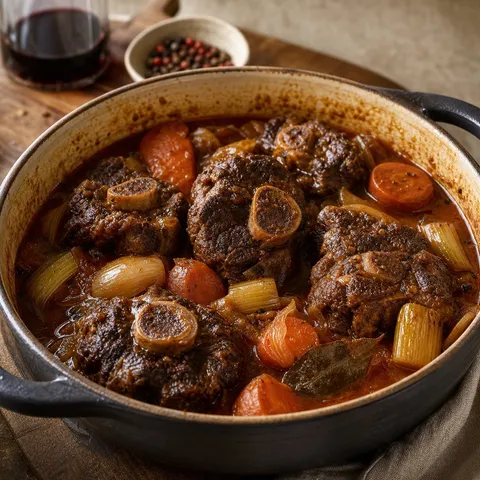
 Rabo de Toro
Oxtail slow-braised for hours with red wine, vegetables, and cloves until the meat falls from the bone in a deeply savoury, velvety Andalusian stew.
 Spanish Lens Verified Images are for illustrative purposes only, may be inaccurate, and do not guarantee the presence or absence of specific ingredients.
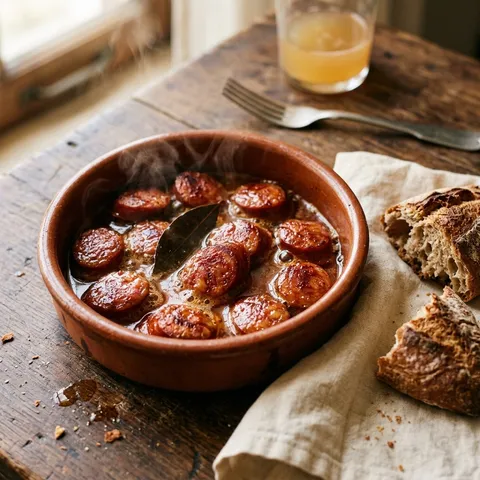
 Chorizo a la Sidra
Sliced Spanish chorizo simmered in dry Asturian cider until the sauce is tangy, smoky, and gloriously red — a quick tapas that pairs beautifully with beer.
 Spanish Lens Verified Images are for illustrative purposes only, may be inaccurate, and do not guarantee the presence or absence of specific ingredients.
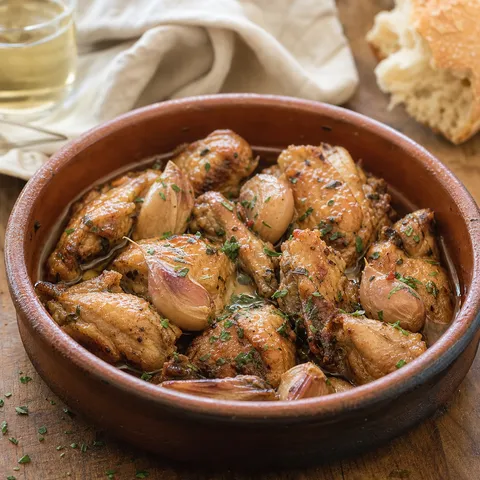
 Pollo al Ajillo
Chicken pieces braised in white wine and a generous amount of garlic until the sauce is sticky, fragrant, and impossible to resist mopping up.