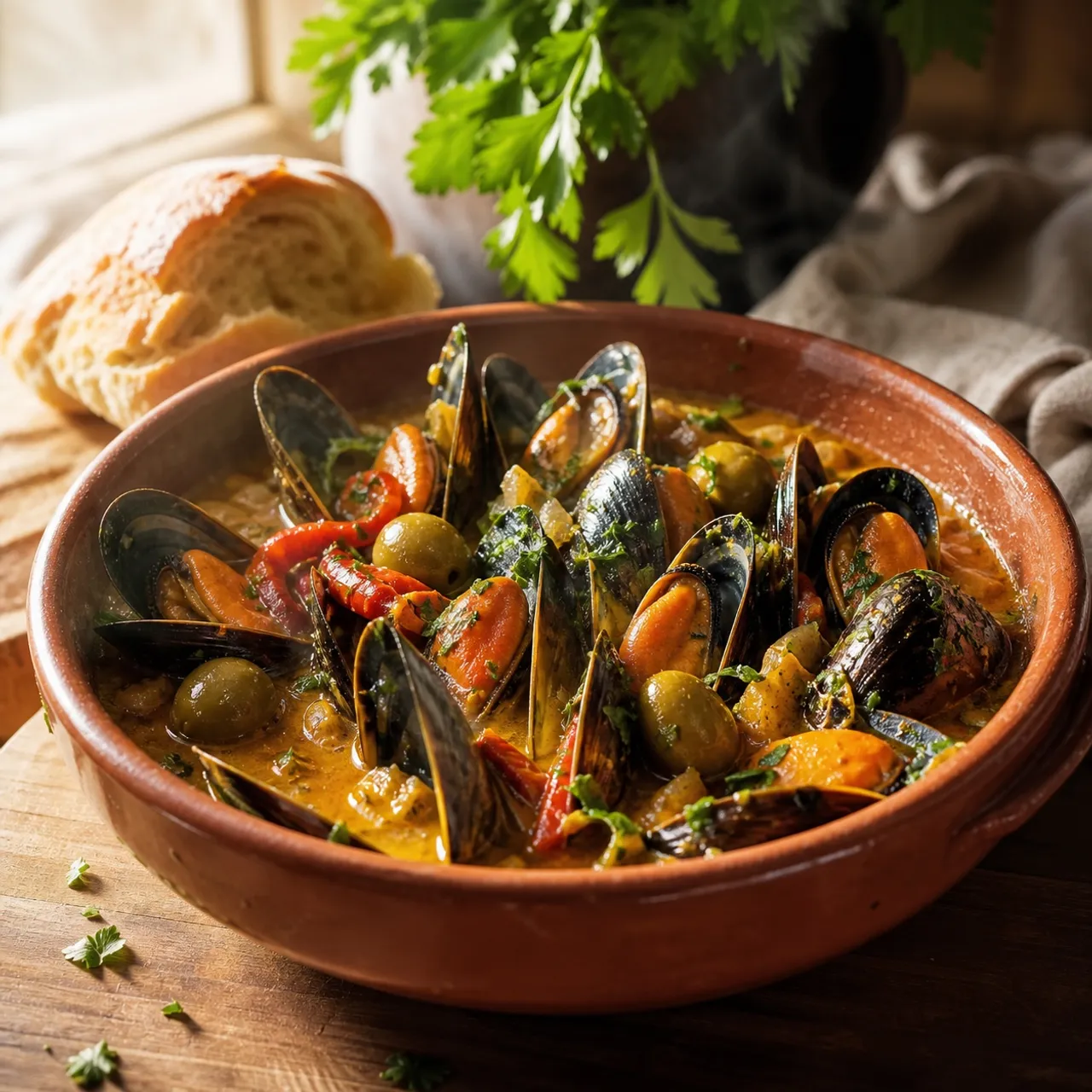
 Spanish Images are for illustrative purposes only, may be inaccurate, and do not guarantee the presence or absence of specific ingredients.
 Mejillones a la Marinera
Plump mussels steamed open in a fragrant tomato, white wine, and garlic broth in true sailor's style.
Contains common allergens
In the app, Listahan checks these against your household automatically.
Good to know
- One-pot
- Ready in under 30 minutes
Matched from this dish's own ingredients and timing. Browse more: one-pot dinners30-minute meals
Instructions
5 steps- 1
Rinse the scrubbed mussels in cold water and discard any that are cracked or stay open when tapped.
- 2
Heat a splash of olive oil in a wide pot over medium heat and sauté the onion until soft and translucent, about 5 minutes, then add the garlic and paprika and cook for 1 minute.
- 3
Pour in the white wine and let it bubble for 1 minute, then stir in the crushed tomatoes and simmer the sauce for 8 minutes to concentrate the flavors.
- 4
Add the mussels, cover the pot tightly, and steam for 4 to 6 minutes, shaking occasionally, until all the shells open.
- 5
Discard any mussels that remain closed, stir in the chopped parsley, and serve immediately with plenty of bread for soaking up the broth.
Listahan Family Score™
69/100
Works for many families
Score reflects how well this recipe fits a typical busy household. In the app, your Family Score is personalized to your household's allergens, kids, and pantry.
Nutrition
per serving240
Calories
28 g
Protein
14 g
Carbs
5 g
Fat
Estimated per serving. Actual values depend on the brands and portions you use.
Listahan cooking guide
Chef notes & practical guide
Technique notes, ingredient swaps, serve-alongside ideas, storage guidance, and equipment for this recipe.
Cultural context
Mejillones a la marinera belongs to the Spanish coastal habit of cooking shellfish quickly in a simple pan sauce, often with wine, garlic, onion, and a little paprika. The phrase a la marinera means sailor-style, and in practice it points to food that is direct, briny, and built around a broth worth chasing with bread.
Listahan note
This version keeps the sauce tomato-forward but not heavy, so the mussels still taste like the sea. The main priority is timing: build the broth first, then steam the mussels only until the shells open.
Technique cues
- Scrubbed and debearded mussels cook fast, so have the sauce ready before they go into the pot.
- Let the white wine bubble for a minute before adding the tomatoes; it softens the raw wine edge and leaves a cleaner broth.
- Shake the covered pot once or twice while steaming so the mussels redistribute without losing too much heat.
Kitchen flow
- Parallel prep
- Scrub the mussels first, then dice the onion, mince the garlic, and open the tomatoes before the pot goes on the stove.
- Make-ahead
- Make the tomato-wine sauce a few hours ahead and hold it chilled, then reheat and steam the mussels just before serving.
- Leftover move
- Pull leftover mussels from the shells and toss them with the broth and short pasta for a quick next-day lunch.
- Cleanup rhythm
- Keep a bowl by the stove for beards and empty shells, then soak the pot after serving so tomato and paprika residue lift easily.
Ingredient brief
Role, handling, and swap guidance for each key ingredient.
Fresh mussels, scrubbed and debearded
Main shellfish
Purpose: Mussels bring the briny flavor that seasons the whole broth as they steam open.
Handling: Rinse them in cold water and pull away any remaining beards before cooking.
Adaptation: Clams can use the same sauce, but they usually take a little longer to open and give a slightly sweeter broth.
Dry white wine
Broth base
Purpose: Wine gives the sauce brightness and helps carry the garlic, paprika, and tomato around the mussels.
Handling: Add it before the tomatoes and let it bubble briefly so the flavor rounds out.
Adaptation: Seafood stock or a light vegetable broth gives a softer, less sharp sauce.
Crushed tomatoes
Sauce body
Purpose: Crushed tomatoes give the broth enough body to cling to the shells and the bread without turning it into a thick stew.
Handling: Simmer them for several minutes before adding the mussels so the tomato tastes cooked, not canned.
Adaptation: Finely chopped canned tomatoes work too, but the broth will be looser and more rustic.
Small onion, finely diced
Aromatic base
Purpose: Onion adds sweetness that balances the tomato acidity and the briny mussel juices.
Handling: Cook it until translucent before adding garlic so it melts into the sauce instead of staying sharp.
Adaptation: Shallot makes a more delicate base if you want the broth a little lighter.
Garlic, minced
Aromatic punch
Purpose: Garlic gives the marinera sauce its familiar Spanish kitchen backbone.
Handling: Cook it briefly after the onion; minced garlic can turn bitter if it browns too hard.
Adaptation: Thinly sliced garlic gives a gentler flavor and is less likely to scorch.
Sweet paprika
Warm seasoning
Purpose: Sweet paprika adds color and a low, earthy warmth without making the broth spicy.
Handling: Stir it into the oil with the garlic for a short bloom before the wine goes in.
Adaptation: Smoked paprika gives a deeper campfire note, so use a lighter hand if substituting.
Technique notes
- Use a wide pot with a tight lid; mussels need room for steam to move around them.
- Do not keep cooking once most shells have opened. Extra heat makes the mussels shrink and toughen.
- Taste the broth after the mussels open before adding any salt, because the mussel juices season the sauce on their own.
Ingredient swaps
- No-wine direction
- Use seafood stock or light vegetable broth in place of the white wine; add a small squeeze of lemon at the end if the sauce needs brightness.
- Smokier profile
- Replace part of the sweet paprika with smoked paprika for a deeper flavor, but keep it modest so it does not cover the mussels.
- Tomato-light path
- Use half the crushed tomatoes and simmer a shorter time for a brothier, more wine-forward version.
Serve alongside
- Pan con tomate
- Patatas bravas
- Saffron rice
- Grilled asparagus with lemon
- Albarino
- Manzanilla sherry
- Sparkling lemon water
Serving suggestions only — check pairings for your household's allergens.
Storage & reheating
- Refrigerate cooked mussels in their broth in a sealed container and use the next day.
- Reheat gently in a covered pan over low heat just until warmed through, adding a splash of water if the broth has thickened.
- Freezing is not ideal for the mussels because the texture firms up, but the leftover broth can be frozen and used later for rice or pasta.
Equipment
- Wide heavy pot with lid
- Colander
- Shellfish brush
- Wooden spoon
Make this household-aware
Listahan Pro checks this recipe against your household's allergens, finds pantry-aware swaps, builds the shopping list, and helps you plan the week around it.
Plan it in Listahan
Add Mejillones a la Marinera to your week, check it against your household's allergens, and build the shopping list automatically.
More Spanish recipes
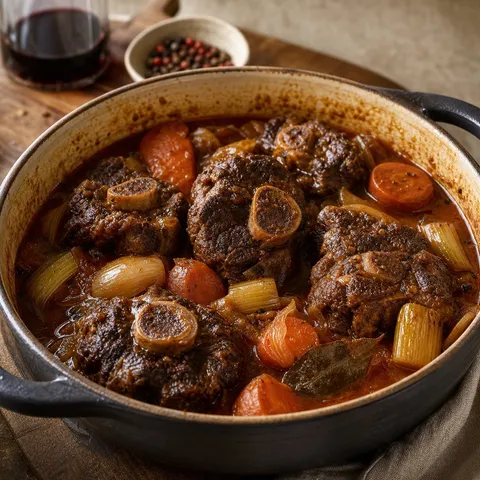 Spanish Lens Verified Images are for illustrative purposes only, may be inaccurate, and do not guarantee the presence or absence of specific ingredients.
 Rabo de Toro
Oxtail slow-braised for hours with red wine, vegetables, and cloves until the meat falls from the bone in a deeply savoury, velvety Andalusian stew.
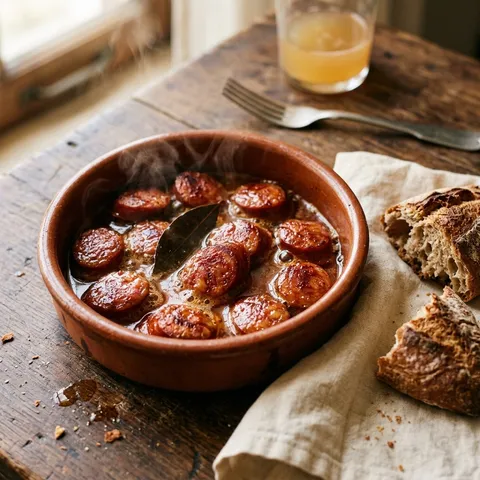 Spanish Lens Verified Images are for illustrative purposes only, may be inaccurate, and do not guarantee the presence or absence of specific ingredients.
 Chorizo a la Sidra
Sliced Spanish chorizo simmered in dry Asturian cider until the sauce is tangy, smoky, and gloriously red — a quick tapas that pairs beautifully with beer.
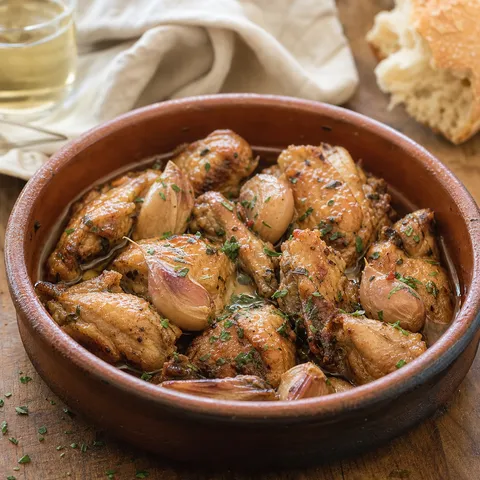 Spanish Lens Verified Images are for illustrative purposes only, may be inaccurate, and do not guarantee the presence or absence of specific ingredients.
 Pollo al Ajillo
Chicken pieces braised in white wine and a generous amount of garlic until the sauce is sticky, fragrant, and impossible to resist mopping up.