 Spanish Images are for illustrative purposes only, may be inaccurate, and do not guarantee the presence or absence of specific ingredients.
  Serving Images are for illustrative purposes only, may be inaccurate, and do not guarantee the presence or absence of specific ingredients.
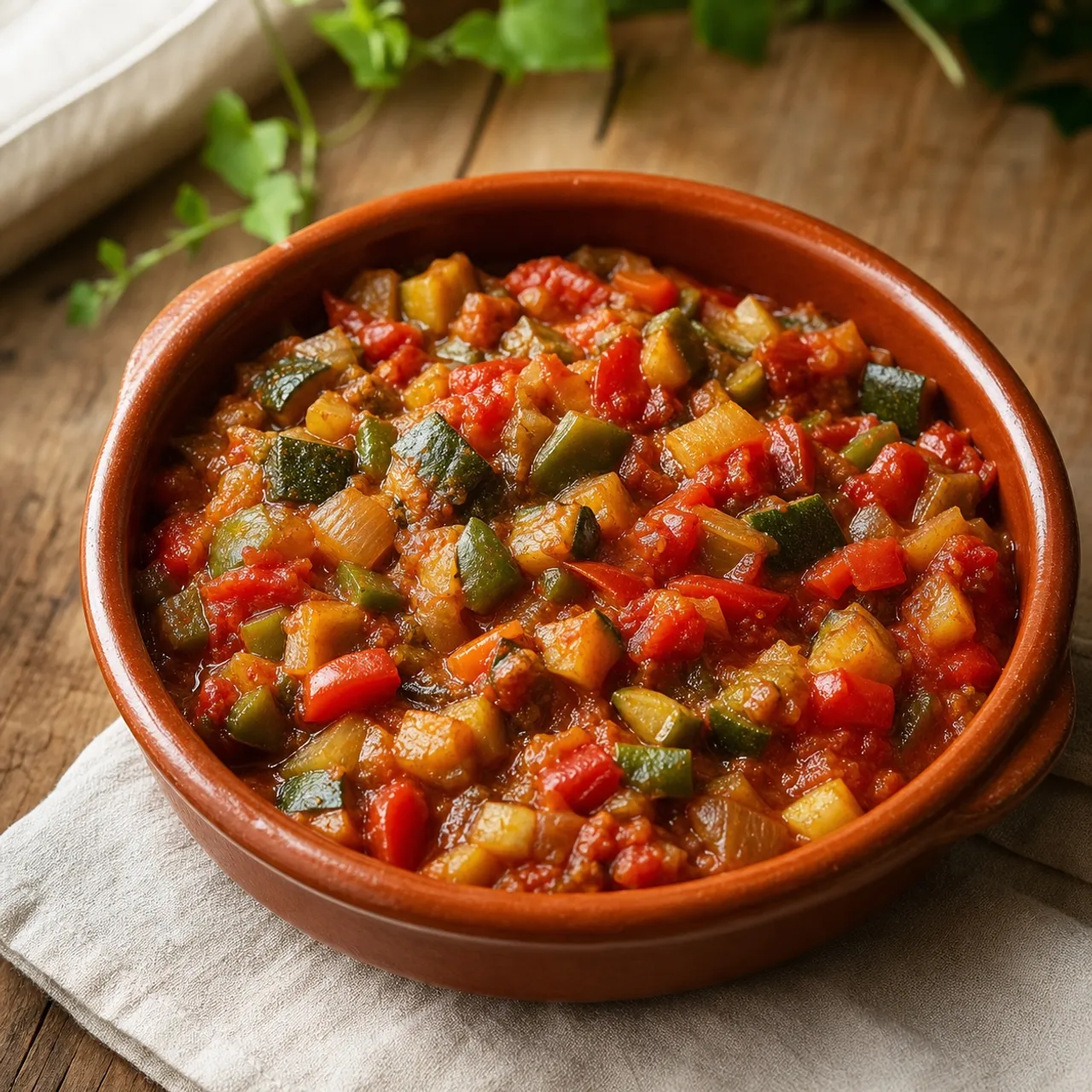
 Pisto Manchego
Slow-cooked courgette, pepper, and tomato melt together in olive oil into a silky, sweet Spanish vegetable stew perfect with a fried egg on top.
Contains common allergens
In the app, Listahan checks these against your household automatically.
Instructions
6 steps- 1
Prepare the Vegetables: Ensure the onion, peppers, and zucchini are diced uniformly so they cook evenly. If using fresh tomatoes, blanch them for 30 seconds in boiling water to peel the skins easily before chopping.
- 2
Sauté the Aromatics: Heat the olive oil in a large skillet or cazuela over medium-low heat. Add the onions and garlic, cooking gently for 10 minutes until soft and translucent, without browning.
- 3
Add the Peppers: Stir in the diced green and red bell peppers. Cook for another 10 minutes until they soften significantly, stirring occasionally.
- 4
Cook the Zucchini: Add the diced zucchini to the pan. Season the mixture with a pinch of salt. Cook for 5 minutes until the zucchini begins to yield but still holds its shape.
- 5
Simmer the Tomatoes: Pour in the crushed tomatoes and add the sugar (to balance the acidity). Season with salt and pepper. Reduce the heat to low, cover partially, and let it simmer gently for 20-30 minutes until the vegetables are meltingly tender and the oil separates slightly from the tomato sauce.
- 6
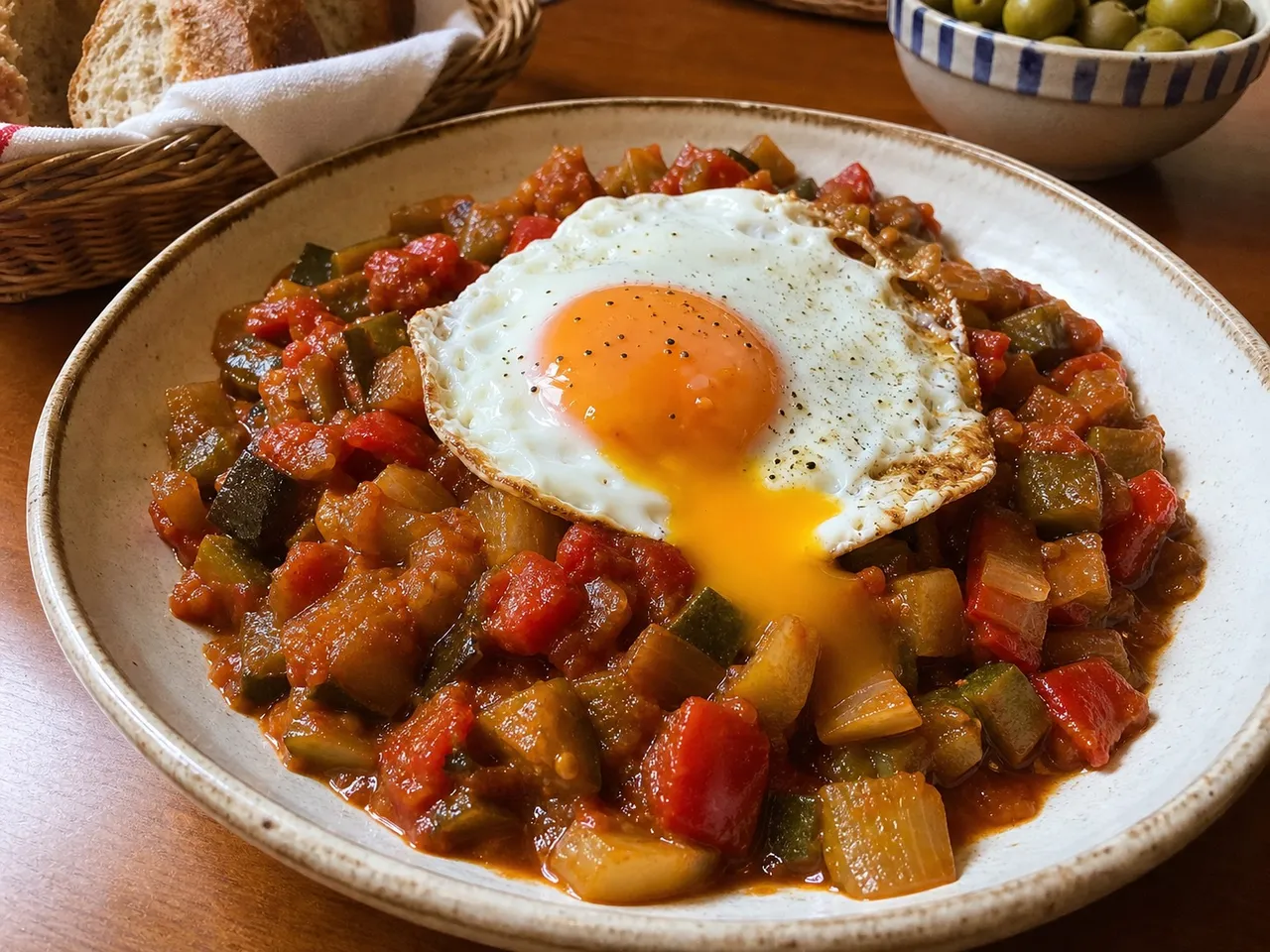
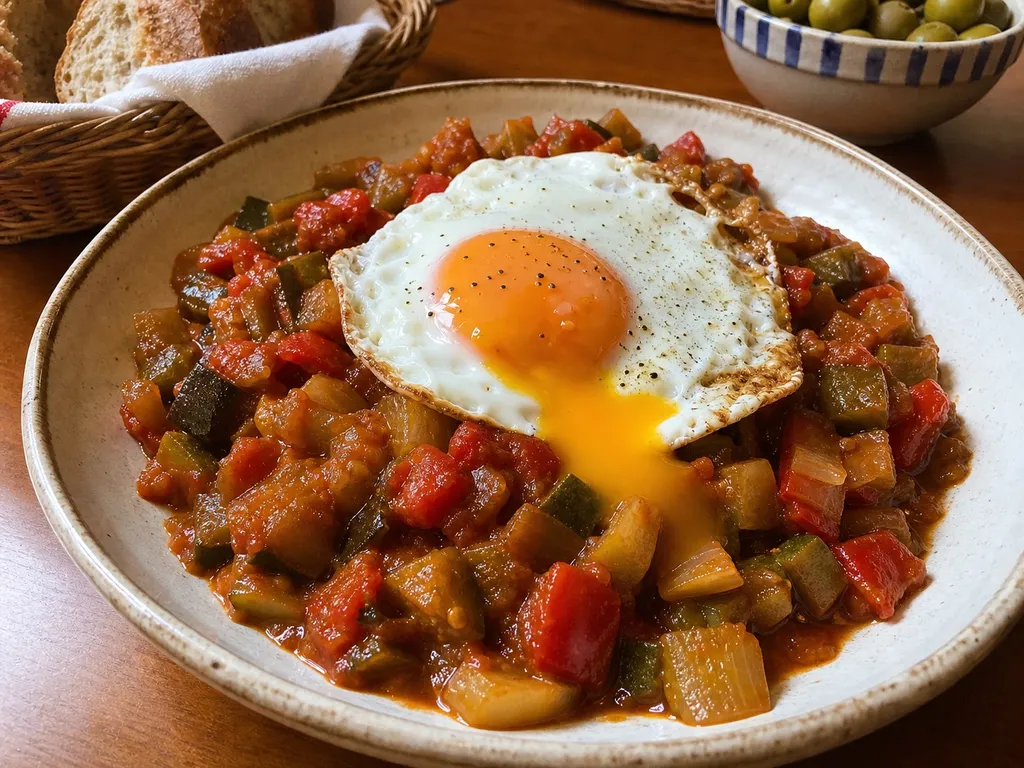
Serve: Taste and adjust seasoning. Pisto can be served hot, room temperature, or cold. Traditionally, it is served hot with a sunny-side-up fried egg resting on top and a slice of crusty bread.
 Images are for illustrative purposes only, may be inaccurate, and do not guarantee the presence or absence of specific ingredients.
 Listahan Family Score™
70/100
Good fit for most families
Score reflects how well this recipe fits a typical busy household. In the app, your Family Score is personalized to your household's allergens, kids, and pantry.
Nutrition
per serving200
Calories
3 g
Protein
17 g
Carbs
14 g
Fat
Estimated per serving. Actual values depend on the brands and portions you use.
Listahan cooking guide
Chef notes & practical guide
Technique notes, ingredient swaps, serve-alongside ideas, storage guidance, and equipment for this recipe.
Cultural context
Pisto manchego is the rustic vegetable stew of La Mancha, the central Spanish region of windmills and Don Quixote. It is Spain's answer to ratatouille, a slow-simmered mix of tomato, pepper, onion, zucchini, and eggplant cooked down until jammy and sweet. Traditionally it is a way to preserve the late-summer vegetable glut, often served topped with a fried egg or as a side to meat and fish.
Listahan note
This version cooks each vegetable with patience so the pisto turns deep and jammy rather than watery, finishing with the classic fried egg on top.
Technique cues
- Cook the vegetables in stages rather than all at once, since each releases water at a different rate and dumping them together makes a watery stew.
- Let the tomato reduce slowly until the oil separates and pools at the edges, the sign the pisto has concentrated properly.
- Top each serving with a softly fried egg so the runny yolk becomes a sauce that ties the vegetables together.
Kitchen flow
- Parallel prep
- Dice all the vegetables before you start cooking, since you will be adding them to the pan in timed stages.
- Make-ahead
- Pisto tastes even better the next day, so make a big batch ahead and reheat; only the egg goes on fresh.
- Leftover move
- Spread leftover pisto on toast under a poached egg, or use it as a filling for an omelette or empanada.
- Cleanup rhythm
- One pan does most of the work, so soak it as the pisto rests and it cleans easily once the tomato loosens.
Ingredient brief
Role, handling, and swap guidance for each key ingredient.
Tomatoes
the simmering base
Purpose: Tomato cooks down into the sweet, rich sauce that binds all the vegetables together.
Handling: Grate or chop ripe tomatoes, or use good canned ones, and simmer until thick.
Adaptation: Quality canned tomatoes are reliable year round and often better than pale fresh ones.
Bell peppers
sweetness and body
Purpose: Peppers add a mellow sweetness and substantial texture as they soften into the stew.
Handling: Cut into even pieces and cook until completely soft, never crisp.
Adaptation: Use a mix of red and green peppers, or roasted piquillo peppers for extra depth.
Zucchini
tender bulk
Purpose: Zucchini turns silky and absorbs the tomato flavor, lightening the stew.
Handling: Dice it and add it later than the peppers so it does not turn to mush.
Adaptation: Yellow summer squash works identically.
Eggplant
richness and depth
Purpose: Eggplant melts into the pisto and adds a meaty, satisfying body.
Handling: Salt the diced eggplant briefly to draw out bitterness, then cook in oil until soft.
Adaptation: Leave it out if you dislike eggplant; add extra zucchini to compensate.
Eggs
the traditional finish
Purpose: A fried egg on top is the classic Manchego serving, its yolk enriching the whole dish.
Handling: Fry just until the white sets but the yolk stays runny.
Adaptation: Skip the egg to keep it vegan, or crack eggs into the pisto and bake shakshuka-style.
Technique notes
- Be patient with the reduction; rushing it leaves a thin, watery stew instead of a glossy, jammy one.
- Cook the onion and pepper down slowly until truly soft before the tomato goes in, building a sweet foundation.
- Taste for a balance of sweet and acid at the end; a pinch of sugar or splash of vinegar fine-tunes the tomato.
Ingredient swaps
- Gluten-free direction
- Naturally gluten-free; serve with gluten-free bread or over rice.
- Vegan option
- Skip the fried egg and serve the pisto over rice or with crusty bread for a fully plant-based meal.
- Lower-sodium direction
- Use no-salt-added canned tomatoes and season at the end so you control the salt.
Serve alongside
- Crusty bread
- Steamed white rice
- Grilled pork chops or chicken
- Pan-fried white fish
- Glass of Tempranillo
- Light Spanish rosado
- Sparkling water with lemon
Serving suggestions only — check pairings for your household's allergens.
Storage & reheating
- Refrigerate for up to four days; the flavor deepens with time. Reheat gently on the stovetop and top with a fresh egg when serving. Pisto freezes well for up to three months, so portion and freeze extras for quick meals.
Equipment
- Wide deep skillet or saute pan
- Sharp knife for even dicing
- Wooden spoon
- Separate small pan for frying the egg
Make this household-aware
Listahan Pro checks this recipe against your household's allergens, finds pantry-aware swaps, builds the shopping list, and helps you plan the week around it.
Plan it in Listahan
Add Pisto Manchego to your week, check it against your household's allergens, and build the shopping list automatically.
More Spanish recipes
 Spanish Lens Verified Images are for illustrative purposes only, may be inaccurate, and do not guarantee the presence or absence of specific ingredients.
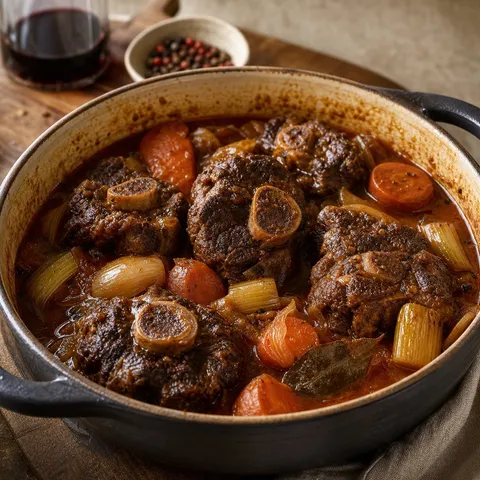
 Rabo de Toro
Oxtail slow-braised for hours with red wine, vegetables, and cloves until the meat falls from the bone in a deeply savoury, velvety Andalusian stew.
 Spanish Lens Verified Images are for illustrative purposes only, may be inaccurate, and do not guarantee the presence or absence of specific ingredients.
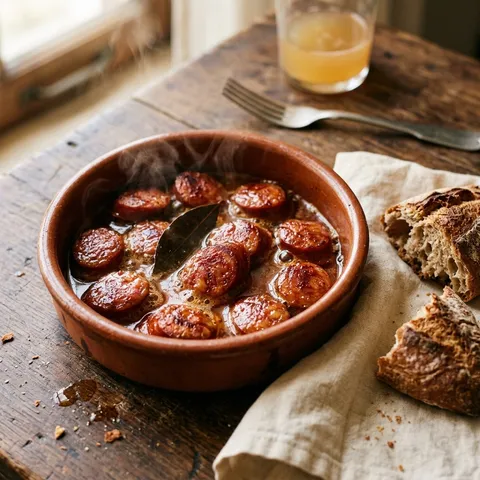
 Chorizo a la Sidra
Sliced Spanish chorizo simmered in dry Asturian cider until the sauce is tangy, smoky, and gloriously red — a quick tapas that pairs beautifully with beer.
 Spanish Lens Verified Images are for illustrative purposes only, may be inaccurate, and do not guarantee the presence or absence of specific ingredients.
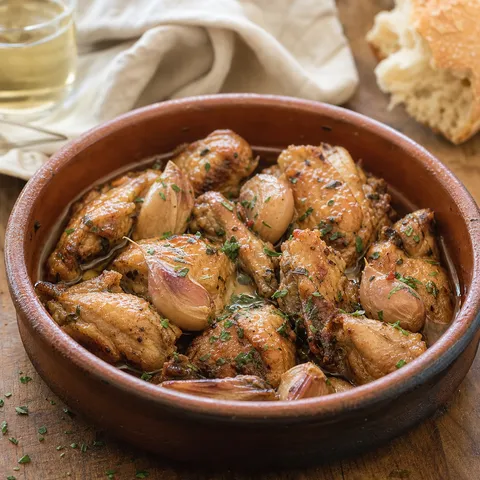
 Pollo al Ajillo
Chicken pieces braised in white wine and a generous amount of garlic until the sauce is sticky, fragrant, and impossible to resist mopping up.