 Spanish Images are for illustrative purposes only, may be inaccurate, and do not guarantee the presence or absence of specific ingredients.
  Serving Images are for illustrative purposes only, may be inaccurate, and do not guarantee the presence or absence of specific ingredients.
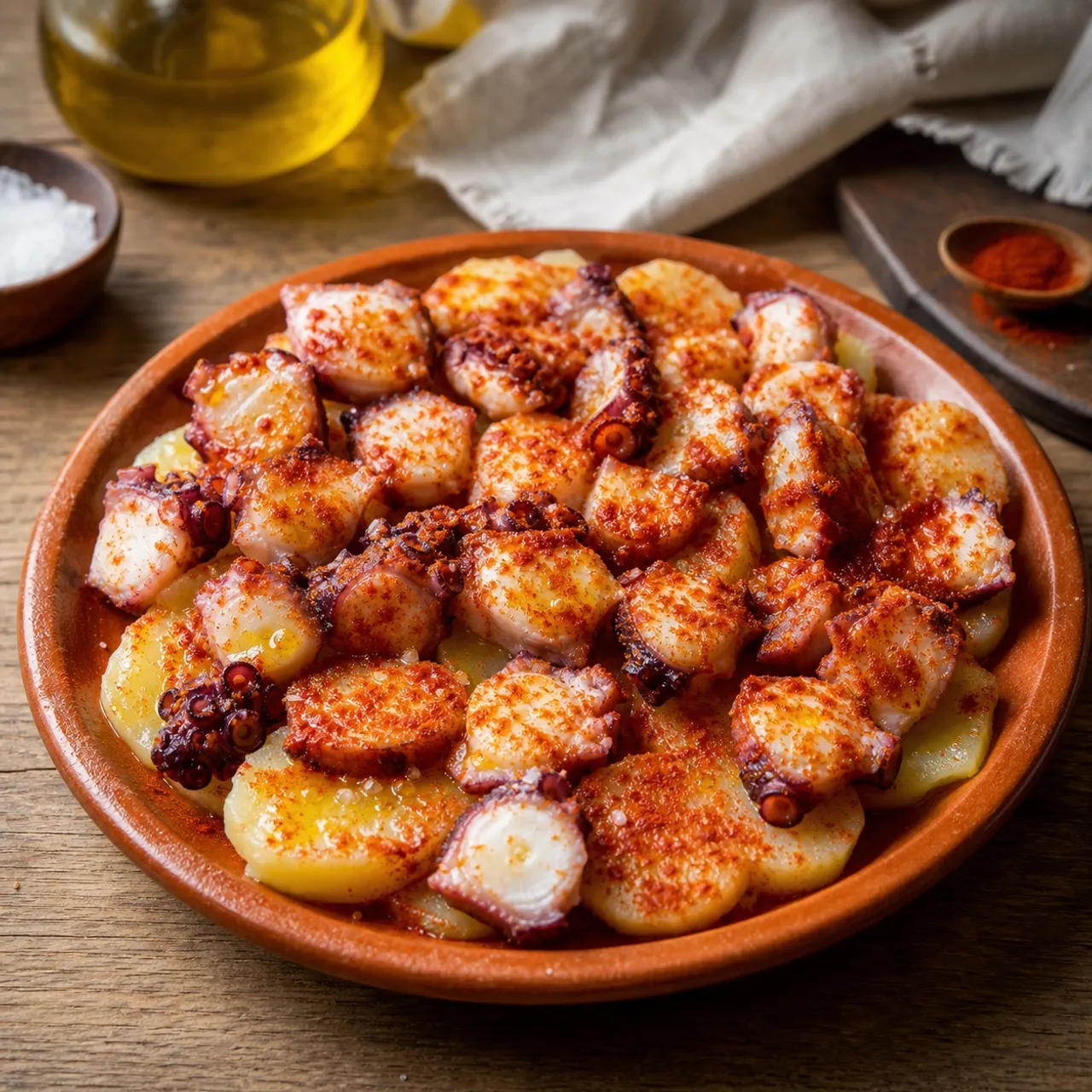
 Pulpo a la Gallega
Tender boiled octopus drizzled with smoky paprika and good olive oil over a bed of waxy potato slices — simple, stunning Galician cooking.
Contains common allergens
In the app, Listahan checks these against your household automatically.
Good to know
- One-pot
Matched from this dish's own ingredients and timing. Browse more: one-pot dinners
Instructions
6 steps- 1
Tenderize the Octopus: If using fresh octopus, freeze it for 48 hours and thaw completely to break down the tough fibers. Bring a large pot of unseasoned water to a rolling boil with the onion and bay leaf.
- 2
"Scare" the Octopus: Holding the octopus by the head using tongs, dip the tentacles into the boiling water for 3 seconds, then pull it out. Repeat this "scaring" process three times. This curls the tentacles beautifully and prevents the skin from peeling off.
- 3
Boil the Octopus: Submerge the entire octopus in the water. Lower the heat to a gentle simmer, cover, and cook for 40-50 minutes. Check for tenderness by piercing the thickest part of a tentacle with a skewer; it should slide in easily with zero resistance.
- 4
Rest and Cook Potatoes: Turn off the heat and let the octopus rest in the hot water for 15 minutes. Carefully remove it and set aside. In the same cooking liquid, boil the potato rounds for 15 minutes until tender, then drain.
- 5
Slice: Using kitchen shears, cut the octopus tentacles into bite-sized medallions (about 1/2 inch thick). Discard the head or save for another use.
- 6
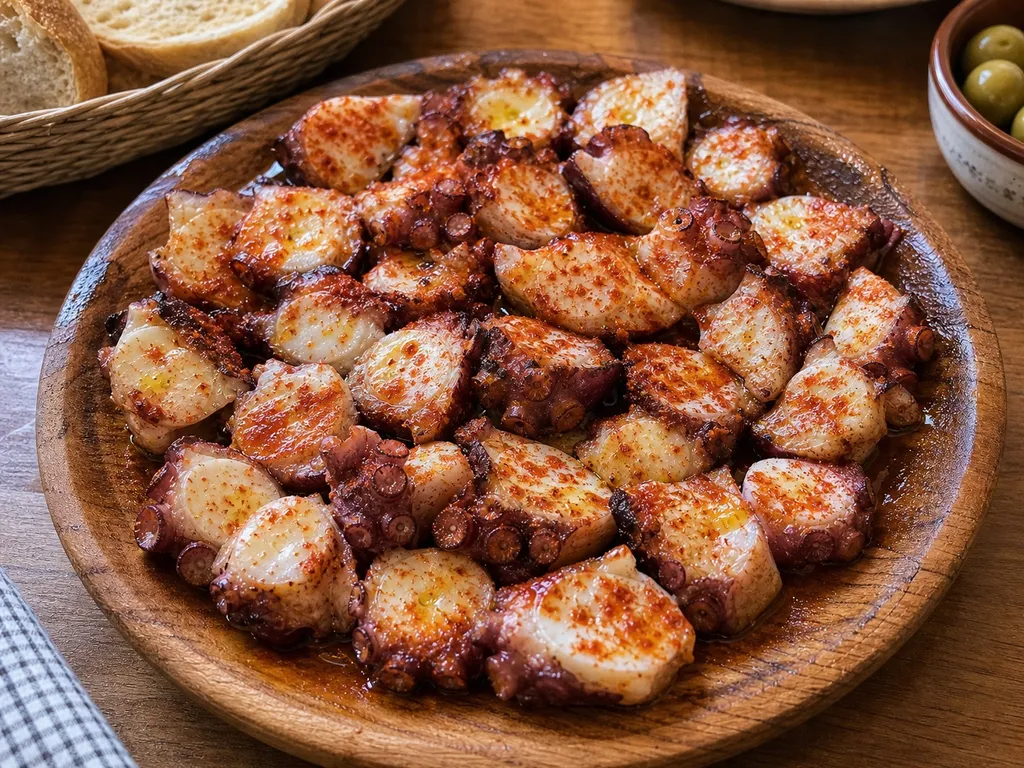
Assemble and Dress: Arrange the warm potato slices on a wooden serving board or warm plate. Place the octopus medallions on top. Drizzle generously with extra virgin olive oil, sprinkle with a mix of sweet and hot paprika, and finish with a heavy pinch of coarse sea salt. Serve warm.
 Images are for illustrative purposes only, may be inaccurate, and do not guarantee the presence or absence of specific ingredients.
 Listahan Family Score™
69/100
Works for many families
Score reflects how well this recipe fits a typical busy household. In the app, your Family Score is personalized to your household's allergens, kids, and pantry.
Nutrition
per serving145
Calories
4 g
Protein
32 g
Carbs
0 g
Fat
Estimated per serving. Actual values depend on the brands and portions you use.
Listahan cooking guide
Chef notes & practical guide
Technique notes, ingredient swaps, serve-alongside ideas, storage guidance, and equipment for this recipe.
Cultural context
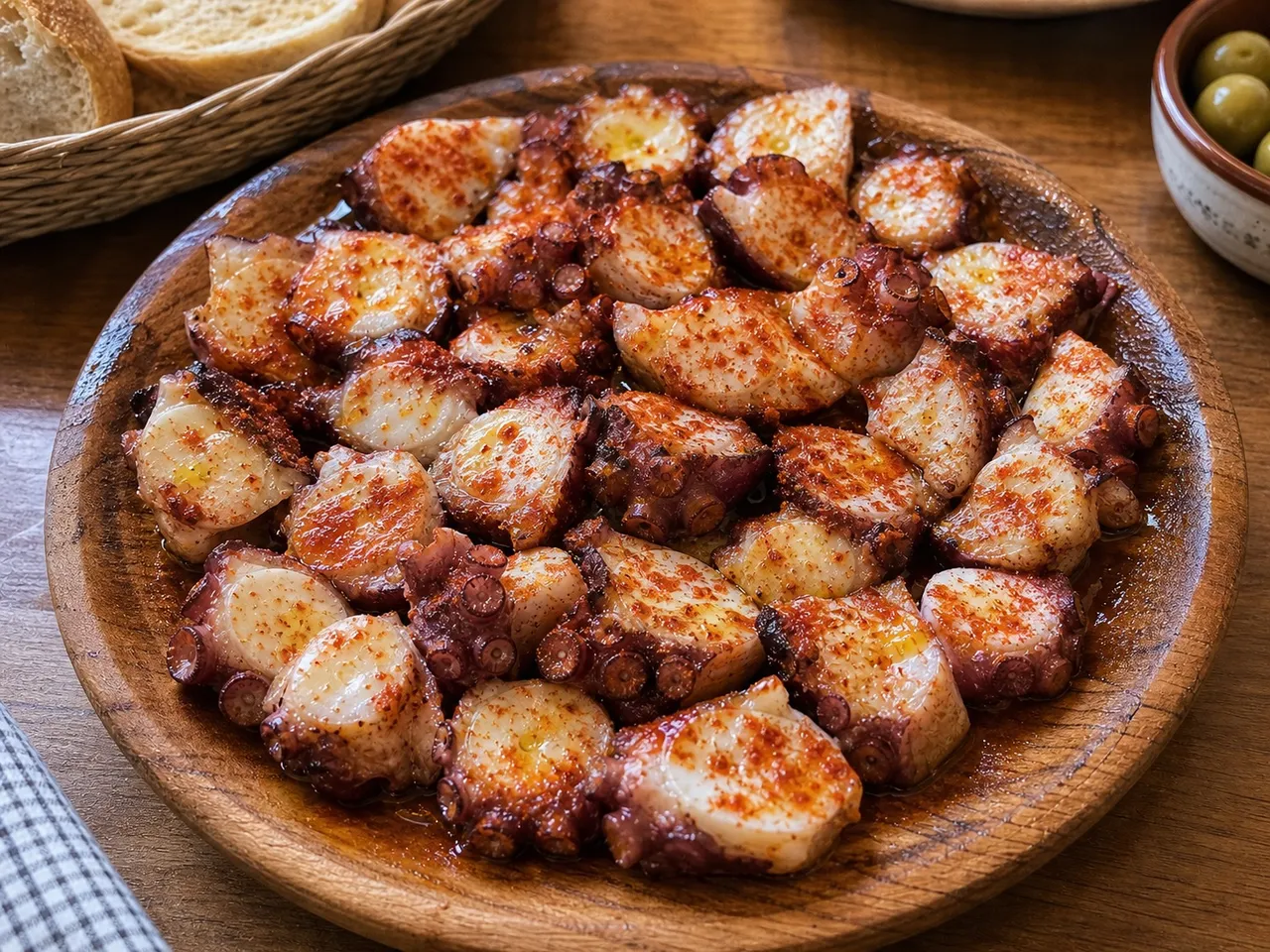
Pulpo a la gallega, octopus Galician-style, hails from Galicia in Spain's rainy northwest, where it is a fixture at festivals and market fairs cooked by specialists called pulpeiras. The dish is disarmingly simple: tender boiled octopus sliced into coins, dusted with smoked paprika and coarse salt, and drizzled with olive oil, traditionally served on a wooden plate. Its reputation rests entirely on the texture of the octopus, which must be tender, not chewy.
Listahan note
This version focuses on the technique that intimidates most cooks, getting the octopus genuinely tender, then keeps the seasoning as minimal and traditional as it should be.
Technique cues
- Tenderize the octopus before cooking by freezing and thawing it, which breaks down the muscle so it cooks up tender.
- Dip the octopus into boiling water three times before fully submerging, a Galician trick that helps the skin set and curl attractively.
- Slice it into coins with kitchen scissors while still warm, then dress immediately so the paprika and oil cling.
Kitchen flow
- Parallel prep
- Boil the potatoes in the same pot the octopus cooked in while the octopus rests, so both are ready to plate together.
- Make-ahead
- Cook the octopus a day ahead and refrigerate; bring it to room temperature or warm it gently before slicing and dressing.
- Leftover move
- Chop leftover octopus into a chilled seafood salad with peppers, onion, and a sherry vinaigrette.
- Cleanup rhythm
- Strain and discard the cooking water once cooled, and wash the pot promptly before any residue sets.
Ingredient brief
Role, handling, and swap guidance for each key ingredient.
Octopus
the entire dish
Purpose: Octopus is the whole point, and its tender texture is what the dish lives or dies on.
Handling: Use previously frozen octopus and simmer gently until a knife slides easily into the thickest part.
Adaptation: No real substitute exists; tender squid is a distant cousin but a very different texture.
Smoked paprika
the signature seasoning
Purpose: Pimenton dusted over the top gives the dish its characteristic color and smoky aroma.
Handling: Dust it on at the very end so it sits on the surface rather than dissolving.
Adaptation: Sweet paprika works but loses the smokiness that defines the dish.
Coarse sea salt
texture and seasoning
Purpose: Flaky coarse salt seasons and adds a deliberate crunch against the soft octopus.
Handling: Sprinkle it on at the end along with the paprika just before serving.
Adaptation: Any flaky finishing salt like Maldon works well.
Extra virgin olive oil
the finishing drizzle
Purpose: A generous pour of good oil ties the paprika and salt together and adds richness.
Handling: Drizzle it over right before serving so it stays glossy.
Adaptation: Use the best fruity olive oil you have; this is not a place to economize.
Boiled potatoes
the traditional base
Purpose: Sliced waxy potatoes underneath soak up the oil and paprika and make the tapa more substantial.
Handling: Boil them in the octopus water for extra flavor, then slice into rounds.
Adaptation: Leave them out for a pure octopus tapa, or use small new potatoes.
Technique notes
- Do not salt the cooking water heavily, as it can toughen the octopus; save the seasoning for the finish.
- Let the octopus rest off the heat in its hot water for a few minutes after cooking so it stays moist and tender.
- Use scissors instead of a knife to slice it into neat, even coins without dragging the soft flesh.
Ingredient swaps
- Gluten-free direction
- Naturally gluten-free; the dish has no flour or breading at all.
- Dairy-free option
- Dressed with olive oil and pimentón rather than butter; the dish is octopus, potato, onion and bay.
- Lower-sodium direction
- Use a light hand with the finishing salt and lean on the smoked paprika and oil for flavor.
Serve alongside
- Boiled cachelos potatoes
- Pan gallego (rustic bread)
- Pimientos de Padron
- Empanada gallega
- Crisp Albarino from Galicia
- Dry white Ribeiro
- Spanish lager
Serving suggestions only — check pairings for your household's allergens.
Storage & reheating
- Refrigerate cooked octopus undressed for up to three days. Reheat gently in warm water or serve at room temperature, dressing it with paprika and oil only just before eating. Cooked octopus freezes acceptably; thaw in the fridge and re-dress fresh.
Equipment
- Large pot for boiling
- Kitchen scissors for slicing
- Wooden plate or board for serving
- Tongs for the three-dip method
Make this household-aware
Listahan Pro checks this recipe against your household's allergens, finds pantry-aware swaps, builds the shopping list, and helps you plan the week around it.
Plan it in Listahan
Add Pulpo a la Gallega to your week, check it against your household's allergens, and build the shopping list automatically.
More Spanish recipes
 Spanish Lens Verified Images are for illustrative purposes only, may be inaccurate, and do not guarantee the presence or absence of specific ingredients.
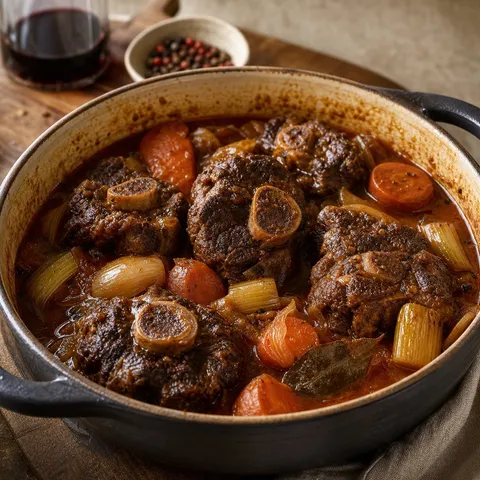
 Rabo de Toro
Oxtail slow-braised for hours with red wine, vegetables, and cloves until the meat falls from the bone in a deeply savoury, velvety Andalusian stew.
 Spanish Lens Verified Images are for illustrative purposes only, may be inaccurate, and do not guarantee the presence or absence of specific ingredients.
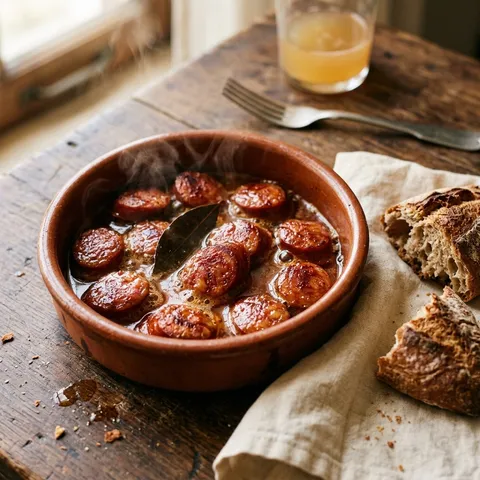
 Chorizo a la Sidra
Sliced Spanish chorizo simmered in dry Asturian cider until the sauce is tangy, smoky, and gloriously red — a quick tapas that pairs beautifully with beer.
 Spanish Lens Verified Images are for illustrative purposes only, may be inaccurate, and do not guarantee the presence or absence of specific ingredients.
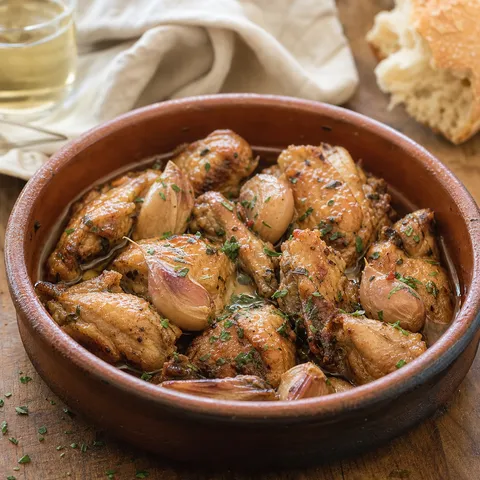
 Pollo al Ajillo
Chicken pieces braised in white wine and a generous amount of garlic until the sauce is sticky, fragrant, and impossible to resist mopping up.