 Vegetables & Sides Images are for illustrative purposes only, may be inaccurate, and do not guarantee the presence or absence of specific ingredients.
  Serving Images are for illustrative purposes only, may be inaccurate, and do not guarantee the presence or absence of specific ingredients.
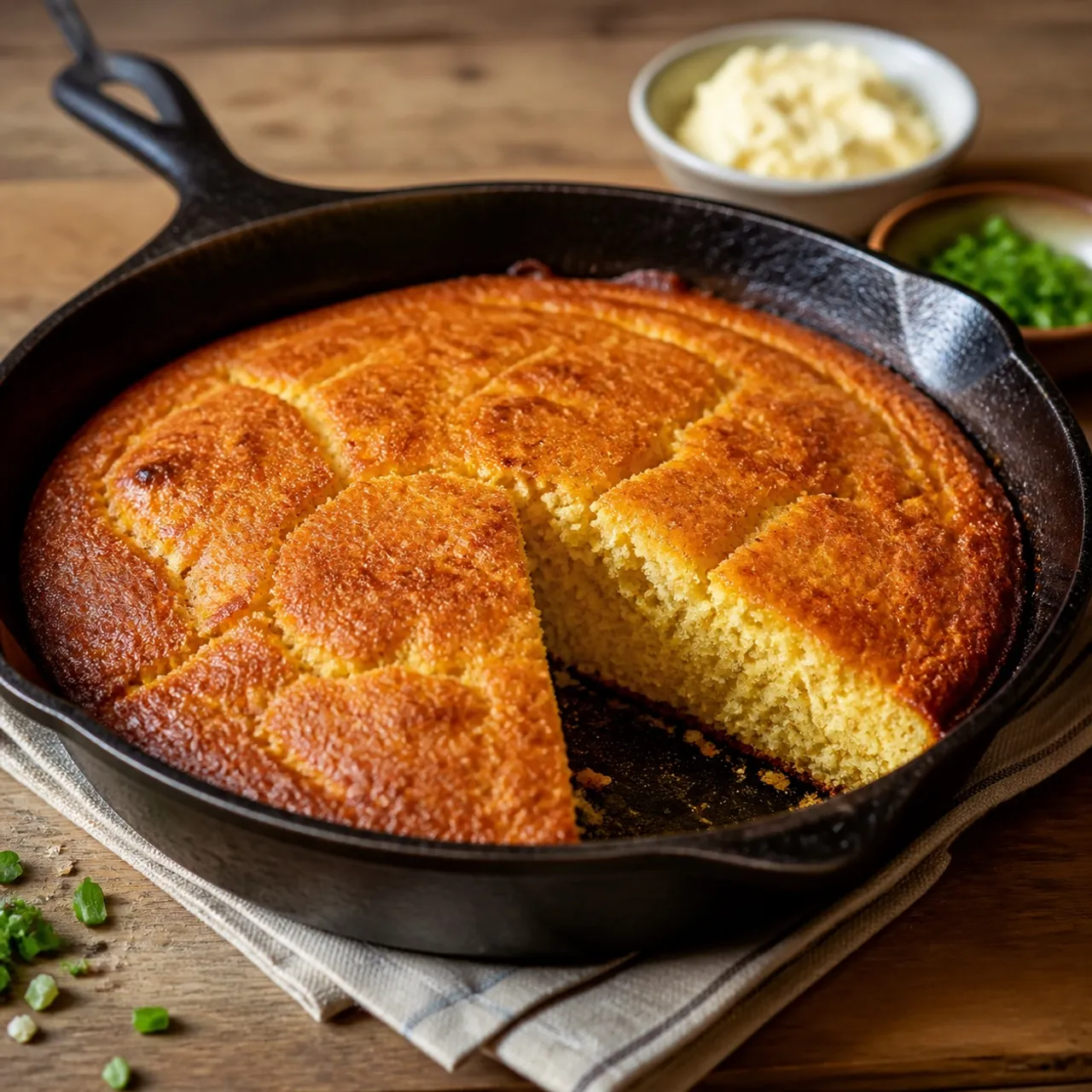
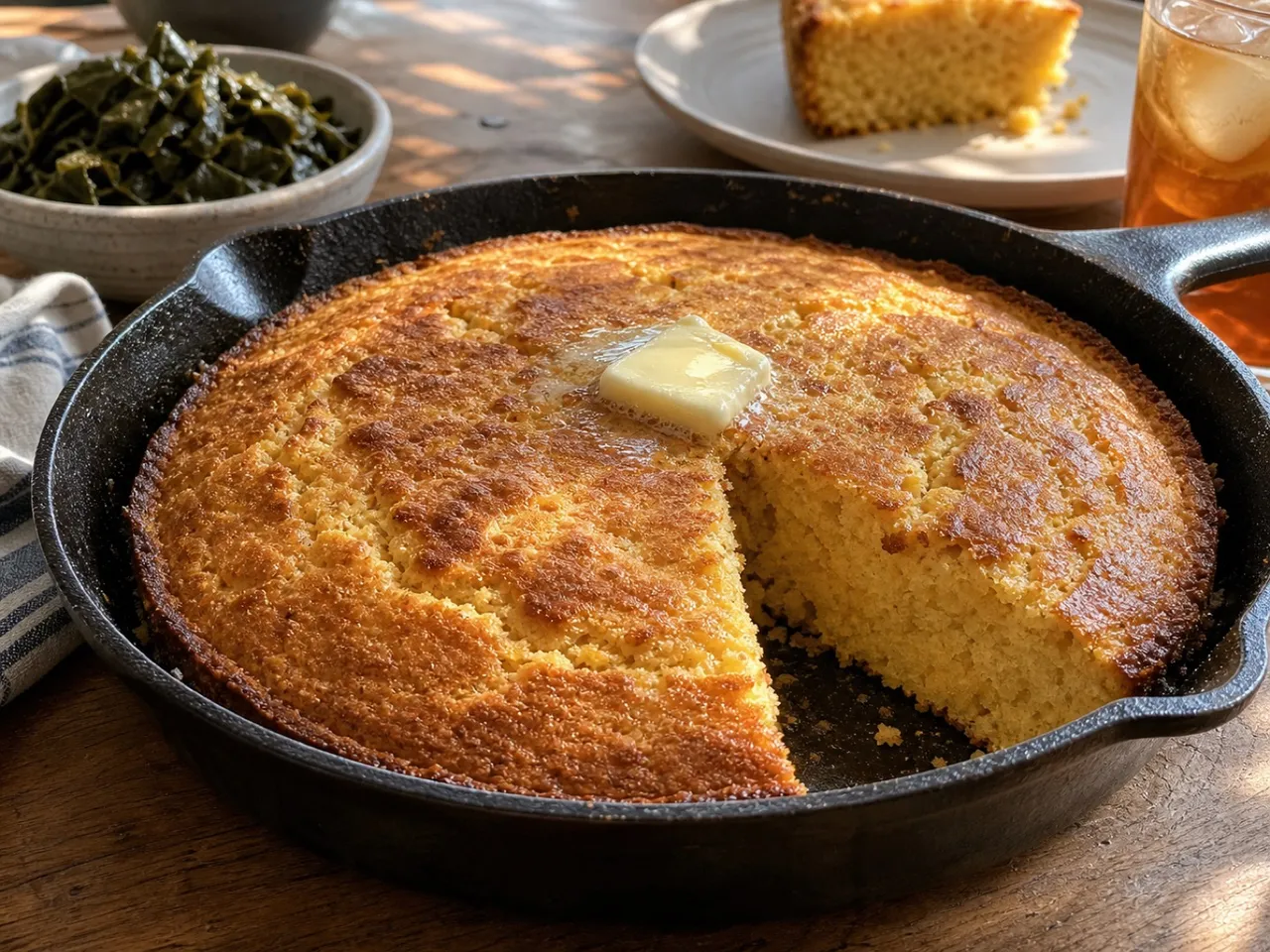
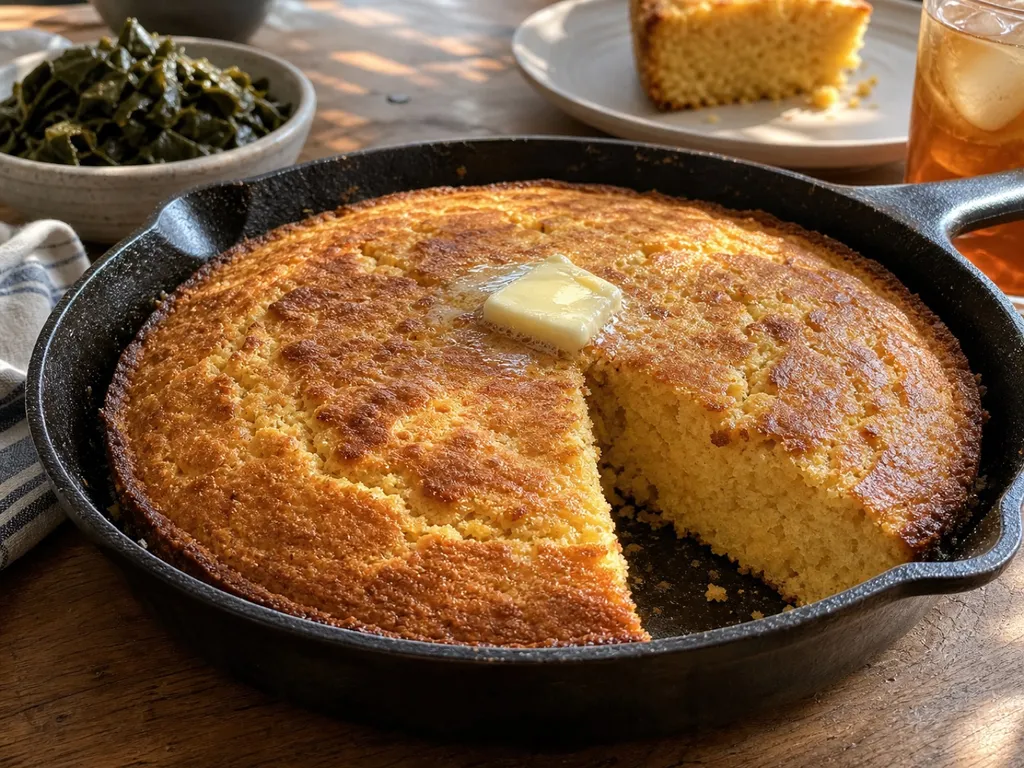
 Buttermilk Skillet Cornbread
Golden, tender cornbread with crackly buttered edges baked in a sizzling cast-iron skillet.
Contains common allergens
In the app, Listahan checks these against your household automatically.
Good to know
- Crispy
Matched from this dish's own ingredients and timing. Browse more: crispy recipes
Instructions
6 steps- 1
Place a 10-inch cast-iron skillet in the oven and preheat to 425 F so the pan gets screaming hot.
- 2
In a large bowl, whisk together the cornmeal, flour, sugar, baking powder, baking soda, and salt.
- 3
In a second bowl, whisk the buttermilk, eggs, and 6 tablespoons melted butter until smooth. Pour the wet ingredients into the dry and stir just until combined; a few lumps are fine and overmixing toughens the crumb.
- 4
Carefully remove the hot skillet, add the remaining 1 tablespoon butter, and swirl to coat the bottom and sides until it sizzles. Pour in the batter; it should hiss on contact.
- 5
Bake for 18 to 22 minutes, until the top is golden and a toothpick inserted in the center comes out clean.
- 6
Let cool in the pan for 5 minutes, then turn out or slice into wedges and serve warm with butter.
 Images are for illustrative purposes only, may be inaccurate, and do not guarantee the presence or absence of specific ingredients.
 Listahan Family Score™
65/100
Works for many families
Score reflects how well this recipe fits a typical busy household. In the app, your Family Score is personalized to your household's allergens, kids, and pantry.
Nutrition
per serving250
Calories
6 g
Protein
32 g
Carbs
11 g
Fat
Estimated per serving. Actual values depend on the brands and portions you use.
Listahan cooking guide
Chef notes & practical guide
Technique notes, ingredient swaps, serve-alongside ideas, storage guidance, and equipment for this recipe.
Cultural context
Cornbread is one of the oldest North American breads, adapted by European settlers from Indigenous traditions of grinding and cooking corn. The skillet method, baking the batter in a screaming-hot cast-iron pan, is a Southern hallmark that produces a crackling crust the pan itself helps create. Buttermilk gives the classic Southern style its tang and tender crumb, distinguishing it from the sweeter, cakier Northern versions.
Listahan note
This version preheats fat in the skillet until it nearly smokes so the batter sizzles on contact, building the crisp, lacy crust that defines a real skillet cornbread.
Technique cues
- Heat the greased cast-iron skillet in the oven until the fat shimmers, then pour the batter in; the instant sizzle is what sets the crust.
- Stir the batter only until just combined, because overmixing develops gluten and trades the tender crumb for a tough, rubbery one.
- Pull it as soon as the edges pull from the pan and the top springs back, since cornbread dries out fast once it overbakes.
Kitchen flow
- Parallel prep
- Set the greased skillet in the oven to heat while you whisk the wet and dry mixes separately, then combine at the last second.
- Make-ahead
- Bake a day ahead and rewarm wrapped in foil; the dry whisked mix can also be measured out in advance.
- Leftover move
- Crumble day-old cornbread into a skillet with butter to toast, or use it as the base for a quick stuffing or panzanella.
- Cleanup rhythm
- Wipe the still-warm cast iron with a paper towel and a little oil rather than soaking it, to protect the seasoning.
Ingredient brief
Role, handling, and swap guidance for each key ingredient.
cornmeal
the grain and texture
Purpose: Cornmeal gives the bread its signature gritty bite and corn flavor.
Handling: Use medium-grind for the classic texture and whisk with the dry ingredients first.
Adaptation: Fine cornmeal yields a smoother crumb; a coarse grind makes it more rustic.
buttermilk
tang and tenderness
Purpose: Buttermilk's acidity tenderizes the crumb and reacts with the baking soda for lift.
Handling: Bring it to room temperature and whisk with the eggs before adding to the dry mix.
Adaptation: Milk soured with a tablespoon of lemon juice, or a dairy-free milk plus vinegar, works.
eggs
structure and binding
Purpose: Eggs hold the crumb together and add richness to an otherwise lean batter.
Handling: Whisk into the buttermilk so they distribute evenly.
Adaptation: A flax-and-water slurry can bind an egg-free version, though the crumb is denser.
baking soda and baking powder
leavening
Purpose: The two together give a quick, even rise without needing yeast or time.
Handling: Whisk thoroughly into the dry ingredients so there are no bitter pockets.
Adaptation: Use the combination as written; substituting one for the other changes the rise and tang.
butter or bacon fat
crust and flavor
Purpose: The hot fat in the skillet is what fries the crust crisp and lacy.
Handling: Melt it in the preheating skillet until it shimmers before the batter goes in.
Adaptation: Neutral oil works for a cleaner flavor; vegan butter keeps it dairy-free.
Technique notes
- Do not skip preheating the skillet; a cold pan gives a pale, soft bottom instead of the crackling crust that makes skillet cornbread special.
- Keep it barely sweet for the Southern style so it stands up to savory dishes like chili and greens.
- Let it rest five minutes before cutting so the crumb sets, then serve warm while the crust is still crisp.
Ingredient swaps
- Gluten-free direction
- Replace the flour portion with a gluten-free blend; an all-cornmeal version is naturally denser but works.
- Dairy-free option
- Use plant milk soured with vinegar and oil or vegan butter for the skillet.
- Sweeter direction
- Add a couple tablespoons of honey or sugar for a Northern-style cake-like cornbread.
Serve alongside
- A big pot of chili con carne
- Braised collard greens
- Pulled pork with slaw
- White bean and ham soup
- A cold lager
- Sweet iced tea
- Buttermilk or cold milk
Serving suggestions only — check pairings for your household's allergens.
Storage & reheating
- Keep wrapped at room temperature for two days or refrigerate up to five; it dries out faster than yeast breads.
- Rewarm wrapped in foil at 300F or split and toast in butter to revive the crust.
- Freeze cooled wedges wrapped tightly for up to three months and reheat from frozen in a low oven.
Equipment
- A well-seasoned cast-iron skillet
- Two mixing bowls for wet and dry
- A whisk
- Oven mitts for the screaming-hot pan
Make this household-aware
Listahan Pro checks this recipe against your household's allergens, finds pantry-aware swaps, builds the shopping list, and helps you plan the week around it.
Plan it in Listahan
Add Buttermilk Skillet Cornbread to your week, check it against your household's allergens, and build the shopping list automatically.
More Vegetables & Sides recipes
 Vegetables & Sides Lens Verified Images are for illustrative purposes only, may be inaccurate, and do not guarantee the presence or absence of specific ingredients.
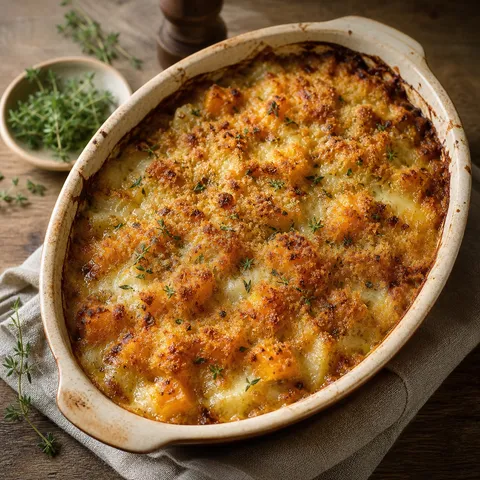
 Acorn, Butternut Squash and Parsnips Gratin
A cozy autumn gratin of roasted winter squash and parsnips topped with melted sharp cheddar and herbed breadcrumbs.
 Vegetables & Sides Lens Verified Images are for illustrative purposes only, may be inaccurate, and do not guarantee the presence or absence of specific ingredients.
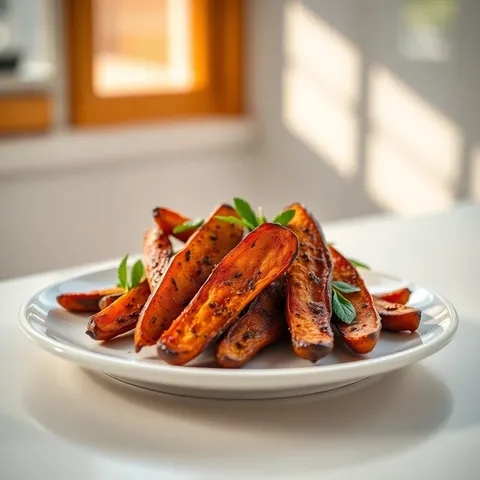
 Roasted Sweet Potato Wedges
Caramelized, crispy-edged sweet potato wedges seasoned with smoked paprika and a hint of brown sugar.
 Vegetables & Sides Lens Verified Images are for illustrative purposes only, may be inaccurate, and do not guarantee the presence or absence of specific ingredients.
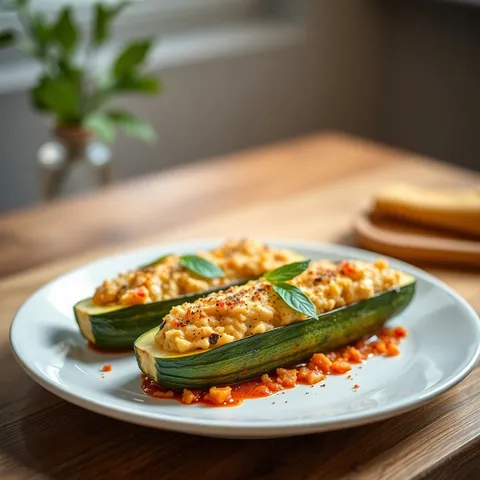
 Stuffed Zucchini
Zucchini boats filled with a savory cream cheese, mushroom, and Parmesan stuffing, baked until golden.