 Bakery Images are for illustrative purposes only, may be inaccurate, and do not guarantee the presence or absence of specific ingredients.
  Serving Images are for illustrative purposes only, may be inaccurate, and do not guarantee the presence or absence of specific ingredients.
 Bagels
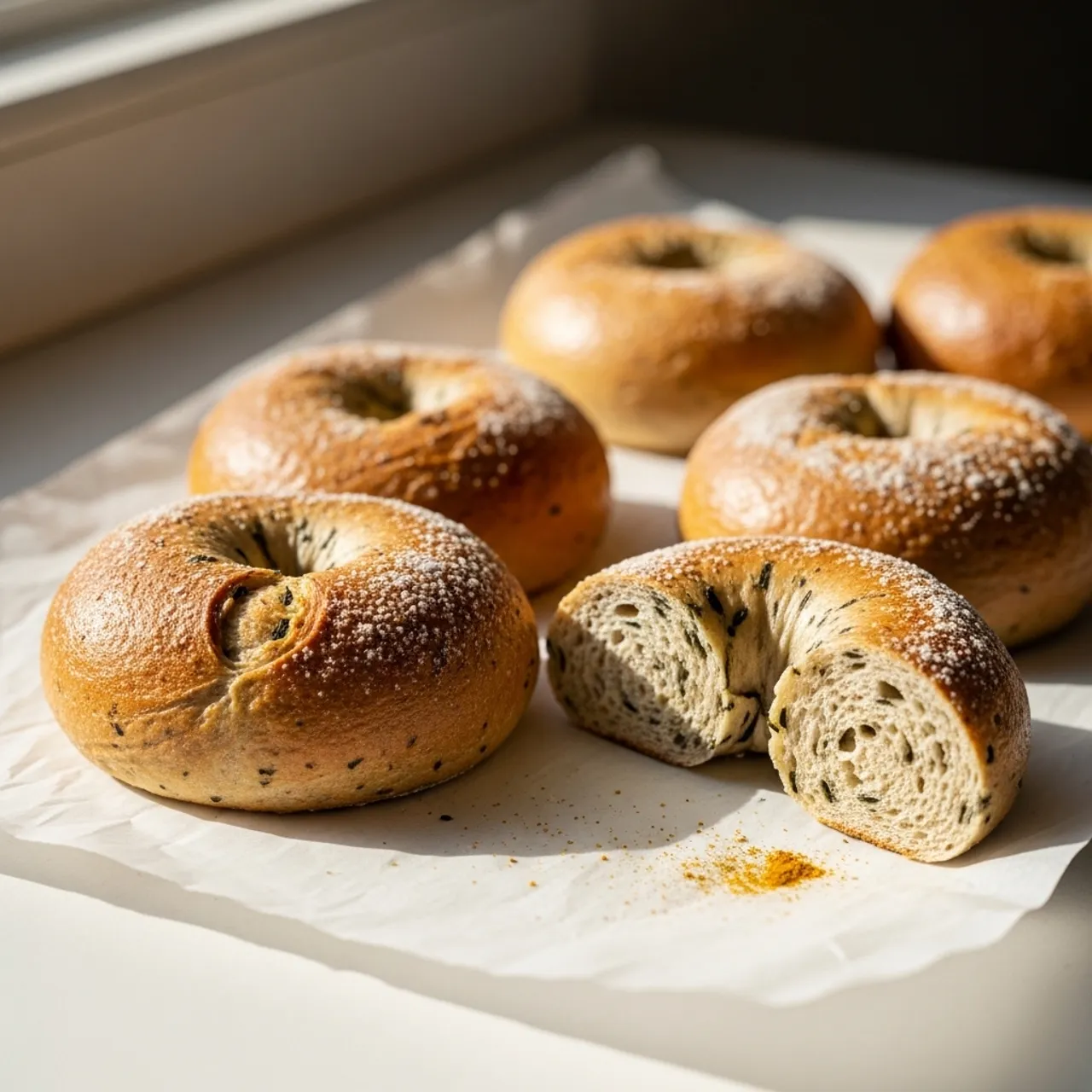
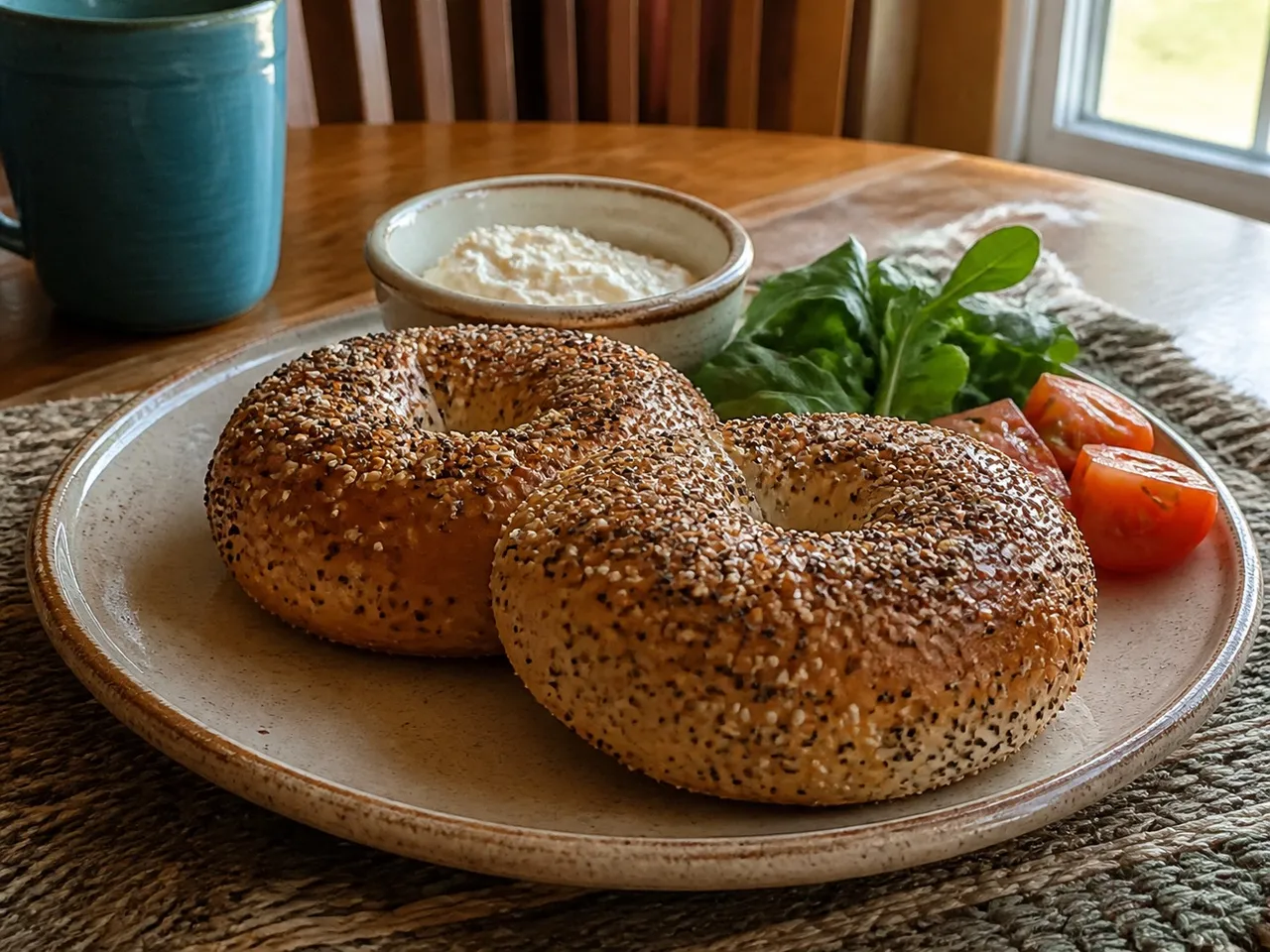
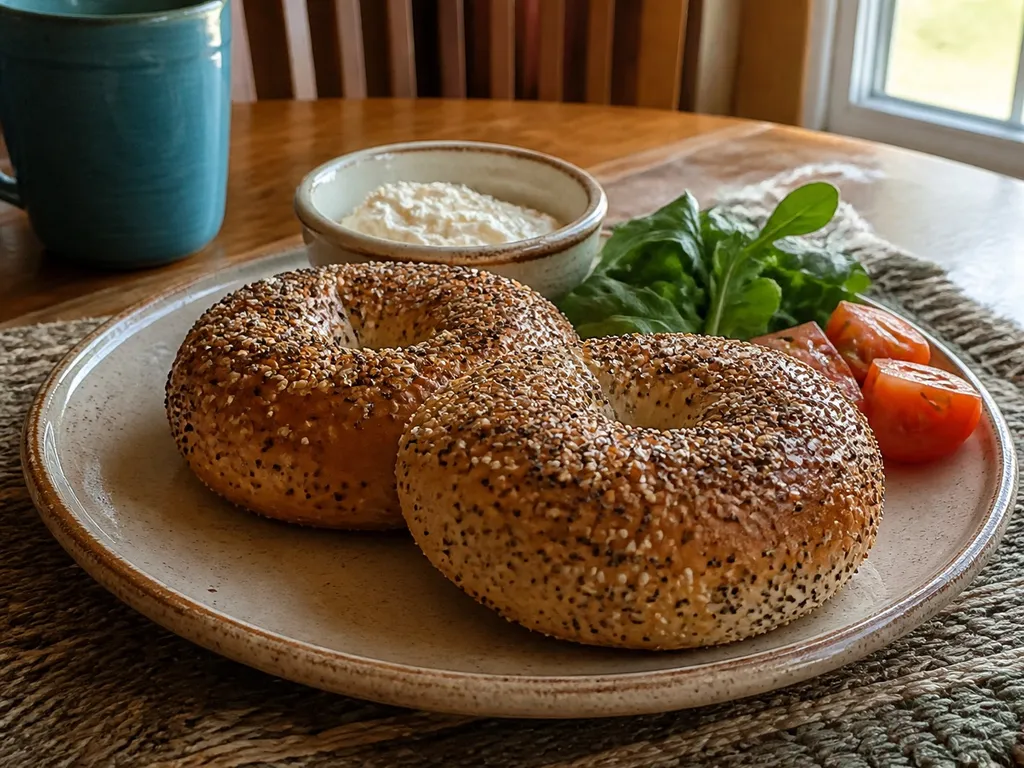
Master the authentic New York style with these spectacularly dense, delightfully chewy bagels, featuring a shiny, blistered crust from their signature malt-water boil.
Contains common allergens
In the app, Listahan checks these against your household automatically.
Instructions
6 steps- 1
In a mixing bowl, dissolve the yeast in the warm water. Stir in the malt syrup, salt, and flour to form a stiff dough.
- 2
Knead the dough vigorously for 10-12 minutes until it is very smooth, firm, and elastic. Cover and let it rest for 20 minutes to relax the gluten.
- 3
Divide the dough into 8 equal pieces. Roll each piece into a smooth ball, then use your thumb to poke a hole in the center. Gently stretch the hole to about 2 inches wide to form rings.
- 4
Place the shaped bagels on a parchment-lined baking sheet. Cover with plastic wrap and let them rise in the refrigerator overnight (or for at least 2 hours) to develop flavor and texture.
- 5
Preheat the oven to 425°F (220°C). In a large pot, bring the water bath to a rolling boil and add the malt syrup. Boil the chilled bagels in batches for 1 minute per side. Remove with a slotted spoon and place back on the baking sheet.
- 6
Add desired toppings (sesame, poppy seeds) while the bagels are still wet. Bake for 20-25 minutes until deep golden brown and crispy on the outside.
 Images are for illustrative purposes only, may be inaccurate, and do not guarantee the presence or absence of specific ingredients.
 Listahan Family Score™
78/100
Good fit for most families
Score reflects how well this recipe fits a typical busy household. In the app, your Family Score is personalized to your household's allergens, kids, and pantry.
Nutrition
per serving240
Calories
7 g
Protein
50 g
Carbs
1 g
Fat
Estimated per serving. Actual values depend on the brands and portions you use.
Listahan cooking guide
Chef notes & practical guide
Technique notes, ingredient swaps, serve-alongside ideas, storage guidance, and equipment for this recipe.
Cultural context
Bagels emerged from Ashkenazi Jewish communities in Poland as early as the 17th century, and the word itself likely derives from the Yiddish 'beygl,' from the German 'bougel' meaning ring. Jewish immigrants brought them to New York's Lower East Side in the late 19th and early 20th centuries, where they became synonymous with New York deli culture. The defining technique -- boiling the shaped ring before baking -- creates the characteristic dense, chewy crumb and glossy, thin crust that cannot be replicated by baking alone. The International Bagel Association formed in the 1970s partly in response to the spread of mass-produced bagels that were steamed rather than boiled.
Listahan note
This version cold-proofs the shaped bagels overnight for maximum flavor development, then uses a malt syrup boiling water bath that is the single technique separating an authentic New York bagel from what is essentially a round roll with a hole.
Technique cues
- The dough should be quite stiff -- stiffer than most bread doughs -- which is correct; a slack bagel dough produces a bread-like interior rather than the dense, chewy crumb that defines a bagel.
- Boil for exactly 1 minute per side: less and the crust does not form the skin needed for seeds to adhere and for the characteristic chew; more and the exterior becomes thick and gummy.
- Apply toppings immediately after boiling while the surface is still wet and sticky; seeds applied to a dry bagel will fall off during baking.
Kitchen flow
- Parallel prep
- While the boiling water comes to temperature, set up a parchment-lined sheet pan for the boiled bagels and have toppings measured and ready in shallow bowls.
- Make-ahead
- Shaped bagels can be placed on a sheet pan, covered, and refrigerated overnight or up to 18 hours; boil and bake directly from cold the next morning.
- Leftover move
- Day-old bagels sliced thin and toasted in a 350 F oven until crisp become bagel chips that are excellent with cream cheese dip or smoked salmon spread.
- Cleanup rhythm
- The boiling pot leaves a malt residue on the bottom; soak it with hot water immediately after use. Line sheet pans with parchment to avoid baked-on malt drips from the transfer.
Ingredient brief
Role, handling, and swap guidance for each key ingredient.
bread flour
chewy structure
Purpose: High-protein bread flour builds the dense, tight gluten network that gives bagels their characteristic chew -- all-purpose flour produces a noticeably softer, less chewy result.
Handling: Weigh the flour; bagels are typically at 57 to 60 percent hydration and the stiff dough is intentional and correct.
Adaptation: High-gluten flour (14 percent protein) produces an even chewier, more traditionally New York-style bagel; it may require a stand mixer as the dough is very stiff.
barley malt syrup
boiling water additive and surface color
Purpose: Malt syrup added to the boiling water speeds the Maillard reaction on the bagel surface during baking, contributing to the deep mahogany crust and distinctive malt flavor.
Handling: Add 1 to 2 tablespoons per quart of boiling water; the water should have a light amber tint.
Adaptation: Baking soda (1 tablespoon per quart) is the most common substitute and produces a similar but slightly more alkaline, pretzel-adjacent result; brown sugar is a closer flavor approximation to malt.
instant yeast
leavener
Purpose: Yeast provides enough lift during the cold proof for the bagel to develop flavor and a proper interior texture without over-proofing into a bread roll.
Handling: Use a conservative amount -- bagels proof slowly and a low-yeast, long-cold formula produces the best flavor.
Adaptation: Sourdough starter at 15 to 20 percent of flour weight produces a tangy, flavorful bagel; allow 4 to 6 hours of room-temperature bulk fermentation before shaping.
sesame or poppy seeds
topping and flavor
Purpose: Seeds toasted on the crust during baking add nutty flavor and textural contrast to the smooth, glossy exterior of the bagel.
Handling: Apply seeds to the wet surface immediately after boiling, pressing gently so they adhere before the surface dries.
Adaptation: Everything bagel seasoning (a mix of sesame seeds, poppy seeds, dried garlic, dried onion, and coarse salt) is the most popular American topping combination.
Technique notes
- Shape bagels by rolling a rope of dough slightly longer than feels natural, then overlapping the ends and rolling the seam on the counter to seal -- a poorly sealed seam opens during baking and the bagel loses its round shape.
- The float test -- a shaped, refrigerated bagel placed in cold water that floats within 10 seconds -- is the traditional way to verify that cold-proofed bagels are ready to bake.
- Bake on a preheated stone at 450 F to generate the bottom crust heat that completes the chew; a cold pan produces a soft bottom that does not match the crust texture.
Ingredient swaps
- Egg-free direction
- Bagels are naturally egg-free in their traditional formulation; ensure any seed coatings are applied to the boiled wet surface rather than an egg wash for a vegan version.
- Whole wheat direction
- Replace up to one-quarter of bread flour with whole wheat; the bagel will be denser and chewier with a noticeably heartier flavor and a rougher crust texture.
- Gluten-free direction
- A gluten-free bagel cannot replicate the chew of the original; a cassava and almond flour blend can produce a credible ring-shaped bread but with a cake-like rather than chewy interior.
Serve alongside
- Cream cheese with lox and capers
- Smoked whitefish salad
- Avocado with everything seasoning and lemon
- Black coffee
- Orange juice
- Deli-style hot tea
Serving suggestions only — check pairings for your household's allergens.
Storage & reheating
- Bagels are best eaten the day they are made. Store at room temperature in a paper bag for up to 1 day; plastic bags soften the crust rapidly. Slice and freeze individually for up to 2 months; toast from frozen for 4 to 5 minutes.
Equipment
- Large pot for boiling
- Slotted spoon or spider for transferring
- Baking stone or preheated sheet pan
- Shallow bowls for topping seeds
Make this household-aware
Listahan Pro checks this recipe against your household's allergens, finds pantry-aware swaps, builds the shopping list, and helps you plan the week around it.
Plan it in Listahan
Add Bagels to your week, check it against your household's allergens, and build the shopping list automatically.
More Bakery recipes
 Bakery Lens Verified Images are for illustrative purposes only, may be inaccurate, and do not guarantee the presence or absence of specific ingredients.
 Scones
Flaky and buttery British baked goods, often with currants or berries.
 Bakery Lens Verified Images are for illustrative purposes only, may be inaccurate, and do not guarantee the presence or absence of specific ingredients.
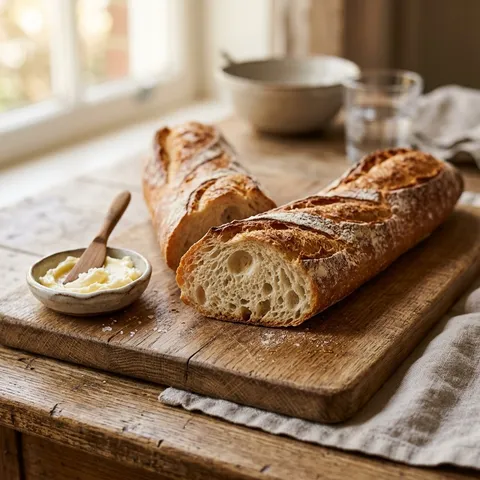
 French Baguette
Savor the authentic crunch of this rustic French baguette, featuring a beautifully crackling golden crust and a soft, airy, and utterly irresistible crumb.
 Bakery Lens Verified Images are for illustrative purposes only, may be inaccurate, and do not guarantee the presence or absence of specific ingredients.
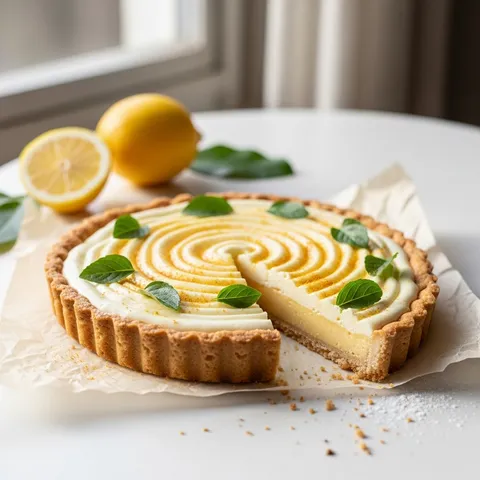
 Lemon Tart
Brighten your dessert spread with this elegant lemon tart, perfectly balancing a brilliantly zesty, silky-smooth lemon curd inside a crisp and buttery sweet pastry shell.