 Bakery Images are for illustrative purposes only, may be inaccurate, and do not guarantee the presence or absence of specific ingredients.
  Serving Images are for illustrative purposes only, may be inaccurate, and do not guarantee the presence or absence of specific ingredients.
 Croissants
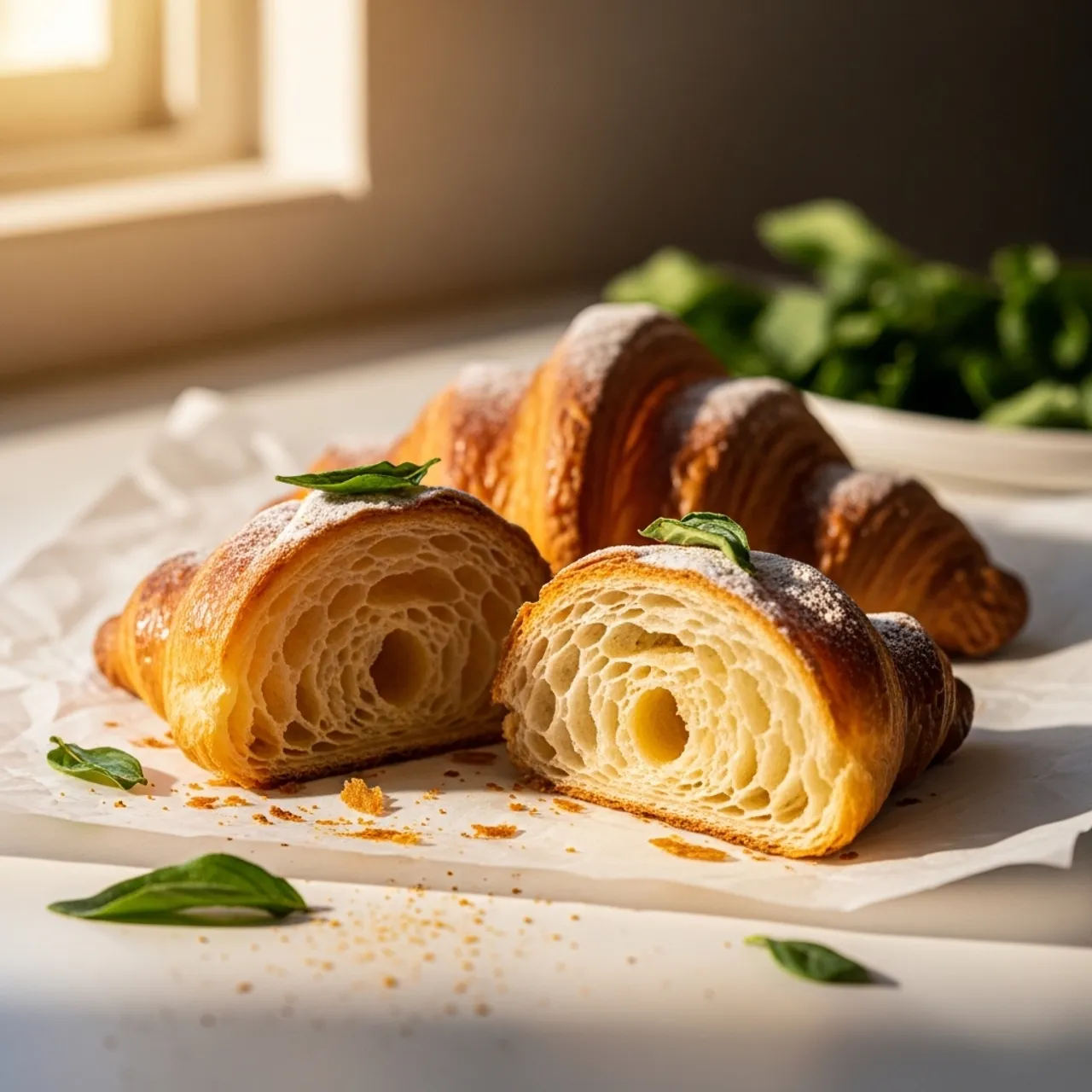
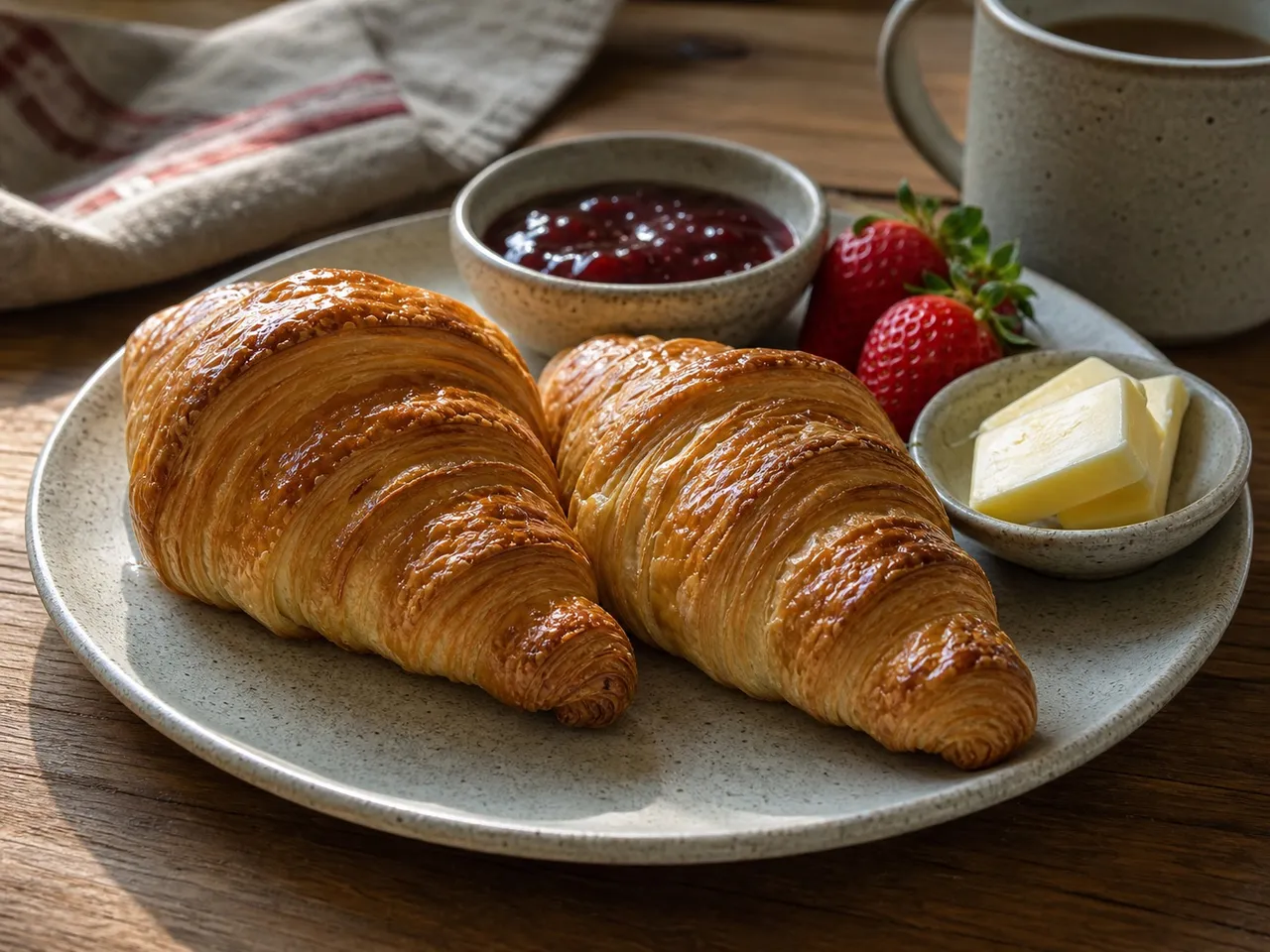
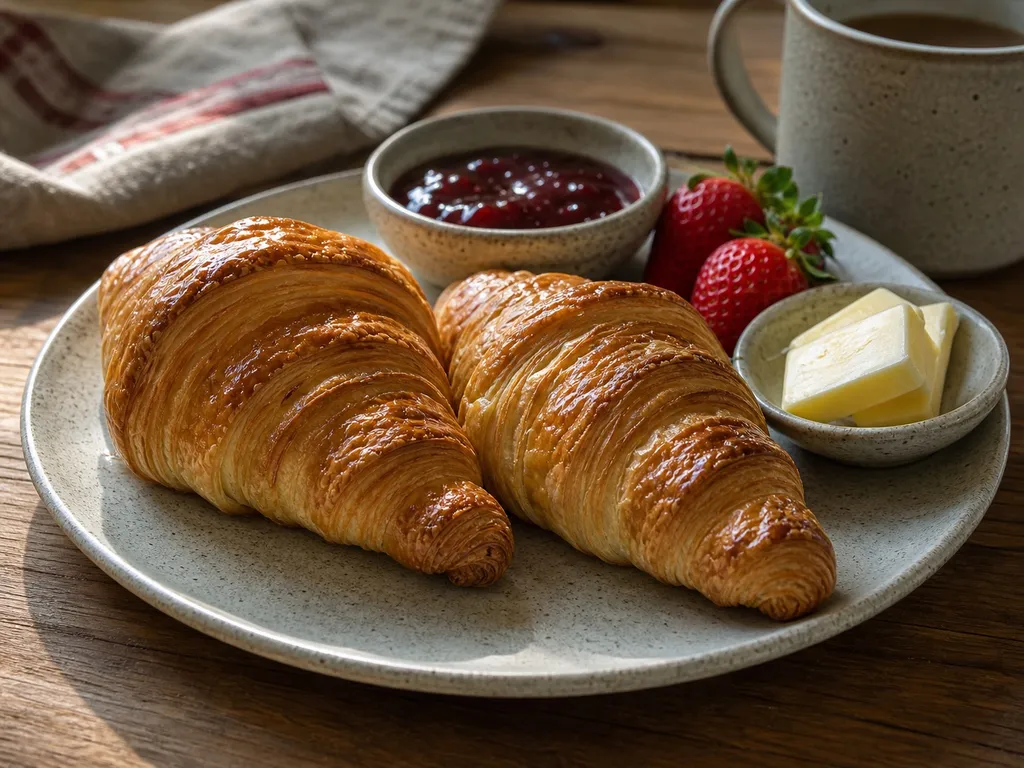
Experience a taste of a Parisian bakery with these gorgeously flaky and exquisitely buttery croissants, boasting delicate, shatteringly crisp layers.
Contains common allergens
In the app, Listahan checks these against your household automatically.
Good to know
- Crispy
Matched from this dish's own ingredients and timing. Browse more: crispy recipes
Instructions
6 steps- 1
In a large bowl, dissolve the yeast in the warm water and milk. Stir in the sugar, salt, and flour to form a dough, then knead for 5 minutes. Cover and refrigerate for 1 hour to relax the gluten.
- 2
Prepare the butter block by pounding the cold butter between two sheets of parchment paper into a 6x8-inch rectangle. Chill until firm but pliable.
- 3
Roll the chilled dough into a large rectangle, place the butter block in the center, and fold the dough edges over the butter to completely encase it. Seal the edges.
- 4
Perform the lamination process: roll the dough out into a long rectangle and fold it in thirds (like a letter). Wrap and chill for 30 minutes. Repeat this process (rolling and folding) two more times.
- 5
Roll out the final laminated dough to a 1/4-inch thickness. Cut into large triangles, stretch each triangle slightly, and roll up from the wide base to the tip to form crescents. Place on a parchment-lined baking sheet.
- 6
Cover loosely and let proof in a warm spot for 1-2 hours until visibly puffy and jiggly. Preheat the oven to 400°F (200°C) and bake for 15-20 minutes until deeply golden brown and flaky.
 Images are for illustrative purposes only, may be inaccurate, and do not guarantee the presence or absence of specific ingredients.
 Listahan Family Score™
69/100
Works for many families
Score reflects how well this recipe fits a typical busy household. In the app, your Family Score is personalized to your household's allergens, kids, and pantry.
Nutrition
per serving515
Calories
7 g
Protein
55 g
Carbs
30 g
Fat
Estimated per serving. Actual values depend on the brands and portions you use.
Listahan cooking guide
Chef notes & practical guide
Technique notes, ingredient swaps, serve-alongside ideas, storage guidance, and equipment for this recipe.
Cultural context
Despite their association with French breakfast culture, the croissant descends from the Austrian kipferl, brought to Paris in the early 19th century by Austrian entrepreneur August Zang. French bakers transformed the kipferl by applying lamination -- the technique of folding cold butter repeatedly into yeasted dough -- to create the hundreds of alternating layers of dough and fat that shatter on the outside and pull apart in silky, honeyed sheets within. The croissant became synonymous with French boulangerie culture by the early 20th century and is now baked globally, though the standard set by Parisian bakers remains the benchmark.
Listahan note
This version prioritizes proper lamination cold-chain discipline: every fold happens with butter and dough at the same cold pliable temperature, which is what separates a croissant that shatters from one that is merely bread-adjacent.
Technique cues
- Keep both the butter block and the dough at the same cold, pliable temperature -- around 15 degrees Celsius -- before each fold; if the butter cracks into shards or the dough tears, wrap and refrigerate for 20 minutes before continuing.
- After shaping, proof the croissants at cool room temperature (not warm) until they jiggle noticeably when the tray is shaken and have increased by about 50 percent in size -- a rushed proof means layers that seal shut in the oven rather than opening up.
- Apply egg wash twice: once before proofing and once just before baking, letting the first coat dry slightly; two thin coats produce a deeper mahogany gloss than one heavy application.
Kitchen flow
- Parallel prep
- While the dough completes its first overnight rest, prepare and refrigerate the butter block so both are at the same temperature when lamination begins.
- Make-ahead
- Shaped, unbaked croissants can be frozen solid on a tray then transferred to a freezer bag for up to 1 month; thaw overnight in the refrigerator and complete the final proof at room temperature before baking.
- Leftover move
- Day-old croissants are ideal for almond croissants (split, fill with almond cream, reseal, top with sliced almonds, bake at 375 F for 12 minutes) or slice horizontally and fill for a sandwich.
- Cleanup rhythm
- Flour the work surface minimally and sweep between folds to prevent crust buildup; wash the bench scraper and rolling pin immediately after the final shape before dough residue hardens.
Ingredient brief
Role, handling, and swap guidance for each key ingredient.
bread flour
dough structure
Purpose: Higher protein content builds a gluten network strong enough to trap the steam that separates the layers without tearing under the pressure of repeated folds.
Handling: Measure by weight rather than volume for consistent results; a digital scale is essential for this recipe.
Adaptation: All-purpose flour works but produces a slightly softer, less chewy exterior; reduce hydration by 1 to 2 tablespoons to compensate.
European-style butter
lamination fat
Purpose: Higher butterfat content (82 to 84 percent) is more pliable at lamination temperature and creates crisper, more defined layers than standard American butter at 80 percent fat.
Handling: Beat the cold butter into a flat even square between sheets of parchment; it should flex without cracking.
Adaptation: Standard unsalted butter is an acceptable substitute; the layers will be slightly less defined but the flavor remains excellent.
instant yeast
leavener and flavor developer
Purpose: Yeast provides the gentle rise that inflates the layers during baking and develops subtle fermented flavor notes during the overnight cold proof.
Handling: Mix directly into the dry ingredients without proofing; verify freshness with a brief warm-water activation test if the yeast is older than 6 months.
Adaptation: Active dry yeast works at the same quantity but must be proofed in warm milk first before combining with the flour.
whole milk
hydration and tenderness
Purpose: Milk fat and proteins contribute to a more tender, richly flavored crumb compared to water-only doughs.
Handling: Use cold milk from the refrigerator to prevent the dough from warming too quickly during mixing.
Adaptation: Oat milk is the most reliable dairy-free substitute for a similar richness; almond milk tends to make a slightly drier crumb.
Technique notes
- Cut dough triangles with a sharp bench scraper or chef's knife in one decisive stroke -- sawing back and forth compresses the cut edge and seals layers that should remain separate.
- Stretch each triangle gently by pulling the base and tip apart before rolling; this elongation creates more surface area and more distinct visible layers in the finished croissant.
- The interior temperature should reach 190 to 195 F on an instant-read thermometer when done -- this is the only reliable indicator, since the outside can look done while the inside is still gummy.
Ingredient swaps
- Dairy-free direction
- Use oat milk in the dough and a high-quality vegan butter with at least 78 percent fat content for lamination; lower-fat vegan spreads will not produce clean layers.
- Weeknight shortcut
- Store-bought all-butter puff pastry can be cut into triangles and rolled into crescent shapes for a croissant-adjacent result in under 30 minutes, though the texture is flakier and less tender.
- Whole wheat direction
- Replace up to 25 percent of the bread flour with whole wheat flour for a nuttier flavor; beyond that ratio the gluten structure weakens and layers begin to tear during folding.
Serve alongside
- Cultured butter and good jam
- Sliced Emmental and smoked ham
- Soft-boiled egg with fleur de sel
- Cafe au lait
- Fresh-squeezed grapefruit juice
- Chamomile tea
Serving suggestions only — check pairings for your household's allergens.
Storage & reheating
- Baked croissants are best within 4 hours of coming out of the oven; store at room temperature loosely covered for up to 1 day. Reheat in a 350 F oven for 5 to 8 minutes to restore the crust rather than microwaving, which makes them rubbery.
Equipment
- Rolling pin
- Bench scraper or dough cutter
- Parchment-lined baking sheet
- Instant-read thermometer
Make this household-aware
Listahan Pro checks this recipe against your household's allergens, finds pantry-aware swaps, builds the shopping list, and helps you plan the week around it.
Plan it in Listahan
Add Croissants to your week, check it against your household's allergens, and build the shopping list automatically.
More Bakery recipes
 Bakery Lens Verified Images are for illustrative purposes only, may be inaccurate, and do not guarantee the presence or absence of specific ingredients.
 Scones
Flaky and buttery British baked goods, often with currants or berries.
 Bakery Lens Verified Images are for illustrative purposes only, may be inaccurate, and do not guarantee the presence or absence of specific ingredients.
 French Baguette
Savor the authentic crunch of this rustic French baguette, featuring a beautifully crackling golden crust and a soft, airy, and utterly irresistible crumb.
 Bakery Lens Verified Images are for illustrative purposes only, may be inaccurate, and do not guarantee the presence or absence of specific ingredients.
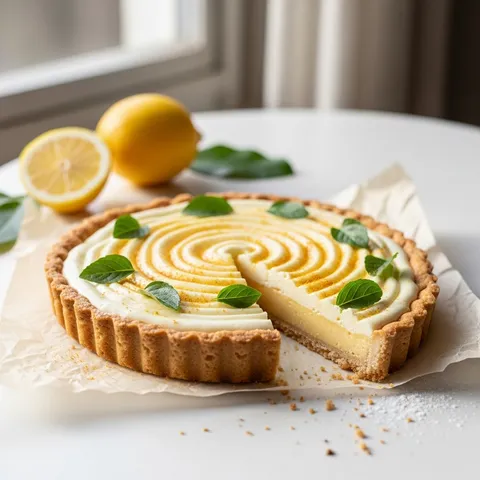
 Lemon Tart
Brighten your dessert spread with this elegant lemon tart, perfectly balancing a brilliantly zesty, silky-smooth lemon curd inside a crisp and buttery sweet pastry shell.