 Bakery Images are for illustrative purposes only, may be inaccurate, and do not guarantee the presence or absence of specific ingredients.
  Serving Images are for illustrative purposes only, may be inaccurate, and do not guarantee the presence or absence of specific ingredients.
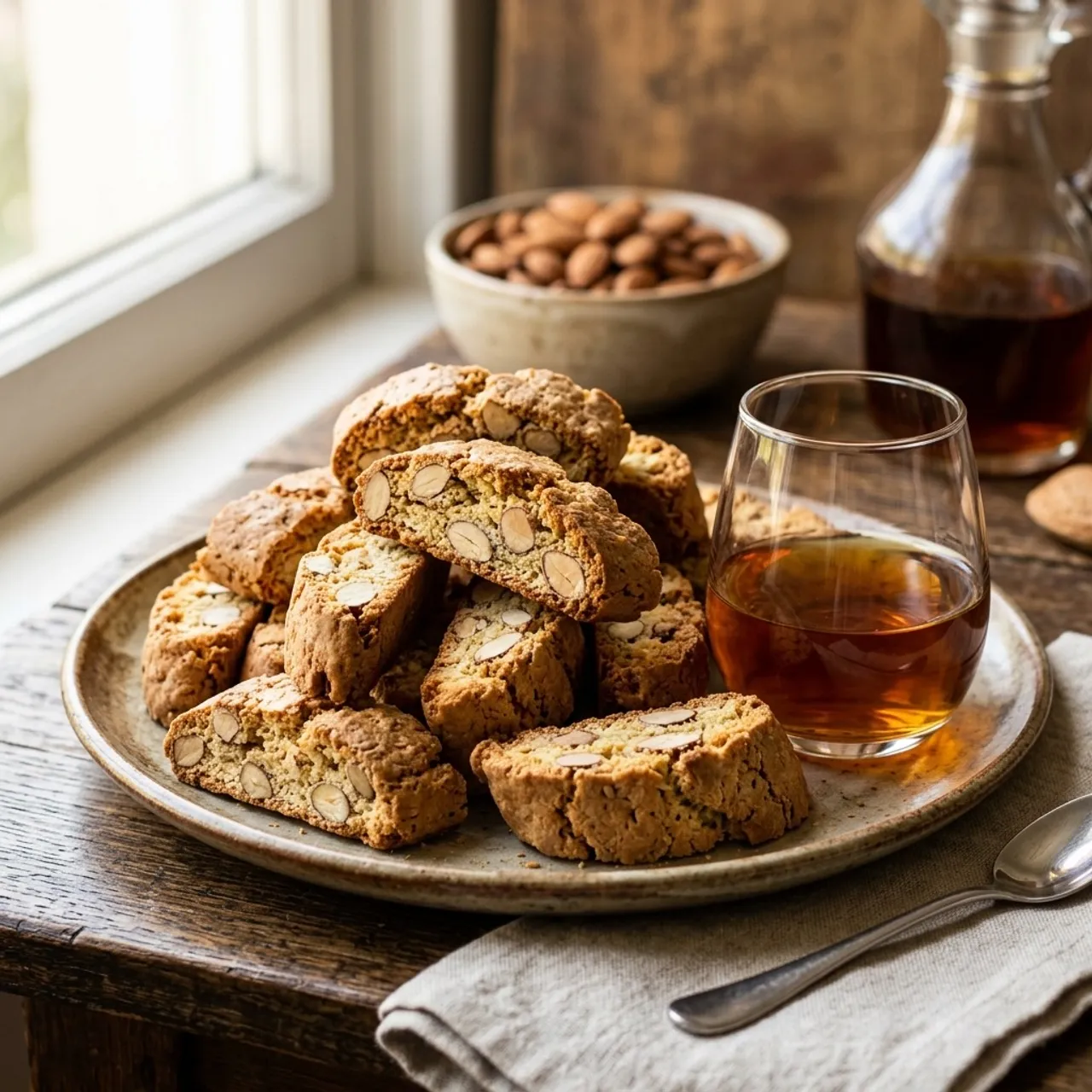
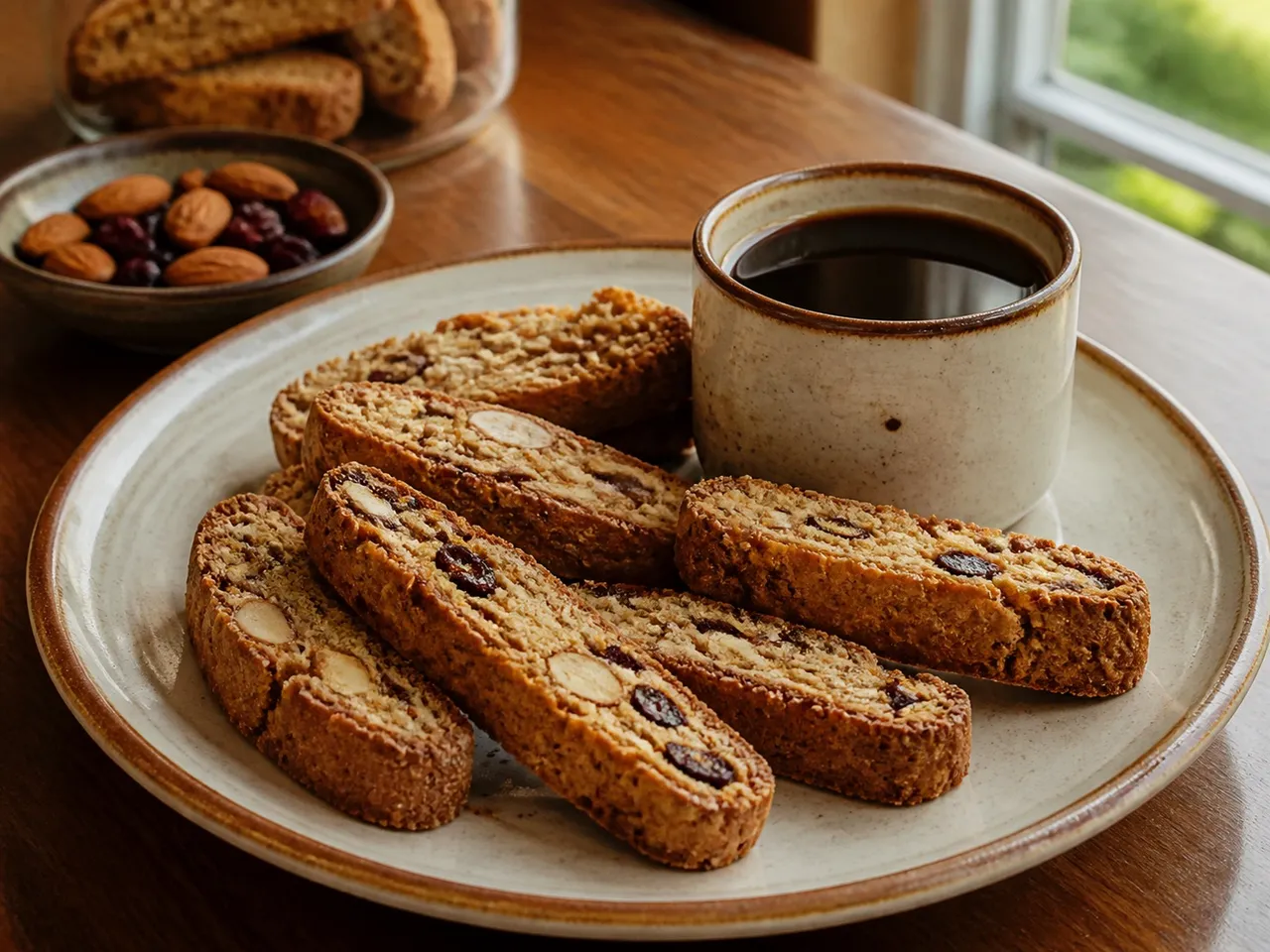
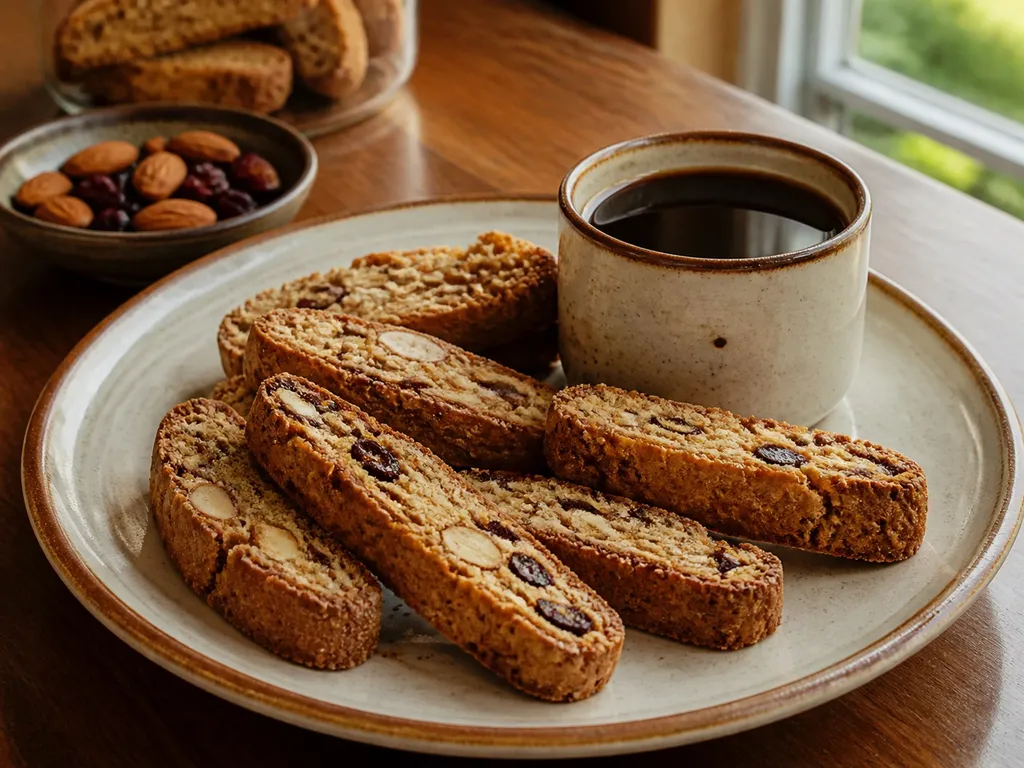
 Biscotti
Twice-baked Italian almond cookies, perfect for dipping in coffee.
Contains common allergens
In the app, Listahan checks these against your household automatically.
Instructions
6 steps- 1
Preheat the oven to 350°F (175°C) and line a baking sheet with parchment paper.
- 2
In a large bowl, whisk together the sugar, melted butter, eggs, vanilla extract, and almond extract until well combined and lightened in color.
- 3
In a separate bowl, mix the flour, baking powder, and salt. Add the dry ingredients to the wet mixture and stir with a wooden spoon until a stiff dough begins to form.
- 4
Fold in the whole toasted almonds. Turn the dough out onto a lightly floured surface and divide it in half. Shape each half into a slightly flattened log, about 10 inches long and 2 inches wide.
- 5
Place the logs on the prepared baking sheet and bake for 25-30 minutes until golden and firm to the touch. Remove from the oven and let cool on a wire rack for 15 minutes. Reduce the oven temperature to 300°F (150°C).
- 6
Transfer the slightly cooled logs to a cutting board. Using a serrated knife, slice them diagonally into 1/2-inch thick pieces. Place the slices cut-side down back onto the baking sheet. Bake for 10-12 minutes on each side until crisp and dry.
 Images are for illustrative purposes only, may be inaccurate, and do not guarantee the presence or absence of specific ingredients.
 Listahan Family Score™
72/100
Good fit for most families
Score reflects how well this recipe fits a typical busy household. In the app, your Family Score is personalized to your household's allergens, kids, and pantry.
Nutrition
per serving380
Calories
9 g
Protein
47 g
Carbs
18 g
Fat
Estimated per serving. Actual values depend on the brands and portions you use.
Listahan cooking guide
Chef notes & practical guide
Technique notes, ingredient swaps, serve-alongside ideas, storage guidance, and equipment for this recipe.
Cultural context
Biscotti means 'twice baked' in Italian, and the technique -- baking a loaf, slicing it, then baking the slices again -- was a Roman-era preservation method that produced a rock-hard biscuit that could last for months in the field. The Tuscan version, cantucci or cantuccini, is the template for most modern biscotti: an almond-studded, dry, crunchy biscuit designed to be dipped in Vin Santo dessert wine. The version that became a North American coffee-shop staple in the 1990s is typically larger and often includes chocolate, dried fruit, or espresso. True cantucci contain no fat beyond the eggs -- the fats that North American recipes add soften the texture and reduce the shelf life.
Listahan note
This version uses the traditional no-added-fat formula, relying entirely on eggs and almond oil from whole almonds for its richness, which produces the proper snap and a long shelf life without the softening that butter introduces.
Technique cues
- The log will spread during the first bake -- plan for it to flatten to about twice the height you started with; a log that is too narrow produces thin, fragile slices that crumble during the second bake.
- Cool the baked log for exactly 10 to 15 minutes before slicing -- too hot and it crumbles; too cold and the crust becomes so hard that even a serrated knife struggles through without shattering the slice.
- Cut at a slight diagonal rather than straight across; diagonal slices are longer and more elegant, and the slight angle exposes more of the interior's cross-section including the almonds.
Kitchen flow
- Parallel prep
- Toast the almonds while the oven preheats for the first bake; they cool quickly on the counter and can be added to the dough immediately.
- Make-ahead
- Biscotti improve with 24 hours of resting after the second bake as the texture firms and the flavor deepens; bake a day ahead of serving.
- Leftover move
- Biscotti that have softened slightly from humidity can be returned to a 300 F oven for 10 minutes to restore the snap; they should emerge as crisp as fresh.
- Cleanup rhythm
- Line the baking sheet with parchment for both bakes; the first bake leaves a sticky egg-sugar residue that burns in the second bake if the parchment is not replaced.
Ingredient brief
Role, handling, and swap guidance for each key ingredient.
all-purpose flour
structure
Purpose: Flour provides the base structure that bakes firm in the first pass and sets completely dry in the second, allowing the biscotti to snap cleanly rather than crumble.
Handling: Measure by weight for consistent results; too much flour makes the dough crumbly and the biscotti prone to breaking during slicing.
Adaptation: A gluten-free 1:1 baking blend produces an acceptable biscotti but the texture is slightly more crumbly and less snap-crisp.
whole almonds
flavor, texture, and natural fat source
Purpose: Whole almonds toasted before mixing release their oils into the dough during baking and provide the crunchy pockets that define classic cantucci; their fat partially replaces the butter that other recipes include.
Handling: Toast briefly at 350 F for 8 minutes before adding; toasted almonds have a more pronounced flavor and a slightly firmer texture that survives the double bake without becoming rubbery.
Adaptation: Pistachios, hazelnuts, or cashews work equally well; chocolate chips can be added alongside the nuts for a modern version.
eggs
binding agent and only liquid
Purpose: In a traditional fat-free biscotti, eggs are the sole binder and moisture source; they set firm during baking and contribute to the snap-crisp texture.
Handling: Beat lightly before adding to the dry ingredients; a well-combined egg mixture distributes evenly through the dough for consistent texture across the log.
Adaptation: Adding one egg yolk for richness (using 2 whole eggs plus 1 yolk) produces a more golden, slightly richer biscotti without noticeably softening the texture.
anise seeds
traditional flavoring
Purpose: Anise seeds are the traditional cantucci flavoring, providing a mild licorice note that pairs perfectly with the Vin Santo or espresso the biscotti is meant to accompany.
Handling: Lightly crush seeds in a mortar or with the flat of a knife to release the volatile oils before adding to the dough.
Adaptation: Vanilla extract plus the zest of one orange is a popular modern substitution that produces a fragrant, family-friendly biscotti without the anise flavor.
Technique notes
- The dough will be quite sticky -- this is correct; wet hands or lightly floured hands help shape the log without tearing the dough or incorporating excess flour that would tighten the texture.
- Slice with a gentle back-and-forth sawing motion using a serrated bread knife, letting the serrations do the work rather than pressing down; pressure cracks the slices at the almond points.
- The internal temperature of the second bake should reach 200 F -- at this point the moisture is fully driven out and the biscotti will set to proper snap-crispness as they cool on a wire rack.
Ingredient swaps
- Gluten-free direction
- Use a 1:1 gluten-free baking flour blend; the biscotti will be slightly more crumbly and benefit from slightly longer baking in the second pass to achieve the proper dry snap.
- Nut-free direction
- Replace almonds with chocolate chips, dried cranberries, or a combination; reduce the second bake time slightly as chocolate can become bitter if over-baked.
- Lower-sugar direction
- Reduce sugar by one-quarter; biscotti are not a sweet cookie and the sugar primarily affects browning and structure rather than sweetness at the levels used in traditional recipes.
Serve alongside
- Espresso or strong coffee for dipping
- A small glass of Vin Santo or dessert wine
- Fresh ricotta with honey
- Double espresso
- Vin Santo
- Hot Earl Grey tea
Serving suggestions only — check pairings for your household's allergens.
Storage & reheating
- Store completely cooled biscotti in an airtight tin or jar at room temperature for up to 3 weeks; the absence of added fat means they do not go rancid and they stay crisp without refrigeration. Do not store in a humid environment or the snap will diminish.
Equipment
- Serrated bread knife for slicing
- Parchment-lined baking sheet
- Wire cooling rack
- Mortar and pestle or flat-bottomed glass for crushing seeds
Make this household-aware
Listahan Pro checks this recipe against your household's allergens, finds pantry-aware swaps, builds the shopping list, and helps you plan the week around it.
Plan it in Listahan
Add Biscotti to your week, check it against your household's allergens, and build the shopping list automatically.
More Bakery recipes
 Bakery Lens Verified Images are for illustrative purposes only, may be inaccurate, and do not guarantee the presence or absence of specific ingredients.
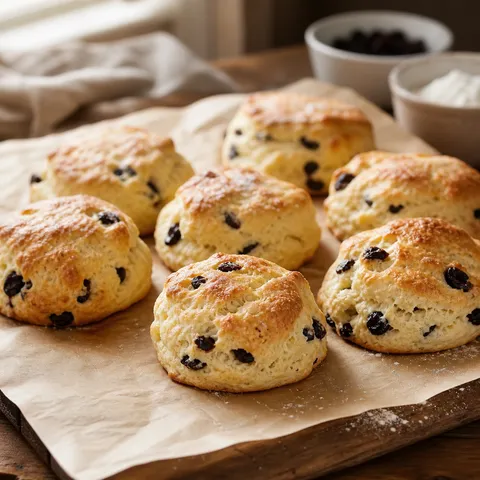
 Scones
Flaky and buttery British baked goods, often with currants or berries.
 Bakery Lens Verified Images are for illustrative purposes only, may be inaccurate, and do not guarantee the presence or absence of specific ingredients.
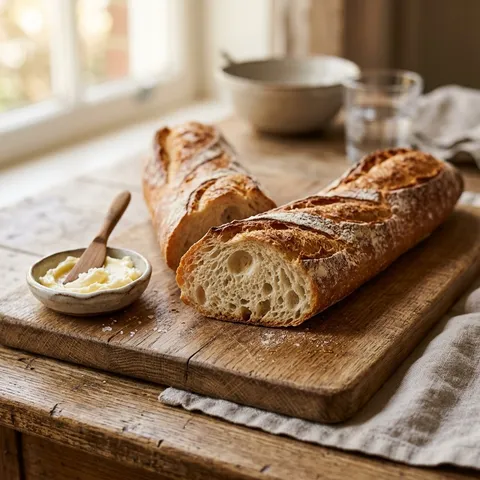
 French Baguette
Savor the authentic crunch of this rustic French baguette, featuring a beautifully crackling golden crust and a soft, airy, and utterly irresistible crumb.
 Bakery Lens Verified Images are for illustrative purposes only, may be inaccurate, and do not guarantee the presence or absence of specific ingredients.
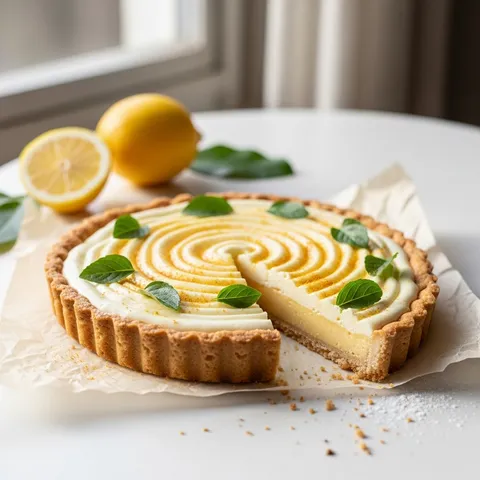
 Lemon Tart
Brighten your dessert spread with this elegant lemon tart, perfectly balancing a brilliantly zesty, silky-smooth lemon curd inside a crisp and buttery sweet pastry shell.