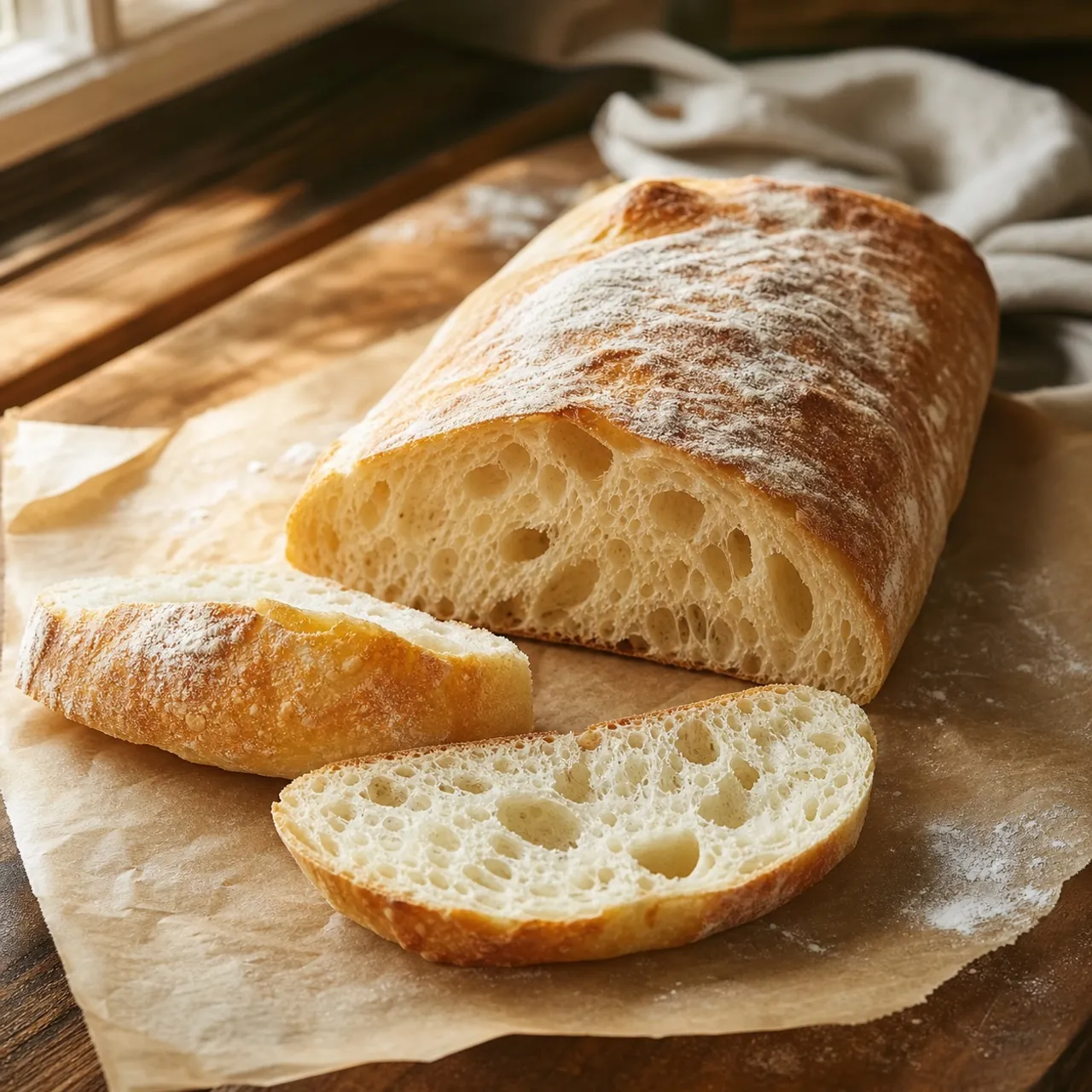
 Bakery Images are for illustrative purposes only, may be inaccurate, and do not guarantee the presence or absence of specific ingredients.
 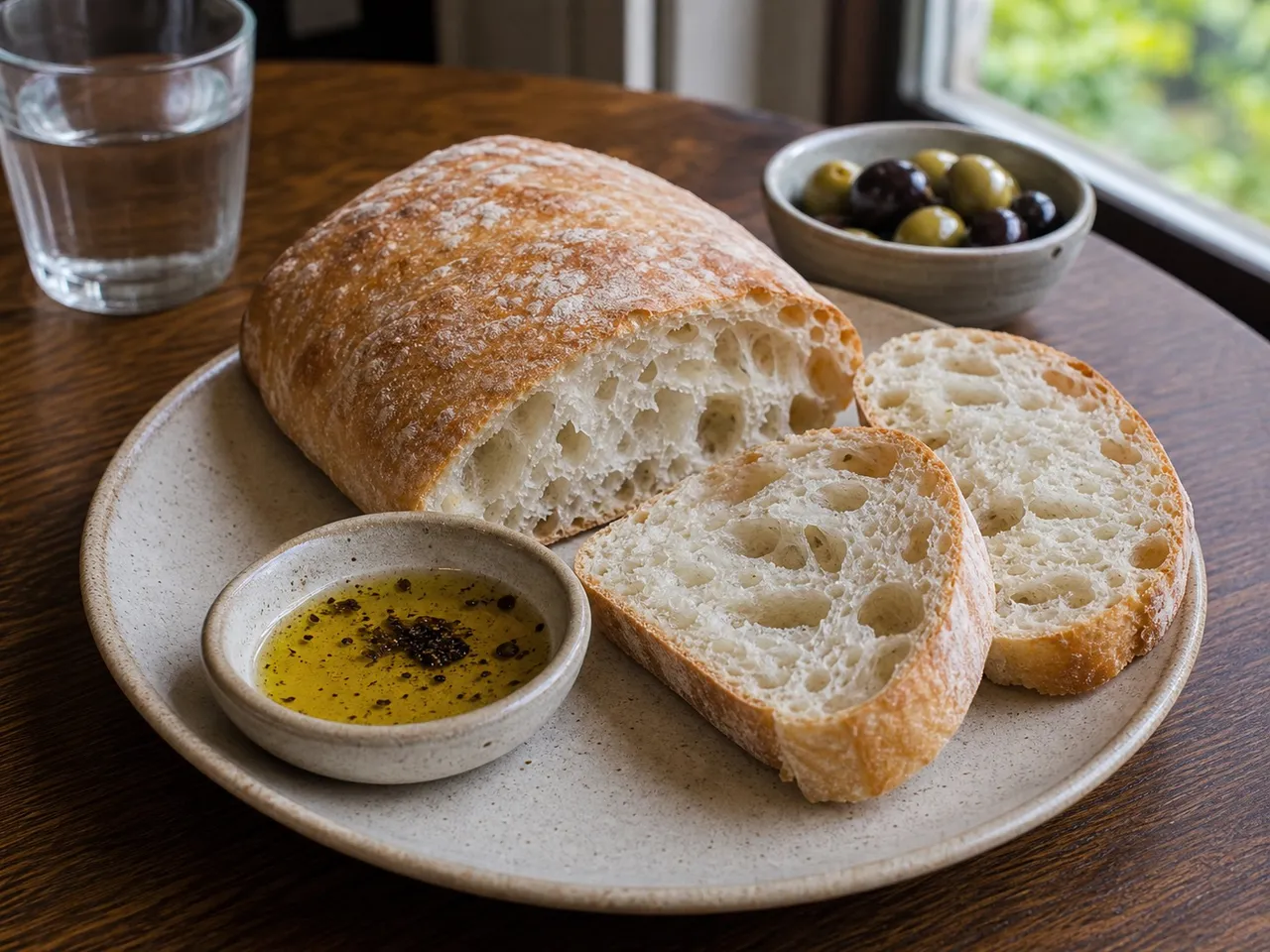 Serving Images are for illustrative purposes only, may be inaccurate, and do not guarantee the presence or absence of specific ingredients.
 Ciabatta
Master the rustic charm of artisan Italian baking with this spectacular ciabatta, offering an impossibly crisp crust and a delightfully airy, hole-filled crumb perfect for dipping.
Contains common allergens
In the app, Listahan checks these against your household automatically.
Good to know
- Crispy
Matched from this dish's own ingredients and timing. Browse more: crispy recipes
Instructions
6 steps- 1
Make the poolish the night before: mix 1 cup flour, 1 cup water, and 1/8 tsp yeast. Cover and let sit at room temperature for 12-16 hours until bubbly and collapsed.
- 2
In a large bowl, mix the poolish, remaining water, yeast, and olive oil. Add the flour and salt. Mix until a very wet, sticky dough forms.
- 3
Leave the dough in the bowl. Over the next 2 hours, perform 4 sets of "stretch and folds" (wet your hands, grab the underside of the dough, stretch it up, and fold it over itself) every 30 minutes. The dough will gain structure.
- 4
Let the dough bulk ferment until it is very bubbly and tripled in size (about 1-2 hours).
- 5
Generously flour a work surface and turn the wet dough out gently to avoid deflating it. Dust the top with flour and carefully divide the dough in half using a bench scraper. Gently shape each half into a rough rectangular "slipper" shape. Transfer to a well-floured couche or parchment paper. Proof for 45 minutes.
- 6
Preheat the oven to 450°F (230°C) with a baking stone and a steam pan. Slide the loaves onto the hot stone, pour water into the steam pan, and bake for 25-30 minutes until the crust is deep brown and feels firm and hollow.
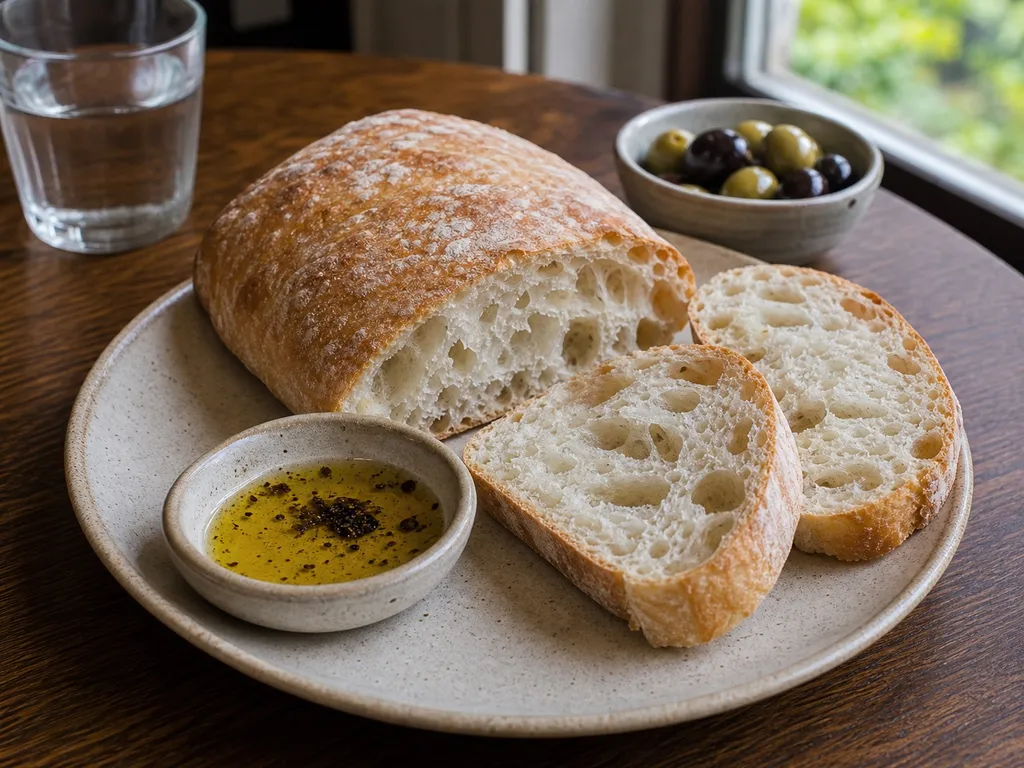 Images are for illustrative purposes only, may be inaccurate, and do not guarantee the presence or absence of specific ingredients.
 Listahan Family Score™
72/100
Good fit for most families
Score reflects how well this recipe fits a typical busy household. In the app, your Family Score is personalized to your household's allergens, kids, and pantry.
Nutrition
per serving30
Calories
0 g
Protein
0 g
Carbs
3 g
Fat
Estimated per serving. Actual values depend on the brands and portions you use.
Listahan cooking guide
Chef notes & practical guide
Technique notes, ingredient swaps, serve-alongside ideas, storage guidance, and equipment for this recipe.
Cultural context
Ciabatta is a remarkably modern bread -- it was invented in 1982 by Arnaldo Cavallari, a Veronese miller, as an Italian response to the popularity of the French baguette in European markets. Its name means 'slipper' in Italian, a reference to its flat, wide shape. Cavallari patented the name and recipe and began licensing it to Italian bakers, which is why the style spread so rapidly across Italy and internationally. The very wet dough and open, irregular crumb were deliberate design choices meant to create a bread that could be made quickly by industrial bakeries while still expressing authentic Italian bread character -- it is one of the few traditional-seeming breads with a known inventor.
Listahan note
This version uses a pre-ferment (biga) built the night before, which is the technique that gives ciabatta its complex wheaty flavor despite its simple ingredient list, and handles the very wet dough with a series of folds rather than conventional kneading.
Technique cues
- Do not add more flour when the dough feels impossibly wet -- ciabatta dough at 75 to 80 percent hydration is supposed to spread and cling to your hands; the high water content is directly responsible for the open, irregular crumb.
- Use the stretch-and-fold method rather than kneading: wet your hands, reach under the dough, stretch it upward and fold it over itself, rotating the container 90 degrees between each fold -- 4 sets of 4 folds over 2 hours builds strength without excess flour.
- Transfer the shaped loaf to a very hot baking surface with a lame-dusted couche or heavily floured peel in one decisive motion; hesitation deflates the delicate gas structure built up during fermentation.
Kitchen flow
- Parallel prep
- Build the biga the evening before; the next morning while it comes to room temperature, preheat the baking stone or steel for a minimum of 45 minutes so it reaches full temperature.
- Make-ahead
- The biga can be refrigerated for up to 16 hours; longer fermentation deepens flavor but past 18 hours the yeast becomes exhausted and the final dough rise suffers.
- Leftover move
- Day-old ciabatta cut into thick slices, grilled, and rubbed with garlic and a cut tomato is bruschetta at its most authentic; the open crumb soaks up olive oil perfectly.
- Cleanup rhythm
- The very wet dough leaves a flour paste on the counter; scrape with a bench scraper while moist rather than waiting for it to dry into a film that requires soaking.
Ingredient brief
Role, handling, and swap guidance for each key ingredient.
bread flour
strong gluten for high-hydration handling
Purpose: The high protein content of bread flour is necessary to form a gluten network strong enough to hold the large volume of water in the dough without the structure collapsing.
Handling: Weigh by grams; at 78 percent hydration, a 10-gram flour difference meaningfully changes the dough's consistency and handling.
Adaptation: 00 flour (Italian-style fine-milled flour) is used by Italian bakers and produces a slightly silkier crumb; it may require slightly less water due to finer milling.
biga (pre-ferment)
flavor development and dough extensibility
Purpose: An overnight biga ferments slowly at low yeast levels, producing acetic and lactic acids that deepen the flavor and increase the extensibility of the final dough.
Handling: Mix biga (flour, water, tiny amount of yeast) the night before and refrigerate; use it cold the next morning when building the final dough.
Adaptation: Skip the biga for a same-day ciabatta using a poolish instead (equal parts flour and water plus yeast, 1 to 2 hours at room temperature); the flavor will be simpler but the crumb structure similar.
olive oil
dough relaxation and flavor
Purpose: A small amount of olive oil loosens the extensibility of the very tight, strong gluten network and adds a subtle flavor note appropriate for an Italian bread.
Handling: Add to the final dough during the mixing stage, not to the biga, so the oil does not interfere with gluten development in the pre-ferment.
Adaptation: Neutral oil can be used without significant flavor impact; some Veronese recipes omit oil entirely for a chewier, leaner crumb.
instant yeast
leavening in final dough
Purpose: Only a small addition of yeast in the final dough is needed because the biga brings existing fermentation and yeast activity that carries through to the final bake.
Handling: Dissolve in a small amount of the measured water before adding to the dough to ensure even distribution without clumps.
Adaptation: Sourdough starter combined with a short biga period produces a tangy ciabatta with an even more open crumb; this is a longer, more advanced process.
Technique notes
- Flour the work surface generously for the final shaping -- the dough is so wet that it adheres aggressively to any surface; semolina flour or rice flour provides better non-stick than all-purpose.
- Resist degassing the dough during shaping: use minimal pressure and gentle movements that preserve rather than eliminate the bubbles built during fermentation -- those bubbles are the open crumb.
- The bread is done at an internal temperature of 205 to 210 F; the thick, crisp bottom crust should sound hollow when tapped and the sides should feel firm when lightly pressed.
Ingredient swaps
- Whole wheat direction
- Replace 20 percent of bread flour with whole wheat; increase water by 1 to 2 tablespoons per 100 grams of whole wheat added as the bran absorbs more moisture.
- Gluten-free direction
- True open-crumb ciabatta cannot be replicated without gluten; a gluten-free high-hydration flatbread using psyllium husk as a binder is the closest alternative but produces a very different eating experience.
- Weeknight shortcut
- Replace the overnight biga with a 2-hour poolish (equal parts flour and water, plus yeast) and proceed directly to the final dough; the crumb will be more uniform and the flavor simpler but the technique is identical.
Serve alongside
- Burrata and roasted cherry tomatoes on grilled slices
- Prosciutto and melon on ciabatta halves
- White bean and rosemary dip
- Crisp Pinot Grigio
- Sparkling water with a slice of lemon
- Light lager
Serving suggestions only — check pairings for your household's allergens.
Storage & reheating
- Ciabatta is best the day of baking; store at room temperature in a paper bag for up to 1 day. The high-hydration crumb goes stale faster than drier breads. Slice and freeze immediately if not eating same-day; toast from frozen at 375 F for 5 minutes.
Equipment
- Baking stone or baking steel (essential)
- Bench scraper for handling wet dough
- Banneton or floured kitchen towel for final proof
- Digital scale
Make this household-aware
Listahan Pro checks this recipe against your household's allergens, finds pantry-aware swaps, builds the shopping list, and helps you plan the week around it.
Plan it in Listahan
Add Ciabatta to your week, check it against your household's allergens, and build the shopping list automatically.
More Bakery recipes
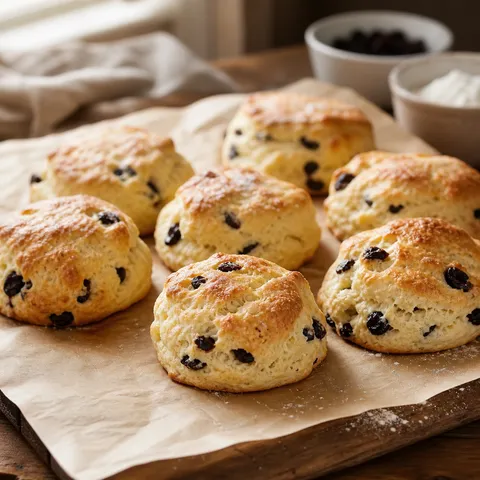 Bakery Lens Verified Images are for illustrative purposes only, may be inaccurate, and do not guarantee the presence or absence of specific ingredients.
 Scones
Flaky and buttery British baked goods, often with currants or berries.
 Bakery Lens Verified Images are for illustrative purposes only, may be inaccurate, and do not guarantee the presence or absence of specific ingredients.
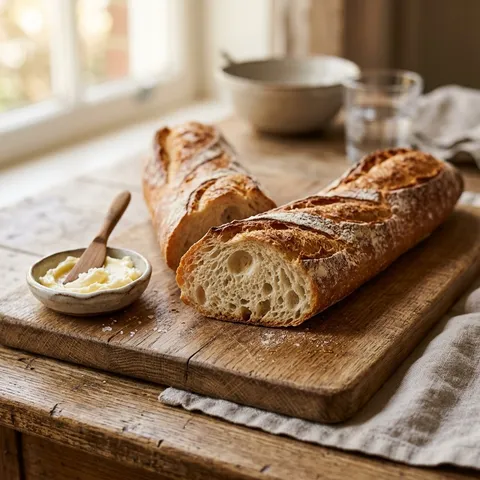
 French Baguette
Savor the authentic crunch of this rustic French baguette, featuring a beautifully crackling golden crust and a soft, airy, and utterly irresistible crumb.
 Bakery Lens Verified Images are for illustrative purposes only, may be inaccurate, and do not guarantee the presence or absence of specific ingredients.
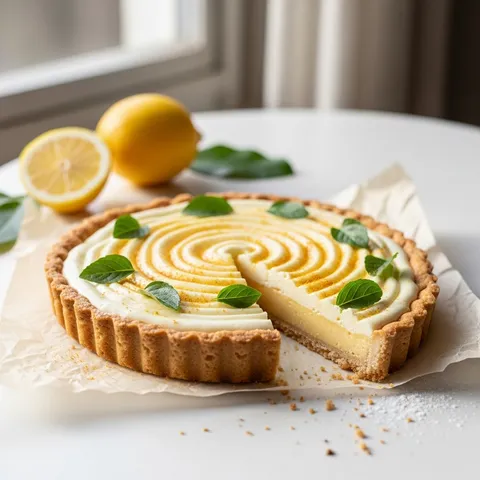
 Lemon Tart
Brighten your dessert spread with this elegant lemon tart, perfectly balancing a brilliantly zesty, silky-smooth lemon curd inside a crisp and buttery sweet pastry shell.