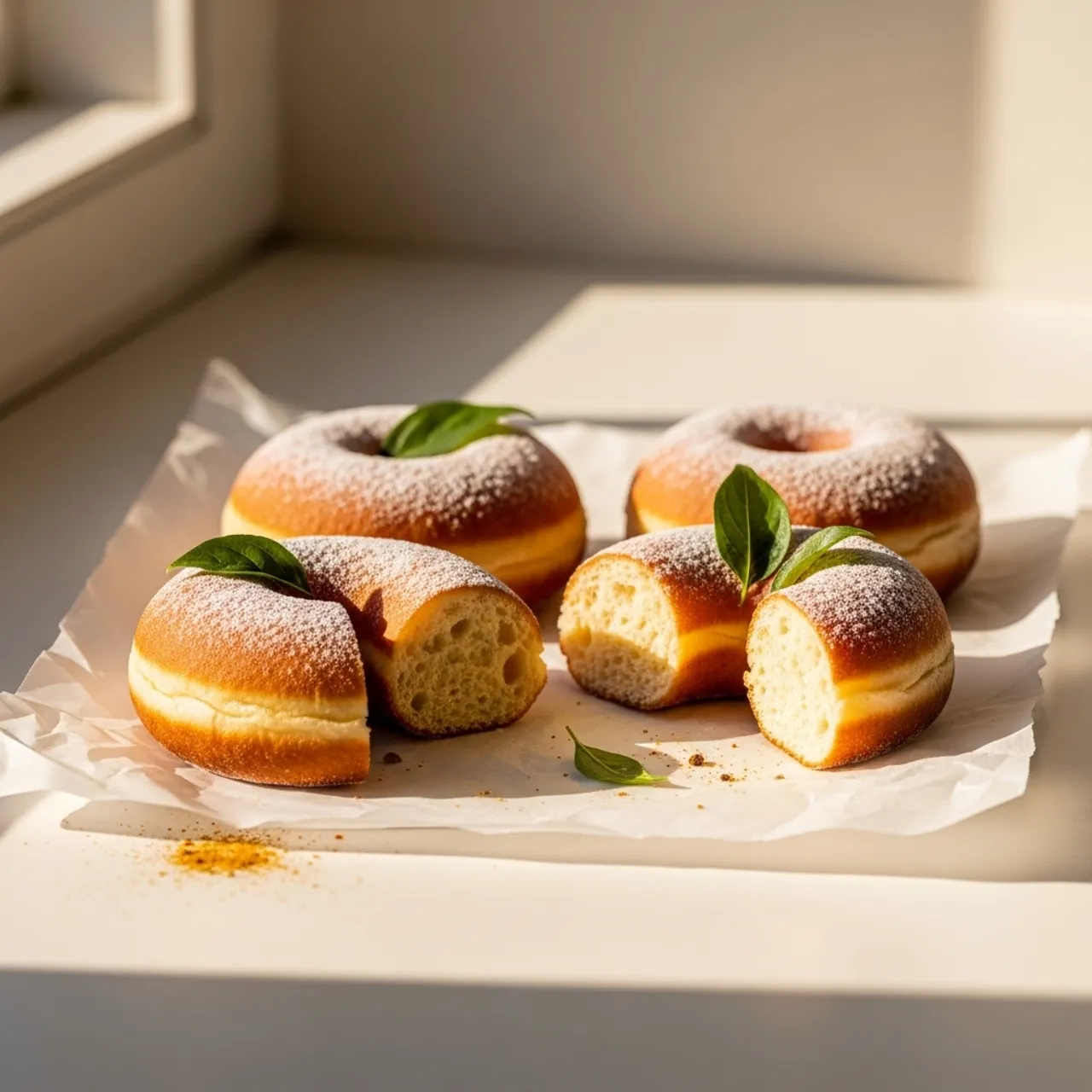
 Bakery Images are for illustrative purposes only, may be inaccurate, and do not guarantee the presence or absence of specific ingredients.
 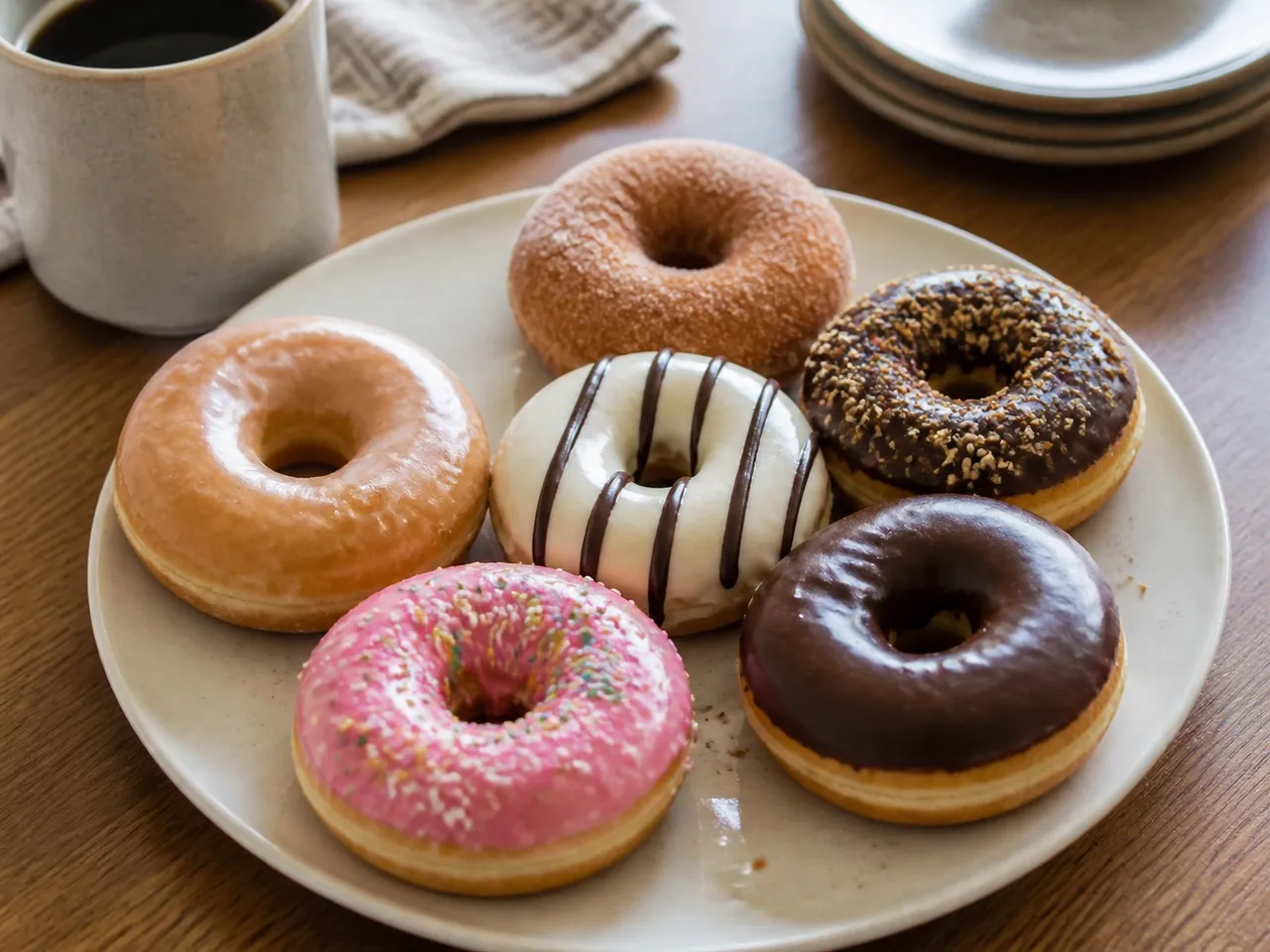 Serving Images are for illustrative purposes only, may be inaccurate, and do not guarantee the presence or absence of specific ingredients.
 Doughnuts
Bring the bakery home with these incredibly fluffy, yeast-raised doughnuts, fried to a perfect golden brown and dunked in a sweet, crackly vanilla glaze.
Contains common allergens
In the app, Listahan checks these against your household automatically.
Good to know
- Crispy
Matched from this dish's own ingredients and timing. Browse more: crispy recipes
Instructions
6 steps- 1
In a stand mixer bowl, dissolve the yeast and 1 teaspoon of sugar in the warm milk. Let sit for 5 minutes until frothy.
- 2
Add the remaining sugar, eggs, melted butter, salt, and half the flour. Mix with the paddle attachment until combined. Switch to the dough hook, add the remaining flour, and knead on medium speed for 5-7 minutes until the dough is smooth, elastic, and clears the sides of the bowl.
- 3
Place the dough in a greased bowl, cover, and let rise in a warm spot for 1 to 1.5 hours until doubled in volume.
- 4
Turn the dough out onto a floured surface and roll it to 1/2-inch thickness. Use a doughnut cutter (or two different-sized biscuit cutters) to cut out rings. Place the rings and holes on parchment squares. Cover loosely and proof for 30-45 minutes until very puffy.
- 5
Heat the vegetable oil in a heavy pot to 350°F (175°C). Carefully lower 2-3 doughnuts into the oil using the parchment squares. Fry for 1 to 1.5 minutes per side until golden brown. Drain on a wire rack set over paper towels.
- 6
Whisk the powdered sugar, milk, and vanilla together to make a smooth glaze. Dip the warm doughnuts completely into the glaze, let the excess drip off, and return to the wire rack to set.
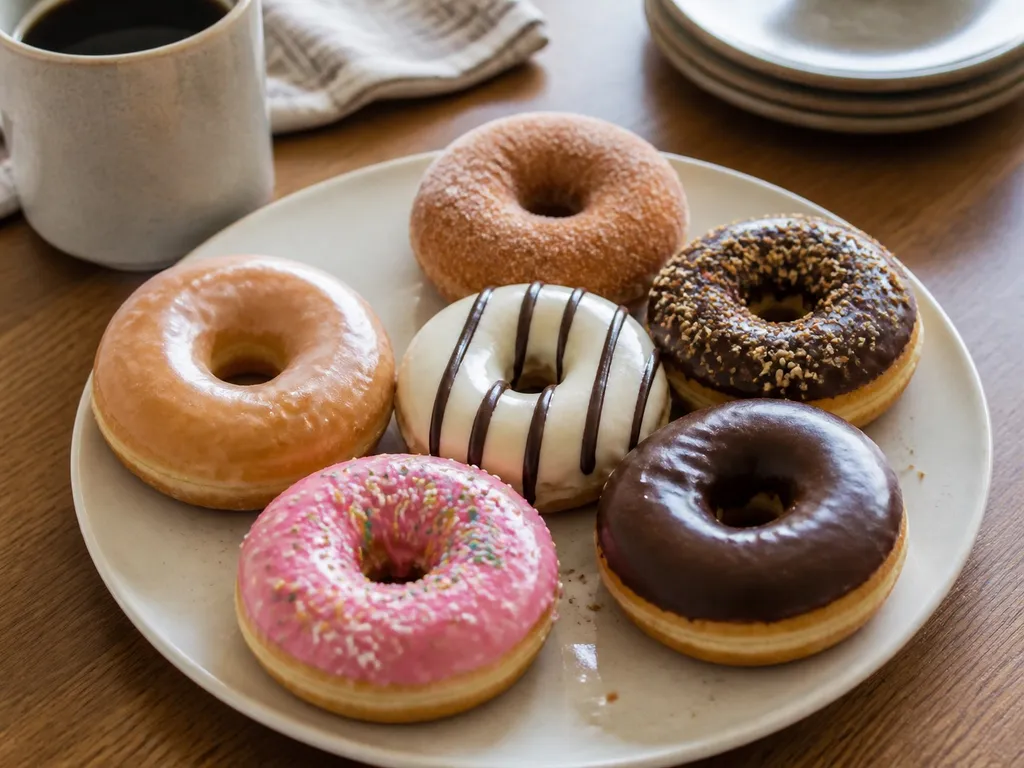 Images are for illustrative purposes only, may be inaccurate, and do not guarantee the presence or absence of specific ingredients.
 Listahan Family Score™
77/100
Good fit for most families
Score reflects how well this recipe fits a typical busy household. In the app, your Family Score is personalized to your household's allergens, kids, and pantry.
Nutrition
per serving120
Calories
3 g
Protein
9 g
Carbs
8 g
Fat
Estimated per serving. Actual values depend on the brands and portions you use.
Listahan cooking guide
Chef notes & practical guide
Technique notes, ingredient swaps, serve-alongside ideas, storage guidance, and equipment for this recipe.
Cultural context
Deep-fried dough rings appear in culinary traditions worldwide, but the modern American doughnut descends most directly from Dutch olykoeks — oil cakes — brought to New Amsterdam in the 17th century. The ring shape is commonly attributed to a Maine ship captain named Hanson Gregory, who reportedly punched out the centers of his mother's fried dough balls in 1847 to ensure even cooking. The 20th century industrialized the doughnut via chains like Krispy Kreme and Dunkin, but home-fried yeast doughnuts — pillowy, light, and deeply fragrant — represent a weekend project that the commercial versions can never fully replicate.
Listahan note
This version focuses on the classic yeasted glazed doughnut — a light, airy interior from a proper rise, a thin crackly sugar glaze, and the deep golden color that comes from frying in oil at the right temperature. Patience with the dough is the only real technique required.
Technique cues
- Fry at exactly 375 F — too low and the doughnuts absorb oil and turn greasy; too high and the exterior browns before the interior cooks through, leaving a raw doughy center.
- Cut doughnuts from the rolled dough and let them proof a second time on floured parchment squares, then lower each one into the oil parchment-side up and peel the paper away — this avoids deflating the fragile proofed dough during transfer.
- Glaze doughnuts while they are still warm but not hot — about 60 seconds out of the oil — so the glaze sets in a thin, crackly shell rather than pooling or running off entirely.
Kitchen flow
- Parallel prep
- While the shaped doughnuts complete their second proof, heat the oil and prepare the glazing station — a wire rack over a sheet pan to catch drips, and the glaze whisked and ready in a wide shallow bowl.
- Make-ahead
- After the first rise, punch down the dough, wrap tightly, and refrigerate overnight; the next morning let it come to room temperature for 30 minutes, then roll, cut, and proof for the second rise before frying.
- Leftover move
- Day-old glazed doughnuts are excellent halved and toasted cut-side down in a buttered skillet until caramelized, then served with ice cream as a shortcut dessert, or blitzed into a bread pudding base.
- Cleanup rhythm
- Let the frying oil cool completely in the pot, then strain it through a fine-mesh sieve lined with a coffee filter into a sealed jar — clean oil can be reused 2 to 3 more times for frying sweet doughs.
Ingredient brief
Role, handling, and swap guidance for each key ingredient.
bread flour
structure and chew
Purpose: The higher protein content in bread flour creates more gluten, which gives yeasted doughnuts their signature slight chew and allows them to hold the CO2 from the yeast through two rises and the thermal shock of hot oil.
Handling: Measure by spooning into the cup; packing the flour makes the dough too stiff and the finished doughnuts tough.
Adaptation: All-purpose flour works and produces a softer, more tender doughnut with less chew — a better choice for cake doughnuts but acceptable for yeasted.
active dry yeast
leavening and flavor
Purpose: Yeast fermentation produces the carbon dioxide that creates the open, airy crumb inside a yeasted doughnut, and also generates flavor compounds during the rise that give it depth beyond simple sweetness.
Handling: Proof in warm (105 to 115 F) whole milk with a pinch of sugar for 5 to 10 minutes until visibly foamy before adding to the dough.
Adaptation: Instant yeast can be mixed directly into the dry ingredients without proofing; use 25% less than the active dry yeast quantity.
whole milk
liquid and tenderness
Purpose: Milk's fat and lactose contribute to a tender crumb and browning of the crust during frying; water-based doughs produce a chewier, less rich result.
Handling: Warm to between 105 and 115 F for yeast activation — a kitchen thermometer is more reliable than touch, which tends to overestimate temperature.
Adaptation: Full-fat oat milk or soy milk works as a dairy-free substitute and produces a nearly identical crumb.
eggs
richness and structure
Purpose: Egg yolks add fat and lecithin, which tenderize the crumb and produce the characteristic yellow interior of enriched dough; the proteins in the whites also help support structure during frying.
Handling: Use at room temperature — cold eggs slow yeast activity and can cause the fat from butter to seize into lumps in the dough.
Adaptation: Two egg yolks per whole egg increase richness without the additional whites, producing an even more brioche-like doughnut.
neutral frying oil
cooking medium
Purpose: A neutral oil with a high smoke point (canola, peanut, refined sunflower) maintains a stable 375 F without imparting flavor and produces the clean golden exterior that defines a well-made doughnut.
Handling: Use at least 3 inches of oil in a deep, heavy pot and monitor temperature with a clip-on thermometer throughout frying, as each batch of dough cools the oil.
Adaptation: Lard was the traditional frying fat and produces a slightly crisper, more flavorful result; shortening is the commercial standard.
Technique notes
- Fry doughnuts in small batches of 2 to 3 to avoid crowding, which drops the oil temperature dramatically and results in oil-soaked, pale doughnuts rather than the deeply golden exterior you want.
- For an ultra-thin glaze that sets glass-clear, add a tablespoon of corn syrup to the powdered sugar and milk mixture — it prevents crystallization and gives the glaze a professional sheen.
- Save the doughnut holes and fry them as a separate batch; they cook in roughly 60 to 90 seconds per side and are the ideal quality-control bite before you commit the full rings to the oil.
Ingredient swaps
- Baked direction
- Pipe the dough into a greased doughnut pan and bake at 375 F for 10 to 12 minutes for a lighter, oil-free option; brush with melted butter immediately out of the oven before dipping in glaze to approximate the richness of frying.
- Dairy-free option
- Full-fat oat milk replaces whole milk exactly; vegan butter replaces dairy butter in the dough at a 1:1 ratio with no other adjustments needed.
- Gluten-free direction
- A cake-style GF doughnut (baked, not fried) using a GF 1:1 flour blend and an extra egg for structure is more successful than attempting a yeasted GF doughnut, which lacks the gluten network to contain the yeast bubbles.
Serve alongside
- fresh fruit salad with citrus zest
- scrambled eggs with cheddar
- crispy bacon strips
- drip coffee or a double espresso
- cold whole milk
- hot chocolate with whipped cream
Serving suggestions only — check pairings for your household's allergens.
Storage & reheating
- Glazed doughnuts are best eaten the day they are made; store at room temperature in an open box or loosely covered (not airtight, which steams the glaze) for up to 12 hours.
- To freeze, skip the glaze, freeze unfrosted doughnuts in a single layer until solid, then bag; reheat in a 350 F oven for 8 minutes and glaze while still warm.
Equipment
- deep heavy pot (Dutch oven) for stable oil temperature and splash containment
- clip-on candy or fry thermometer — temperature accuracy is non-negotiable
- 3.5-inch and 1.5-inch round cutters for standard doughnut rings and holes
- spider strainer or slotted spoon for lowering doughnuts in and lifting them out without splash
Make this household-aware
Listahan Pro checks this recipe against your household's allergens, finds pantry-aware swaps, builds the shopping list, and helps you plan the week around it.
Plan it in Listahan
Add Doughnuts to your week, check it against your household's allergens, and build the shopping list automatically.
More Bakery recipes
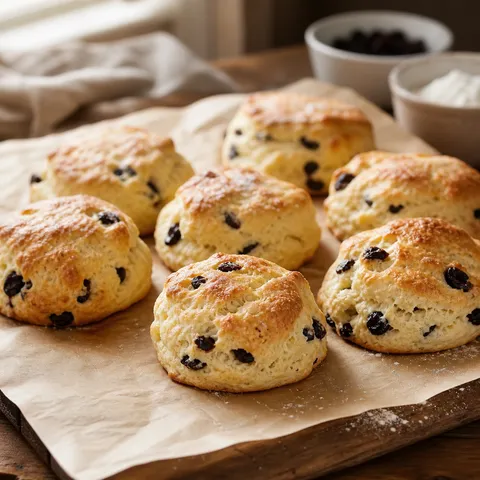 Bakery Lens Verified Images are for illustrative purposes only, may be inaccurate, and do not guarantee the presence or absence of specific ingredients.
 Scones
Flaky and buttery British baked goods, often with currants or berries.
 Bakery Lens Verified Images are for illustrative purposes only, may be inaccurate, and do not guarantee the presence or absence of specific ingredients.
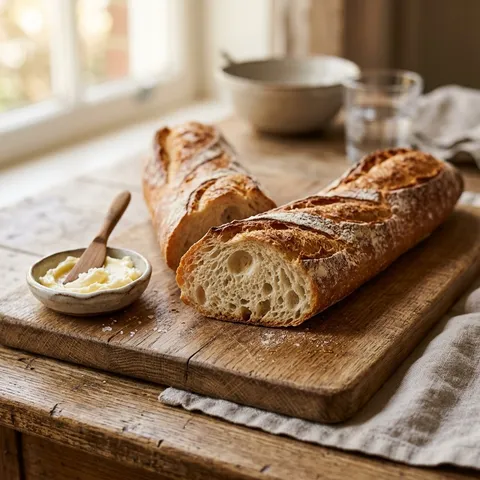
 French Baguette
Savor the authentic crunch of this rustic French baguette, featuring a beautifully crackling golden crust and a soft, airy, and utterly irresistible crumb.
 Bakery Lens Verified Images are for illustrative purposes only, may be inaccurate, and do not guarantee the presence or absence of specific ingredients.
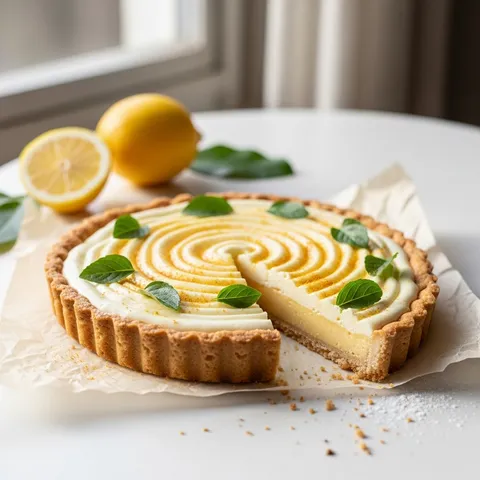
 Lemon Tart
Brighten your dessert spread with this elegant lemon tart, perfectly balancing a brilliantly zesty, silky-smooth lemon curd inside a crisp and buttery sweet pastry shell.