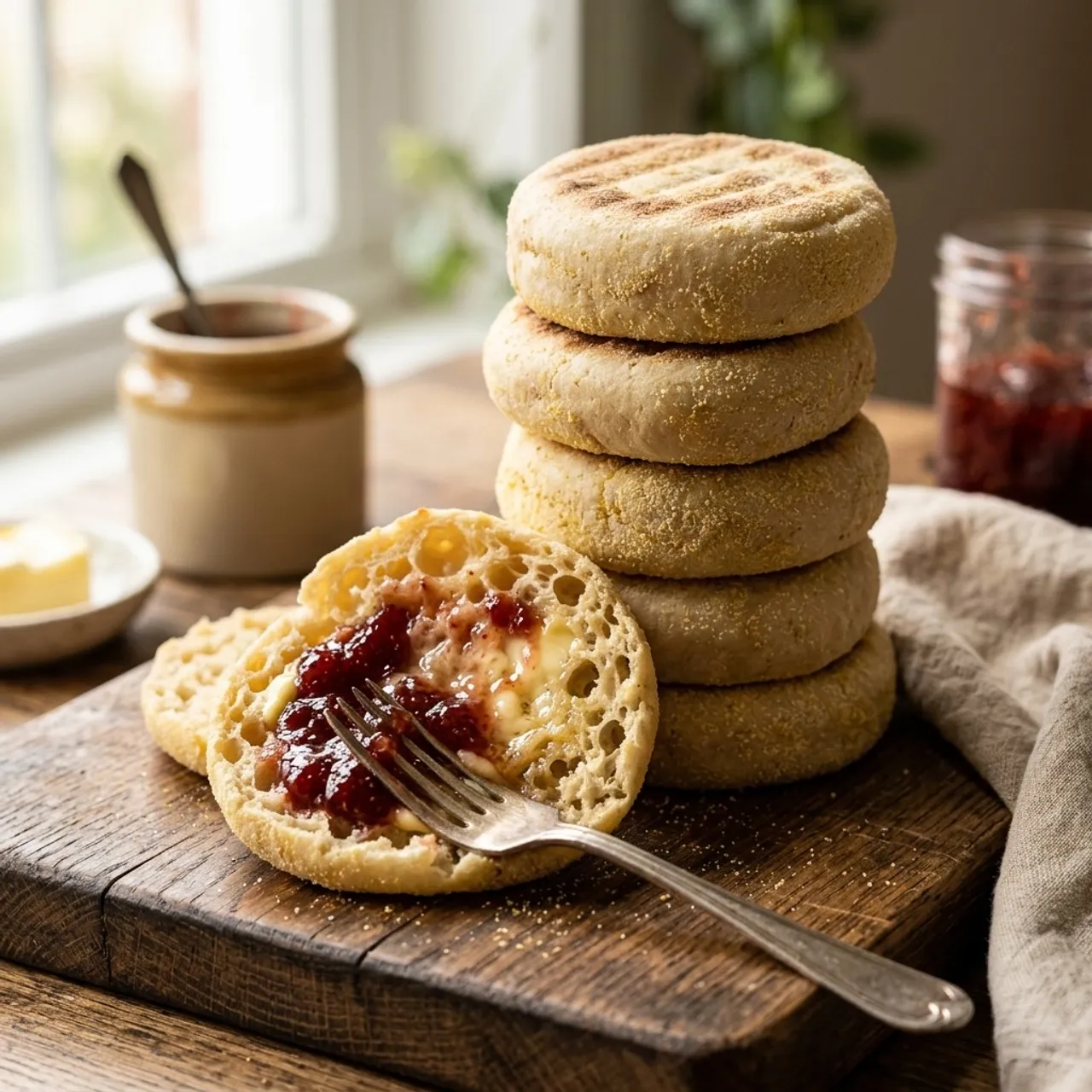
 Bakery Images are for illustrative purposes only, may be inaccurate, and do not guarantee the presence or absence of specific ingredients.
 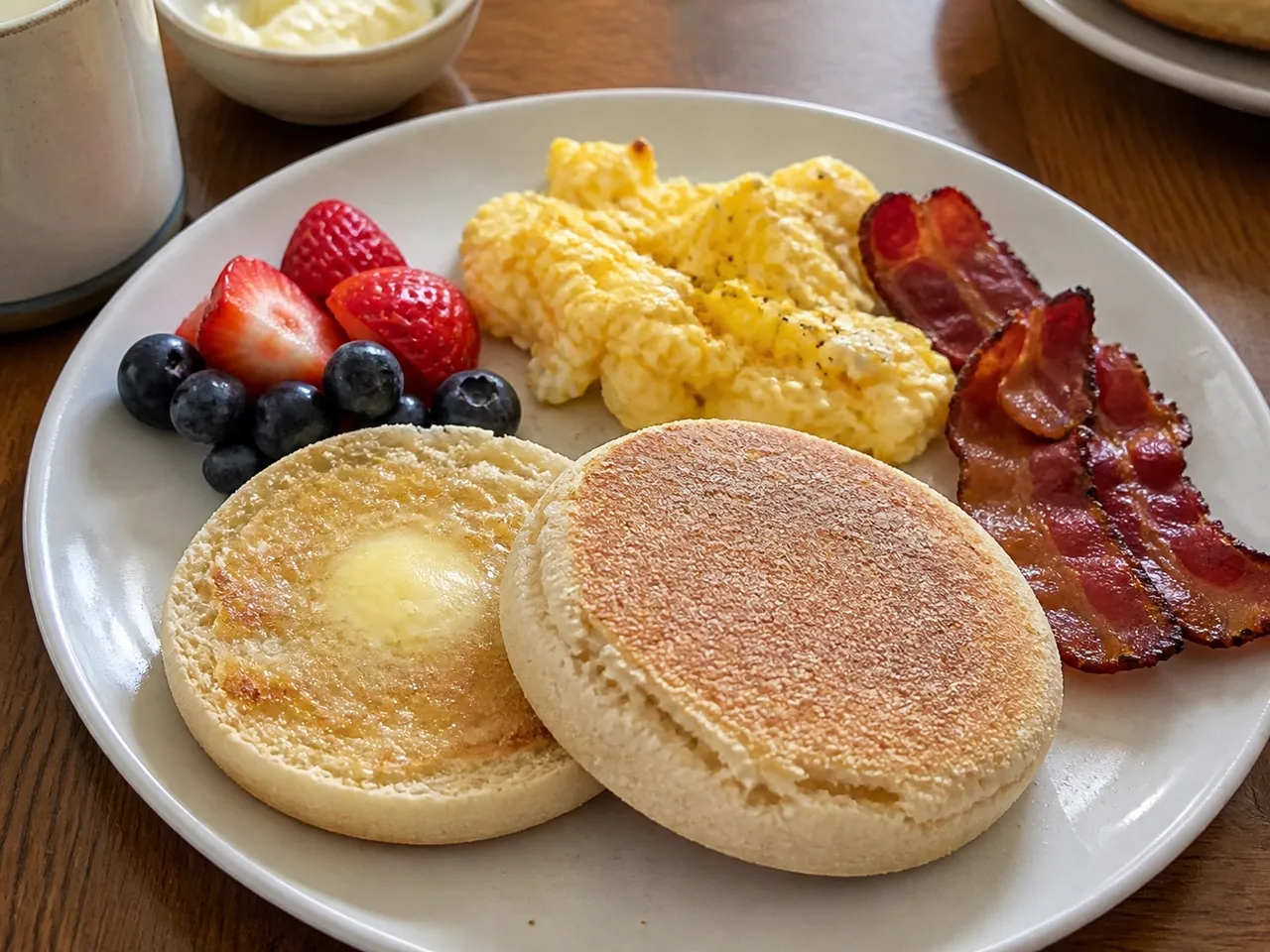 Serving Images are for illustrative purposes only, may be inaccurate, and do not guarantee the presence or absence of specific ingredients.
 English Muffins
Elevate your morning routine with these classic, griddle-cooked English muffins, packed with those essential, butter-trapping nooks and crannies inside a perfectly toasted, cornmeal-dusted crust.
Contains common allergens
In the app, Listahan checks these against your household automatically.
Instructions
6 steps- 1
In a large bowl, whisk together the warm milk, melted butter, sugar, and yeast. Let stand for 5 minutes.
- 2
Add the bread flour and salt. Mix until a shaggy dough forms, then knead on a lightly floured surface for 5-8 minutes until smooth.
- 3
Place the dough in a greased bowl, cover, and let rise in a warm place for 1 hour or until doubled in size.
- 4
Punch down the dough and roll it out on a surface generously dusted with cornmeal to about 1/2-inch thickness. Use a round cutter (about 3 inches wide) to cut out muffins. Reroll the scraps if necessary.
- 5
Place the cut muffins on a baking sheet dusted with more cornmeal. Cover loosely and let them proof for 30-45 minutes until slightly puffy.
- 6
Heat a large cast-iron skillet or griddle over medium-low heat (do not add oil). Cook the muffins for 6-8 minutes on each side until deeply browned and the centers are cooked through. Cool completely before fork-splitting.
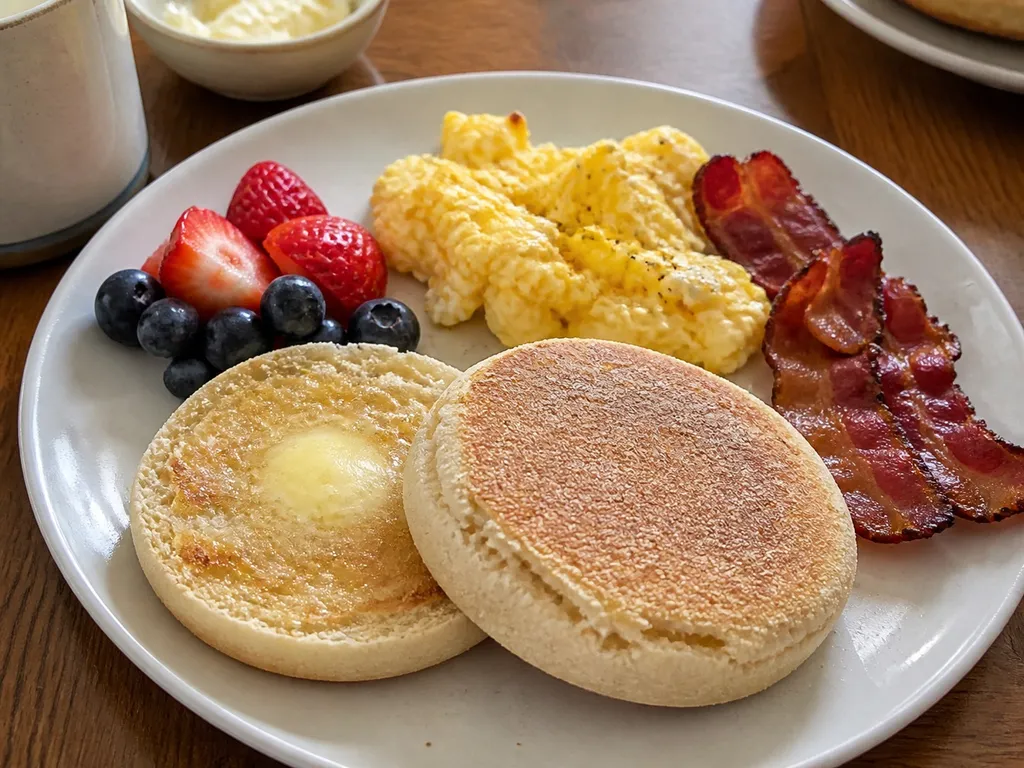 Images are for illustrative purposes only, may be inaccurate, and do not guarantee the presence or absence of specific ingredients.
 Listahan Family Score™
79/100
Good fit for most families
Score reflects how well this recipe fits a typical busy household. In the app, your Family Score is personalized to your household's allergens, kids, and pantry.
Nutrition
per serving235
Calories
6 g
Protein
42 g
Carbs
5 g
Fat
Estimated per serving. Actual values depend on the brands and portions you use.
Listahan cooking guide
Chef notes & practical guide
Technique notes, ingredient swaps, serve-alongside ideas, storage guidance, and equipment for this recipe.
Cultural context
The English muffin as sold in North American markets bears the name but not the exact history of British bread; the griddle-cooked yeasted round became popularized in the United States largely through the work of Samuel Bath Thomas, who brought his recipe from Plymouth, England to New York in 1880 and began selling them commercially. Thomas's English Muffins became a national brand and their marketing slogan about 'nooks and crannies' entered the cultural vocabulary. The British equivalent is actually called a 'muffin' without the English qualifier -- a small distinction that confuses cooks on both sides of the Atlantic.
Listahan note
This version uses a wet, shaggy dough cooked in rings directly on a griddle rather than a firm dough, which is what creates the irregular, open interior that catches butter in every pocket.
Technique cues
- The dough should be noticeably wetter than standard bread dough -- it should just hold its shape when scooped into rings but not be scoopable like batter; too firm a dough produces a dense crumb with no nooks.
- Cook on low to medium-low heat for 7 to 8 minutes per side; the interior needs time to set all the way through while the exterior only gently colors -- high heat browns the outside while leaving a raw center.
- Always fork-split English muffins rather than knife-cutting them; a knife shears the interior and creates a flat surface, while a fork pressed around the circumference and pried open tears the interior to expose the full jagged, toastable surface.
Kitchen flow
- Parallel prep
- While the muffins cook on the first side (7 to 8 minutes), prepare toppings and condiments; the second side cooks quickly and the muffins are ready immediately after.
- Make-ahead
- English muffins freeze extremely well; cool completely, split, and freeze in zip bags for up to 2 months. Toast directly from frozen -- no thawing needed.
- Leftover move
- Day-old English muffins are excellent as the base for mini pizzas or eggs Benedict; toast until golden before adding toppings so the porous crumb does not become soggy.
- Cleanup rhythm
- Wipe the griddle between batches with a folded paper towel and re-dust with cornmeal; cooked-on cornmeal can burn and impart a bitter flavor to subsequent muffins.
Ingredient brief
Role, handling, and swap guidance for each key ingredient.
all-purpose flour
dough structure
Purpose: All-purpose flour provides enough structure for the muffin to hold its ring shape on the griddle while remaining tender enough to split open easily.
Handling: Measure by weight; the dough's high hydration makes flour variation more impactful than in a drier bread recipe.
Adaptation: Bread flour produces a chewier muffin with a stronger internal structure; reduce water by 1 tablespoon per cup substituted.
instant yeast
leavener and crumb opener
Purpose: Yeast fermentation creates the gas bubbles that become the nooks and crannies when the muffin is torn apart -- without proper fermentation, the interior is dense and even-textured.
Handling: Mix directly into flour and allow adequate rise time, at least 1 to 2 hours, for the bubble structure to develop before cooking.
Adaptation: Sourdough starter at 20 percent of flour weight can replace commercial yeast for a tangy muffin; increase bulk fermentation to 3 to 4 hours at room temperature.
cornmeal
anti-stick coating and texture
Purpose: Cornmeal dusted on the griddle and on the shaped muffins prevents sticking, adds a slight crunch to the exterior, and is the traditional finishing touch of American-style English muffins.
Handling: Dust generously on the cooking surface and lightly on the top of the rings before flipping; excess cornmeal can be wiped away after cooking.
Adaptation: Fine semolina works as an equivalent substitute; plain flour sticks and burns rather than providing the same dry, crumbly barrier.
butter
flavor and tenderness
Purpose: A small amount of butter in the dough adds richness and keeps the interior tender so the crumb tears cleanly rather than stretching or compressing.
Handling: Melt and cool before adding to the wet ingredients so it distributes evenly throughout the dough.
Adaptation: Neutral oil or vegan butter works at the same quantity for a dairy-free version.
Technique notes
- Metal crumpet rings or canned tuna cans with both ends removed are the best tools; the ring's height guides the muffin to rise upward and ensures a consistent thickness that cooks evenly through.
- The muffins are done when a toothpick inserted into the side comes out clean -- the domed top can look set while the center is still raw inside the ring, so verify by feel or temperature.
- A 1-minute cool rest on a wire rack before fork-splitting makes the interior tear more cleanly; too-hot muffins are gummy inside and do not fork-split as well.
Ingredient swaps
- Dairy-free option
- Replace butter with vegan butter or coconut oil and use oat milk in place of whole milk; the nooks and crannies are equally pronounced in a dairy-free version.
- Whole wheat direction
- Replace up to half the all-purpose flour with white whole wheat for added fiber; the crumb will be slightly denser but the interior structure still develops well.
- Gluten-free direction
- A 1:1 gluten-free flour blend with a ring mold on the griddle produces a reasonable result; the interior will not have the same open crumb but the toasted crust is similar.
Serve alongside
- Poached eggs and hollandaise for eggs Benedict
- Smoked salmon with cream cheese and capers
- Peanut butter and sliced banana
- English breakfast tea with milk
- Orange juice
- Cold brew coffee
Serving suggestions only — check pairings for your household's allergens.
Storage & reheating
- Store cooled muffins in a zip bag at room temperature for up to 3 days, or refrigerate for 1 week. Split and freeze for up to 2 months; toast directly from frozen for 3 to 4 minutes.
Equipment
- Griddle or large flat skillet
- Metal crumpet rings or 3.5-inch round cutters
- Fork for splitting
- Instant-read thermometer for verifying doneness
Make this household-aware
Listahan Pro checks this recipe against your household's allergens, finds pantry-aware swaps, builds the shopping list, and helps you plan the week around it.
Plan it in Listahan
Add English Muffins to your week, check it against your household's allergens, and build the shopping list automatically.
More Bakery recipes
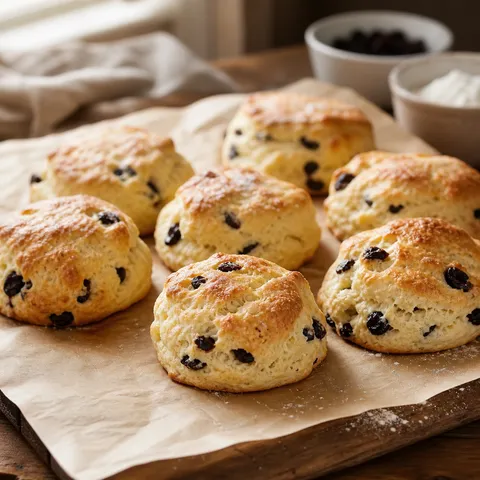 Bakery Lens Verified Images are for illustrative purposes only, may be inaccurate, and do not guarantee the presence or absence of specific ingredients.
 Scones
Flaky and buttery British baked goods, often with currants or berries.
 Bakery Lens Verified Images are for illustrative purposes only, may be inaccurate, and do not guarantee the presence or absence of specific ingredients.
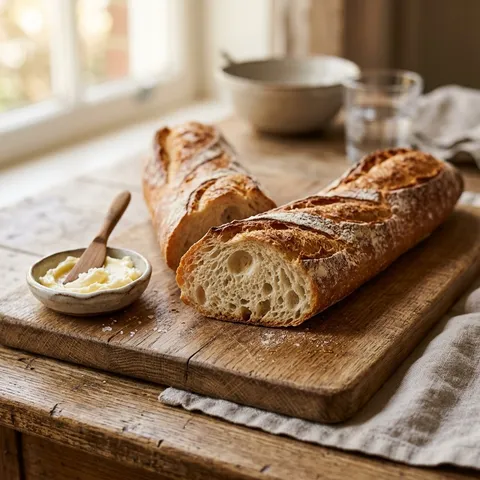
 French Baguette
Savor the authentic crunch of this rustic French baguette, featuring a beautifully crackling golden crust and a soft, airy, and utterly irresistible crumb.
 Bakery Lens Verified Images are for illustrative purposes only, may be inaccurate, and do not guarantee the presence or absence of specific ingredients.
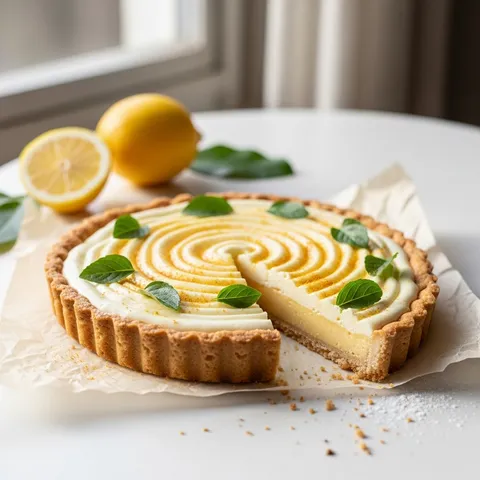
 Lemon Tart
Brighten your dessert spread with this elegant lemon tart, perfectly balancing a brilliantly zesty, silky-smooth lemon curd inside a crisp and buttery sweet pastry shell.