 Bakery Images are for illustrative purposes only, may be inaccurate, and do not guarantee the presence or absence of specific ingredients.
  Serving Images are for illustrative purposes only, may be inaccurate, and do not guarantee the presence or absence of specific ingredients.
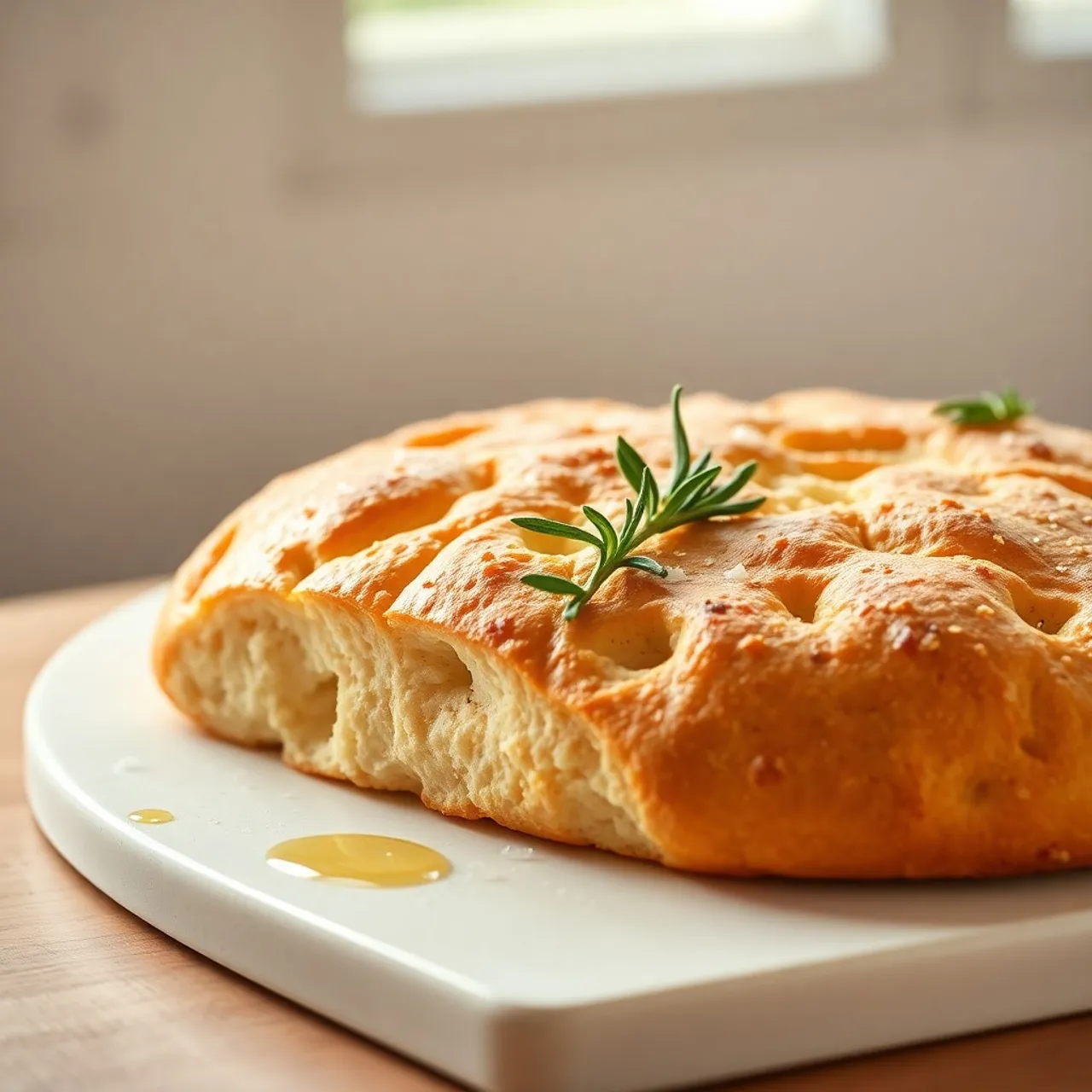
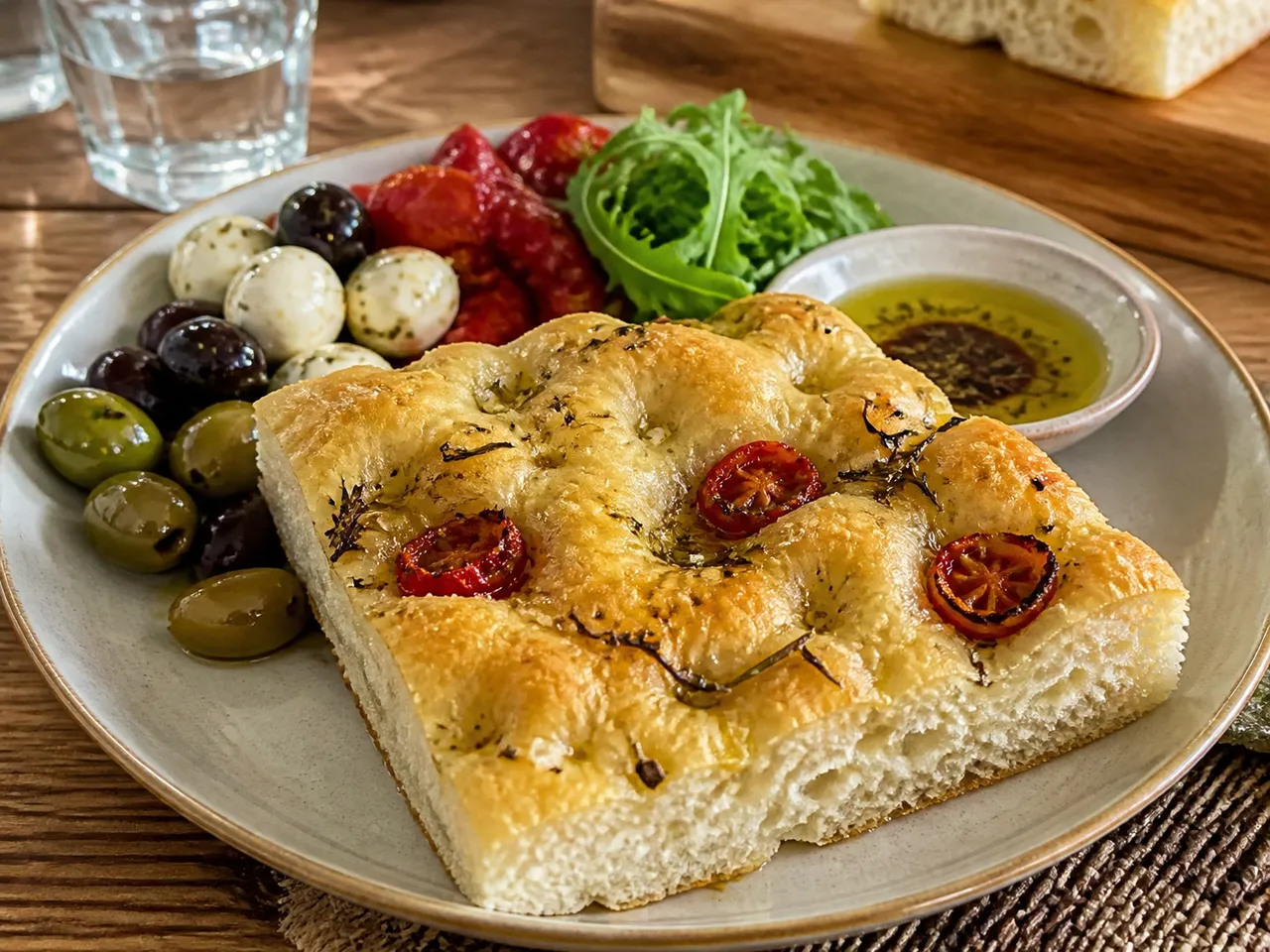
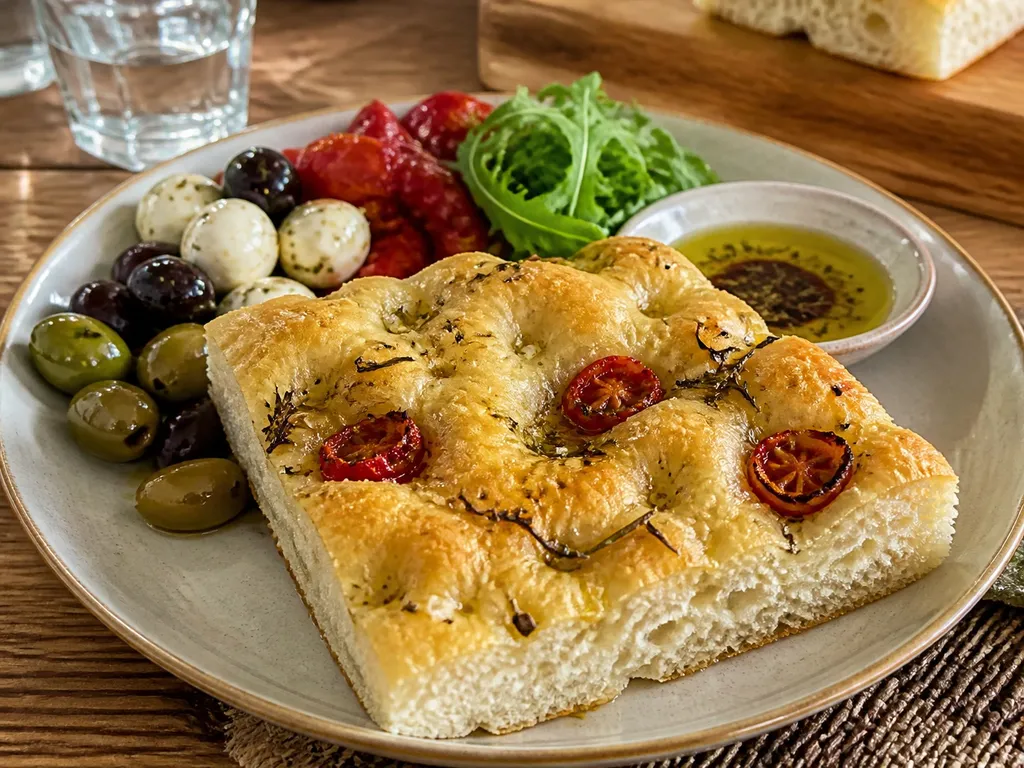
 Focaccia
Transport your tastebuds to Italy with this incredibly bubbly, olive oil-drenched focaccia, boasting a crispy, golden-brown crust and a delightfully soft, chewy interior scented with fresh rosemary.
Contains common allergens
In the app, Listahan checks these against your household automatically.
Good to know
- Crispy
Matched from this dish's own ingredients and timing. Browse more: crispy recipes
Instructions
6 steps- 1
In a large bowl, mix the warm water and yeast. Let sit for 5 minutes. Stir in the flour and fine sea salt until a highly hydrated, sticky dough forms.
- 2
Drizzle 2 tablespoons of olive oil over the dough, cover the bowl with a damp cloth, and let it rise at room temperature for 1 hour, or until bubbly and doubled in size.
- 3
Pour 1/4 cup of olive oil into a 9x13-inch baking pan, coating the bottom and sides evenly. Transfer the dough into the pan and gently stretch it out. If it resists, let it rest for 15 minutes and try again.
- 4
Cover the pan and let the dough rise for another 45-60 minutes until very puffy and filling the pan.
- 5
Preheat the oven to 425°F (220°C). Drizzle the remaining olive oil over the top of the dough. Oil your fingers and press them deeply into the dough to create dimples all over.
- 6
Sprinkle fresh rosemary leaves and flaky sea salt generously over the dimpled surface. Bake for 25-30 minutes until the top is golden brown and crispy.
 Images are for illustrative purposes only, may be inaccurate, and do not guarantee the presence or absence of specific ingredients.
 Listahan Family Score™
71/100
Good fit for most families
Score reflects how well this recipe fits a typical busy household. In the app, your Family Score is personalized to your household's allergens, kids, and pantry.
Nutrition
per serving350
Calories
6 g
Protein
48 g
Carbs
14 g
Fat
Estimated per serving. Actual values depend on the brands and portions you use.
Listahan cooking guide
Chef notes & practical guide
Technique notes, ingredient swaps, serve-alongside ideas, storage guidance, and equipment for this recipe.
Cultural context
Focaccia is one of the oldest breads in the Mediterranean world, descended from flatbreads baked on hearthstones in ancient Liguria in northwestern Italy. The Genoese version, focaccia genovese, is the canonical form: dimpled by finger pressure, generously oiled before and after baking, and scattered with coarse salt. It remains distinctly different from pizza despite sharing many ingredients -- focaccia prioritizes the bread itself, with toppings serving to accent the crumb rather than carry the dish. Bakeries in Liguria bake it as an all-day food, sold by the slab for breakfast, lunch, and afternoon snacking.
Listahan note
This version uses a high-hydration dough and an extended cold proof to develop flavor, then bakes in a generously oiled sheet pan so the bottom crust fries rather than bakes, creating the crisp underside that separates great focaccia from what is essentially a flat roll.
Technique cues
- Pour enough olive oil into the baking pan that it genuinely puddles -- at least 3 tablespoons -- and resist the urge to reduce it; that oil crisps the bottom crust and bastes the underside of the dough as it bakes.
- After the dough is transferred to the oiled pan, let it relax for 30 minutes before dimpling; the gluten needs time to relax or it will spring back and your dimples will disappear.
- Press the dimples all the way to the bottom of the pan with confident force -- shy dimples fill back in during baking and eliminate the pockets that hold pools of oil and salt.
Kitchen flow
- Parallel prep
- Prepare toppings -- sliced olives, rosemary sprigs, halved cherry tomatoes -- while the dough completes its final pan rest so pressing and topping can happen in one efficient step.
- Make-ahead
- The dough can cold-proof in a covered container in the refrigerator for up to 48 hours; longer cold fermentation builds more flavor. Transfer to the oiled pan 2 hours before baking.
- Leftover move
- Day-old focaccia sliced horizontally makes exceptional sandwiches; the dense, oily crumb holds up to wet fillings like roasted peppers and mozzarella without going soggy.
- Cleanup rhythm
- Let the sheet pan soak in hot water immediately after removing the bread; the olive oil that crisped the bottom releases easily when soaked rather than scrubbed dry.
Ingredient brief
Role, handling, and swap guidance for each key ingredient.
bread flour
chewy, open crumb structure
Purpose: High hydration focaccia depends on a strong gluten network to hold the airy structure; bread flour's higher protein content supports the extended fermentation without the dough breaking down.
Handling: Weigh the flour; focaccia is typically 75 to 80 percent hydration and minor flour variations significantly affect the dough's handling properties.
Adaptation: All-purpose flour works well, producing a slightly softer crumb; the handling during shaping is easier because the dough is marginally less extensible.
extra virgin olive oil
flavor, crust development, and moisture
Purpose: Olive oil provides the characteristic richness and fruity aroma of focaccia and is responsible for both the golden, crisp bottom crust and the shiny, slightly chewy top.
Handling: Use a good-quality olive oil whose flavor you enjoy on its own -- it is prominent in the finished bread and a neutral oil produces a noticeably less flavorful result.
Adaptation: Avocado oil is a neutral, higher smoke-point substitute if olive oil flavor is not desired, but the character of the bread changes.
instant yeast
leavener
Purpose: Even a modest amount of yeast drives fermentation over the extended cold proof and produces the bubbles responsible for focaccia's open, irregular crumb.
Handling: Mix directly into the flour before adding water; no separate proofing needed with instant yeast.
Adaptation: Sourdough starter at 20 percent of flour weight creates an even more flavorful focaccia with a more complex tang; extend the total fermentation by a few hours to compensate for slower activity.
coarse sea salt
finishing flavor and texture
Purpose: Coarse salt sprinkled just before baking dissolves only partially in the oven, leaving crunchy salt crystals on top that provide bursts of salinity against the mild bread.
Handling: Apply over the dimpled, oiled surface just before the bread goes in the oven; salt applied too early draws moisture from the top and can make the surface slick.
Adaptation: Fleur de sel or Maldon sea salt flakes are superior for this purpose; iodized table salt dissolves completely and does not provide the textural contrast.
Technique notes
- A cold-proof focaccia transferred directly to a well-oiled room-temperature pan will need about 2 hours to warm up and complete its rise; the waiting time is passive and worth it for the flavor.
- Baking at a high temperature (450 F) for a shorter time produces the golden, slightly crisp top and bottom without overbaking the interior; lower temperatures tend to dry out the crumb.
- Drizzle additional olive oil over the finished hot bread immediately out of the oven and let it soak in for 5 minutes before cutting -- this is the Genoese technique that gives focaccia its distinctive sheen and flavor.
Ingredient swaps
- Gluten-free direction
- Use a 1:1 gluten-free baking blend and increase oil slightly; the crumb will be denser and less chewy but the oily, dimpled style of focaccia translates reasonably well to gluten-free flours.
- Whole wheat direction
- Replace up to one-third of bread flour with whole wheat for a nuttier flavor; the crumb will be slightly denser and the fermentation slightly faster at room temperature.
- Weeknight shortcut
- A same-day focaccia with a 2-hour room-temperature bulk rise is fully acceptable; the flavor is simpler and more bread-like, but the texture can be excellent if the dough is properly hydrated.
Serve alongside
- Burrata with heirloom tomatoes and basil
- Marinated olives
- Roasted red pepper and ricotta dip
- Lightly chilled Vermentino
- Sparkling water with lemon
- Light-bodied Italian red wine
Serving suggestions only — check pairings for your household's allergens.
Storage & reheating
- Store at room temperature wrapped loosely in a kitchen towel for up to 2 days; the crust softens overnight but the flavor deepens. Reheat in a 375 F oven for 8 minutes to restore crispness. Focaccia does not freeze as well as lean breads; the oily crumb can become greasy after thawing.
Equipment
- 18x13 inch half-sheet pan with 1-inch sides
- Bench scraper for handling high-hydration dough
- Pastry brush for oiling
- Wire rack for cooling
Make this household-aware
Listahan Pro checks this recipe against your household's allergens, finds pantry-aware swaps, builds the shopping list, and helps you plan the week around it.
Plan it in Listahan
Add Focaccia to your week, check it against your household's allergens, and build the shopping list automatically.
More Bakery recipes
 Bakery Lens Verified Images are for illustrative purposes only, may be inaccurate, and do not guarantee the presence or absence of specific ingredients.
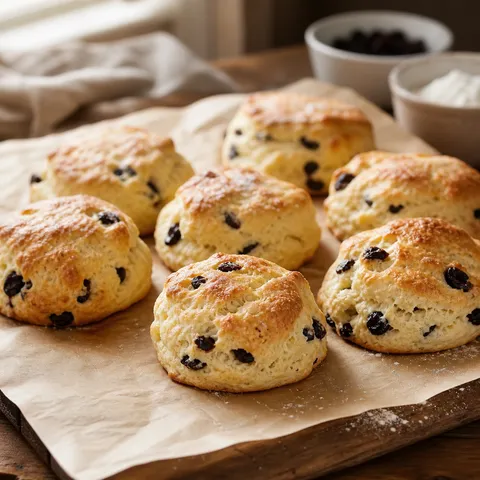
 Scones
Flaky and buttery British baked goods, often with currants or berries.
 Bakery Lens Verified Images are for illustrative purposes only, may be inaccurate, and do not guarantee the presence or absence of specific ingredients.
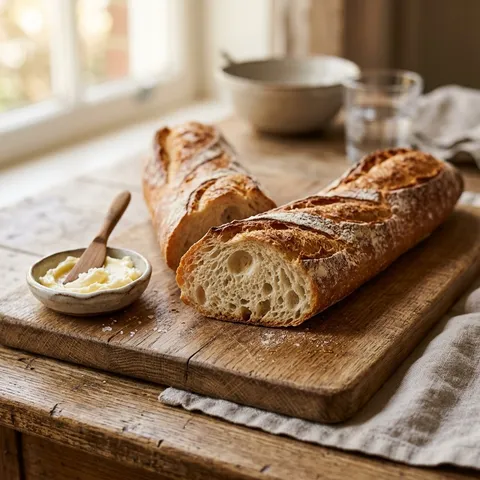
 French Baguette
Savor the authentic crunch of this rustic French baguette, featuring a beautifully crackling golden crust and a soft, airy, and utterly irresistible crumb.
 Bakery Lens Verified Images are for illustrative purposes only, may be inaccurate, and do not guarantee the presence or absence of specific ingredients.
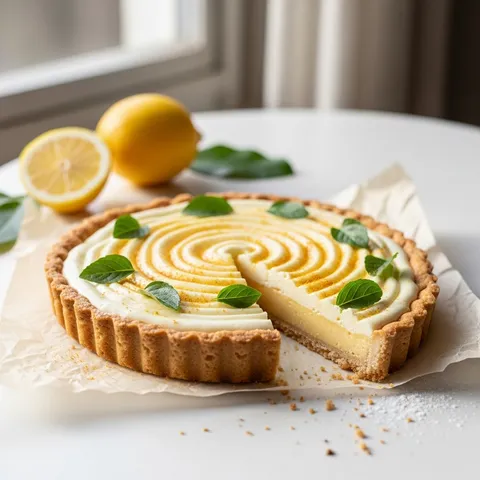
 Lemon Tart
Brighten your dessert spread with this elegant lemon tart, perfectly balancing a brilliantly zesty, silky-smooth lemon curd inside a crisp and buttery sweet pastry shell.