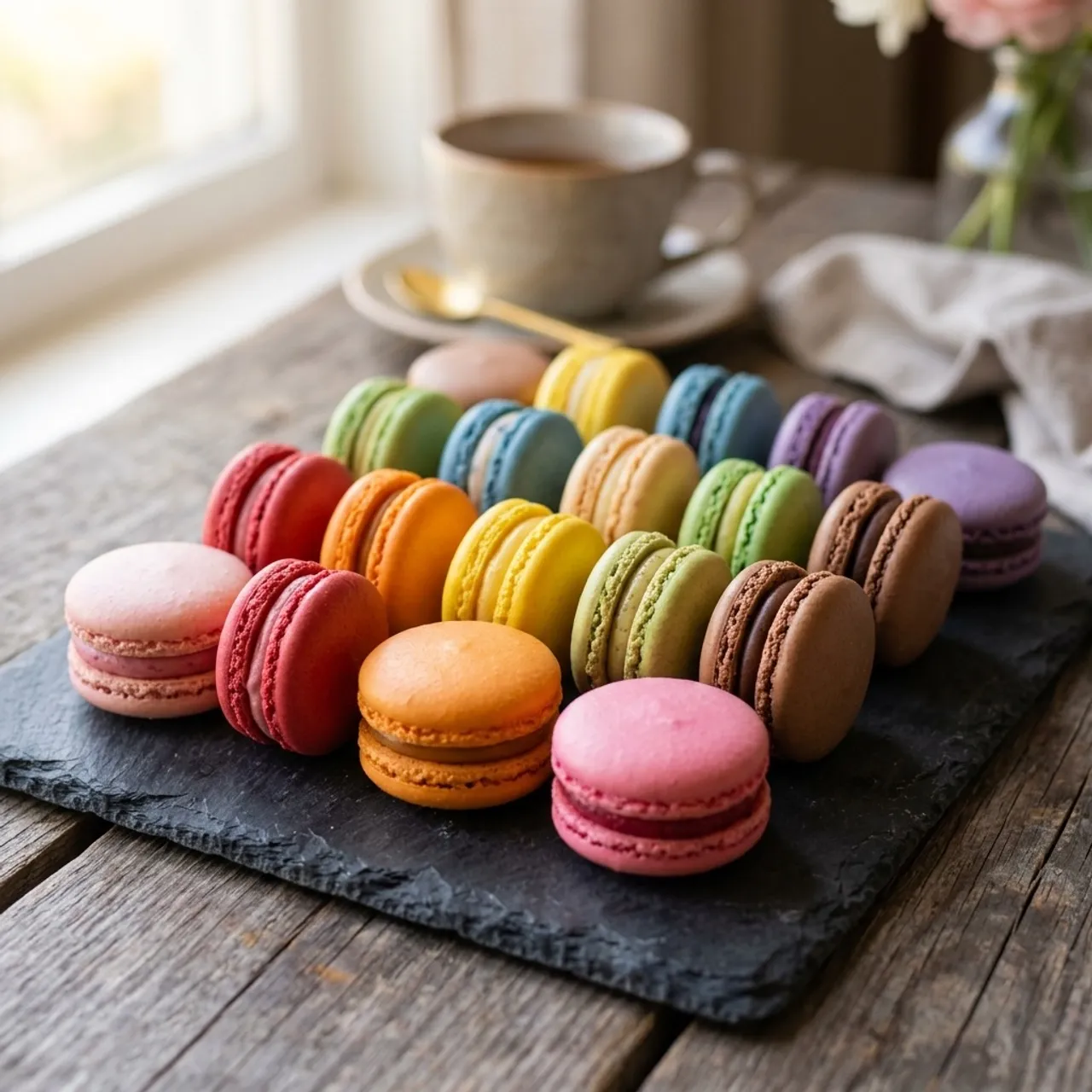
 Bakery Images are for illustrative purposes only, may be inaccurate, and do not guarantee the presence or absence of specific ingredients.
 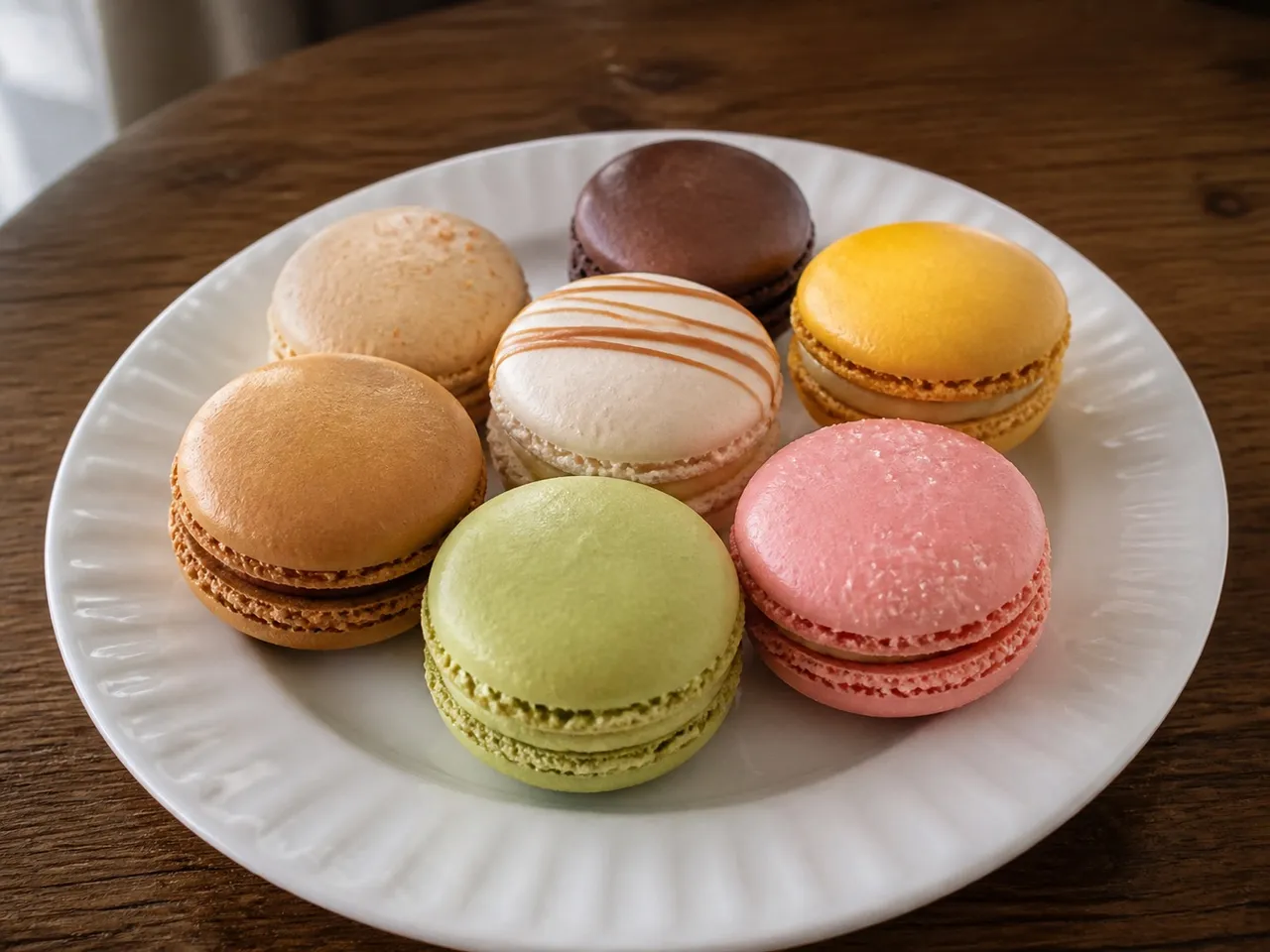 Serving Images are for illustrative purposes only, may be inaccurate, and do not guarantee the presence or absence of specific ingredients.
 Macarons
Master the classic Parisian treat with these exquisitely delicate macarons, boasting crisp, smooth shells that give way to a delightfully chewy, almond-scented center.
Contains common allergens
In the app, Listahan checks these against your household automatically.
Good to know
- Crispy
Matched from this dish's own ingredients and timing. Browse more: crispy recipes
Instructions
6 steps- 1
Sift the almond flour and powdered sugar together through a fine-mesh sieve into a large bowl. Discard any large almond pieces.
- 2
In a clean glass or metal bowl, whip the egg whites with a hand mixer on medium speed until frothy. Gradually add the granulated sugar and whip until stiff, glossy peaks form. Fold in the vanilla and gel coloring.
- 3
Gently fold the dry ingredients into the meringue using a silicone spatula. Perform the "macaronage" by pressing the batter against the sides of the bowl until it deflates slightly and flows like slow-moving lava.
- 4
Transfer the batter to a piping bag fitted with a round tip. Pipe 1-inch circles onto baking sheets lined with parchment paper. Tap the baking sheet firmly against the counter a few times to release air bubbles.
- 5
Let the piped macarons sit at room temperature for 30-45 minutes until a dry skin forms on the surface (they should not stick to your finger when lightly touched).
- 6
Preheat the oven to 300°F (150°C). Bake for 13-15 minutes until the "feet" form and the shells don't wobble when lightly touched. Let cool completely on the tray before removing.
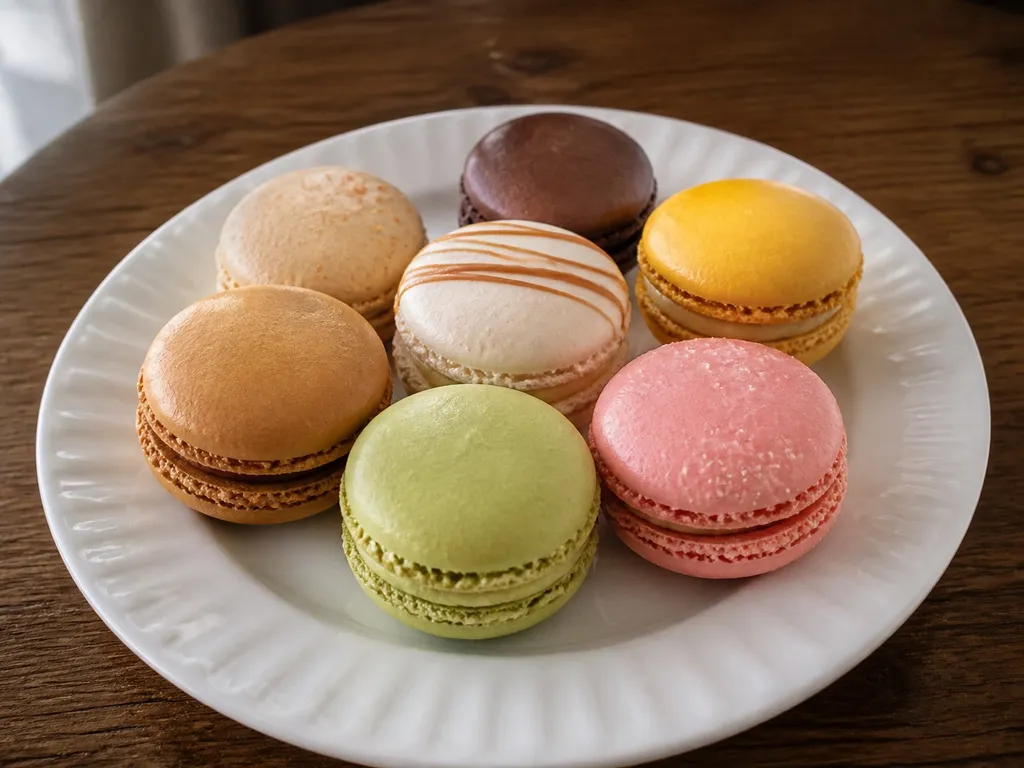 Images are for illustrative purposes only, may be inaccurate, and do not guarantee the presence or absence of specific ingredients.
 Listahan Family Score™
69/100
Works for many families
Score reflects how well this recipe fits a typical busy household. In the app, your Family Score is personalized to your household's allergens, kids, and pantry.
Nutrition
per serving235
Calories
3 g
Protein
56 g
Carbs
0 g
Fat
Estimated per serving. Actual values depend on the brands and portions you use.
Listahan cooking guide
Chef notes & practical guide
Technique notes, ingredient swaps, serve-alongside ideas, storage guidance, and equipment for this recipe.
Cultural context
The modern sandwiched macaron took shape in early twentieth-century Paris, when a pastry chef at the Laduree house is credited with pairing two almond meringue shells around a filling, refining a plainer single almond biscuit that French convent bakers had already been making well before that pairing became standard. The shells and the filling are considered separate crafts in French pastry kitchens, since a shell that is technically perfect can still fail if the filling is too wet or too stiff.
Listahan note
This version puts the emphasis on the folding technique, called macaronage, since getting that step right is what separates a smooth, footed shell from the hollow or cracked shells most home bakers run into first.
Technique cues
- Macaronage means folding the almond-sugar mixture into the whipped egg whites only until the batter falls off the spatula in a slow, ribbon-like sheet; stopping too soon leaves lumpy peaks and folding too long deflates the meringue into flat, cracked shells.
- Piped rounds need to sit uncovered for 30 to 60 minutes until the surface turns matte and no longer sticks to a fingertip, since that dried skin is what forces the batter to rise into feet rather than spreading flat.
- The oven runs cooler than most cookie bakes, closer to 300 degrees F, so the shells climb slowly instead of doming and browning before the inside sets.
- Egg whites perform best aged a day uncovered in the fridge, or at minimum brought fully to room temperature, since leftover moisture is the most common cause of hollow or cracked shells.
Kitchen flow
- Parallel prep
- While Macarons is in the oven, measure out any garnish or topping — like the gel food coloring — so it's ready the moment the bake finishes cooling.
- Make-ahead
- Macarons's dough or batter (built around gel food coloring) can usually be made a day ahead and refrigerated, then baked fresh — many doughs actually improve with an overnight rest.
- Leftover move
- Leftover Macarons freezes well — wrap individual portions tightly and thaw at room temperature, or crumble it over ice cream for a quick second life. This one leans on the gel food coloring. The bake step is what sets the pace here.
- Cleanup rhythm
- Soak the mixing bowl and beaters for Macarons right away — sugar and butter residue hardens fast once it cools. This one leans on the gel food coloring. Plan around the bake; that's the slow part.
Ingredient brief
Role, handling, and swap guidance for each key ingredient.
1 cup almond flour
Structural base
Purpose: cup almond flour defines the shape and texture of the dish.
Handling: Measure before heating and break up clumps so the mix distributes evenly.
Adaptation: Use a certified gluten-free alternative when needed and expect a small texture change.
1 1/2 cups powdered sugar
Sweetness and aroma
Purpose: 1/2 cups powdered sugar adds aroma, sweetness, or warmth without needing extra garnish.
Handling: Measure before heating and break up clumps so the mix distributes evenly.
Adaptation: Use the closest fresh equivalent and expect a modest shift in flavor or texture.
3 large egg whites
Main protein or body
Purpose: large egg whites gives Macarons its main substance and carries the seasoning.
Handling: Prep before heat is high so the cooking step can move without rushing.
Adaptation: Use an egg-free substitute only when binding or glazing is not the main structure.
1/4 cup granulated sugar
Sweetness and aroma
Purpose: cup granulated sugar adds aroma, sweetness, or warmth without needing extra garnish.
Handling: Measure before heating and break up clumps so the mix distributes evenly.
Adaptation: Use the closest fresh equivalent and expect a modest shift in flavor or texture.
1/2 tsp vanilla extract
Sweetness and aroma
Purpose: tsp vanilla extract adds aroma, sweetness, or warmth without needing extra garnish.
Handling: Prep before heat is high so the cooking step can move without rushing.
Adaptation: Use the closest fresh equivalent and expect a modest shift in flavor or texture.
Technique notes
- Tap the piped tray firmly against the counter several times before it rests, which pops trapped air bubbles that would otherwise leave pockmarks across the smooth tops.
- Filled shells taste better after a day in the fridge, since the shell softens slightly and the filling's moisture evens out through the crumb.
- Weigh the almond flour and sugar on a scale rather than using measuring cups, since this particular ratio is far less forgiving than a typical cookie dough's.
Ingredient swaps
- Gluten-free direction
- Replace the almond flour with a certified gluten-free 1:1 flour blend or gluten-free noodles/breadcrumbs — check that any other packaged ingredients here are labeled gluten-free too. This one leans on the gel food coloring.
- Egg-aware direction
- Replace the egg whites with a flax or chia egg (1 tbsp ground seed + 3 tbsp water, rested 5 minutes) for binding, best when eggs are there for binding rather than structure or rise. This one leans on the gel food coloring.
- Nut-aware direction
- Leave out the almond flour or replace it with toasted seeds (sunflower or pumpkin) for a similar crunch without the tree-nut or peanut risk. This one leans on the gel food coloring.
- Lower-sodium direction
- Season lighter on salt than the recipe calls for, then adjust right before serving — it's easier to add more than to fix an oversalted batch. This one leans on the gel food coloring.
Serve alongside
- Fresh berries
- Citrus fruit salad
- Mint leaves
- Black coffee
- Hot tea
- Sparkling water with lemon
Serving suggestions only — check pairings for your household's allergens.
Storage & reheating
- Store covered for 3 to 4 days, refrigerated when dairy, eggs, custard, or fresh fruit are involved.
- Reheat gently only when warmth improves the texture.
- Freeze sturdy baked portions up to 2 months; avoid freezing delicate fresh toppings.
Equipment
- Mixing bowls
- Baking dish or pan
- Cooling rack
Make this household-aware
Listahan Pro checks this recipe against your household's allergens, finds pantry-aware swaps, builds the shopping list, and helps you plan the week around it.
Plan it in Listahan
Add Macarons to your week, check it against your household's allergens, and build the shopping list automatically.
More Bakery recipes
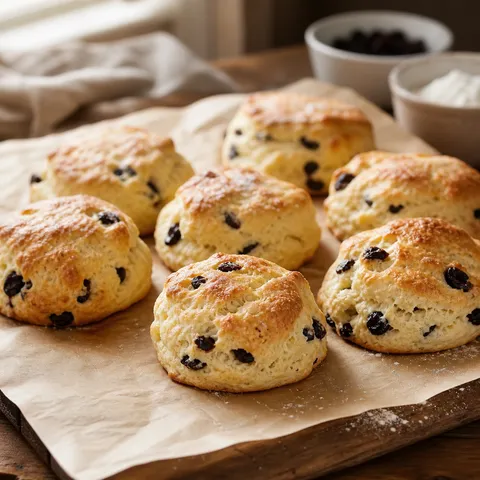 Bakery Lens Verified Images are for illustrative purposes only, may be inaccurate, and do not guarantee the presence or absence of specific ingredients.
 Scones
Flaky and buttery British baked goods, often with currants or berries.
 Bakery Lens Verified Images are for illustrative purposes only, may be inaccurate, and do not guarantee the presence or absence of specific ingredients.
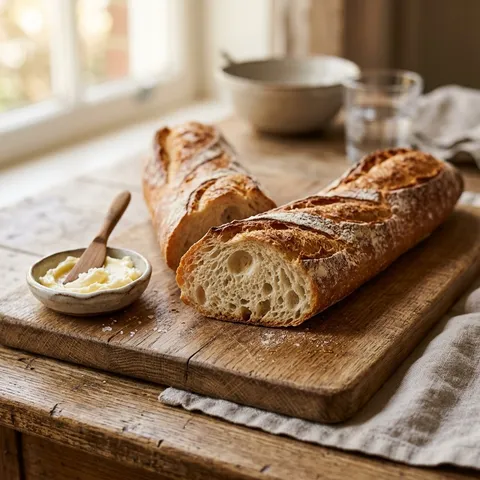
 French Baguette
Savor the authentic crunch of this rustic French baguette, featuring a beautifully crackling golden crust and a soft, airy, and utterly irresistible crumb.
 Bakery Lens Verified Images are for illustrative purposes only, may be inaccurate, and do not guarantee the presence or absence of specific ingredients.
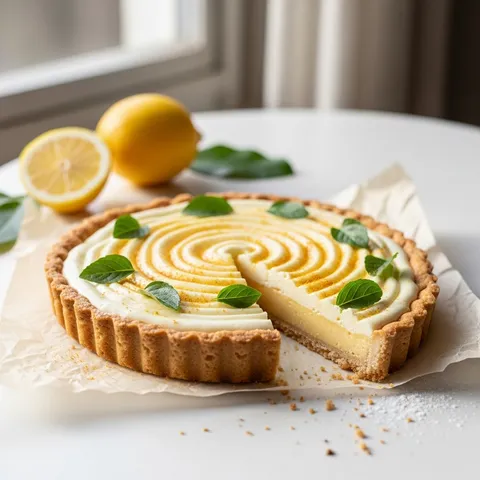
 Lemon Tart
Brighten your dessert spread with this elegant lemon tart, perfectly balancing a brilliantly zesty, silky-smooth lemon curd inside a crisp and buttery sweet pastry shell.