 Bakery Images are for illustrative purposes only, may be inaccurate, and do not guarantee the presence or absence of specific ingredients.
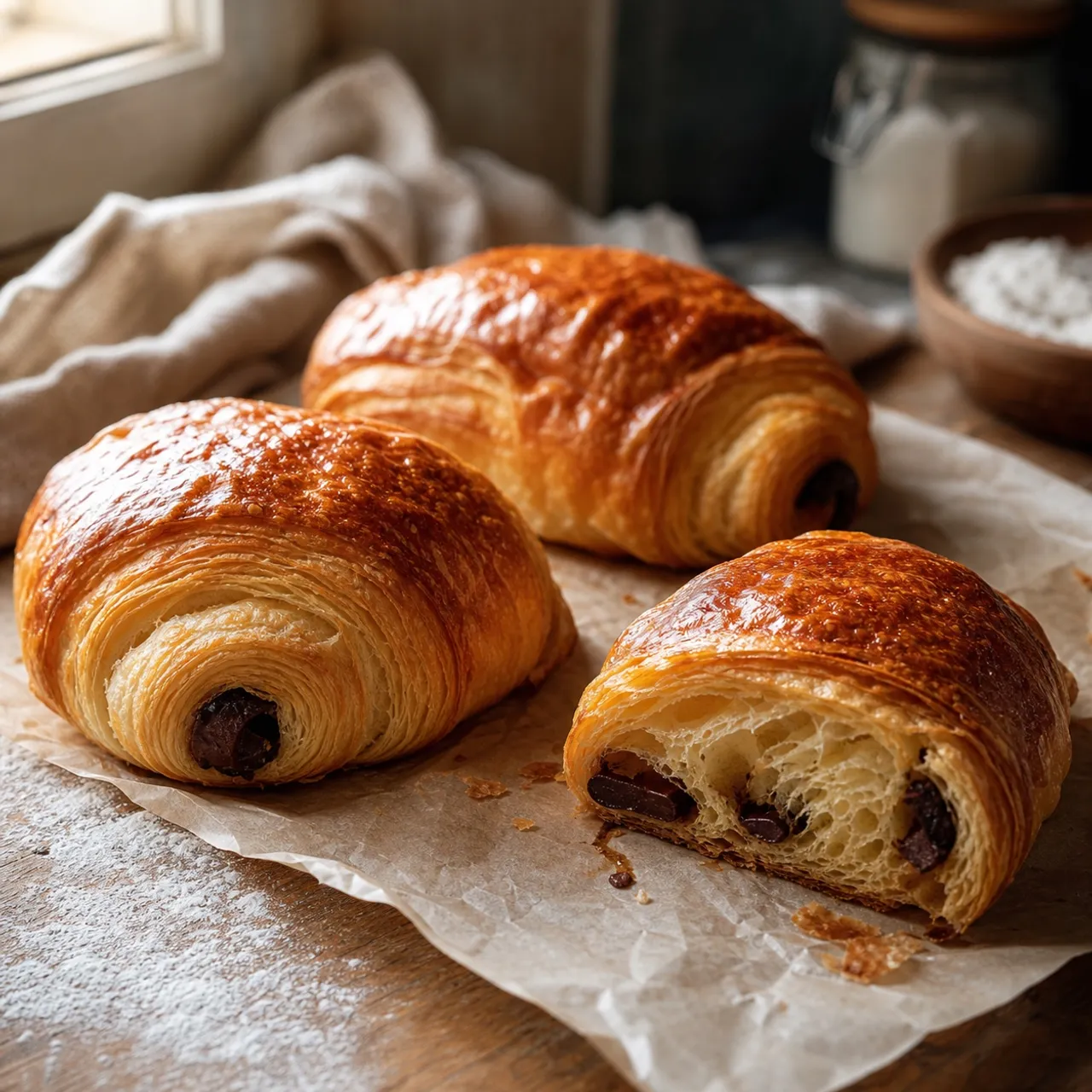
 Pain au Chocolat
Flaky, buttery laminated pastry wrapped around batons of dark chocolate and baked to a deep golden shine.
Contains common allergens
In the app, Listahan checks these against your household automatically.
Good to know
- Crispy
Matched from this dish's own ingredients and timing. Browse more: crispy recipes
Instructions
6 steps- 1
Mix the flour, sugar, yeast, salt, and lukewarm milk into a shaggy dough, knead for 5 minutes until smooth, then wrap and refrigerate for at least 1 hour while you prepare the butter block.
- 2
Pound the cold butter between two sheets of parchment into a 7-inch square, then roll the chilled dough into a 10-inch square, place the butter in the center at a 45-degree angle, and fold the corners over to enclose it completely.
- 3
Roll the dough into a long rectangle and fold it in thirds like a letter, then chill for 30 minutes and repeat this roll-and-fold turn two more times, resting in the fridge between each to keep the butter cold.
- 4
Roll the laminated dough to about 1/8 inch thick and cut into 4x6-inch rectangles, place two chocolate batons near one short edge of each, and roll up snugly so the seam sits underneath.
- 5
Arrange seam-side down on parchment-lined sheets, cover, and let proof at warm room temperature for 1 1/2 to 2 hours until puffy and jiggly, then brush gently with egg wash.
- 6
Bake in a preheated 375°F oven for 18 to 22 minutes until deeply golden and crisp, then cool on a rack for at least 15 minutes so the layers set before serving.
Listahan Family Score™
68/100
Works for many families
Score reflects how well this recipe fits a typical busy household. In the app, your Family Score is personalized to your household's allergens, kids, and pantry.
Nutrition
per serving540
Calories
9 g
Protein
56 g
Carbs
31 g
Fat
Estimated per serving. Actual values depend on the brands and portions you use.
Listahan cooking guide
Chef notes & practical guide
Technique notes, ingredient swaps, serve-alongside ideas, storage guidance, and equipment for this recipe.
Cultural context
Pain au chocolat is a French viennoiserie built from the same laminated, buttery dough as a croissant, wrapped around batons of dark chocolate before baking. The technique of folding butter into dough in repeated turns to create hundreds of flaky layers is a defining skill of French pastry kitchens, adapted here for a home oven.
Listahan note
This version keeps the butter cold at every stage of lamination, since temperature control, more than any single ingredient, is what determines whether the finished pastry is genuinely flaky or dense.
Technique cues
- Chilling the dough between each roll-and-fold turn keeps the butter from melting into the dough, which is essential for distinct, flaky layers rather than a single greasy mass.
- Pounding the cold butter into an even square before encasing it in the dough ensures it spreads evenly through the layers as the dough is rolled, rather than breaking through in spots.
- Proofing until the pastries look puffy and jiggly, not just risen, confirms the yeast has fully done its work, which is what gives the baked pastry its light, airy interior.
Kitchen flow
- Parallel prep
- Pound the butter block while the dough chills for its first hour, so both are ready to combine at the same stage.
- Make-ahead
- The laminated, shaped pastries can be frozen unbaked and proofed the morning you want fresh pastries.
- Leftover move
- Day-old pastries reheat well split and toasted, or turned into a quick bread pudding.
- Cleanup rhythm
- Work on a cool, well-floured surface and chill the dough between each fold, which keeps the process manageable in stages rather than one long session.
Ingredient brief
Role, handling, and swap guidance for each key ingredient.
Bread flour
Structure
Purpose: Its higher protein content gives the dough enough strength to hold together through repeated rolling and folding.
Handling: Mix into a shaggy dough and knead just until smooth, without overworking it.
Adaptation: All-purpose flour can work but produces a slightly less chewy, less structured final pastry.
Unsalted butter (cold)
Lamination fat
Purpose: Pounded into a flat block and folded into the dough, it creates the alternating layers that puff into flaky sheets as the pastry bakes.
Handling: Keep it cold throughout lamination, working quickly and chilling between turns if it starts to soften.
Adaptation: A high-fat European-style butter laminates especially well due to its lower water content.
Active dry yeast
Leavening
Purpose: It gives the dough the rise that, combined with the butter layers, creates the pastry's characteristic light, airy structure.
Handling: Dissolve it into the lukewarm milk as part of the initial dough mix.
Adaptation: Instant yeast can be used in the same amount without needing to dissolve it separately first.
Dark chocolate batons
Filling
Purpose: Rolled into the dough, they melt slightly during baking into a rich, gooey center.
Handling: Use two batons per pastry, placed near one edge before rolling up snugly.
Adaptation: Chopped dark chocolate can substitute for batons if that's what's available.
Technique notes
- Keep everything cold; warm butter is the single biggest reason home lamination fails to produce distinct layers.
- Don't rush the resting periods between turns; skipping chill time causes the butter to break through the dough.
- Proof until genuinely puffy and jiggly, not just slightly risen, since under-proofed pastries bake up dense.
Ingredient swaps
- Overnight direction
- Shape the pastries the night before and refrigerate the final proof slowly overnight, baking fresh in the morning.
- Simpler direction
- Use good-quality store-bought puff pastry sheets instead of laminating from scratch for a faster, less technical version.
- Almond direction
- Add a thin layer of almond cream alongside the chocolate for a pain au chocolat aux amandes variation.
Serve alongside
- Fresh berries
- Butter and jam
- Sliced fruit
- Coffee
- Hot chocolate
- Orange juice
Serving suggestions only — check pairings for your household's allergens.
Storage & reheating
- Store baked pastries in an airtight container at room temperature for up to 2 days.
- Reheat briefly in a warm oven to refresh the flaky texture; microwaving makes them chewy rather than crisp.
- Freeze baked pastries for up to a month, or freeze shaped unbaked pastries for up to 2 months and proof before baking.
Equipment
- Rolling pin
- Bench scraper
- Parchment-lined baking sheets
Make this household-aware
Listahan Pro checks this recipe against your household's allergens, finds pantry-aware swaps, builds the shopping list, and helps you plan the week around it.
Plan it in Listahan
Add Pain au Chocolat to your week, check it against your household's allergens, and build the shopping list automatically.
More Bakery recipes
 Bakery Lens Verified Images are for illustrative purposes only, may be inaccurate, and do not guarantee the presence or absence of specific ingredients.
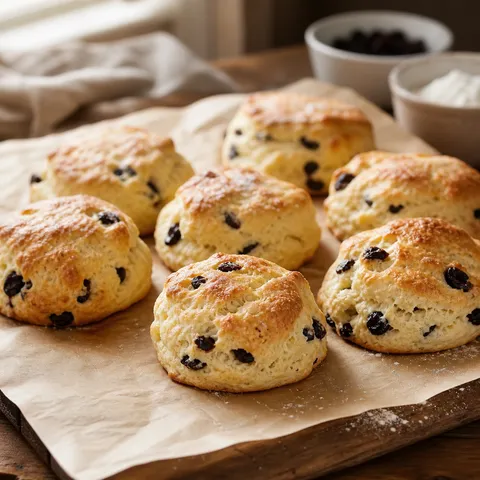
 Scones
Flaky and buttery British baked goods, often with currants or berries.
 Bakery Lens Verified Images are for illustrative purposes only, may be inaccurate, and do not guarantee the presence or absence of specific ingredients.
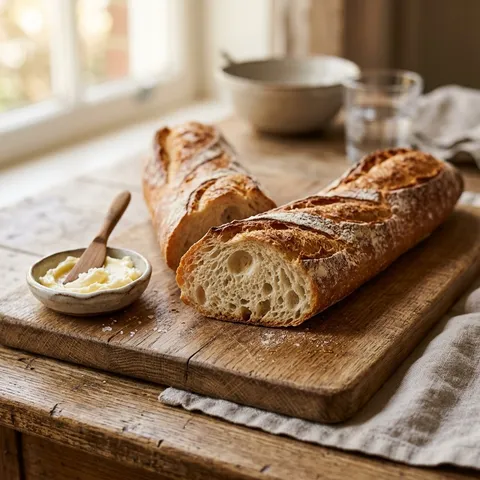
 French Baguette
Savor the authentic crunch of this rustic French baguette, featuring a beautifully crackling golden crust and a soft, airy, and utterly irresistible crumb.
 Bakery Lens Verified Images are for illustrative purposes only, may be inaccurate, and do not guarantee the presence or absence of specific ingredients.
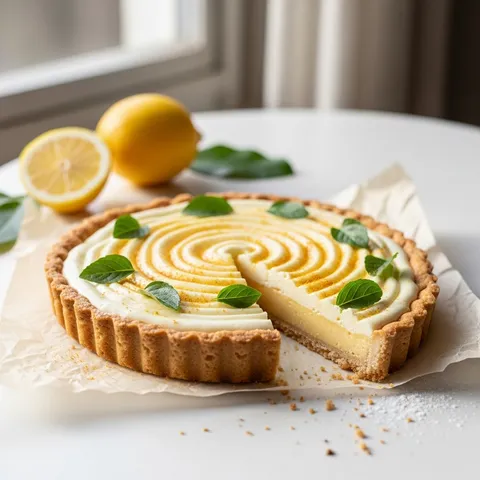
 Lemon Tart
Brighten your dessert spread with this elegant lemon tart, perfectly balancing a brilliantly zesty, silky-smooth lemon curd inside a crisp and buttery sweet pastry shell.