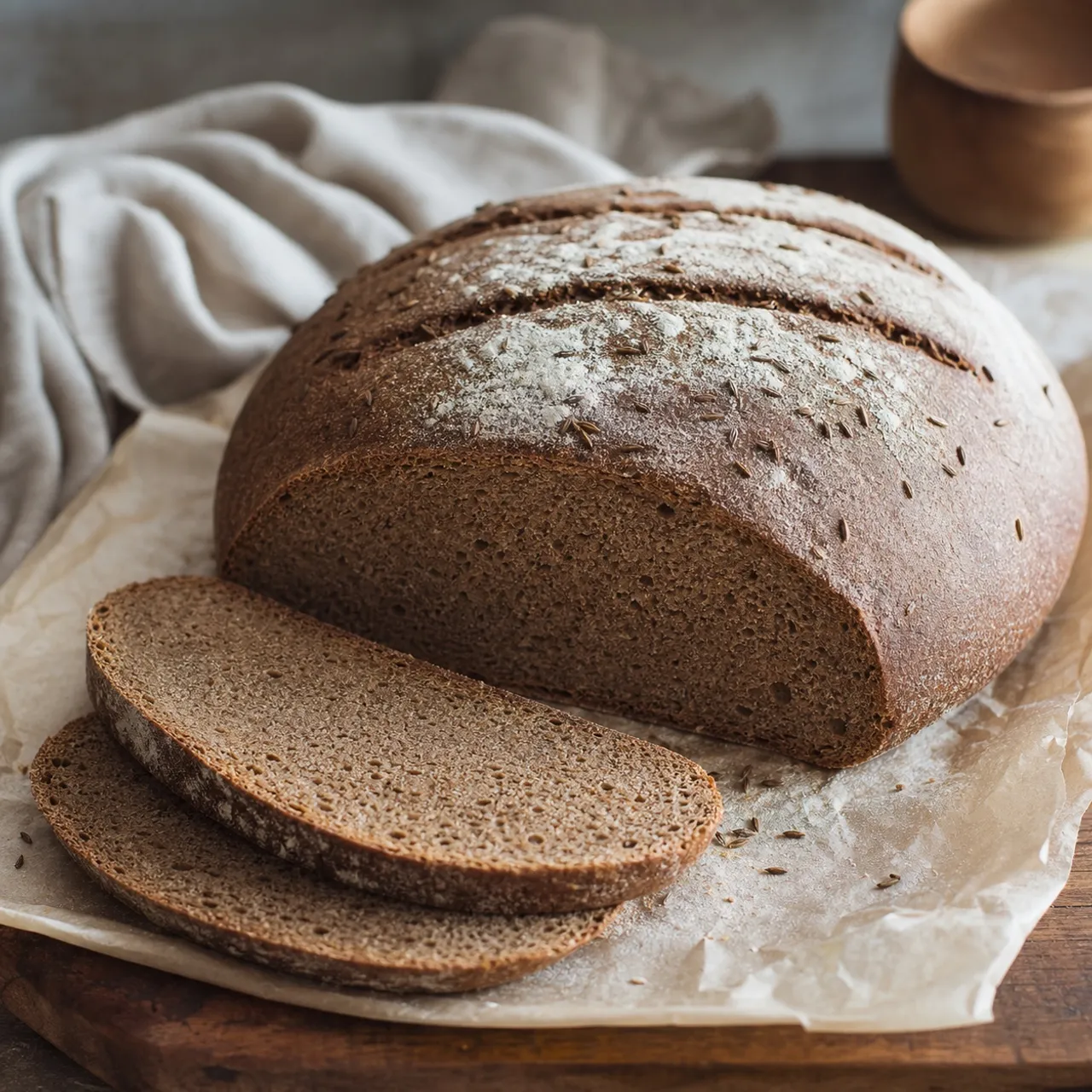
 Bakery Images are for illustrative purposes only, may be inaccurate, and do not guarantee the presence or absence of specific ingredients.
  Serving Images are for illustrative purposes only, may be inaccurate, and do not guarantee the presence or absence of specific ingredients.
 Rye Bread
Hearty bread made with rye flour, often flavored with caraway seeds.
Contains common allergens
In the app, Listahan checks these against your household automatically.
Instructions
6 steps- 1
In a large bowl, dissolve the yeast and molasses in the warm water. Let sit for 5 minutes.
- 2
Whisk together the rye flour, bread flour, cocoa powder, salt, and caraway seeds. Gradually add the dry ingredients to the wet mixture until a shaggy dough forms.
- 3
Turn the dough out onto a lightly floured surface. Knead for 8-10 minutes. Rye dough will remain somewhat sticky; use a bench scraper to help turn it.
- 4
Place the dough in an oiled bowl, cover, and let rise in a warm place for 1.5 to 2 hours until doubled in bulk.
- 5
Punch down the dough and shape it into a tight, round boule or an oval loaf. Place on a parchment-lined baking sheet, cover loosely, and proof for 45-60 minutes until puffy.
- 6
Preheat the oven to 400°F (200°C). Slash the top of the loaf with a sharp knife to allow expansion. Bake for 35-40 minutes until the crust is dark and the loaf sounds hollow when tapped on the bottom. Cool completely before slicing.
 Images are for illustrative purposes only, may be inaccurate, and do not guarantee the presence or absence of specific ingredients.
 Listahan Family Score™
68/100
Works for many families
Score reflects how well this recipe fits a typical busy household. In the app, your Family Score is personalized to your household's allergens, kids, and pantry.
Nutrition
per serving245
Calories
7 g
Protein
51 g
Carbs
1 g
Fat
Estimated per serving. Actual values depend on the brands and portions you use.
Listahan cooking guide
Chef notes & practical guide
Technique notes, ingredient swaps, serve-alongside ideas, storage guidance, and equipment for this recipe.
Cultural context
Rye bread has been a dietary cornerstone of Northern and Eastern Europe for over a thousand years, valued because rye thrives in cold, wet climates where wheat struggles to grow. Dense, dark loaves like German Vollkornbrot and Scandinavian rugbrod were the everyday bread of peasants and laborers long before refined wheat flour was widely affordable. The characteristic sour tang comes from long fermentation with rye's naturally occurring wild yeasts and bacteria, a process that also extends shelf life in a time before refrigeration.
Listahan note
This version leans into a classic American-style deli rye — a lighter, wheat-forward loaf with enough rye flour and caraway to deliver real character without the density of a full European dark loaf. The goal is a bread that slices cleanly for sandwiches and toasts beautifully.
Technique cues
- Rye flour absorbs water slowly, so let the dough rest for 20 minutes after mixing before kneading — it will feel much less sticky after that brief hydration period.
- Caraway seeds bloom in fat before they bloom in water; toasting them dry in a skillet for 90 seconds before adding them to the dough releases the volatile oils that give the bread its distinctive aroma.
- A steam-injected bake (place a pan of boiling water on the oven floor for the first 15 minutes) keeps the crust pliable long enough for full oven spring before it sets into a crackly shell.
Kitchen flow
- Parallel prep
- While the dough completes its first rise, prepare your baking surface — preheat the Dutch oven or line the baking sheet — and set up the steam pan so everything is ready the moment the dough is shaped.
- Make-ahead
- After the first rise, punch down the dough, shape it, and refrigerate overnight in a covered, lightly oiled loaf pan. Pull it out 60 minutes before baking to take the chill off, then bake as directed for a slightly more complex, tangy flavor.
- Leftover move
- Day-old rye bread makes outstanding croutons — cube it, toss with olive oil and garlic, and bake at 375 F until crisp — or blitz stale slices into rye breadcrumbs for coating schnitzel or topping gratins.
- Cleanup rhythm
- Rye dough is stickier than wheat dough; scrape the bowl and countertop immediately after shaping while the dough is still moist, as dried rye starch is significantly harder to remove.
Ingredient brief
Role, handling, and swap guidance for each key ingredient.
rye flour
flavor and character base
Purpose: Rye flour contains pentosans — sticky, water-absorbing fibers — that give rye bread its moist, slightly gummy crumb and earthy flavor that wheat alone cannot replicate.
Handling: Measure by spooning into the cup and leveling off; rye flour packs more densely than all-purpose and over-measuring will make the loaf too heavy.
Adaptation: Dark rye flour deepens color and intensity; medium rye is milder and more approachable for first-time rye bakers.
bread flour
gluten structure
Purpose: Rye is low in gluten-forming proteins, so bread flour provides the elastic network needed to trap gas and give the loaf lift without collapsing.
Handling: Use at room temperature; cold flour slows yeast activity and can cause uneven fermentation.
Adaptation: All-purpose flour works but produces a slightly denser, less chewy crumb.
caraway seeds
signature aromatic
Purpose: Caraway is what most North Americans recognize as the defining scent and taste of rye bread, providing anise-adjacent warmth that complements the grain's earthiness.
Handling: Toast in a dry pan over medium heat for 60 to 90 seconds until fragrant, then let cool before adding to the dough.
Adaptation: Omit for a plainer loaf, or replace with fennel seeds for a sweeter, softer anise note.
active dry yeast
leavening agent
Purpose: Yeast produces carbon dioxide as it ferments the sugars in both flours, creating the structure and rise that makes the loaf light enough to slice cleanly.
Handling: Proof in warm water (around 110 F) with a pinch of sugar for 5 minutes until foamy before incorporating into the dough.
Adaptation: Instant yeast can be added directly to the dry ingredients without proofing, using the same quantity.
molasses
color and depth
Purpose: A small amount of unsulfured molasses deepens the crumb color from tan to a warm brown and adds a subtle bittersweet note that mimics the malty richness of traditional dark rye loaves.
Handling: Spray your measuring spoon with a little oil first so the molasses slides off cleanly without waste.
Adaptation: Dark brown sugar dissolves more easily and adds color with a milder, purely sweet note.
Technique notes
- Score the top of the loaf with a sharp lame or razor blade at a 30-degree angle just before it goes into the oven — a perpendicular score traps and tears rather than directing the expansion.
- Let the baked loaf cool completely on a wire rack for at least 2 hours before slicing; the crumb continues to set as it cools, and cutting early produces a gummy, compressed interior.
- For a shinier crust, brush the top with a cornstarch wash (1 teaspoon cornstarch dissolved in 1/2 cup cold water, briefly microwaved until slightly thickened) immediately when the loaf comes out of the oven.
Ingredient swaps
- Gluten-free direction
- A true gluten-free rye bread is not possible since rye contains gluten, but a buckwheat-sorghum loaf made with a commercial GF bread flour blend and caraway seeds captures a similar earthy, hearty character.
- Lower-sodium direction
- Reduce salt by up to one-third and add an extra 1/2 teaspoon of caraway seeds to compensate with flavor; fermented rye develops enough complexity that the salt reduction is far less noticeable than in a plain white loaf.
- Weeknight shortcut
- A no-knead rye loaf comes together in 5 minutes of mixing; cover the bowl and let it ferment on the counter for 12 to 18 hours, then shape and bake — the long cold fermentation does the gluten work for you.
Serve alongside
- smoked salmon with cream cheese and capers
- deli-style egg salad
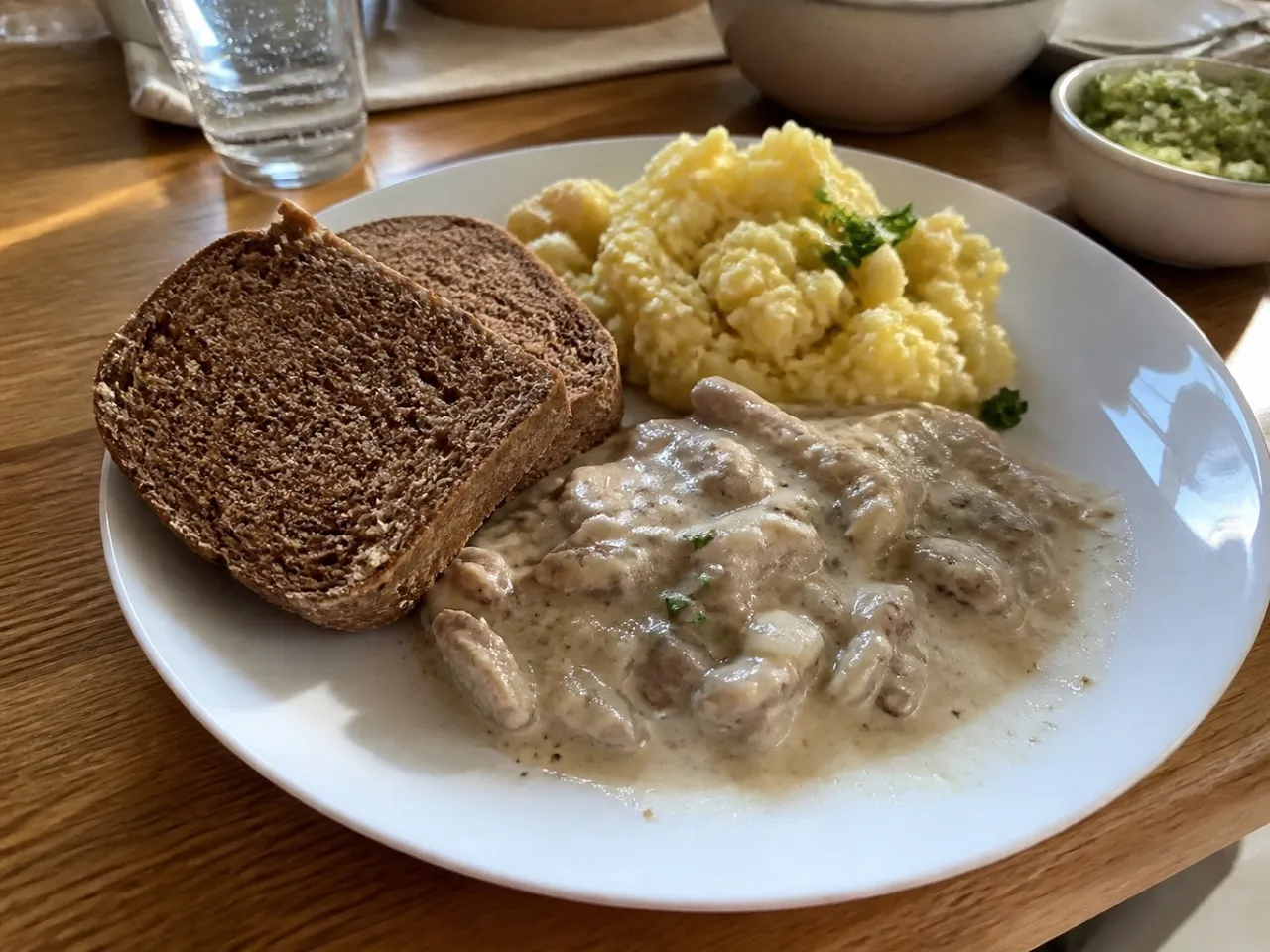
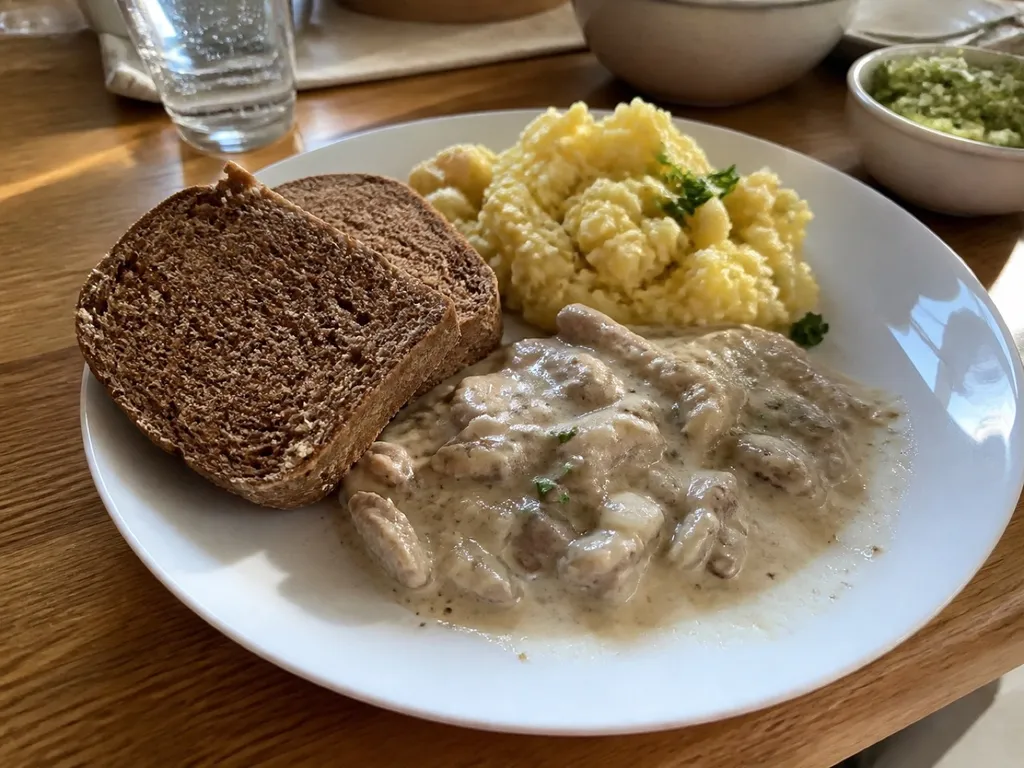
- split pea soup with ham
- dark lager or amber ale
- black coffee or strong black tea
Serving suggestions only — check pairings for your household's allergens.
Storage & reheating
- Store at room temperature wrapped tightly in plastic wrap or in a sealed bread bag for up to 4 days; rye bread actually improves in flavor on days two and three as the crumb firms and the sour notes mellow.
- To freeze, slice the cooled loaf completely, separate slices with parchment, and freeze in a zip-top bag for up to 3 months; toast slices directly from frozen without thawing.
Equipment
- bench scraper — essential for handling the sticky rye dough without adding excess flour
- 9x5-inch loaf pan with straight sides for an even, sandwich-friendly shape
- instant-read thermometer to confirm the interior reaches 200 to 205 F before pulling from the oven
- wire cooling rack to allow full airflow and prevent a soggy bottom crust
Make this household-aware
Listahan Pro checks this recipe against your household's allergens, finds pantry-aware swaps, builds the shopping list, and helps you plan the week around it.
Plan it in Listahan
Add Rye Bread to your week, check it against your household's allergens, and build the shopping list automatically.
More Bakery recipes
 Bakery Lens Verified Images are for illustrative purposes only, may be inaccurate, and do not guarantee the presence or absence of specific ingredients.
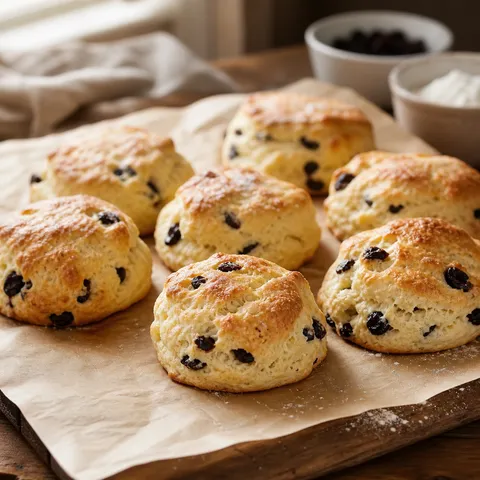
 Scones
Flaky and buttery British baked goods, often with currants or berries.
 Bakery Lens Verified Images are for illustrative purposes only, may be inaccurate, and do not guarantee the presence or absence of specific ingredients.
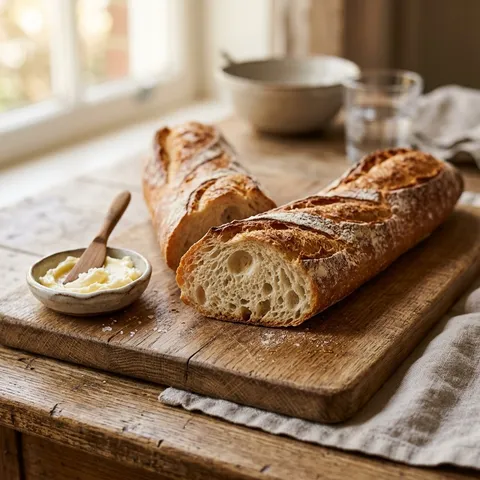
 French Baguette
Savor the authentic crunch of this rustic French baguette, featuring a beautifully crackling golden crust and a soft, airy, and utterly irresistible crumb.
 Bakery Lens Verified Images are for illustrative purposes only, may be inaccurate, and do not guarantee the presence or absence of specific ingredients.
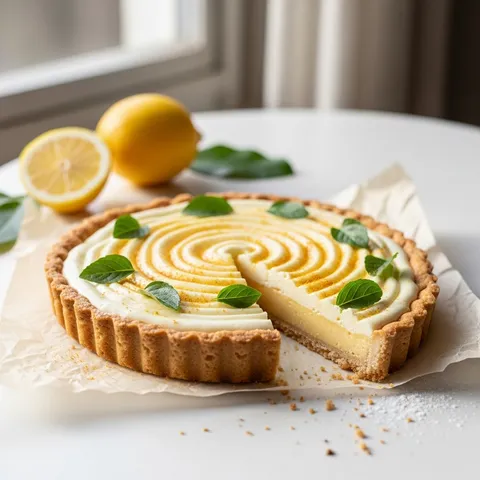
 Lemon Tart
Brighten your dessert spread with this elegant lemon tart, perfectly balancing a brilliantly zesty, silky-smooth lemon curd inside a crisp and buttery sweet pastry shell.