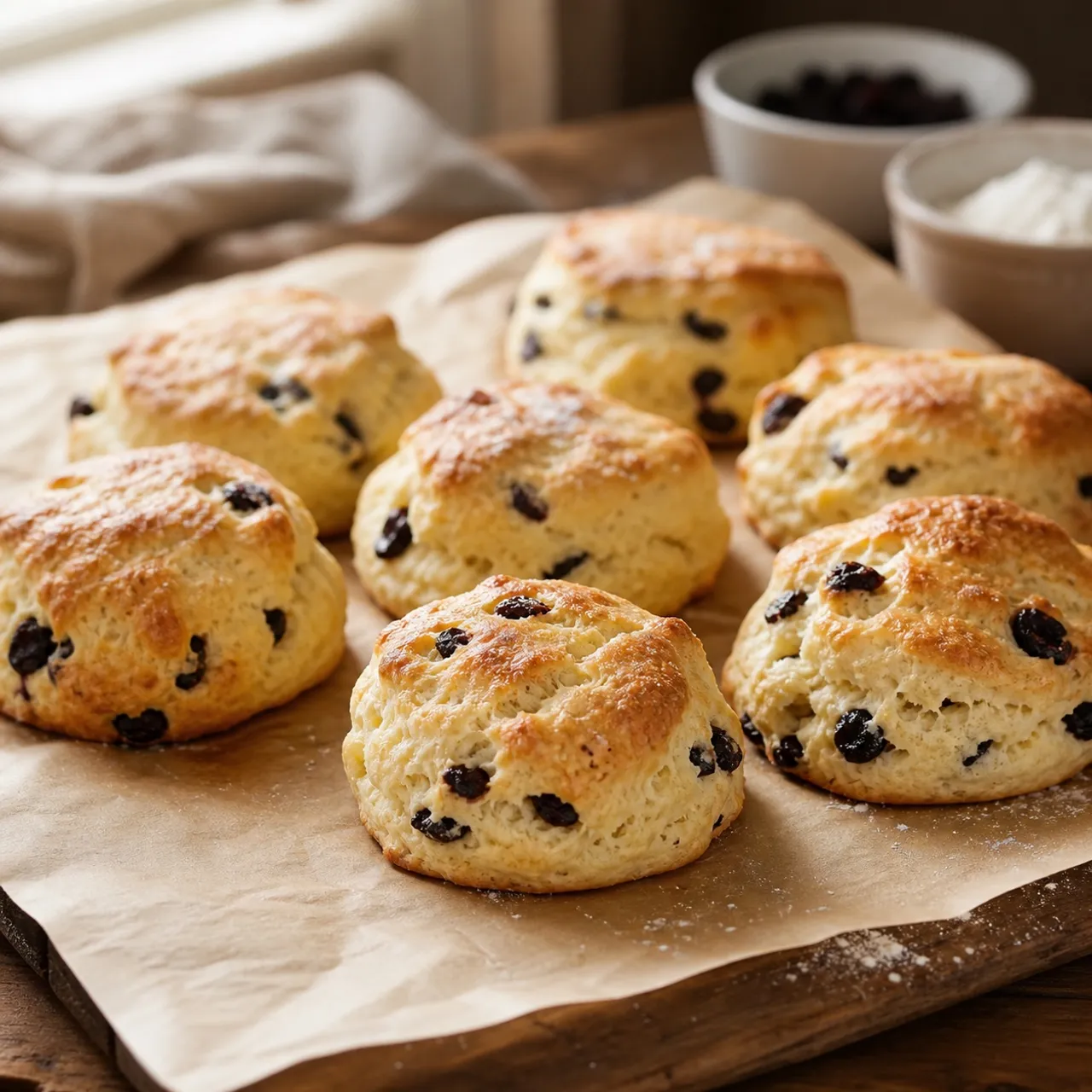
 Bakery Images are for illustrative purposes only, may be inaccurate, and do not guarantee the presence or absence of specific ingredients.
 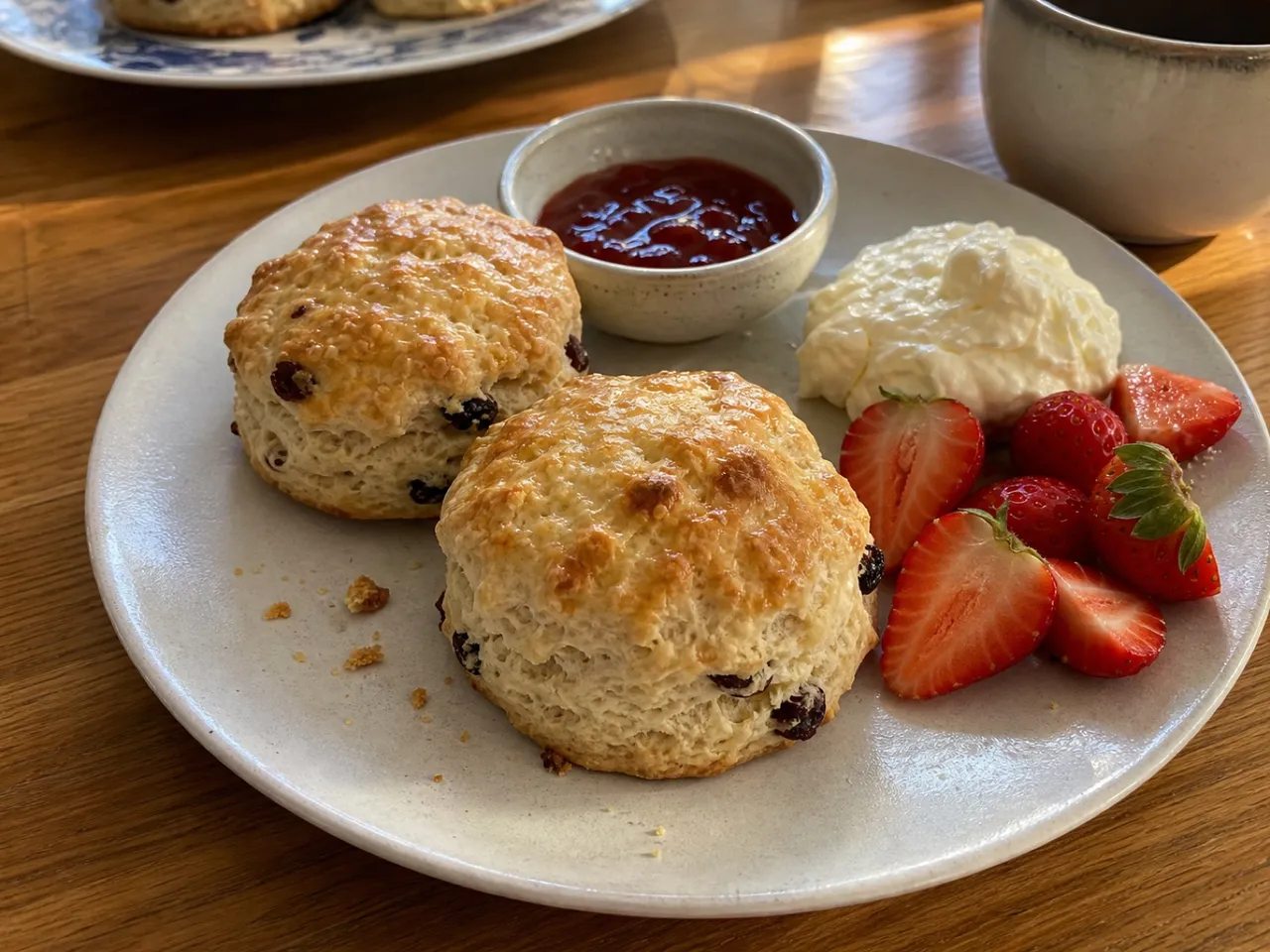 Serving Images are for illustrative purposes only, may be inaccurate, and do not guarantee the presence or absence of specific ingredients.
 Scones
Flaky and buttery British baked goods, often with currants or berries.
Contains common allergens
In the app, Listahan checks these against your household automatically.
Good to know
- Ready in under 30 minutes
Matched from this dish's own ingredients and timing. Browse more: 30-minute meals
Instructions
6 steps- 1
Preheat the oven to 400°F (200°C) and line a baking sheet with parchment paper.
- 2
In a large bowl, whisk together the flour, sugar, baking powder, and salt. Add the cold cubed butter. Using a pastry blender or your fingers, cut the butter into the flour until the mixture resembles coarse meal with some pea-sized butter lumps remaining.
- 3
In a small bowl, whisk the heavy cream, egg, and vanilla extract. Pour the wet ingredients into the dry ingredients and gently fold with a spatula until a shaggy dough begins to form. Fold in the berries or currants.
- 4
Turn the dough out onto a lightly floured surface. Gently knead it 3-4 times just until it comes together. Form the dough into an 8-inch disc, about 1 inch thick.
- 5
Cut the disc into 8 equal wedges using a sharp knife or bench scraper. Transfer the wedges to the prepared baking sheet, spacing them 2 inches apart. Brush the tops lightly with heavy cream and sprinkle with coarse sugar.
- 6
Bake for 15-18 minutes until the scones are puffed, golden brown on top, and firm to the touch. Let cool on the pan for 5 minutes before transferring to a wire rack. Serve warm with clotted cream and jam.
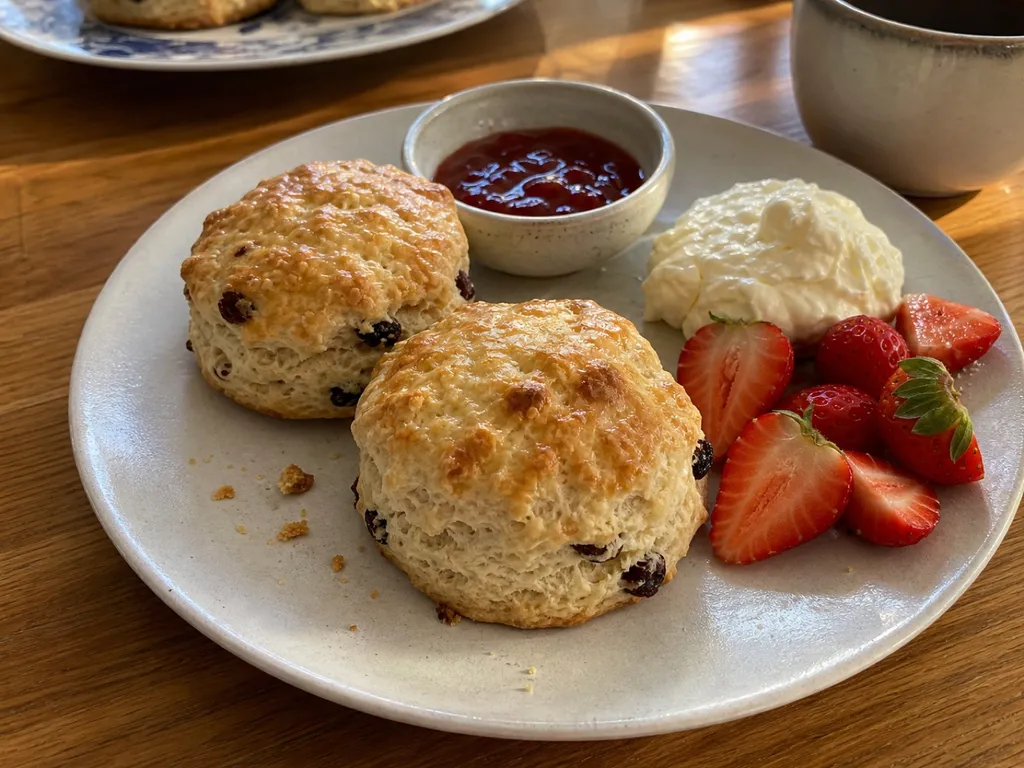 Images are for illustrative purposes only, may be inaccurate, and do not guarantee the presence or absence of specific ingredients.
 Listahan Family Score™
77/100
Good fit for most families
Score reflects how well this recipe fits a typical busy household. In the app, your Family Score is personalized to your household's allergens, kids, and pantry.
Nutrition
per serving315
Calories
5 g
Protein
34 g
Carbs
18 g
Fat
Estimated per serving. Actual values depend on the brands and portions you use.
Listahan cooking guide
Chef notes & practical guide
Technique notes, ingredient swaps, serve-alongside ideas, storage guidance, and equipment for this recipe.
Cultural context
Scones originated in Scotland in the early 1500s, initially as a flat, griddle-cooked round of oat or barley flour — a far cry from the tall, oven-baked wedges we know today. The leavened, oven-baked version became widespread after baking powder was introduced in the mid-19th century, and scones quickly became central to the British tradition of afternoon tea, codified in the grand hotels and tea rooms of Victorian England. In the United States the scone was adopted and significantly sweetened, diverging from the more restrained British original into a pastry-shop staple closer in richness to a sweet biscuit.
Listahan note
This version sits between the spartan British original and the American pastry-counter style — flaky enough to be interesting, tender enough to be a real treat, with a simple glaze and dried fruit for texture. The technique borrows directly from pie dough: cold fat, minimal mixing, no forgiveness for warmth.
Technique cues
- Keep every ingredient cold — frozen butter that is grated on a box grater incorporates in seconds and never needs the warmth of your hands, which is the single biggest variable in producing a flaky rather than dense scone.
- Pat the dough out by hand rather than rolling it with a pin; a rolling pin applies downward pressure that compresses the layers, while a quick pat preserves the flaky pockets formed by cold butter steam.
- Cut scones with a sharp biscuit cutter pressed straight down without twisting — a twisting motion seals the cut edge and prevents the scone from rising fully and evenly.
Kitchen flow
- Parallel prep
- Freeze the measured butter the night before so it is hard enough to grate quickly; measure and whisk dry ingredients the morning of and keep the bowl in the refrigerator so everything is cold when you begin.
- Make-ahead
- Cut scones can be frozen unbaked on a parchment-lined sheet until solid, then transferred to a zip-top bag; bake directly from frozen, adding 4 to 5 minutes to the baking time, for scones that taste freshly made any morning.
- Leftover move
- Day-old scones are excellent sliced horizontally and toasted in a toaster oven until the cut face is golden, then topped with butter and jam or clotted cream — the texture actually improves compared to fresh.
- Cleanup rhythm
- Scone dough is dry and floury rather than sticky; shake excess flour from the work surface into the trash, then wipe with a damp cloth in one pass — no soaking or scrubbing required.
Ingredient brief
Role, handling, and swap guidance for each key ingredient.
all-purpose flour
primary structure
Purpose: All-purpose flour provides just enough gluten development for structure and a tender bite without the chewiness of bread flour, which would make scones tough rather than crumbly-flaky.
Handling: Spoon into the measuring cup and level off, then whisk with sugar, baking powder, and salt before adding fat.
Adaptation: Replacing one-quarter with cake flour produces a more delicate, finer crumb if you prefer a less biscuit-like texture.
cold unsalted butter
fat for flakiness and flavor
Purpose: Cold butter pieces create steam pockets during baking that push layers apart; butter melted into the dough from warm handling produces a dense, cookie-like result rather than the characteristic flaky interior.
Handling: Freeze the butter for 15 minutes, then grate it on the large holes of a box grater directly into the flour; toss to coat immediately so the shreds do not clump.
Adaptation: Cold coconut oil (solidified) can replace butter for a dairy-free version; use the same weight and keep everything very cold.
heavy cream
moisture and richness
Purpose: Heavy cream's fat content inhibits excess gluten development and adds richness, producing a more tender crumb than milk or a leaner liquid would.
Handling: Keep in the refrigerator until the moment you add it; pour it around the bowl in a slow stream while mixing to hydrate evenly.
Adaptation: Full-fat coconut cream works as a dairy-free alternative and adds a faint tropical note that pairs well with dried mango or citrus zest.
dried currants or raisins
sweetness and textural contrast
Purpose: Small dried fruit pieces distribute evenly through the dough and provide concentrated sweetness in each bite without making the dough wet the way fresh fruit would.
Handling: Soak in warm water for 5 minutes and pat dry if very hard and shriveled; plump fruit distributes more evenly and does not draw moisture from the crumb.
Adaptation: Dried cranberries and orange zest, or mini chocolate chips with a pinch of espresso powder, are crowd-pleasing variations.
Technique notes
- Brush the tops with cream or egg wash just before baking for a deep golden sheen; skip the egg wash if you prefer a matte, bakery-style crust with a slightly crunchier surface.
- Rest the shaped scones in the freezer for 15 minutes before baking — this re-chills any butter that softened during cutting and ensures maximum flaky rise in the oven.
- For picture-perfect bakery scones, bake on a parchment-lined sheet rather than a greased pan; parchment allows the bottoms to crisp without overbrowning, and the scones lift cleanly without sticking.
Ingredient swaps
- Dairy-free option
- Use solid refined coconut oil in place of butter (same quantity, kept cold) and full-fat coconut cream in place of heavy cream; chill the dough for 30 minutes after mixing before shaping, as coconut fat softens faster than butter.
- Gluten-free direction
- A 1:1 GF baking flour blend with xanthan gum works well; the dough will be slightly stickier — work it cold and dust the surface generously with GF flour when patting out.
- Lower-sugar direction
- Reduce granulated sugar to 2 tablespoons and omit the glaze; the dried fruit and cream provide enough sweetness for a lightly sweet, breakfast-appropriate scone.
Serve alongside
- clotted cream and strawberry jam for a Devonshire cream tea
- lemon curd
- soft-scrambled eggs with fresh chives
- Earl Grey tea with milk
- freshly squeezed orange juice
- flat white or cappuccino
Serving suggestions only — check pairings for your household's allergens.
Storage & reheating
- Store baked scones in an airtight container at room temperature for up to 2 days; they are best the day they are baked and decline quickly after 48 hours as the fat oxidizes and the crumb dries.
- Freeze baked scones individually wrapped in plastic and then in a freezer bag for up to 2 months; reheat in a 350 F oven for 8 to 10 minutes until warmed through and the exterior re-crisps.
Equipment
- box grater for freezing and grating butter directly into flour
- pastry brush for applying cream or egg wash cleanly
- 2.5-inch round biscuit cutter with a sharp straight edge
- parchment-lined rimmed baking sheet for even heat and easy release
Make this household-aware
Listahan Pro checks this recipe against your household's allergens, finds pantry-aware swaps, builds the shopping list, and helps you plan the week around it.
Plan it in Listahan
Add Scones to your week, check it against your household's allergens, and build the shopping list automatically.
More Bakery recipes
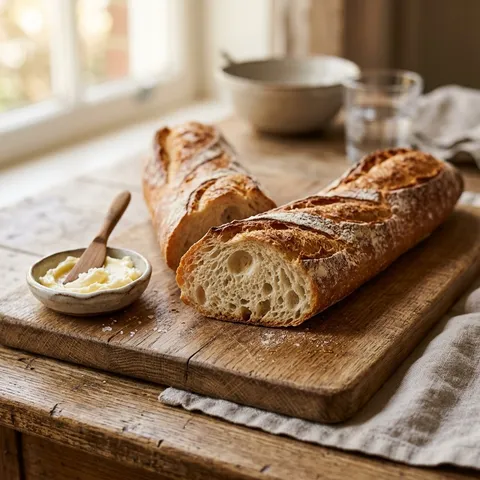 Bakery Lens Verified Images are for illustrative purposes only, may be inaccurate, and do not guarantee the presence or absence of specific ingredients.
 French Baguette
Savor the authentic crunch of this rustic French baguette, featuring a beautifully crackling golden crust and a soft, airy, and utterly irresistible crumb.
 Bakery Lens Verified Images are for illustrative purposes only, may be inaccurate, and do not guarantee the presence or absence of specific ingredients.
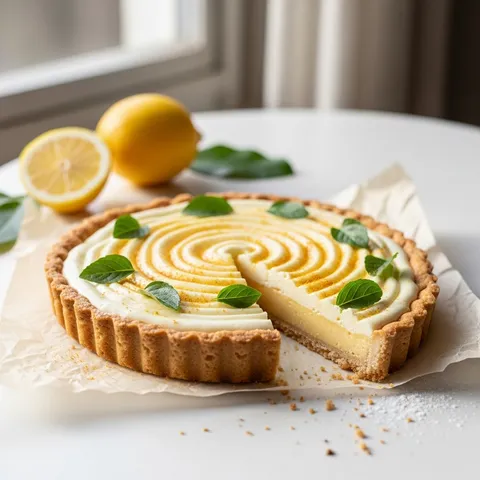
 Lemon Tart
Brighten your dessert spread with this elegant lemon tart, perfectly balancing a brilliantly zesty, silky-smooth lemon curd inside a crisp and buttery sweet pastry shell.
 Bakery Lens Verified Images are for illustrative purposes only, may be inaccurate, and do not guarantee the presence or absence of specific ingredients.
 Hot Cross Buns
Spiced sweet buns studded with raisins and marked with a cross.