 Bakery Images are for illustrative purposes only, may be inaccurate, and do not guarantee the presence or absence of specific ingredients.
 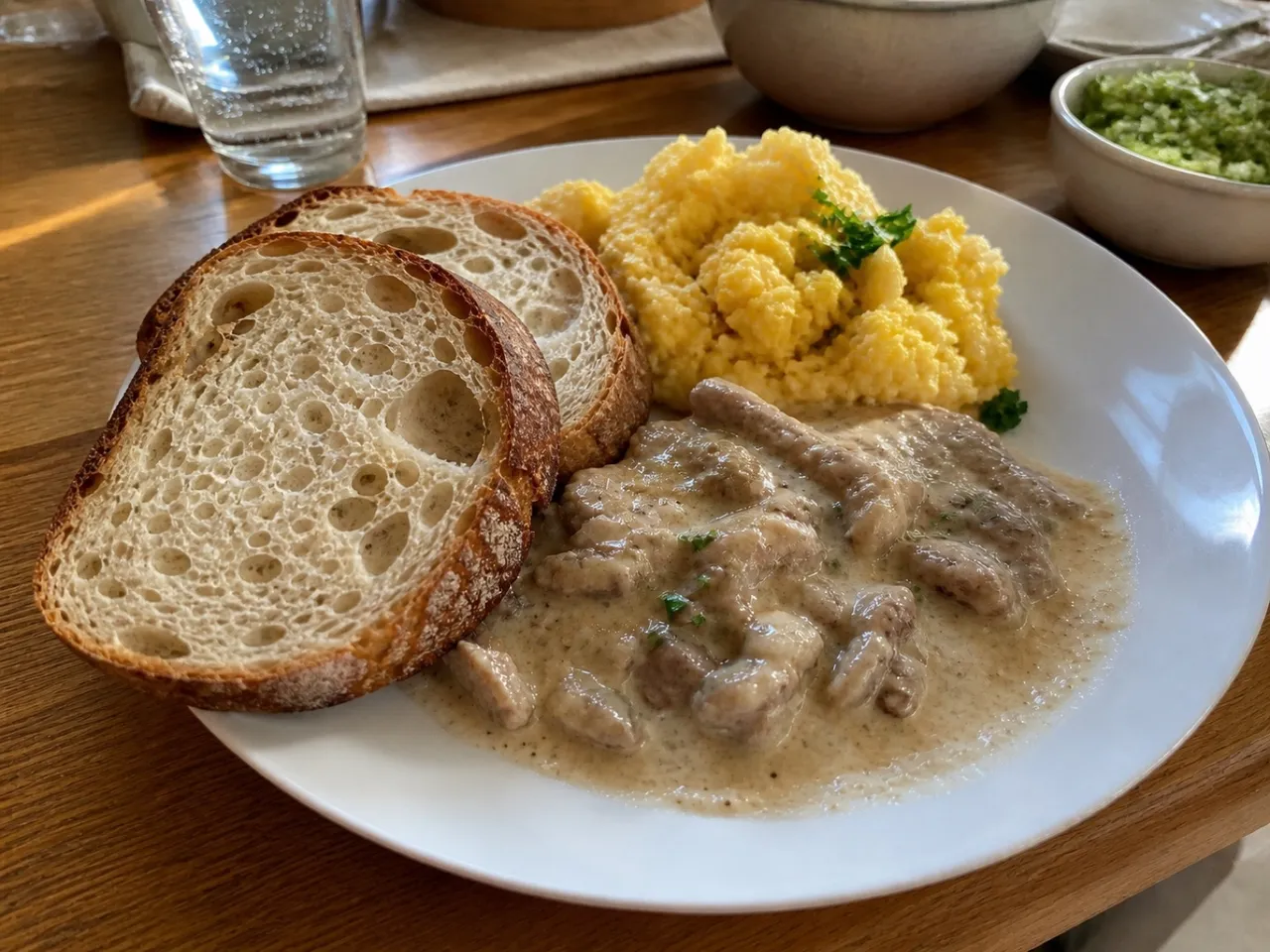 Serving Images are for illustrative purposes only, may be inaccurate, and do not guarantee the presence or absence of specific ingredients.
 Sourdough Bread
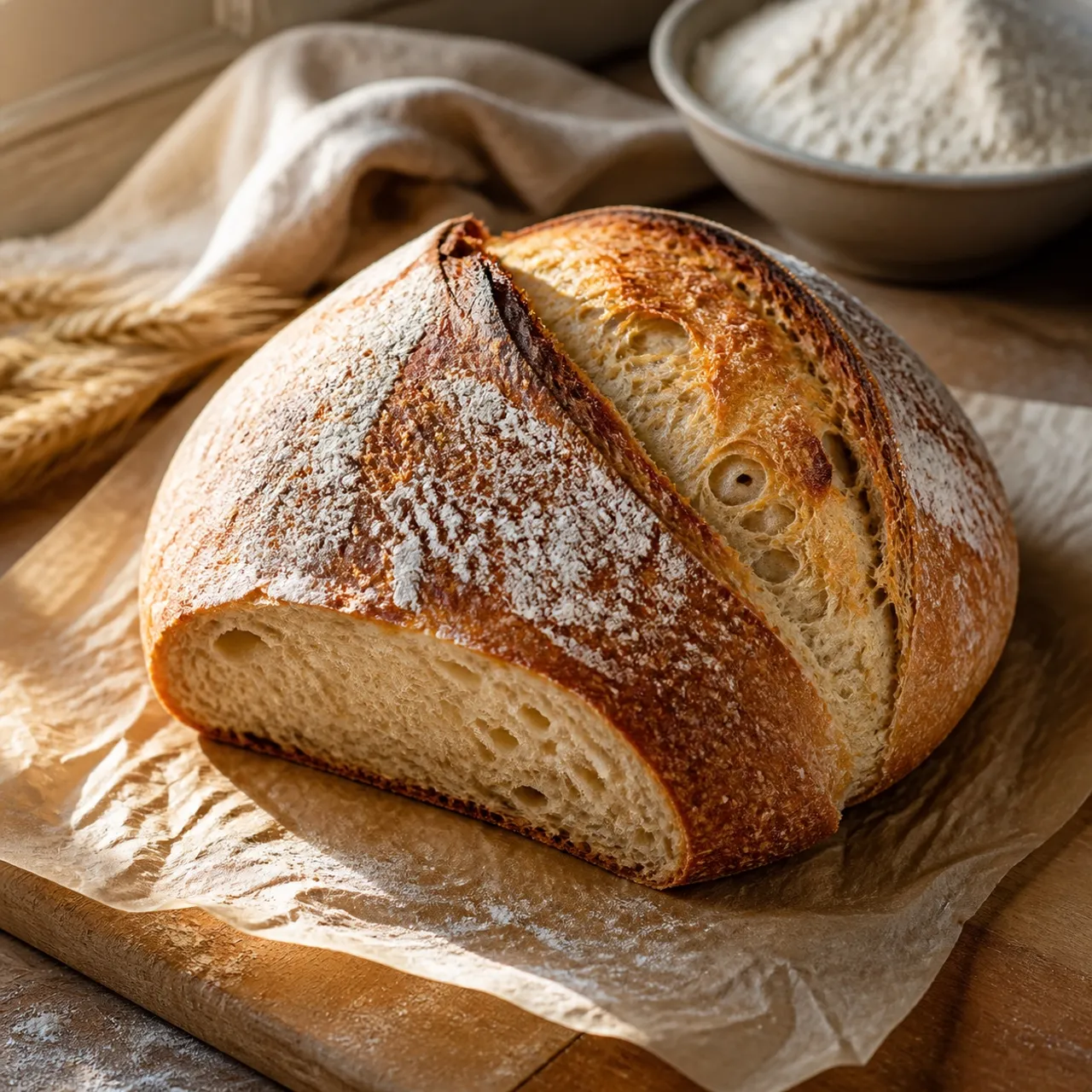
Master the art of artisan baking with this spectacular sourdough, boasting a deep, complex tangy flavor, an open and chewy crumb, and a stunningly blistered mahogany crust.
Contains common allergens
In the app, Listahan checks these against your household automatically.
Instructions
6 steps- 1
In a large mixing bowl, whisk together the active sourdough starter and water until milky. Add the bread flour and mix until all dry bits are incorporated. Cover and let rest (autolyse) for 1 hour to hydrate the flour.
- 2
Sprinkle the salt evenly over the dough and massage it in. Over the next 4 hours, perform a series of "stretch and folds" every 45 minutes to develop the gluten structure.
- 3
Cover the bowl tightly and let the dough bulk ferment at room temperature overnight (8-12 hours) until it has increased in volume by about 50% and shows bubbles on the surface.
- 4
Turn the dough out onto a lightly floured surface, gently pre-shape it into a loose round, and let it rest for 20 minutes. Then, perform the final shaping into a tight boule and place it seam-side up in a well-floured banneton basket.
- 5
Retard the dough in the refrigerator for an additional 4-12 hours to develop flavor.
- 6
Preheat a Dutch oven inside the oven at 450°F (230°C) for 45 minutes. Turn the cold dough out onto parchment paper, score the top with a lame, and carefully transfer it into the hot Dutch oven. Bake covered for 25 minutes, then remove the lid and bake for another 20 minutes until the crust is deep mahogany and blistered.
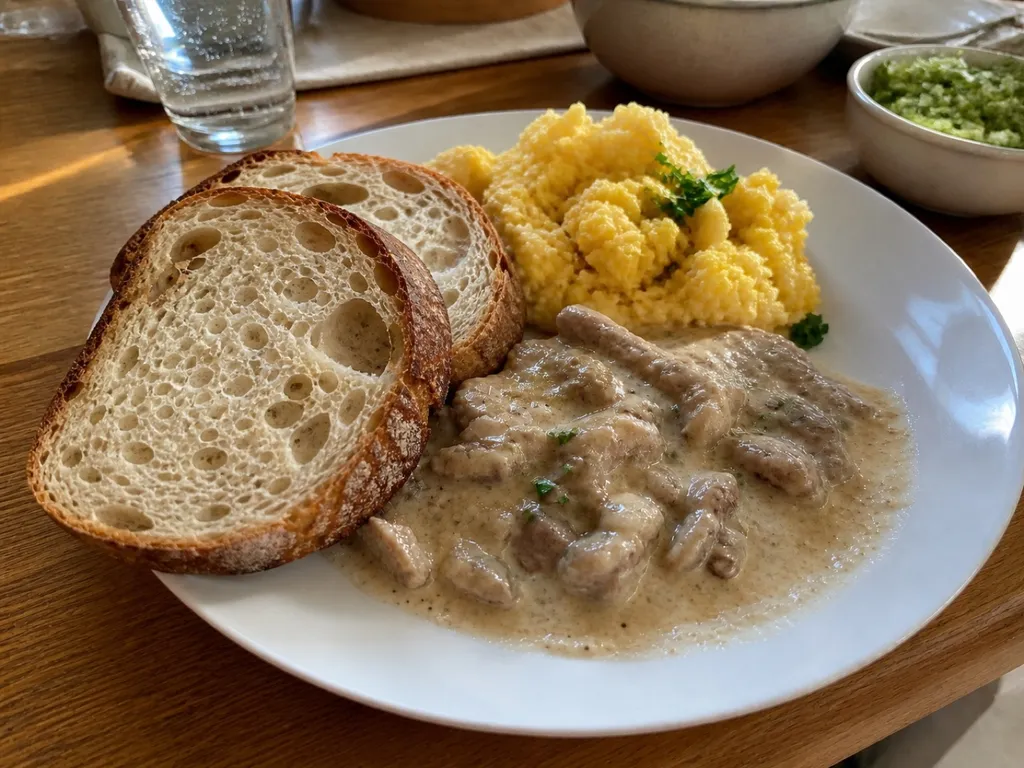 Images are for illustrative purposes only, may be inaccurate, and do not guarantee the presence or absence of specific ingredients.
 Listahan Family Score™
71/100
Good fit for most families
Score reflects how well this recipe fits a typical busy household. In the app, your Family Score is personalized to your household's allergens, kids, and pantry.
Nutrition
per serving230
Calories
6 g
Protein
48 g
Carbs
1 g
Fat
Estimated per serving. Actual values depend on the brands and portions you use.
Listahan cooking guide
Chef notes & practical guide
Technique notes, ingredient swaps, serve-alongside ideas, storage guidance, and equipment for this recipe.
Cultural context
Sourdough is the oldest form of leavened bread, dating back at least 5,000 years to ancient Egypt, where wild fermentation was the only available method for making bread rise. The process relies on a living culture of wild yeast and lactic acid bacteria that the baker maintains by regularly feeding it with flour and water. The gold rush era San Francisco sourdough became famous in the 19th century partly because the particular wild yeast strain in that coastal climate produced an unusually tangy loaf, and that tang became synonymous with the form. The modern sourdough revival brought the practice back into home kitchens as a craft pursuit rather than a practical necessity.
Listahan note
This version emphasizes the bulk fermentation window as the most important variable -- the dough's readiness to shape, not a fixed time on the clock, determines when to move forward.
Technique cues
- Judge bulk fermentation by the dough itself: it should increase by 50 to 75 percent, feel airy and domed at the top, and show bubbles at the edges when you look through a clear container -- time varies by room temperature and starter strength.
- Perform the final shaping with minimal flour on the surface; friction between the dough and the bench is what builds the surface tension needed to hold the loaf's form through baking.
- Score the loaf deeply and decisively -- at least 1 centimeter deep -- at a steep angle; a hesitant score seals shut in the oven's heat and prevents the bloom that creates an open crumb.
Kitchen flow
- Parallel prep
- Feed the starter the evening before baking so it peaks in the morning; mix the dough first thing and let bulk fermentation happen passively throughout the morning while you do other tasks.
- Make-ahead
- After shaping, place the loaf in a floured banneton, cover, and refrigerate for 8 to 16 hours; bake directly from cold for improved flavor and a more defined ear.
- Leftover move
- Day-old sourdough makes exceptional avocado toast, pan-fried in olive oil until golden, or slice thin and dehydrate into crackers in a 250 F oven for 1 hour.
- Cleanup rhythm
- Rinse dough-coated bowls and the bench scraper in cold water immediately after use -- hot water sets the starch and makes cleanup much harder.
Ingredient brief
Role, handling, and swap guidance for each key ingredient.
bread flour
gluten structure
Purpose: High-protein bread flour builds the strong, extensible gluten network that can hold the long fermentation gases without tearing or collapsing.
Handling: Weigh by grams for consistency; sourdough hydration is sensitive and small flour weight differences affect the final crumb significantly.
Adaptation: A blend of 80 percent bread flour and 20 percent whole wheat adds flavor complexity while maintaining enough gluten strength for a good rise.
sourdough starter
natural leavener and flavor source
Purpose: The wild yeast in the starter leavens the bread while the lactic acid bacteria produce acetic and lactic acids that create the characteristic tang and help preserve the loaf.
Handling: Use starter at peak activity -- dome-shaped, bubbly throughout, and about doubled from its last feed -- which typically occurs 4 to 6 hours after feeding at room temperature.
Adaptation: There is no direct substitute that replicates sourdough flavor; for leavening only, 1/4 teaspoon of instant yeast can replace the starter but the resulting bread will taste very different.
fine sea salt
flavor and fermentation control
Purpose: Salt suppresses unwanted bacterial activity, strengthens gluten bonds, and is essential to the bread's flavor -- under-salted sourdough tastes flat regardless of fermentation quality.
Handling: Dissolve salt in a small amount of water before adding to the dough to distribute it evenly without hot spots that inhibit yeast locally.
Adaptation: Kosher salt at the same weight works identically; avoid iodized table salt, which can affect microbial activity in the starter.
water
hydration and crust development
Purpose: Water hydrates the flour to form gluten and gelatinize the starch, and becomes the steam inside the dutch oven that keeps the crust extensible during the oven spring.
Handling: Use filtered or rested tap water if your tap water is heavily chlorinated, as residual chlorine can inhibit the sourdough culture.
Adaptation: No substitute; adjust the total water amount (hydration percentage) up or down to match your flour's absorption and your comfort level with wet dough.
Technique notes
- The dutch oven is not optional -- it replicates the steam injection of a professional deck oven; baking with the lid on for the first 20 minutes traps the loaf's own steam and is responsible for both the ear and the open crumb.
- A higher hydration dough (75 to 80 percent) produces a more open, irregular crumb but requires confident handling; beginners get a more consistent result at 70 percent hydration before working upward.
- The loaf is done when it sounds hollow when tapped on the bottom and the internal temperature reads 205 to 210 F -- a well-baked interior is what gives sourdough its characteristic chew without gumminess.
Ingredient swaps
- Whole grain direction
- Replace 20 to 30 percent of bread flour with whole wheat or spelt flour for a denser, earthier loaf with increased fiber; the trade-off is a somewhat tighter crumb.
- Lower-sodium direction
- Reduce salt to 1.5 percent of flour weight from the standard 2 percent; any lower and the flavor and gluten structure both suffer noticeably.
- Gluten-free direction
- True gluten-free sourdough requires a separate starter maintained on rice flour and a dedicated gluten-free loaf formula; the process and ratios are entirely different from a wheat-based recipe.
Serve alongside
- Cultured butter with honey
- Roasted garlic and olive oil for dipping
- Sharp aged cheddar with apple slices
- Natural orange wine
- Cold kombucha
- Black coffee
Serving suggestions only — check pairings for your household's allergens.
Storage & reheating
- Store the fully cooled loaf cut-side down on a cutting board covered with a clean kitchen towel for up to 2 days; plastic bags trap humidity and soften the crust. Slice and freeze in a zip bag for up to 2 months; toast directly from frozen.
Equipment
- Dutch oven or combo cooker with lid
- Banneton proofing basket
- Bread lame or single-edge razor
- Kitchen scale (essential)
Make this household-aware
Listahan Pro checks this recipe against your household's allergens, finds pantry-aware swaps, builds the shopping list, and helps you plan the week around it.
Plan it in Listahan
Add Sourdough Bread to your week, check it against your household's allergens, and build the shopping list automatically.
More Bakery recipes
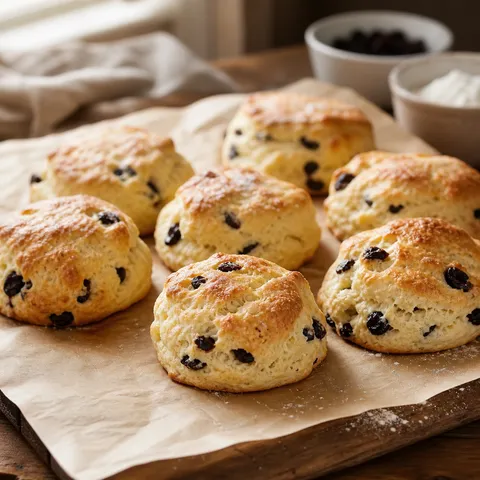 Bakery Lens Verified Images are for illustrative purposes only, may be inaccurate, and do not guarantee the presence or absence of specific ingredients.
 Scones
Flaky and buttery British baked goods, often with currants or berries.
 Bakery Lens Verified Images are for illustrative purposes only, may be inaccurate, and do not guarantee the presence or absence of specific ingredients.
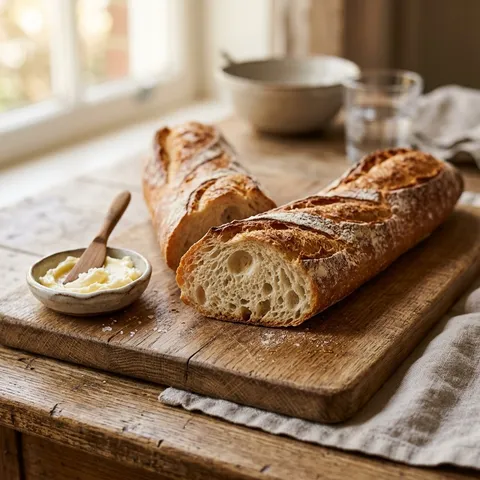
 French Baguette
Savor the authentic crunch of this rustic French baguette, featuring a beautifully crackling golden crust and a soft, airy, and utterly irresistible crumb.
 Bakery Lens Verified Images are for illustrative purposes only, may be inaccurate, and do not guarantee the presence or absence of specific ingredients.
 Lemon Tart
Brighten your dessert spread with this elegant lemon tart, perfectly balancing a brilliantly zesty, silky-smooth lemon curd inside a crisp and buttery sweet pastry shell.