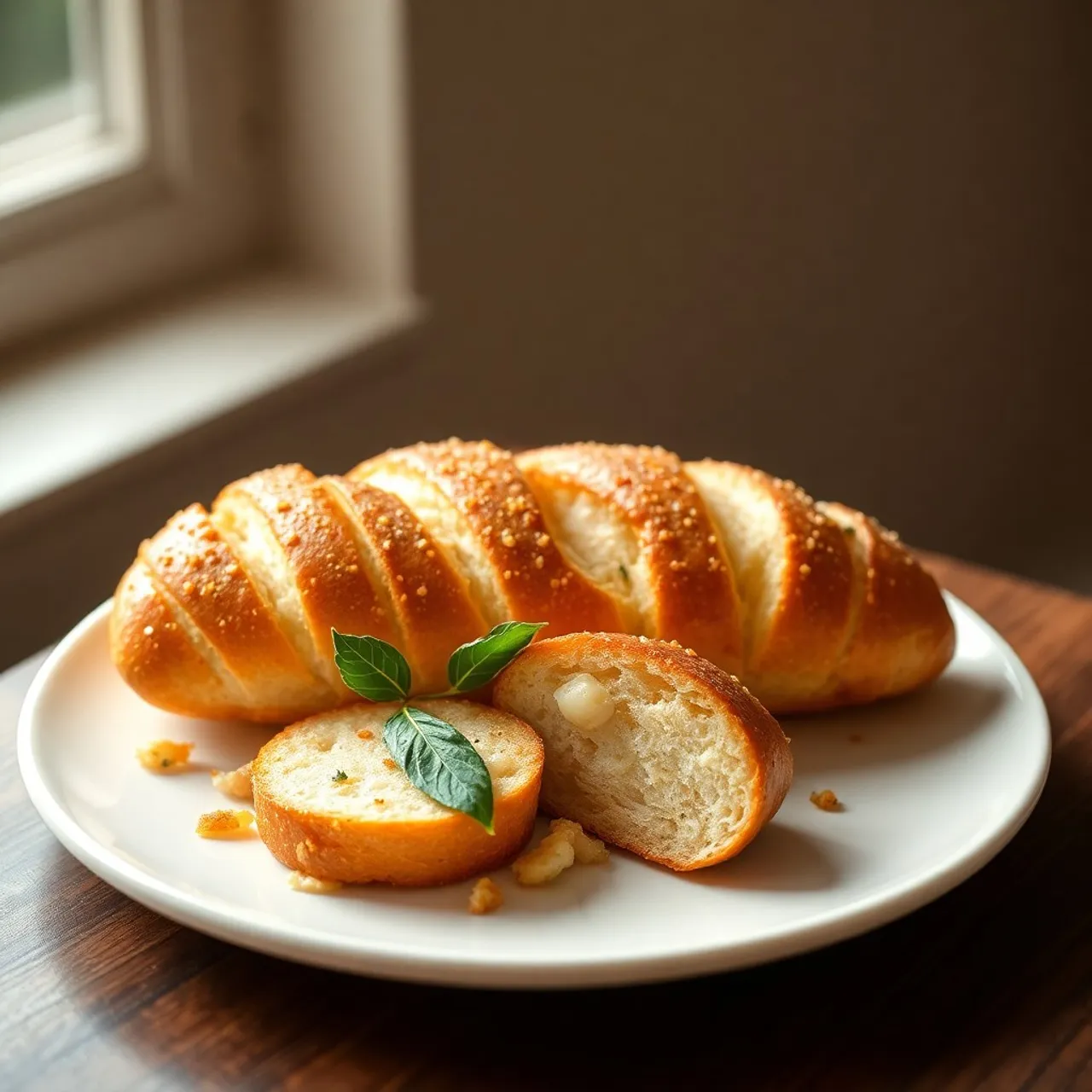
 Breads Images are for illustrative purposes only, may be inaccurate, and do not guarantee the presence or absence of specific ingredients.
 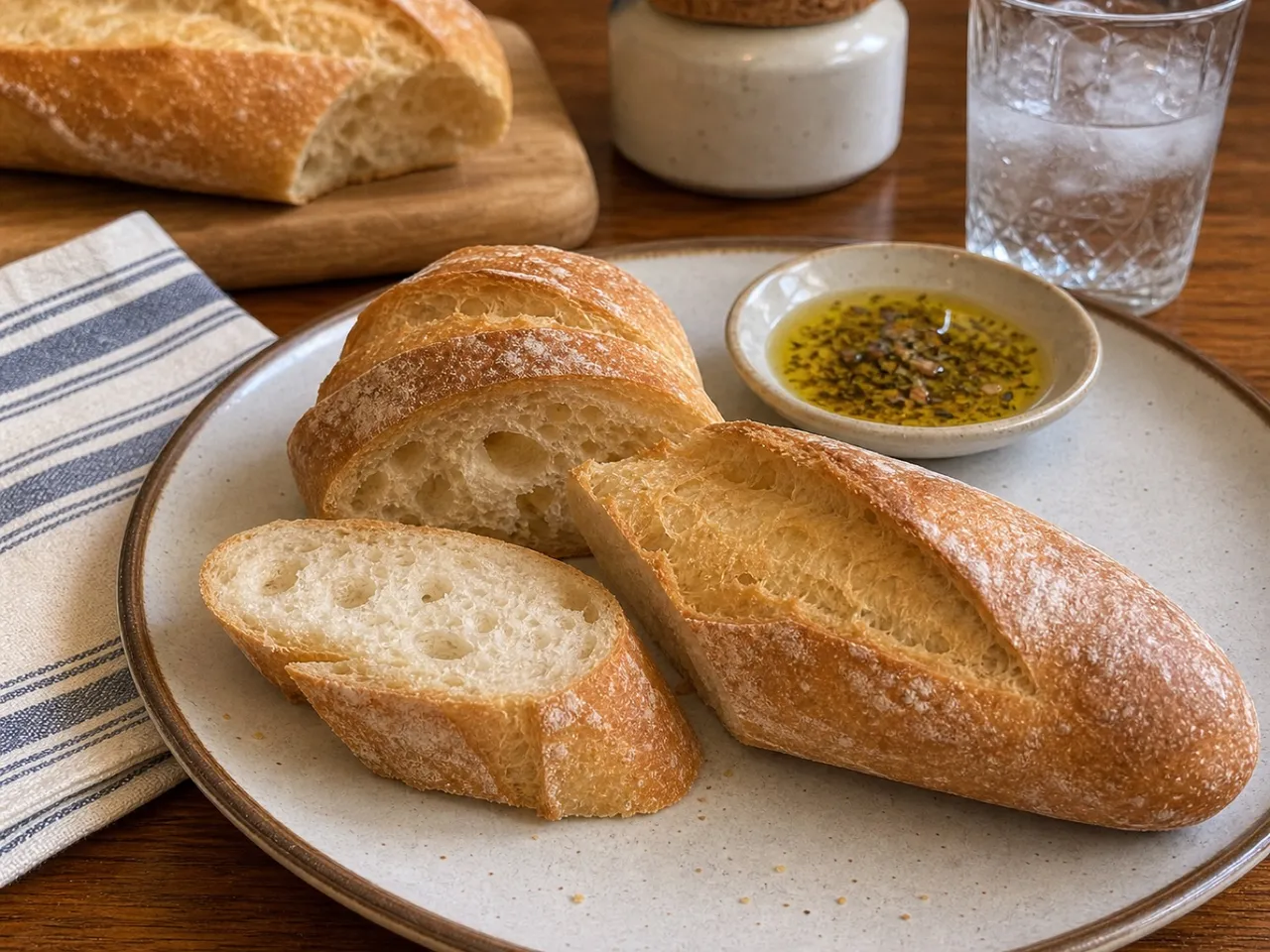 Serving Images are for illustrative purposes only, may be inaccurate, and do not guarantee the presence or absence of specific ingredients.
 Classic French Baguette
Crusty golden baguettes with a crackling crust and an airy, open crumb that shatters at first bite.
Contains common allergens
In the app, Listahan checks these against your household automatically.
Good to know
- Crispy
Matched from this dish's own ingredients and timing. Browse more: crispy recipes
Instructions
7 steps- 1
In a large bowl, whisk together the bread flour, instant yeast, and salt. Pour in the lukewarm water and stir with a wooden spoon until a shaggy, sticky dough forms with no dry patches of flour remaining.
- 2
Cover the bowl and let the dough rest 15 minutes, then knead in the bowl by performing 4 stretch-and-folds: grab one edge, stretch it up, and fold it over the center, rotating the bowl a quarter turn each time. Cover and let rise at room temperature until roughly doubled, about 1 1/2 to 2 hours.
- 3
Turn the dough onto a lightly floured surface and divide into 3 equal pieces. Gently pre-shape each into a loose rectangle, cover, and rest 15 minutes so the gluten relaxes.
- 4
Shape each piece into a baguette: fold the top third down and press to seal, fold the bottom third up and seal, then roll the seam closed and gently stretch to about 14 inches. Transfer seam-side down onto a floured couche or parchment, pleating the cloth between loaves to support them.
- 5
Cover loosely and proof until puffy and slightly jiggly, 45 to 60 minutes. Meanwhile, place a baking stone or inverted sheet pan in the oven and a metal pan on the bottom rack, then preheat to 475°F.
- 6
Slide the baguettes onto parchment, then slash each one 3 to 4 times at a shallow 30-degree angle with a sharp blade. Transfer to the hot stone, toss a handful of ice cubes into the bottom pan to create steam, and quickly close the door.
- 7
Bake 22 to 26 minutes until deeply golden brown and the loaves sound hollow when tapped on the bottom; internal temperature should read about 205°F. Cool on a wire rack at least 20 minutes so the crust sets and crackles before slicing.
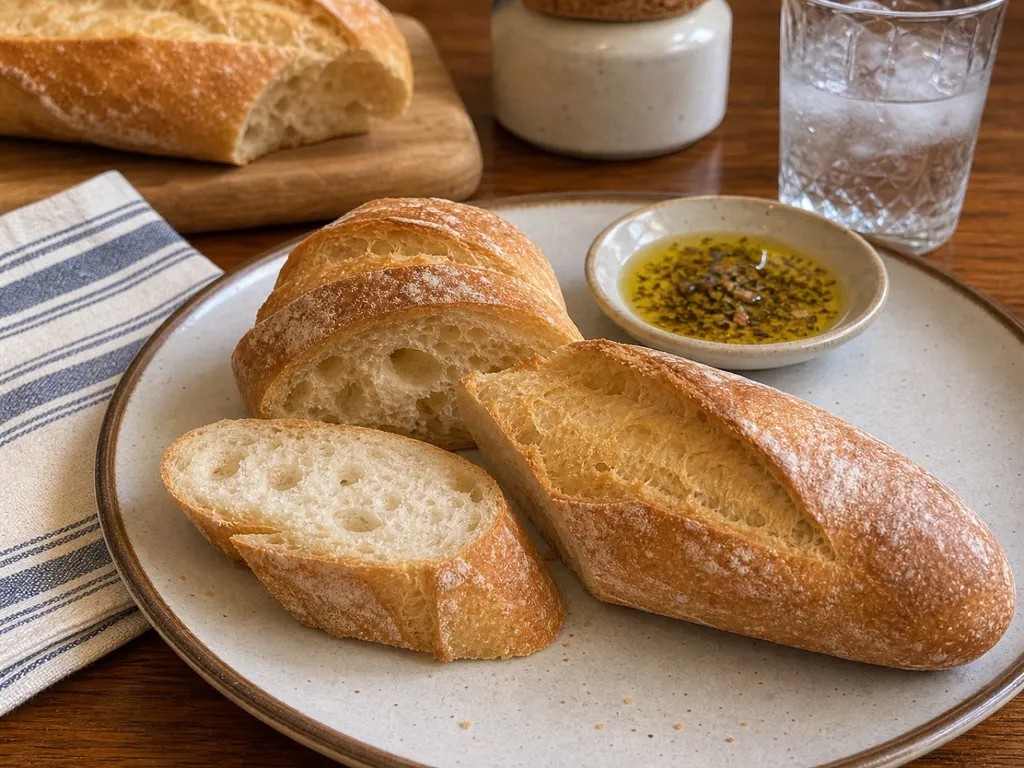 Images are for illustrative purposes only, may be inaccurate, and do not guarantee the presence or absence of specific ingredients.
 Listahan Family Score™
72/100
Good fit for most families
Score reflects how well this recipe fits a typical busy household. In the app, your Family Score is personalized to your household's allergens, kids, and pantry.
Nutrition
per serving150
Calories
4 g
Protein
32 g
Carbs
0 g
Fat
Estimated per serving. Actual values depend on the brands and portions you use.
Listahan cooking guide
Chef notes & practical guide
Technique notes, ingredient swaps, serve-alongside ideas, storage guidance, and equipment for this recipe.
Cultural context
The baguette's long, thin shape and crackling crust were standardized in France in the early 1900s, partly shaped by labor laws that limited bakers' working hours and pushed toward a loaf that baked faster than a traditional round bread. Its now-iconic form makes it as much a matter of French regulation and culture as of any single recipe.
Listahan note
This version tests the dough for a windowpane — stretching a small piece thin enough to see light through without tearing — before moving on, since that specific gluten check is what confirms the dough is developed enough to hold the baguette's shape and open crumb.
Technique cues
- Kneading until the dough passes the windowpane test, stretching thin enough to see light through without tearing, confirms the gluten is developed enough for the bread's open, airy crumb.
- A full hour of rising in a warm, draft-free spot lets the dough double in volume, building the flavor and structure that a rushed rise wouldn't develop.
- Shaping each portion into a long, even cylinder and proofing again for forty-five minutes gives the loaves their final rise before they ever see the oven's heat.
- A shallow pan of water on the bottom rack creates steam in the oven, which is what lets the crust stay flexible just long enough to expand before it sets and turns crackling-crisp.
Kitchen flow
- Parallel prep
- Start Classic French Baguette first if it takes longer than the main dish, and use the wait to prep other sides. This one leans on the instant yeast. Plan around the bake; that's the slow part.
- Make-ahead
- Most of Classic French Baguette can be prepped ahead; finish the last step just before serving so texture and temperature stay right. This one leans on the instant yeast. Everything else is quick — the bake is the one step that takes real time.
- Leftover move
- Fold leftover Classic French Baguette into a grain bowl or omelet the next day rather than reheating it plain. This one leans on the instant yeast. The bake step is what sets the pace here.
- Cleanup rhythm
- Clean the prep bowls for Classic French Baguette while the main dish finishes cooking, so nothing's left stacked at the end of the meal. This one leans on the instant yeast. Everything else is quick — the bake is the one step that takes real time.
Ingredient brief
Role, handling, and swap guidance for each key ingredient.
500 g bread flour
Structural base
Purpose: g bread flour defines the shape and texture of the dish.
Handling: Measure before heating and break up clumps so the mix distributes evenly.
Adaptation: Use a certified gluten-free alternative when needed and expect a small texture change.
1 1/2 tsp instant yeast
Flavor support
Purpose: 1/2 tsp instant yeast supports the balance of Classic French Baguette and should taste integrated.
Handling: Prep before heat is high so the cooking step can move without rushing.
Adaptation: Use the closest fresh equivalent and expect a modest shift in flavor or texture.
2 tsp fine sea salt
Flavor support
Purpose: tsp fine sea salt supports the balance of Classic French Baguette and should taste integrated.
Handling: Prep before heat is high so the cooking step can move without rushing.
Adaptation: Use the closest fresh equivalent and expect a modest shift in flavor or texture.
350 ml lukewarm water
Flavor support
Purpose: ml lukewarm water supports the balance of Classic French Baguette and should taste integrated.
Handling: Prep before heat is high so the cooking step can move without rushing.
Adaptation: Use the closest fresh equivalent and expect a modest shift in flavor or texture.
Extra flour, for dusting
Structural base
Purpose: Extra flour, for dusting defines the shape and texture of the dish.
Handling: Measure before heating and break up clumps so the mix distributes evenly.
Adaptation: Use a certified gluten-free alternative when needed and expect a small texture change.
Technique notes
- Score the loaves with quick, confident diagonal slashes just before baking — hesitant or shallow cuts don't let the bread expand cleanly and can cause it to tear randomly instead.
- Listen for a hollow sound when you tap the bottom of a baked loaf; that hollow knock, not just crust color, is the real sign it's fully baked through.
- Baguettes are best eaten within a few hours of baking, since their thin crust and open crumb dry out and turn stale much faster than a denser loaf.
Ingredient swaps
- Gluten-free direction
- Replace the bread flour with a certified gluten-free 1:1 flour blend or gluten-free noodles/breadcrumbs — check that any other packaged ingredients here are labeled gluten-free too. This one leans on the instant yeast.
- Lower-sodium direction
- Use a low-sodium or no-salt-added version of the fine sea salt, then season to taste with fresh herbs, citrus, or vinegar at the end instead of more salt. This one leans on the instant yeast.
- Weeknight shortcut
- For a faster version, prep the longest-cooking component a day ahead so the night-of cook is mostly assembly and finishing. This one leans on the instant yeast.
Serve alongside
- Fresh fruit
- Cucumber slices
- Plain rice crackers
- Cold water
- Sparkling water
Serving suggestions only — check pairings for your household's allergens.
Storage & reheating
- Refrigerate covered for up to 3 days when the drink is brewed, blended, or mixed ahead.
- Stir or shake before serving over fresh ice.
- Do not freeze unless the recipe is meant to become pops or granita.
Equipment
- Pitcher or blender
- Measuring cup
- Long spoon
Make this household-aware
Listahan Pro checks this recipe against your household's allergens, finds pantry-aware swaps, builds the shopping list, and helps you plan the week around it.
Plan it in Listahan
Add Classic French Baguette to your week, check it against your household's allergens, and build the shopping list automatically.
More Breads recipes
Rice Crust for Quiches or Pies
A simple pressed crust made from cooked rice that holds savory quiche and pie fillings beautifully.
 Breads Lens Verified Images are for illustrative purposes only, may be inaccurate, and do not guarantee the presence or absence of specific ingredients.
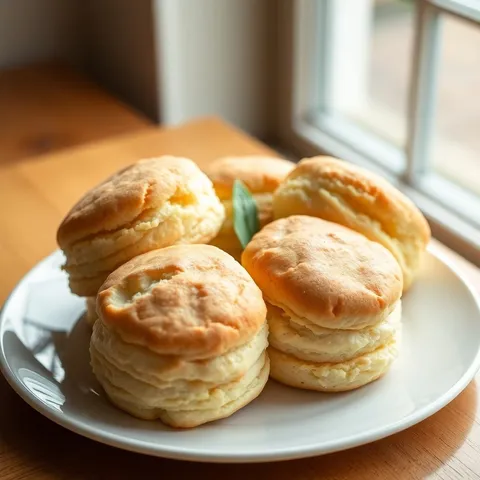
 Kentucky Biscuits
Tall, flaky Southern-style biscuits with a tender crumb, perfect with butter and jam.
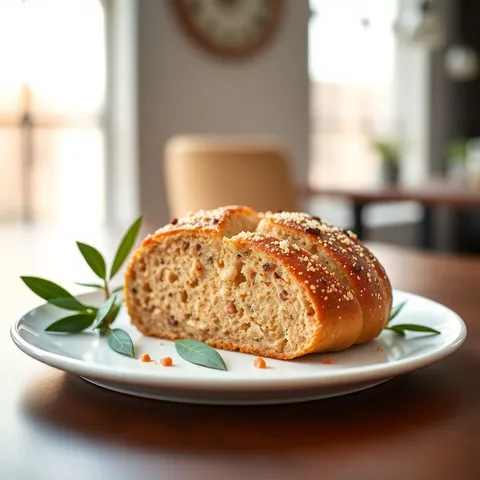 Breads Lens Verified Images are for illustrative purposes only, may be inaccurate, and do not guarantee the presence or absence of specific ingredients.
 Bread Machine Sage-Wheat Bread
A fragrant whole-wheat loaf scented with sage and a hint of cornmeal, made effortlessly in a bread machine.