 Breads Images are for illustrative purposes only, may be inaccurate, and do not guarantee the presence or absence of specific ingredients.
  Serving Images are for illustrative purposes only, may be inaccurate, and do not guarantee the presence or absence of specific ingredients.
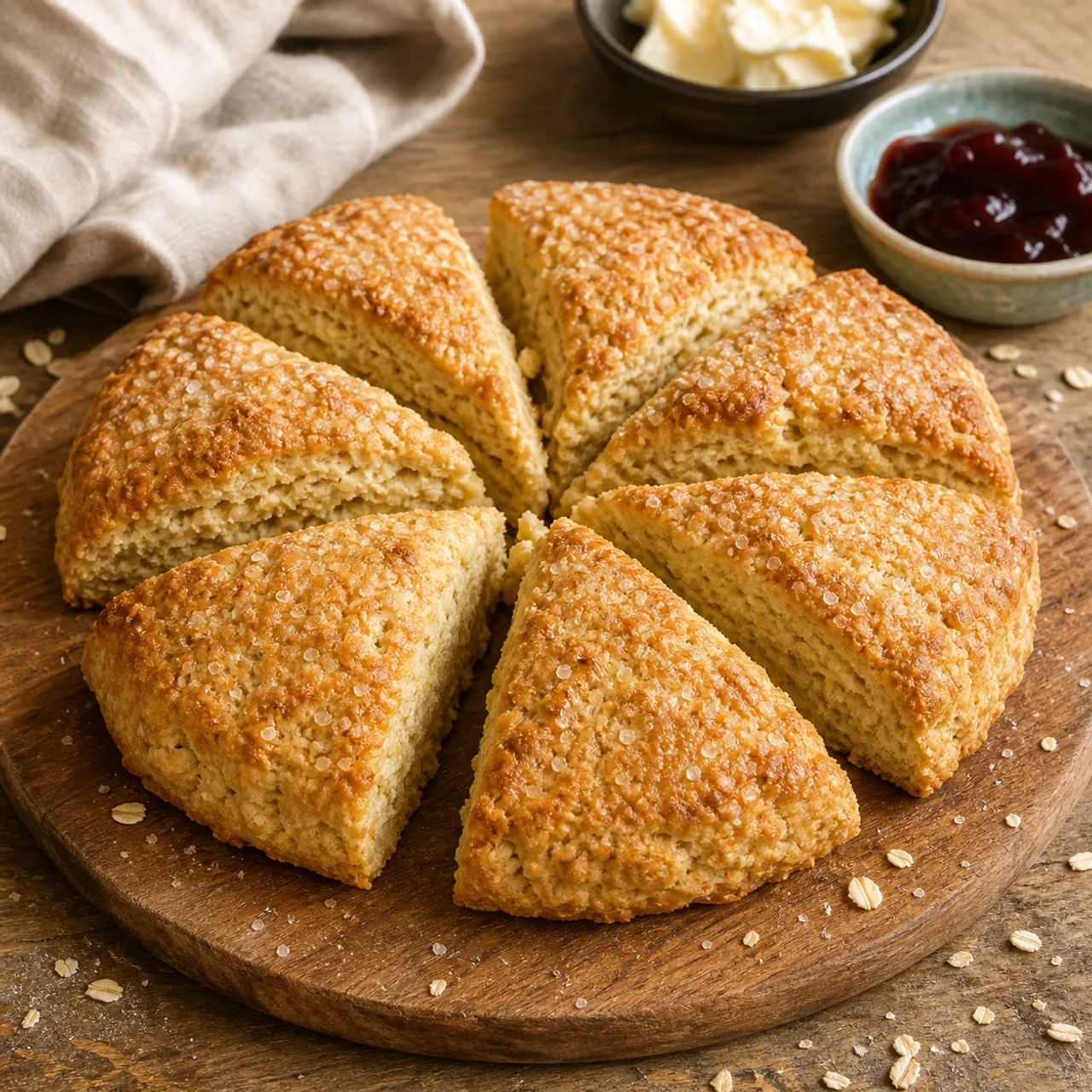
 Scottish Scones
Hearty oat-and-cinnamon scones with a tender crumb and a sweet cinnamon-sugar crust.
Contains common allergens
In the app, Listahan checks these against your household automatically.
Instructions
7 steps- 1
Preheat the oven to 375°F (190°C) and lightly grease a baking sheet.
- 2
In a medium bowl, combine the flour, rolled oats, brown sugar, baking powder, salt, and cinnamon, and mix well.
- 3
Using a pastry blender or fork, cut in the cold cubed butter until the mixture is crumbly and resembles coarse meal.
- 4
Add the milk all at once and stir just until the dry ingredients are moistened; do not overmix.
- 5
Turn the dough out onto a floured surface and gently knead 5 or 6 times. Place on the prepared baking sheet and pat into a round about 6 inches across and 3/4 inch thick.
- 6
Brush the top with the melted butter. In a small bowl, stir together the granulated sugar and cinnamon, then sprinkle evenly over the top.
- 7
Cut the round into 8 wedges and separate them slightly. Bake for 20-30 minutes, until golden brown. Serve warm.
 Images are for illustrative purposes only, may be inaccurate, and do not guarantee the presence or absence of specific ingredients.
 Listahan Family Score™
69/100
Works for many families
Score reflects how well this recipe fits a typical busy household. In the app, your Family Score is personalized to your household's allergens, kids, and pantry.
Nutrition
per serving295
Calories
5 g
Protein
34 g
Carbs
16 g
Fat
Estimated per serving. Actual values depend on the brands and portions you use.
Listahan cooking guide
Chef notes & practical guide
Technique notes, ingredient swaps, serve-alongside ideas, storage guidance, and equipment for this recipe.
Cultural context
The scone takes its name and origin from Scotland, where the earliest versions were round griddle cakes cut into wedges (bannocks) before the oven-baked style took over. Scottish scones tend to be plainer and less sweet than their later English cousins, meant to be split and topped with butter, jam, or cheese rather than eaten as a treat. They remain a cornerstone of the Scottish tea table and home baking.
Listahan note
This version stays true to the Scottish style: lightly sweetened, tall, and tender, with cold butter and a gentle hand so the scones rise high and split cleanly. It keeps them plain enough to go sweet or savory.
Technique cues
- Rub the cold butter into the flour until it looks like coarse crumbs with some pea-sized bits; those bits create the flaky lift Scottish scones are known for.
- Bring the dough together with the fewest possible strokes and pat rather than roll, since rough handling deflates the rise.
- Cut straight down with a sharp, floured cutter and avoid twisting, which seals the edges and stops the scone from rising evenly.
Kitchen flow
- Parallel prep
- Cube and chill the butter and preheat the oven while you measure dry ingredients, so the cold butter goes straight into cold flour.
- Make-ahead
- Cut the scones and freeze them raw on a tray, then bake from frozen with a couple extra minutes whenever you want fresh ones.
- Leftover move
- Split day-old scones, toast the cut faces, and serve with butter and jam or sharp cheese.
- Cleanup rhythm
- Wipe the floury surface and bowl right after cutting, before the dough dries and crusts on.
Ingredient brief
Role, handling, and swap guidance for each key ingredient.
all-purpose flour
structure base
Purpose: Provides the tender framework that traps the leavening gas for a tall scone.
Handling: Sift with the baking powder for an even, lump-free lift.
Adaptation: A 1:1 gluten-free blend works, giving a slightly more delicate crumb.
cold butter
flakiness
Purpose: Cold butter melts in pockets to create the layered, flaky texture of a proper scone.
Handling: Cube and chill it, then rub it in quickly so it stays cold.
Adaptation: A cold vegan baking stick gives a similar flake for dairy-free.
buttermilk
moisture and rise
Purpose: The acidity tenderizes the crumb and boosts the leavening for a high, soft scone.
Handling: Keep it cold and add all at once to limit mixing.
Adaptation: Milk soured with lemon, or plant milk plus vinegar, both work.
baking powder
leavening
Purpose: It delivers the fast, even rise that makes scones tall without yeast.
Handling: Make sure it is fresh and sifted with the flour.
Adaptation: Self-rising flour lets you skip it; baking soda plus extra acid also works.
egg
richness and color
Purpose: An egg in the dough adds richness, and an egg wash on top gives the classic golden sheen.
Handling: Reserve a little beaten egg to brush the tops before baking.
Adaptation: Milk or cream brushed on top stands in for the wash in an egg-free batch.
Technique notes
- Chill the cut scones for ten minutes before baking so the butter re-firms, which gives a noticeably higher rise.
- Brush only the tops with egg wash, keeping it off the sides so the layers can climb freely.
- Bake them close together on the tray so they support each other and rise straight up rather than spreading.
Ingredient swaps
- Gluten-free direction
- Use a 1:1 gluten-free flour with xanthan gum and rest the dough briefly before cutting.
- Dairy-free option
- Swap a cold vegan stick for butter and plant milk soured with lemon for the buttermilk.
- Savory direction
- Cut the sugar to a teaspoon and fold in grated sharp cheddar and chives for a savory tea scone.
Serve alongside
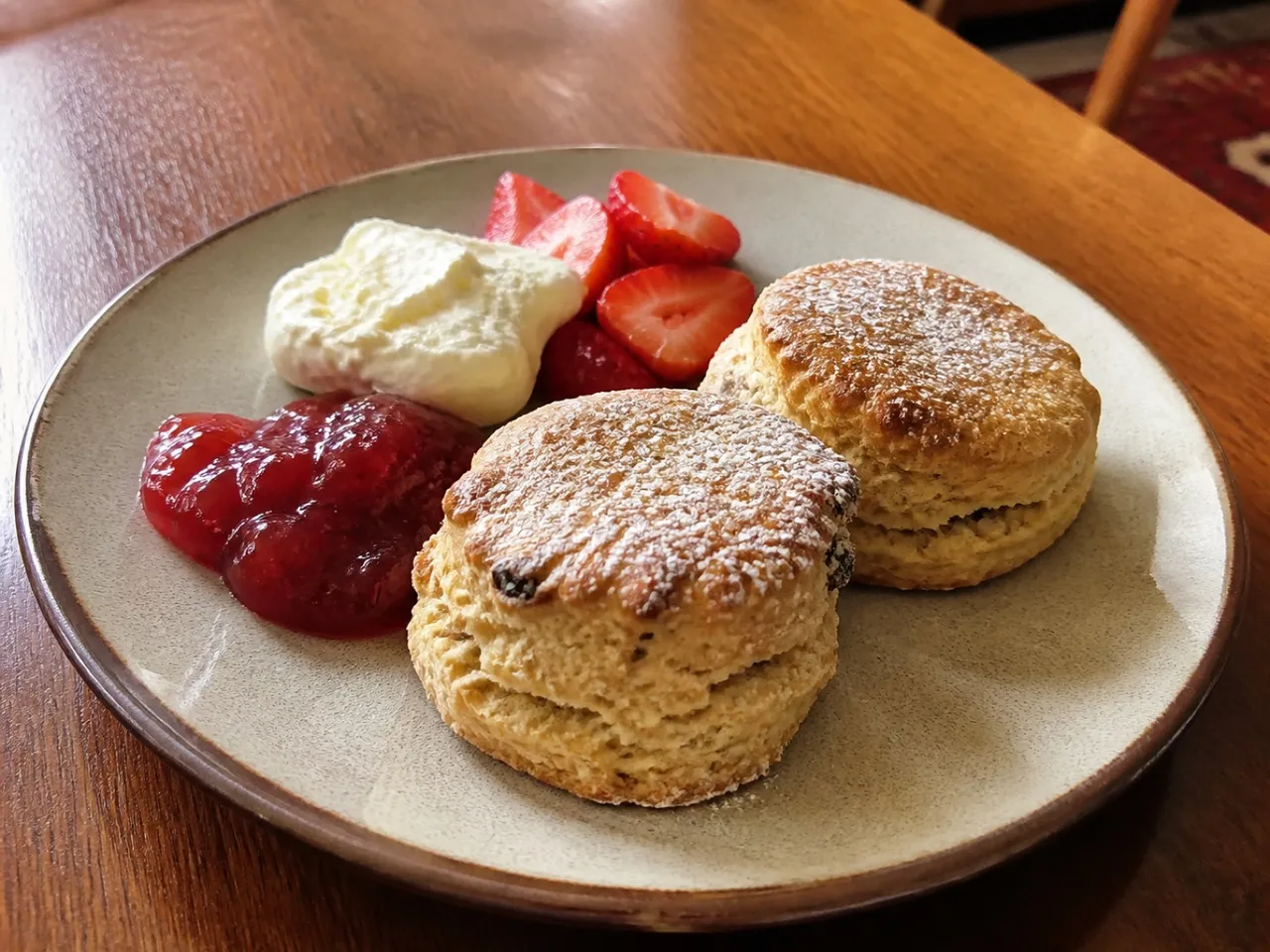
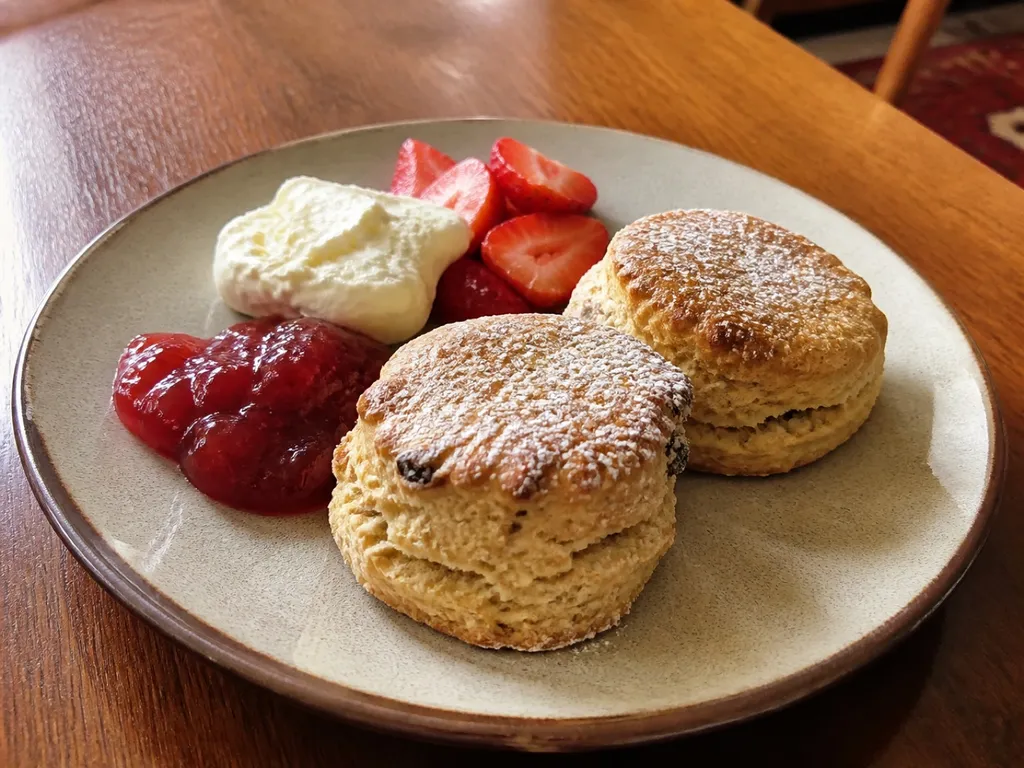
- Strawberry jam
- Clotted cream
- Sharp cheddar
- Lemon curd
- Strong black tea
- Milky coffee
- Hot chocolate
Serving suggestions only — check pairings for your household's allergens.
Storage & reheating
- Keep cooled scones airtight at room temperature for up to two days; they are best the day they are baked. Reheat in a 300F oven for five minutes to restore the crisp exterior. Freeze baked or raw scones for up to three months and reheat from frozen.
Equipment
- Round biscuit cutter
- Pastry cutter or two knives
- Sturdy baking sheet
- Wire cooling rack
Make this household-aware
Listahan Pro checks this recipe against your household's allergens, finds pantry-aware swaps, builds the shopping list, and helps you plan the week around it.
Plan it in Listahan
Add Scottish Scones to your week, check it against your household's allergens, and build the shopping list automatically.
More Breads recipes
Rice Crust for Quiches or Pies
A simple pressed crust made from cooked rice that holds savory quiche and pie fillings beautifully.
 Breads Lens Verified Images are for illustrative purposes only, may be inaccurate, and do not guarantee the presence or absence of specific ingredients.
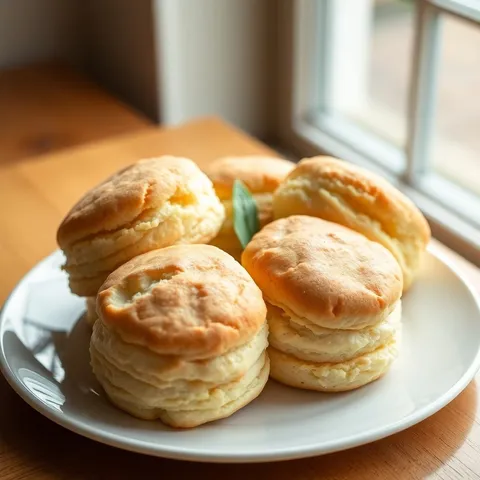
 Kentucky Biscuits
Tall, flaky Southern-style biscuits with a tender crumb, perfect with butter and jam.
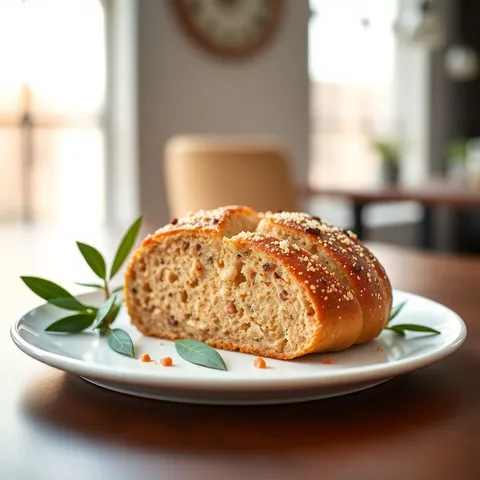 Breads Lens Verified Images are for illustrative purposes only, may be inaccurate, and do not guarantee the presence or absence of specific ingredients.
 Bread Machine Sage-Wheat Bread
A fragrant whole-wheat loaf scented with sage and a hint of cornmeal, made effortlessly in a bread machine.