 Chinese Images are for illustrative purposes only, may be inaccurate, and do not guarantee the presence or absence of specific ingredients.
  Serving Images are for illustrative purposes only, may be inaccurate, and do not guarantee the presence or absence of specific ingredients.
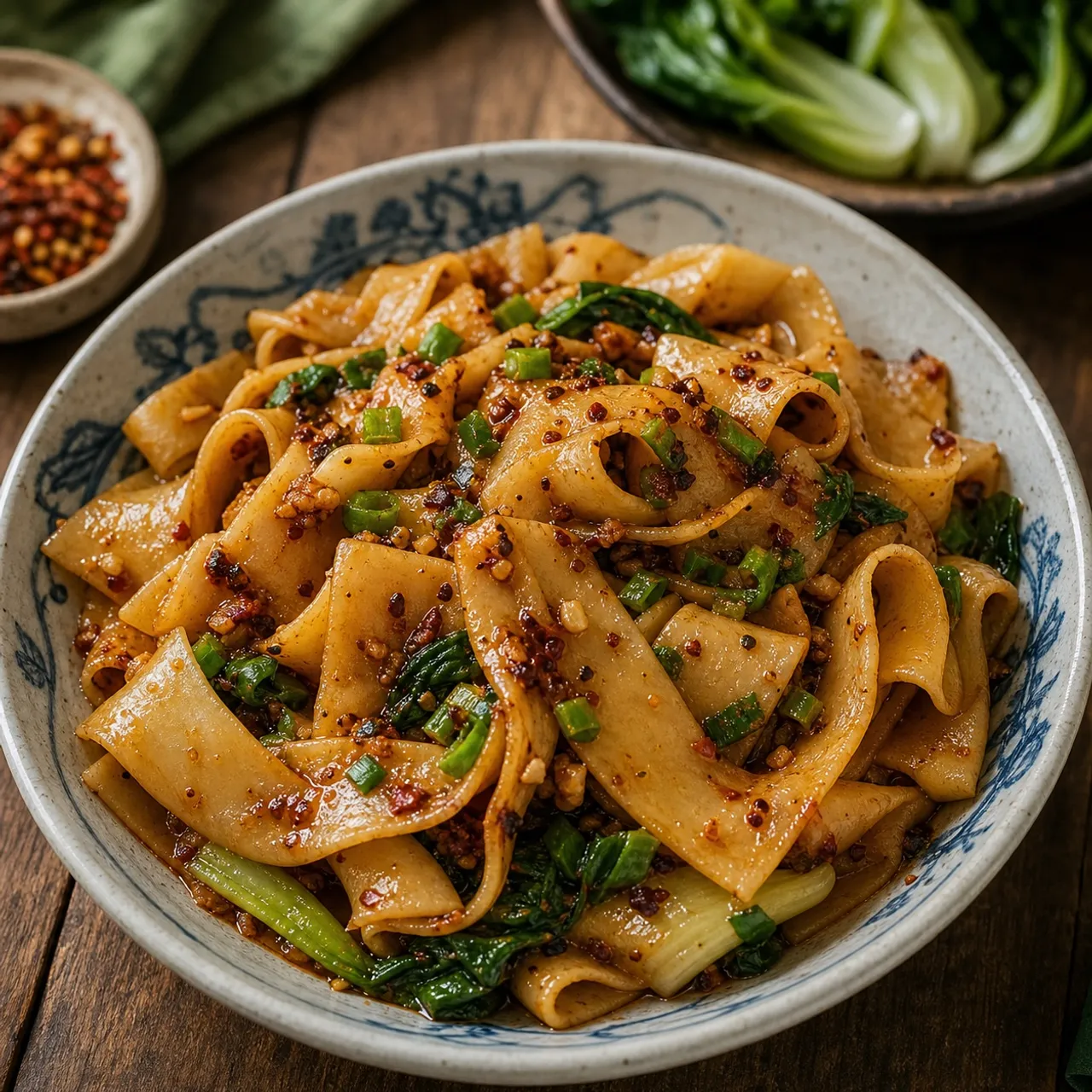
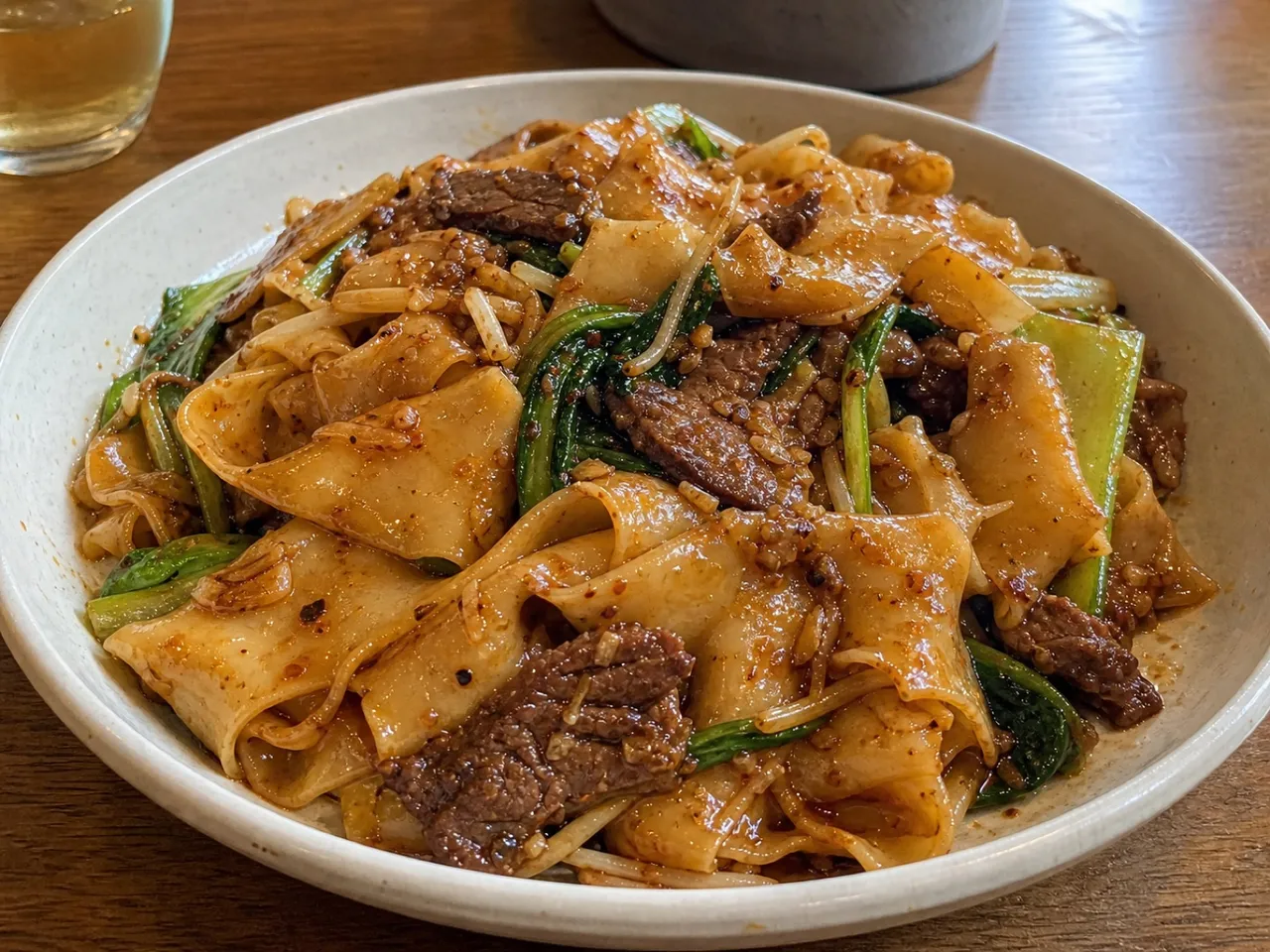
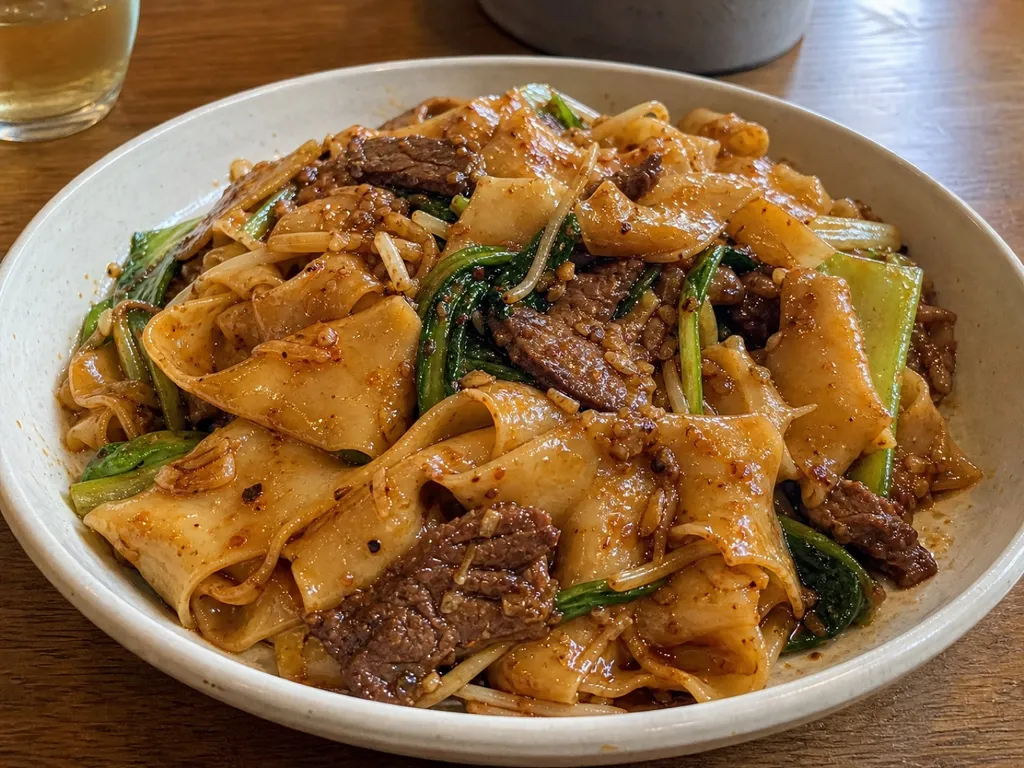
 Biang Biang Noodles
Hand-pulled, wide and thick noodles originally from Shaanxi province, served with hot oil poured over spices.
Contains common allergens
In the app, Listahan checks these against your household automatically.
Instructions
6 steps- 1
Make the Dough: Dissolve the salt in the water. Gradually add it to the bread flour, mixing until a shaggy dough forms. Knead vigorously for 10 minutes until perfectly smooth. Cover with a damp cloth and let it rest for 30 minutes.
- 2
Portion and Oil: Divide the dough into 8 equal logs. Coat each log generously with oil to prevent sticking and drying. Cover tightly with plastic wrap and let them rest for at least 2 hours. This relaxes the gluten, which is necessary for pulling.
- 3
Form the Noodles: Take one log of dough and flatten it slightly with your hands. Press a chopstick down the center lengthwise to create an indentation.
- 4
Pull the Noodles: Grab the ends of the dough and gently pull them apart, bouncing the dough against the counter (which makes the "biang biang" sound) until it is about an arm's length long. Tear the noodle down the center indentation to create one massive, continuous loop.
- 5
Boil: Drop the pulled noodles immediately into a large pot of violently boiling water. Cook for 2-3 minutes until they float and are chewy. Drain and place in a large heatproof bowl.
- 6
Flash Oil Dressing: Place the minced garlic, scallions, and chili flakes in a pile directly on top of the warm noodles. Pour the soy sauce and black vinegar around the edges. Heat the peanut oil until smoking hot, then carefully pour it directly over the garlic and chili flakes. Mix everything thoroughly and serve.
 Images are for illustrative purposes only, may be inaccurate, and do not guarantee the presence or absence of specific ingredients.
 Listahan Family Score™
60/100
Works for many families
Score reflects how well this recipe fits a typical busy household. In the app, your Family Score is personalized to your household's allergens, kids, and pantry.
Nutrition
per serving480
Calories
11 g
Protein
75 g
Carbs
15 g
Fat
Estimated per serving. Actual values depend on the brands and portions you use.
Listahan cooking guide
Chef notes & practical guide
Technique notes, ingredient swaps, serve-alongside ideas, storage guidance, and equipment for this recipe.
Cultural context
Biang Biang Noodles come from Shaanxi province in central China, where they have fed farmers and laborers for centuries as a filling, affordable staple. The name is said to derive from the slapping sound the broad dough strips make when they are whacked against the work surface during hand-pulling -- a technique that simultaneously stretches and tenderizes the dough. The character used to write 'biang' is famously one of the most complex in Chinese writing, with over 50 strokes, making the noodle a cultural curiosity as much as a culinary one.
Listahan note
This version focuses on the technique of properly resting and pulling the dough to achieve the signature wide, chewy belt-like strips, finished with the classic hot-oil pour over dried chiles and garlic.
Technique cues
- Rest the dough for at least 30 minutes after kneading and again after cutting into strips -- this relaxes the gluten network so the strips pull wide and even rather than snapping back to their original size.
- Coat the cut dough strips generously in oil before the second rest; this prevents sticking and allows you to pull each strip into a thin, wide belt without tearing.
- Pour the hot oil over the chili flakes and garlic at the table or just before serving -- the sizzle activates the aromatics and blooms the chili's fruity heat in a way that pre-mixing cannot replicate.
Kitchen flow
- Parallel prep
- While the dough rests for the second time, bring the water to a boil and prepare the chili flakes, garlic, and sauce ingredients so everything is ready the moment the noodles are pulled.
- Make-ahead
- The dough can be made up to 24 hours ahead and refrigerated after the first rest; bring to room temperature for 30 minutes before cutting and pulling.
- Leftover move
- Dress leftover noodles with a splash of black vinegar and a drizzle of chili oil and eat at room temperature as a noodle salad -- they absorb sauce beautifully overnight.
- Cleanup rhythm
- Wipe out the oil-heating skillet while still warm; clean up the flour-dusted work surface before the dough scraps dry and harden.
Ingredient brief
Role, handling, and swap guidance for each key ingredient.
all-purpose flour
noodle dough base
Purpose: Standard all-purpose flour has sufficient gluten to produce the chewy, elastic strips that are the whole point of this noodle.
Handling: Measure by weight if possible for consistent dough hydration; add warm (not hot) water gradually and knead until smooth.
Adaptation: Bread flour makes an even chewier noodle; cake flour produces strips that are too soft and tear during pulling.
Korean chili flakes (gochugaru) or dried Shaanxi chiles
heat and color
Purpose: The coarse-ground chili flakes are placed raw on top of the noodles and activated by the hot oil pour, creating an instant chili crisp that coats every strand.
Handling: Use at room temperature; no toasting required as the hot oil does the work.
Adaptation: Regular red pepper flakes work but are sharper and less fruity; Thai bird chiles are too fine-ground to achieve the right texture.
soy sauce
seasoning sauce
Purpose: Soy sauce provides the salt base and savory depth in the sauce that gets tossed through the noodles before serving.
Handling: Combine with black vinegar and sesame oil ahead of time for a balanced dressing.
Adaptation: Tamari makes this dish gluten-free alongside rice noodles, though the texture of the noodle itself changes.
black rice vinegar (Chinkiang)
acid balance
Purpose: Black vinegar adds a mellow, almost smoky tartness that cuts through the chili oil and balances the richness of the sesame and soy.
Handling: Add after the hot oil pour so its aromatics are not cooked off.
Adaptation: Balsamic vinegar is a workable substitute for its depth, though it is sweeter; plain rice vinegar is too sharp.
garlic
aromatic bloom
Purpose: Minced raw garlic placed on the noodles is cooked in seconds by the hot oil pour, shifting from sharp and pungent to fragrant and sweet.
Handling: Mince finely so it cooks evenly when the oil hits; larger pieces will stay raw in the center.
Adaptation: Garlic powder gives a milder result and skips the pungency issue, but loses the fresh aromatic bloom that makes this technique distinctive.
Technique notes
- When pulling the dough strip, hold both ends and whack the middle section against the work surface several times -- this thins the center dramatically and creates the characteristic uneven, rustic edge.
- Cook the pulled strips immediately in aggressively salted boiling water; unlike dried pasta, fresh-pulled biang biang noodles cook in just 1 to 2 minutes.
- Use a long-handled ladle or wok spatula to pour the hot oil in a slow, controlled stream from a height of 6 to 8 inches -- the drop activates the chili bloom more effectively than a direct pour.
Ingredient swaps
- Gluten-free direction
- The hand-pulled dough cannot be made gluten-free in the traditional way, but wide rice noodles or sweet potato glass noodles make a satisfying bowl with the same sauce and toppings.
- Lower-spice direction
- Reduce or omit the chili flakes and substitute with a teaspoon of smoked paprika to keep the color without the heat -- the dish is still delicious with just the soy-vinegar-sesame base.
- Weeknight shortcut
- Use store-bought thick udon noodles or Korean knife-cut noodles (kalguksu) to skip the hand-pulling; the sauce and hot oil pour still deliver the essential flavor.
Serve alongside
- Chinese cucumber salad with garlic and rice vinegar
- Smashed eggplant with sesame paste
- Braised pork belly (as a protein addition)
- Iced jasmine green tea
- Cold sorghum beer (such as Tsingtao)
Serving suggestions only — check pairings for your household's allergens.
Storage & reheating
- Pulled and cooked noodles are best eaten immediately; store raw pulled strips lightly oiled and separated in the refrigerator for up to 1 day and cook from cold.
- Leftover dressed noodles keep in the refrigerator for 1 day; refresh with a splash of black vinegar and sesame oil before serving.
Equipment
- Large work surface or cutting board for whacking and pulling the dough strips
- Long-handled ladle or wok for heating and pouring the chili oil
- Large wide pot with plenty of water for cooking the broad noodle strips without tangling
Make this household-aware
Listahan Pro checks this recipe against your household's allergens, finds pantry-aware swaps, builds the shopping list, and helps you plan the week around it.
Plan it in Listahan
Add Biang Biang Noodles to your week, check it against your household's allergens, and build the shopping list automatically.
More Chinese recipes
 Chinese Lens Verified Images are for illustrative purposes only, may be inaccurate, and do not guarantee the presence or absence of specific ingredients.
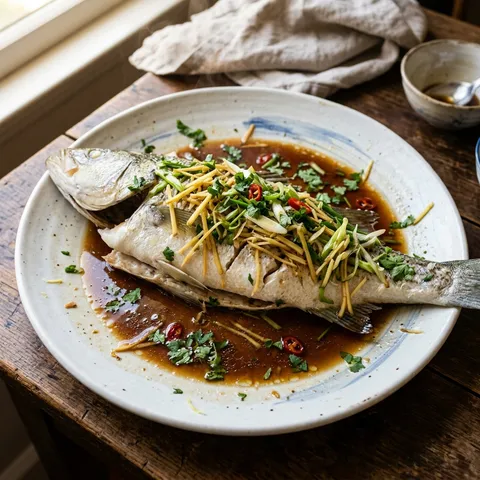
 Steamed Fish with Soy and Ginger
A traditional banquet dish featuring delicately steamed whole fish with hot oil poured over aromatics.
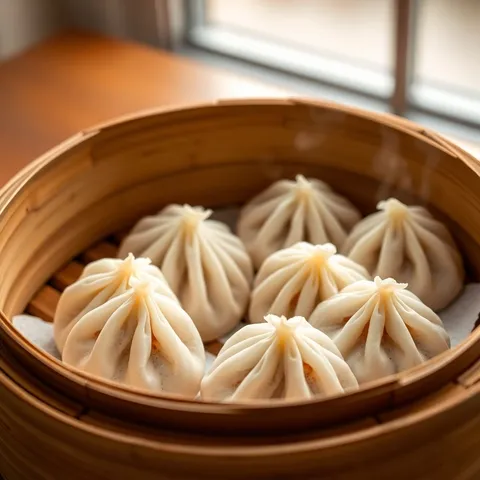 Chinese Lens Verified Images are for illustrative purposes only, may be inaccurate, and do not guarantee the presence or absence of specific ingredients.
 Xiao Long Bao (Soup Dumplings)
Delicate steamed buns filled with pork and a rich, savory soup.
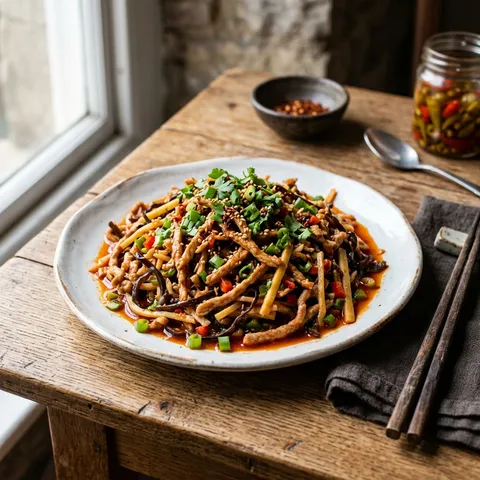 Chinese Lens Verified Images are for illustrative purposes only, may be inaccurate, and do not guarantee the presence or absence of specific ingredients.
 Yuxiang Rou Si (Fish-Fragrant Pork Shreds)
A classic Sichuan dish that uses "fish-fragrant" seasoning (sweet, sour, and spicy) on pork shreds, containing no actual fish.