 Chinese Images are for illustrative purposes only, may be inaccurate, and do not guarantee the presence or absence of specific ingredients.
  Serving Images are for illustrative purposes only, may be inaccurate, and do not guarantee the presence or absence of specific ingredients.
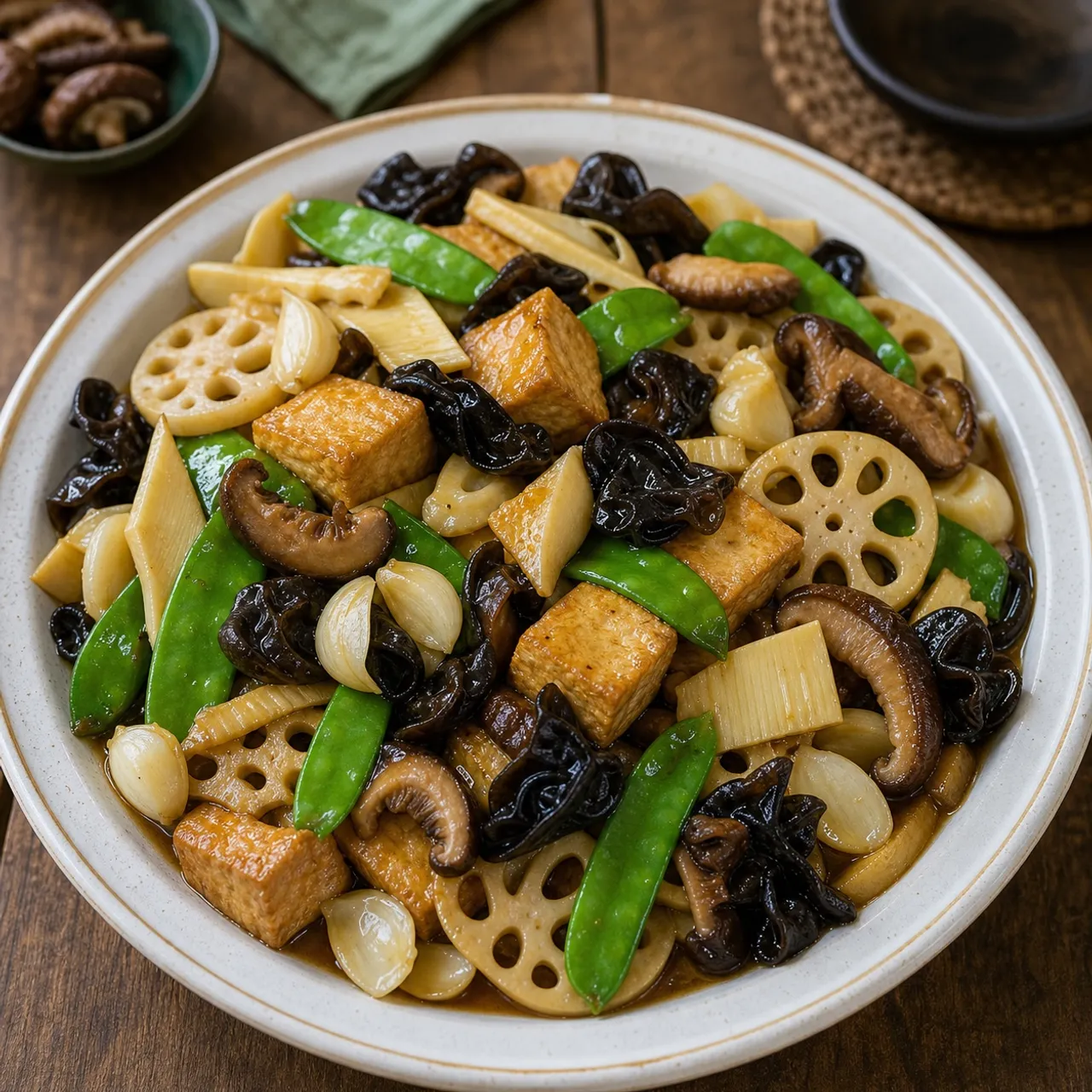
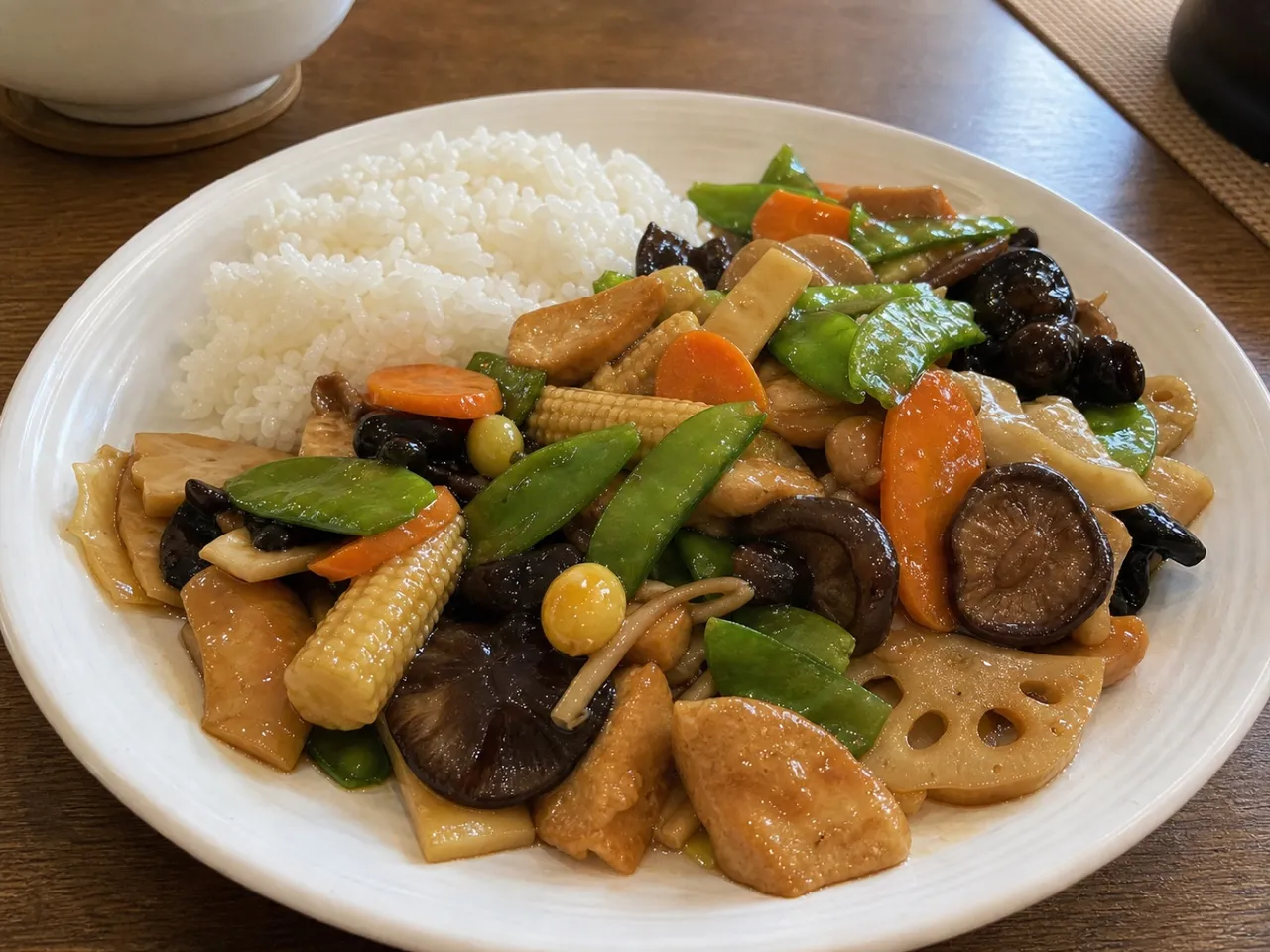
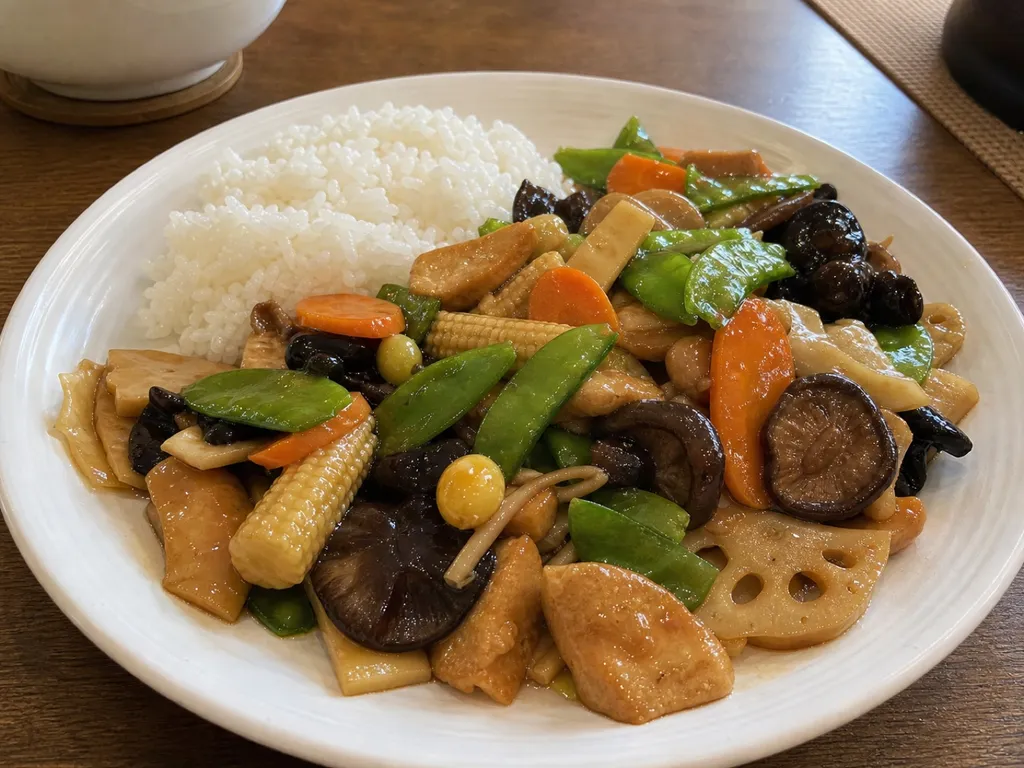
 Buddha's Delight (Luohan Zhai)
A traditional vegetarian stir-fry eaten by Buddhist monks, packed with various veggies and tofu.
Contains common allergens
In the app, Listahan checks these against your household automatically.
Instructions
6 steps- 1
Prep the Ingredients: Rehydrate all dried fungi and lily buds in warm water for 30 minutes. Squeeze out excess water and trim tough stems. Blanch the lotus root slices in boiling water for 2 minutes and drain.
- 2
Fry the Tofu: In a wok over medium heat, shallow fry the tofu cubes in 2 tbsp oil until golden and crisp on all sides. Remove and set aside.
- 3
Stir-Fry Aromatics: Leave 1 tbsp of oil in the wok. Add a slice of ginger and fry for 30 seconds to flavor the oil.
- 4
Cook the Vegetables: Toss in the rehydrated mushrooms, lily buds, and bamboo shoots. Stir-fry over high heat for 2 minutes. Add the snow peas and lotus root, cooking for another minute until tender-crisp.
- 5
Season: Add the fried tofu back into the wok. Pour in the soy sauce, vegetarian oyster sauce, and 1/4 cup of the reserved mushroom soaking liquid.
- 6
Simmer and Thicken: Let everything simmer for 2-3 minutes to absorb the flavors. If desired, stir in a cornstarch slurry (1 tsp cornstarch to 1 tbsp water) to thicken the sauce slightly. Finish with sesame oil and serve.
 Images are for illustrative purposes only, may be inaccurate, and do not guarantee the presence or absence of specific ingredients.
 Listahan Family Score™
56/100
Works for many families
Score reflects how well this recipe fits a typical busy household. In the app, your Family Score is personalized to your household's allergens, kids, and pantry.
Nutrition
per serving80
Calories
7 g
Protein
5 g
Carbs
4 g
Fat
Estimated per serving. Actual values depend on the brands and portions you use.
Listahan cooking guide
Chef notes & practical guide
Technique notes, ingredient swaps, serve-alongside ideas, storage guidance, and equipment for this recipe.
Cultural context
Buddha's Delight (luohan zhai, meaning dish of the arhats) is a traditional Chinese Buddhist vegetarian stew eaten across China during the Lunar New Year period and on the first and fifteenth days of each lunar month by those observing religious dietary restrictions. The dish is a compendium of dried and fresh plant ingredients, each carrying a symbolic meaning: dried bean curd skin (tofu skin) represents abundance, black moss fungus represents prosperity, and dried lily buds represent fertility. It is deliberately not seasoned with garlic or onion in its strictest religious form, as those are considered stimulating foods in Buddhist dietary practice.
Listahan note
This version uses the most flavorful and accessible combination of the traditional 18 ingredients and does include garlic for home cooking purposes; readers following the strict Buddhist form can omit all alliums.
Technique cues
- Soak every dried ingredient separately rather than together; different ingredients need different soaking times and combining them produces some that are over-softened and some still tough.
- Start with the ingredient that needs the most cooking (typically the dried tofu skin or dried lily buds) and add softer ingredients in stages toward the end; everything should reach the same tender texture simultaneously.
- Use the mushroom and other soaking liquids as part of the braising stock; they contain concentrated umami that makes the sauce significantly more complex than water or plain vegetable broth alone.
Kitchen flow
- Parallel prep
- Set all dried ingredients soaking in separate bowls 30 minutes before cooking; once soaking starts the active prep for other components (cutting fresh vegetables, making the sauce) can happen simultaneously.
- Make-ahead
- Buddha's Delight is far better on day two; the sauce deepens and the ingredients absorb more flavor overnight. Make it the day before serving and gently reheat.
- Leftover move
- Leftover Buddha's Delight served over steamed rice or stirred into hot noodle soup extends the dish into multiple meals easily, since the sauce is already deeply flavored.
- Cleanup rhythm
- Save the soaking bowls for rinsing as you go rather than using new dishes for each step; this dish involves many components but does not require many pieces of equipment.
Ingredient brief
Role, handling, and swap guidance for each key ingredient.
dried tofu skin (yuba)
primary texture and protein
Purpose: Rehydrated tofu skin provides a silky, layered texture that is uniquely satisfying and absorbs the braising sauce beautifully.
Handling: Soak in cold water for 30 minutes until pliable, then cut into 2-inch pieces.
Adaptation: Firm tofu cut into triangles and lightly pan-fried first can substitute for a different but equally traditional inclusion.
dried shiitake mushrooms
umami backbone
Purpose: Shiitake mushrooms are the primary savory flavor builder in a dish with no meat; their rehydrating liquid becomes the braising stock.
Handling: Soak in warm water for 20 to 30 minutes, squeeze dry, and remove the stems; save the soaking water.
Adaptation: No real substitute for the depth they provide; fresh shiitake can be used but will not contribute soaking liquid.
mung bean thread noodles
body and texture
Purpose: Glass noodles absorb the braising liquid and thicken the stew slightly while becoming translucent and silky.
Handling: Soak in warm water for 10 minutes until pliable, then drain and cut into shorter lengths to make serving easier.
Adaptation: Sweet potato starch noodles give a similar translucent result with a slightly chewier texture.
dried lily buds
floral-earthiness
Purpose: Golden needle flowers (dried lily buds) contribute a subtle, floral-earthy flavor and a soft, slightly chewy texture that is a traditional element of the dish.
Handling: Soak in warm water for 20 minutes; pinch off the hard nub at the base of each bud.
Adaptation: Omit if unavailable; the dish will still be complete.
wood ear mushrooms
crunch and texture
Purpose: Wood ear mushrooms retain a satisfying crisp-tender texture even after extended braising, providing textural contrast in a stew that otherwise trends toward softness.
Handling: Soak in warm water for 15 minutes, rinse well to remove any grit, and tear into bite-sized pieces.
Adaptation: Enoki mushrooms can supplement but have a different texture; cloud ear mushrooms are a near-identical substitute.
Technique notes
- Resist the urge to stir too often; many of the delicate ingredients like tofu skin and lily buds will break apart with excessive stirring and the dish will look muddled rather than composed.
- Taste the braising liquid before serving and adjust with soy sauce or a touch of sugar if the balance is off; the correct flavor should be savory and lightly sweet with a clean finish.
- Thicken the final sauce with a cornstarch slurry only if it seems thin; Buddha's Delight should have a light sauce that coats rather than a thick gravy.
Ingredient swaps
- Gluten-free direction
- Use tamari instead of soy sauce; check that your oyster-style sauce is mushroom-based and certified gluten-free.
- Nut-free direction
- The dish is naturally nut-free; just avoid any packaged ingredients that have nut cross-contamination warnings.
- Streamlined direction
- Use only five or six ingredients rather than the full 18; a combination of tofu skin, shiitake, wood ear mushroom, glass noodles, and baby bok choy gives a fully satisfying result with significantly less prep.
Serve alongside
- steamed jasmine rice
- vegetarian congee
- pan-fried turnip cake
- hot chrysanthemum tea
- warm barley tea
Serving suggestions only — check pairings for your household's allergens.
Storage & reheating
- Refrigerate for up to 4 days; the stew improves with time as the ingredients continue to absorb the braising liquid.
- Freeze for up to 2 months; glass noodles may lose some of their translucent texture after freezing but the flavor remains excellent.
Equipment
- large wide braising pot or wok with lid
- multiple bowls for soaking separate dried ingredients
- spider strainer for fishing soaked ingredients out of their soaking liquid cleanly
Make this household-aware
Listahan Pro checks this recipe against your household's allergens, finds pantry-aware swaps, builds the shopping list, and helps you plan the week around it.
Plan it in Listahan
Add Buddha's Delight (Luohan Zhai) to your week, check it against your household's allergens, and build the shopping list automatically.
More Chinese recipes
 Chinese Lens Verified Images are for illustrative purposes only, may be inaccurate, and do not guarantee the presence or absence of specific ingredients.
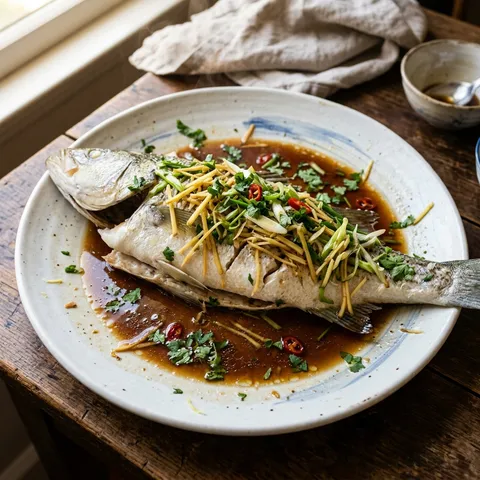
 Steamed Fish with Soy and Ginger
A traditional banquet dish featuring delicately steamed whole fish with hot oil poured over aromatics.
 Chinese Lens Verified Images are for illustrative purposes only, may be inaccurate, and do not guarantee the presence or absence of specific ingredients.
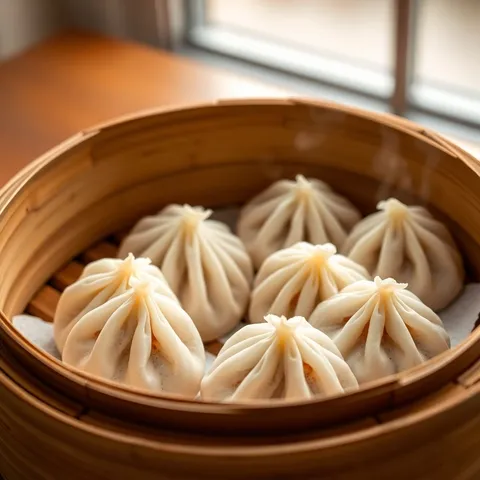
 Xiao Long Bao (Soup Dumplings)
Delicate steamed buns filled with pork and a rich, savory soup.
 Chinese Lens Verified Images are for illustrative purposes only, may be inaccurate, and do not guarantee the presence or absence of specific ingredients.
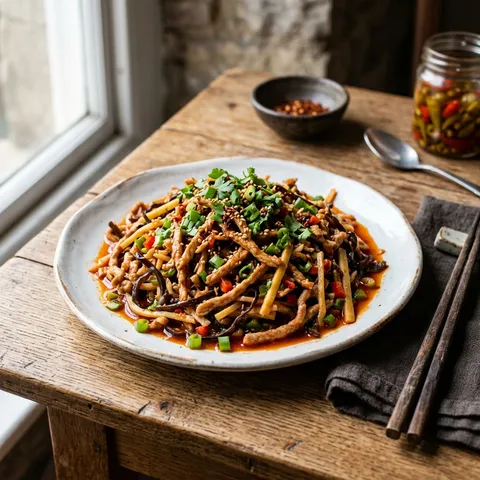
 Yuxiang Rou Si (Fish-Fragrant Pork Shreds)
A classic Sichuan dish that uses "fish-fragrant" seasoning (sweet, sour, and spicy) on pork shreds, containing no actual fish.