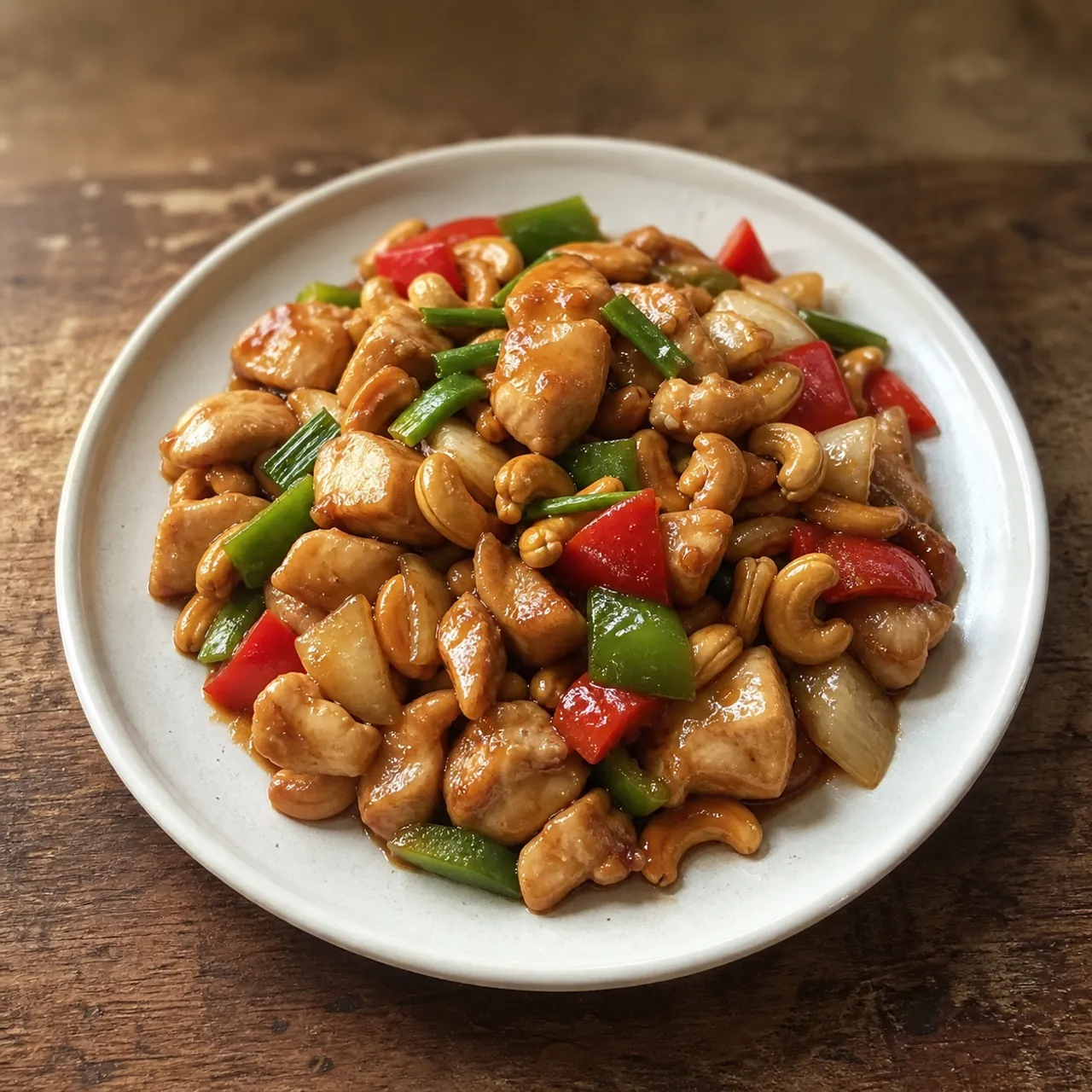
 Chinese Images are for illustrative purposes only, may be inaccurate, and do not guarantee the presence or absence of specific ingredients.
 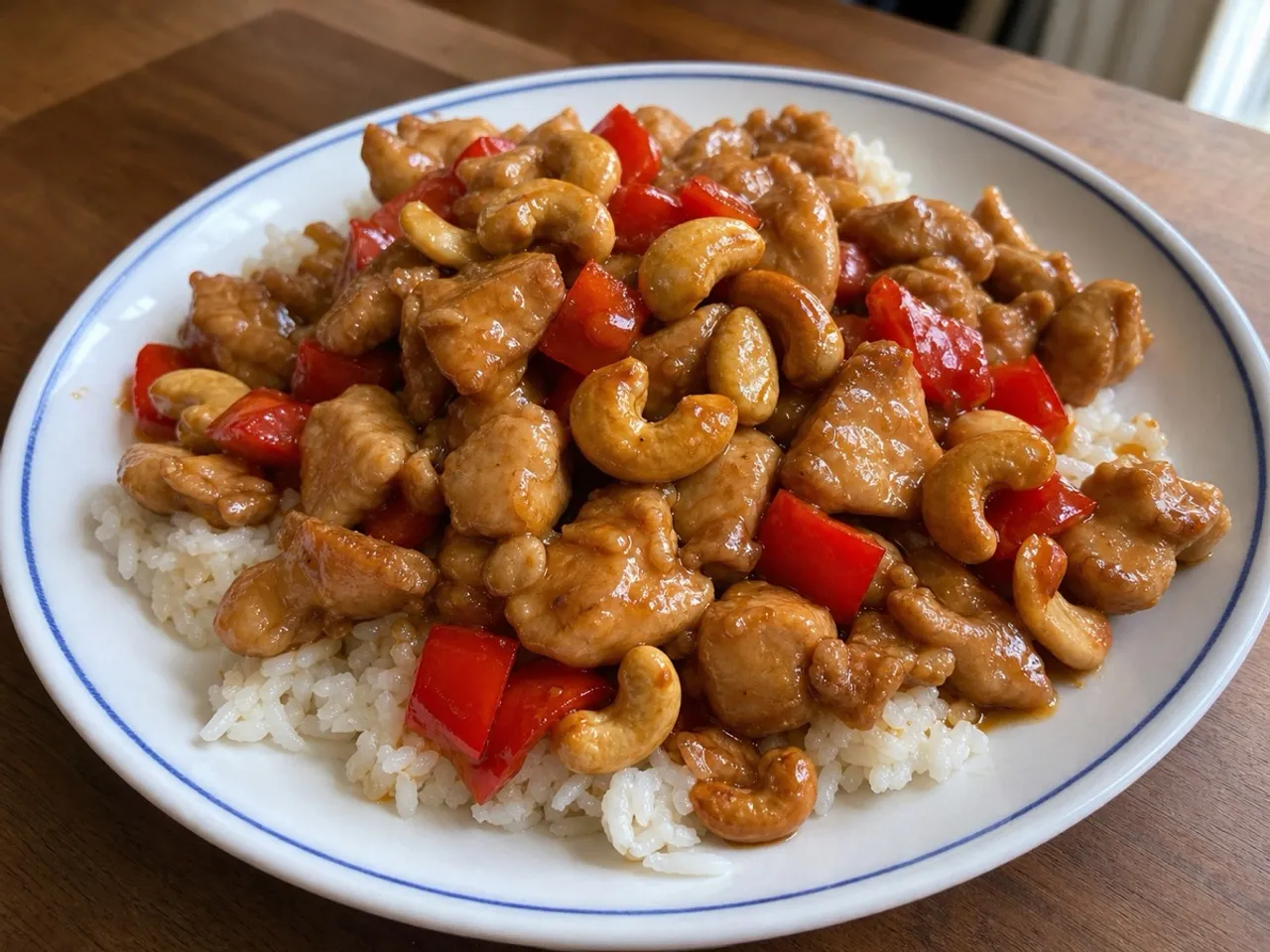 Serving Images are for illustrative purposes only, may be inaccurate, and do not guarantee the presence or absence of specific ingredients.
 Cashew Chicken
Tender stir-fried chicken and crunchy toasted cashews in a light, savory brown sauce.
Contains common allergens
In the app, Listahan checks these against your household automatically.
Good to know
- Ready in under 30 minutes
Matched from this dish's own ingredients and timing. Browse more: 30-minute meals
Instructions
6 steps- 1
Toast the cashews in a dry wok over medium heat for 4 to 5 minutes, shaking frequently, until they turn golden and smell nutty, then tip them onto a plate to stop the cooking.
- 2
Stir together the oyster sauce, soy sauce, Shaoxing wine, and 1/4 cup water in a small bowl to make the sauce base.
- 3
Raise the heat to high, add the vegetable oil, and stir-fry the chicken pieces for 4 to 5 minutes until golden and cooked through to 165°F, then push them to one side.
- 4
Add the bell pepper and stir-fry for 2 minutes until just crisp-tender and still bright.
- 5
Pour in the sauce base and bring to a rapid simmer, then stir in the cornstarch slurry and cook for 1 minute until the sauce thickens and glazes the chicken.
- 6
Fold the toasted cashews back in, toss for 30 seconds so they stay crunchy, and serve hot over rice.
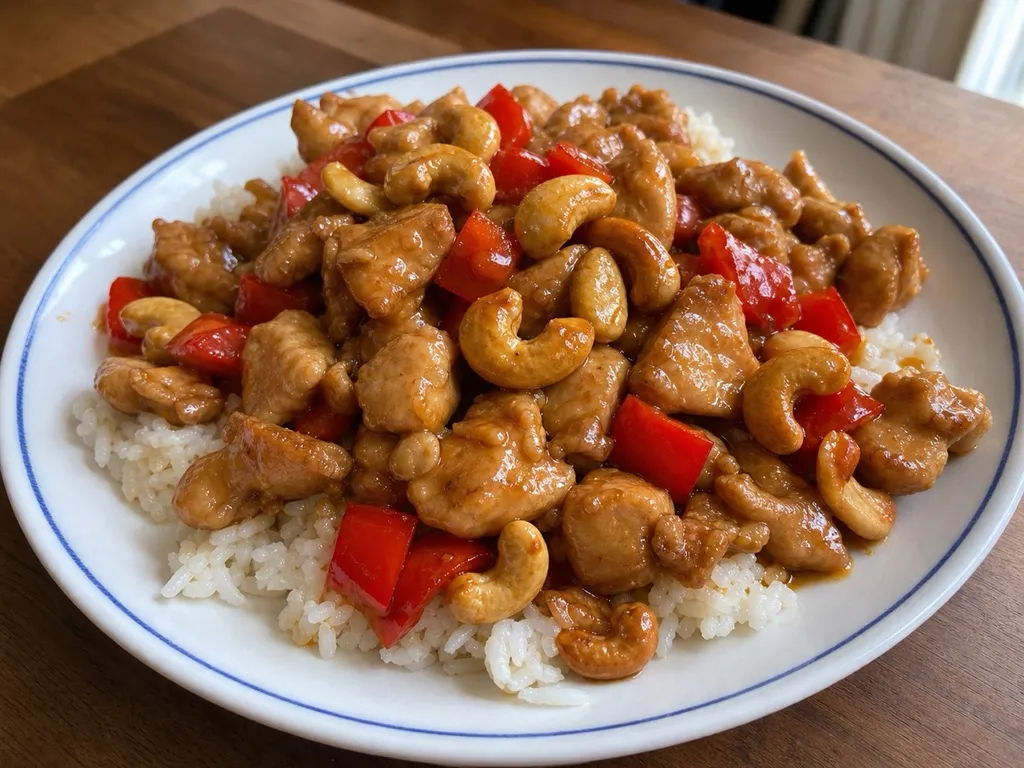 Images are for illustrative purposes only, may be inaccurate, and do not guarantee the presence or absence of specific ingredients.
 Listahan Family Score™
61/100
Works for many families
Score reflects how well this recipe fits a typical busy household. In the app, your Family Score is personalized to your household's allergens, kids, and pantry.
Nutrition
per serving630
Calories
52 g
Protein
15 g
Carbs
41 g
Fat
Estimated per serving. Actual values depend on the brands and portions you use.
Listahan cooking guide
Chef notes & practical guide
Technique notes, ingredient swaps, serve-alongside ideas, storage guidance, and equipment for this recipe.
Cultural context
Cashew chicken, as many North American cooks know it, sits in the Chinese-American stir-fry tradition rather than one fixed regional Chinese recipe. It uses the Cantonese restaurant logic of quick wok cooking, a glossy savory sauce, and clear texture contrast: tender chicken, crisp pepper, and nuts added late so they stay crunchy.
Listahan note
This version keeps the sauce light and direct, so the toasted cashews and chicken are not buried under sweetness. The main priorities are high heat, small chicken pieces, and adding the cashews only at the end.
Technique cues
- Toast the cashews before anything else and move them off the heat as soon as they smell nutty; they keep cooking if left in the hot wok.
- Cut the chicken and bell pepper to a similar size so each bite has both sauce and texture instead of separate chunks of meat and vegetable.
- The cornstarch slurry should go in only after the sauce is simmering, because heat is what turns it from cloudy liquid into a glossy coating.
Kitchen flow
- Parallel prep
- Start rice first, then toast the cashews and mix the sauce while the rice cooks.
- Make-ahead
- Cut the chicken and pepper and mix the sauce up to a day ahead; keep the cashews separate until cooking.
- Leftover move
- Chop leftovers and fold them into fried rice, adding the cashews near the end so they do not soften too much.
- Cleanup rhythm
- Rinse the sauce bowl and slurry spoon right after they are emptied, then soak the wok while the rice bowls are served.
Ingredient brief
Role, handling, and swap guidance for each key ingredient.
Boneless skinless chicken thighs
Main protein
Purpose: Thigh meat stays tender during high-heat stir-frying and gives the dish a fuller bite than very lean cuts.
Handling: Cut into 1-inch pieces so the chicken cooks quickly and evenly in the wok.
Adaptation: Boneless chicken breast works, but cook it a little more cautiously because it firms up faster.
Raw cashews
Crunch and richness
Purpose: Cashews add the soft crunch and buttery finish that define this dish.
Handling: Toast in a dry wok and remove to a plate before stir-frying the chicken.
Adaptation: Roasted unsalted cashews can be used; add them at the end and skip the initial toasting step.
Red bell pepper
Sweet crisp vegetable
Purpose: The pepper brings color, mild sweetness, and a fresh snap against the brown sauce.
Handling: Cut into broad 1-inch squares so the pieces stay crisp-tender instead of wilting.
Adaptation: Green bell pepper is sharper, while snap peas give a brighter crunch.
Oyster sauce
Savory sauce base
Purpose: Oyster sauce gives the stir-fry its rounded restaurant-style body without needing a long simmer.
Handling: Whisk it with soy sauce, Shaoxing wine, and water before the wok gets busy.
Adaptation: Vegetarian oyster-style sauce changes the flavor slightly earthier but keeps the same glossy texture.
Low-sodium soy sauce
Salt and color
Purpose: Soy sauce sharpens the savory edge and helps the sauce glaze the chicken evenly.
Handling: Measure it into the sauce bowl so it can hit the pan all at once.
Adaptation: Tamari can replace soy sauce if that fits the pantry, with a slightly different depth and salt level.
Shaoxing wine
Aromatic cooking wine
Purpose: Shaoxing wine adds a warm, lightly fermented note that makes the quick sauce taste less flat.
Handling: Stir it into the sauce base rather than adding it separately to the hot wok.
Adaptation: Dry sherry is the closest common substitute; the result is a little cleaner and less earthy.
Technique notes
- Let the wok get hot before the chicken goes in; a lukewarm pan makes the chicken release liquid and slows the browning.
- Do not crowd the chicken into a small pan. If needed, stir-fry it in two batches and combine everything when the sauce goes in.
- Give the slurry a quick stir before adding it, because cornstarch settles fast and can leave a thin sauce on top with paste at the bottom.
Ingredient swaps
- Gluten-free direction
- Use tamari in place of soy sauce, choose oyster sauce labeled gluten-free, and replace Shaoxing wine with a labeled dry sherry; expect a slightly different aroma.
- Tree-nut direction
- Replace cashews with toasted pumpkin seeds for a smaller, snappier crunch, and fold them in at the very end.
- Extra vegetable path
- Add snap peas or broccoli florets after the chicken browns, giving them just enough time to turn bright and crisp-tender.
- Pantry wine backup
- Use dry sherry instead of Shaoxing wine, or add a splash more water if you prefer to skip the wine note.
Serve alongside
- Steamed jasmine rice
- Egg fried rice
- Garlic sauteed bok choy
- Smashed cucumber salad
- Jasmine iced tea
- Sparkling water with lime
- Light lager
Serving suggestions only — check pairings for your household's allergens.
Storage & reheating
- Refrigerate in a sealed container for up to 3 days, knowing the cashews will soften as they sit.
- Reheat in a skillet over medium heat with a splash of water to loosen the glaze, then add a few fresh toasted cashews if you want crunch back.
- Freeze the chicken, pepper, and sauce without extra cashews for up to 2 months; thaw overnight and refresh with freshly toasted cashews after reheating.
Equipment
- Wok or large skillet
- Small mixing bowl for sauce
- Wooden spatula or wok spatula
- Sheet pan or plate for toasted cashews
Make this household-aware
Listahan Pro checks this recipe against your household's allergens, finds pantry-aware swaps, builds the shopping list, and helps you plan the week around it.
Plan it in Listahan
Add Cashew Chicken to your week, check it against your household's allergens, and build the shopping list automatically.
More Chinese recipes
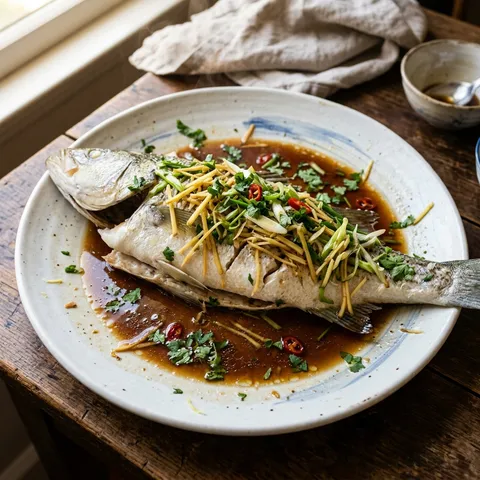 Chinese Lens Verified Images are for illustrative purposes only, may be inaccurate, and do not guarantee the presence or absence of specific ingredients.
 Steamed Fish with Soy and Ginger
A traditional banquet dish featuring delicately steamed whole fish with hot oil poured over aromatics.
 Chinese Lens Verified Images are for illustrative purposes only, may be inaccurate, and do not guarantee the presence or absence of specific ingredients.
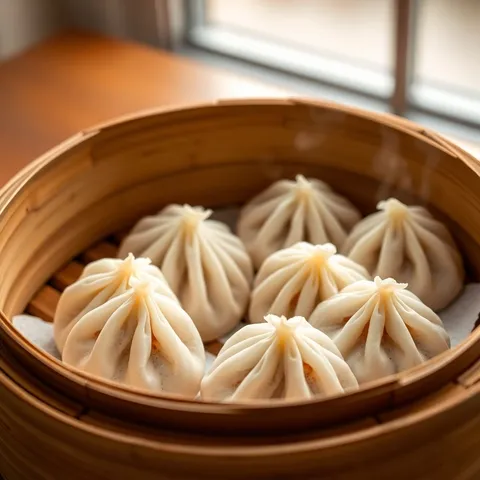
 Xiao Long Bao (Soup Dumplings)
Delicate steamed buns filled with pork and a rich, savory soup.
 Chinese Lens Verified Images are for illustrative purposes only, may be inaccurate, and do not guarantee the presence or absence of specific ingredients.
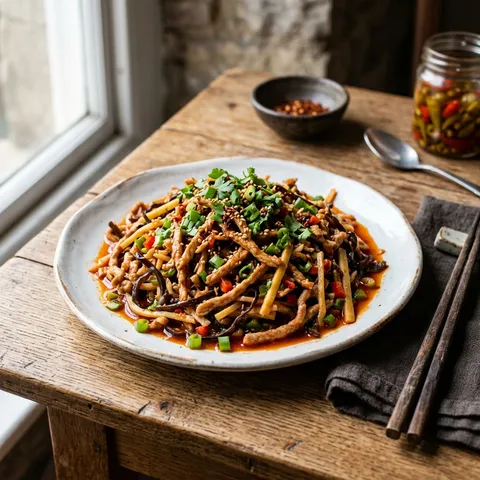
 Yuxiang Rou Si (Fish-Fragrant Pork Shreds)
A classic Sichuan dish that uses "fish-fragrant" seasoning (sweet, sour, and spicy) on pork shreds, containing no actual fish.