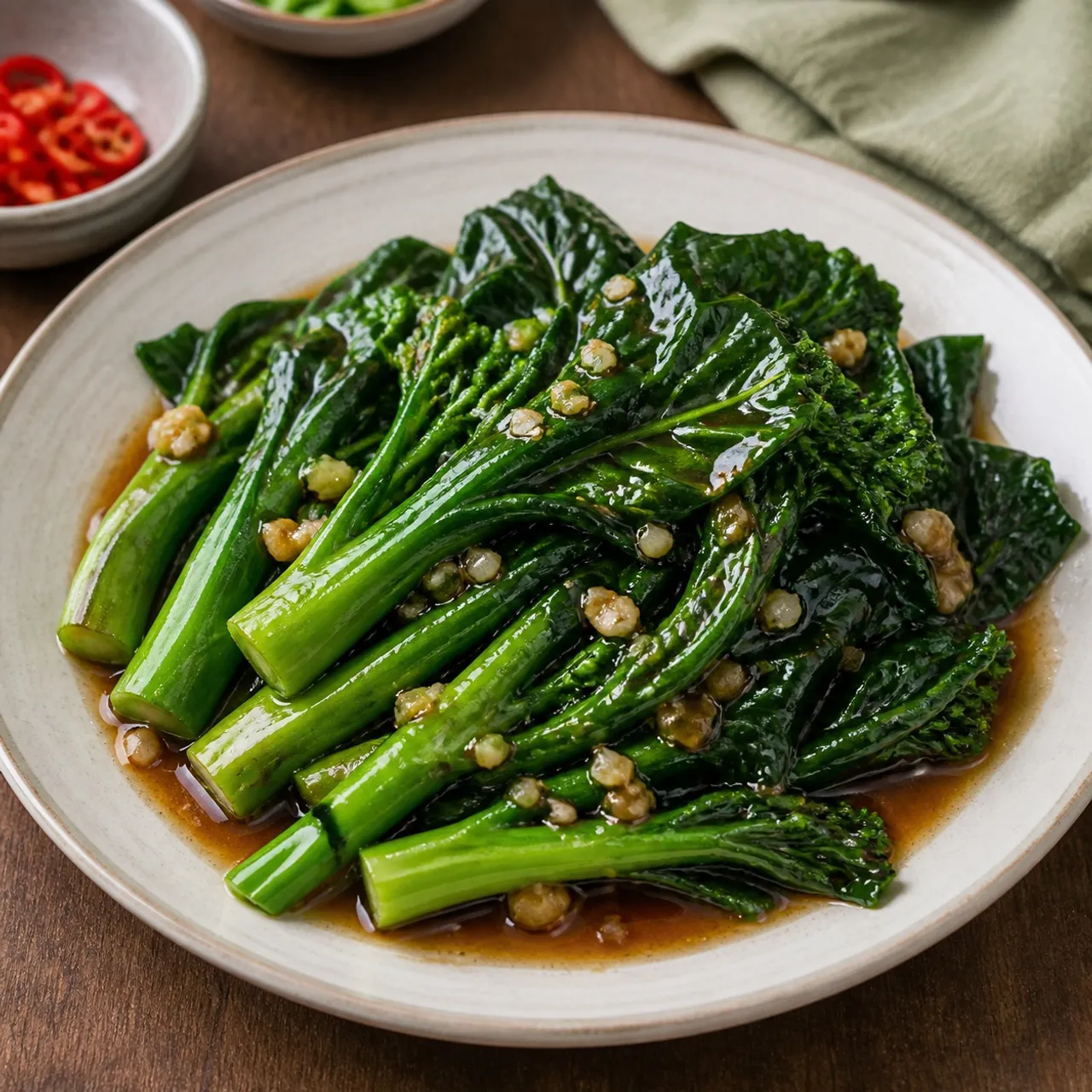
 Chinese Images are for illustrative purposes only, may be inaccurate, and do not guarantee the presence or absence of specific ingredients.
 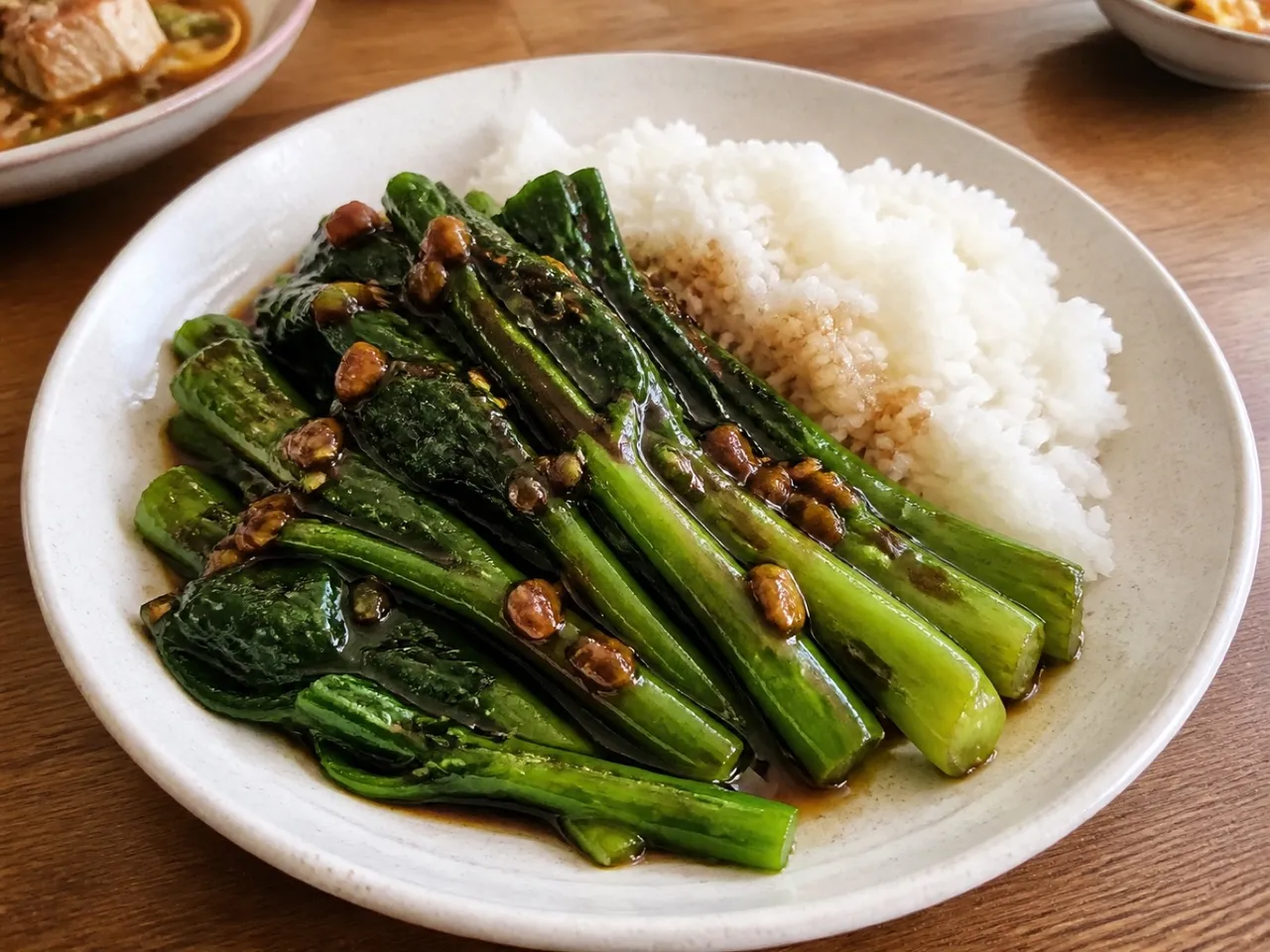 Serving Images are for illustrative purposes only, may be inaccurate, and do not guarantee the presence or absence of specific ingredients.
 Chinese Broccoli with Oyster Sauce
Blanch-cooked Chinese broccoli (gai lan) dressed in a savory oyster sauce glaze.
Contains common allergens
In the app, Listahan checks these against your household automatically.
Good to know
- Ready in under 30 minutes
Matched from this dish's own ingredients and timing. Browse more: 30-minute meals
Instructions
6 steps- 1
Prep the Gai Lan: Wash the Chinese broccoli thoroughly. If the stems are very thick, peel the tough outer skin with a vegetable peeler or slice them in half lengthwise so they cook evenly with the leaves.
- 2
Make the Glaze: In a small bowl, whisk together the oyster sauce, soy sauce, sugar, and sesame oil. Set aside.
- 3
Blanch the Greens: Bring a large, wide pot of water to a rolling boil. Add 1 tbsp of cooking oil and a generous pinch of salt to the water (this keeps the greens glossy and vibrant).
- 4
Cook the Stems First: Submerge just the thick stems in the boiling water for 1 minute, holding the leafy tops out. Then push the entire vegetable into the water and boil for another 1-2 minutes until tender but still crisp.
- 5
Drain and Plate: Remove the Gai Lan and drain very thoroughly in a colander. Arrange the greens neatly on a serving platter.
- 6
Finish with Garlic and Sauce: In a small skillet, heat 1 tsp of oil and briefly fry the minced garlic for 15 seconds until fragrant but not browned. Stir the garlic into the oyster sauce mixture, then drizzle the sauce heavily over the center of the plated greens.
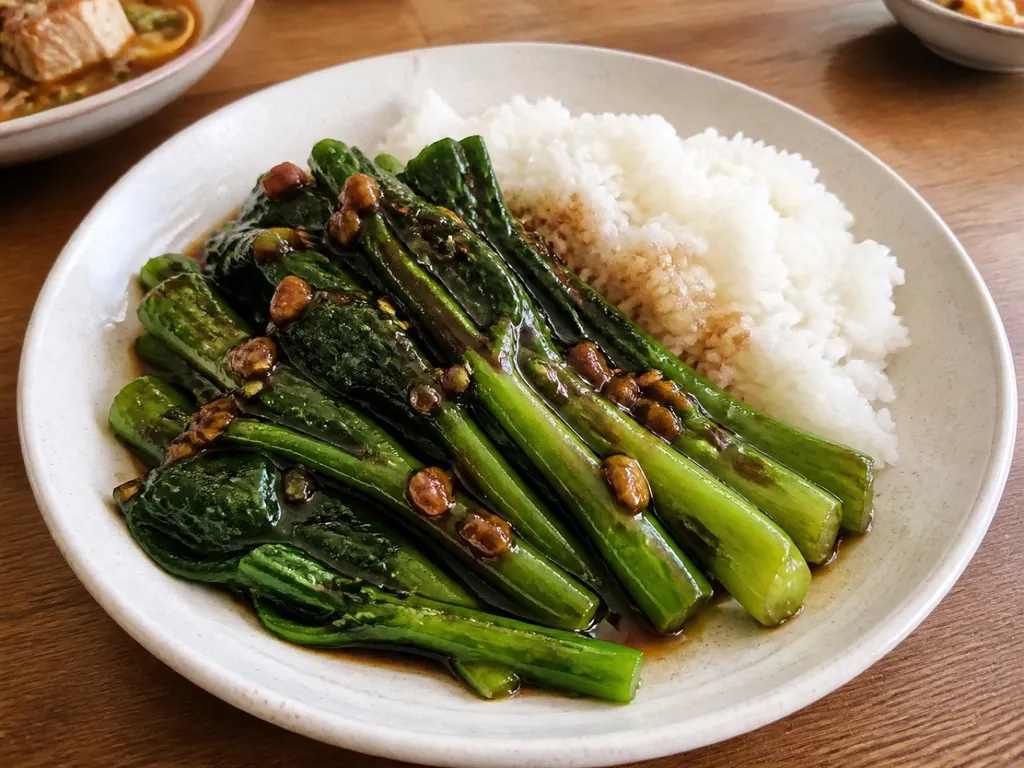 Images are for illustrative purposes only, may be inaccurate, and do not guarantee the presence or absence of specific ingredients.
 Listahan Family Score™
64/100
Works for many families
Score reflects how well this recipe fits a typical busy household. In the app, your Family Score is personalized to your household's allergens, kids, and pantry.
Nutrition
per serving115
Calories
4 g
Protein
11 g
Carbs
7 g
Fat
Estimated per serving. Actual values depend on the brands and portions you use.
Listahan cooking guide
Chef notes & practical guide
Technique notes, ingredient swaps, serve-alongside ideas, storage guidance, and equipment for this recipe.
Cultural context
Chinese broccoli (gai lan or kai-lan) is a leafy Brassica with thick stalks, small florets, and a pleasantly bitter taste that is a staple of Cantonese cuisine and dim sum culture. The pairing of blanched or stir-fried gai lan with oyster sauce is one of the simplest and most elegant preparations in the Cantonese repertoire, believed to have solidified as a restaurant staple in Hong Kong during the mid-20th century. The combination works because the rich, slightly sweet oyster sauce balances the vegetable's natural bitterness without burying it.
Listahan note
This version blanches the gai lan briefly to preserve its vivid green color and slight crunch, then dresses it with a warm oyster sauce glaze rather than a heavy reduction, keeping the dish light and vegetable-forward.
Technique cues
- Add a teaspoon of oil and a pinch of salt to the blanching water; the oil helps the sauce adhere to the surface later and the salt seasons the stalks from within as they cook.
- Blanch stalks first for 30 seconds before adding the leafy parts, since the stalks need more time; pulling everything out together at the right moment keeps the whole vegetable evenly tender-crisp.
- Heat the oyster sauce in a small pan with a splash of sesame oil and a pinch of sugar before drizzling; a warm, loosened sauce coats the gai lan more evenly than cold sauce straight from the bottle.
Kitchen flow
- Parallel prep
- Fry the garlic slices and warm the oyster sauce in a separate small pan while the blanching water heats; the vegetable only takes 2 minutes, so everything else needs to be ready.
- Make-ahead
- The oyster sauce dressing can be made and refrigerated for up to a week; the gai lan is best blanched fresh as it loses its vivid green color and crunch over time.
- Leftover move
- Chop leftover gai lan roughly and add it to fried rice along with the residual oyster sauce, where it acts as both a vegetable and a seasoning.
- Cleanup rhythm
- The blanching pot rinses clean with hot water, and the sauce pan just needs a quick wipe since only a small amount of sauce is warmed; this is genuinely one of the lowest-cleanup vegetable dishes in the Cantonese repertoire.
Ingredient brief
Role, handling, and swap guidance for each key ingredient.
Chinese broccoli (gai lan)
main vegetable
Purpose: Its mild bitterness, thick stalks, and tender leaves create a textural contrast that makes this simple dish satisfying as a standalone side.
Handling: Trim the tough bottom half-inch of each stalk and peel if the stalks are thick and fibrous.
Adaptation: Broccolini is the most accessible substitute and requires no peeling; standard broccoli florets also work but the character of the dish shifts notably.
oyster sauce
sauce and seasoning
Purpose: Oyster sauce has a deep, savory-sweet quality derived from reduced oyster extract that is nearly irreplaceable in Cantonese vegetable preparations.
Handling: Warm gently and thin slightly with a teaspoon of warm water if it seems too thick to pour in a thin stream.
Adaptation: Vegetarian oyster sauce made from mushroom extract is an excellent swap for a pescatarian-free version with nearly identical flavor.
sesame oil
finishing aroma
Purpose: A small amount of toasted sesame oil added to the warm sauce and drizzled over the plated gai lan adds a nutty, fragrant finish that lifts the whole dish.
Handling: Add after the heat is off; it is used for aroma, not cooking.
Adaptation: Omit entirely for a sesame-free version; the dish is complete without it.
garlic
aromatic
Purpose: Fried garlic slices scattered over the top add a savory crunch that complements the silky blanched vegetable and smooth sauce.
Handling: Slice thin and fry in neutral oil over medium-low heat until golden; watch carefully as it goes from golden to burnt very quickly.
Adaptation: Skip if garlic is not desired; the sauce and vegetable stand alone.
Technique notes
- Shock the gai lan in ice water immediately after blanching if you want to hold it for more than a few minutes before serving; this stops the cooking and preserves the vivid green color.
- Do not overload the blanching pot; cook the gai lan in batches if necessary so the water does not drop below a boil and steam the vegetable instead of blanching it cleanly.
- The dish is traditionally served with the stems fanning in one direction and the sauce applied in a single generous pour; the visual presentation takes 10 seconds and makes the dish look restaurant-quality.
Ingredient swaps
- Shellfish-free direction
- Use vegetarian oyster sauce (mushroom-based), which is widely available and produces a nearly identical result without any shellfish.
- Sesame-free direction
- Omit the sesame oil finish entirely; the dish still has full flavor from the oyster sauce and fried garlic.
- Gluten-free direction
- Choose a certified gluten-free oyster sauce or mushroom sauce; standard oyster sauce can contain wheat.
Serve alongside
- steamed jasmine rice
- char siu (BBQ pork)
- steamed white fish with ginger and soy
- hot jasmine tea
- chilled sparkling water with lime
Serving suggestions only — check pairings for your household's allergens.
Storage & reheating
- Blanched gai lan keeps for up to 2 days in the refrigerator but loses color and texture; sauce can be stored separately for up to a week.
- Reheat gently in a pan with a splash of water; avoid microwaving, which makes the stalks rubbery.
Equipment
- large pot for blanching with enough water to keep temperature stable
- spider strainer for pulling the gai lan out quickly and cleanly
- small saucepan for warming and loosening the oyster sauce
Make this household-aware
Listahan Pro checks this recipe against your household's allergens, finds pantry-aware swaps, builds the shopping list, and helps you plan the week around it.
Plan it in Listahan
Add Chinese Broccoli with Oyster Sauce to your week, check it against your household's allergens, and build the shopping list automatically.
More Chinese recipes
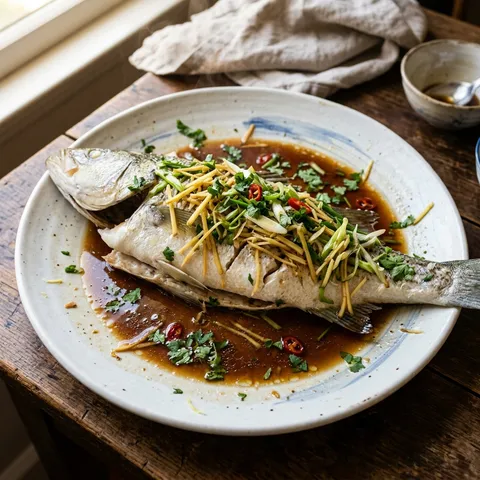 Chinese Lens Verified Images are for illustrative purposes only, may be inaccurate, and do not guarantee the presence or absence of specific ingredients.
 Steamed Fish with Soy and Ginger
A traditional banquet dish featuring delicately steamed whole fish with hot oil poured over aromatics.
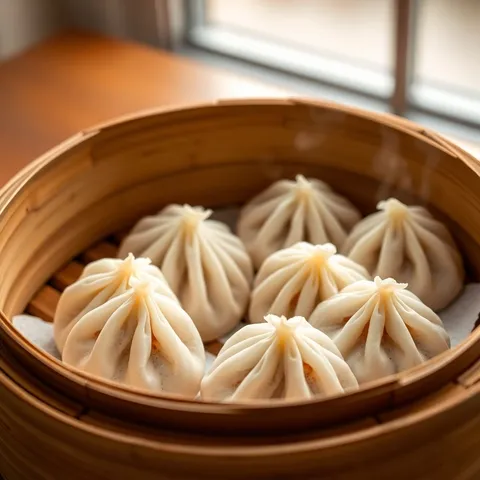 Chinese Lens Verified Images are for illustrative purposes only, may be inaccurate, and do not guarantee the presence or absence of specific ingredients.
 Xiao Long Bao (Soup Dumplings)
Delicate steamed buns filled with pork and a rich, savory soup.
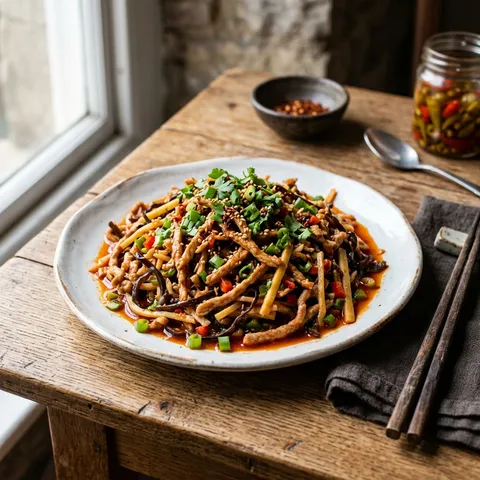 Chinese Lens Verified Images are for illustrative purposes only, may be inaccurate, and do not guarantee the presence or absence of specific ingredients.
 Yuxiang Rou Si (Fish-Fragrant Pork Shreds)
A classic Sichuan dish that uses "fish-fragrant" seasoning (sweet, sour, and spicy) on pork shreds, containing no actual fish.