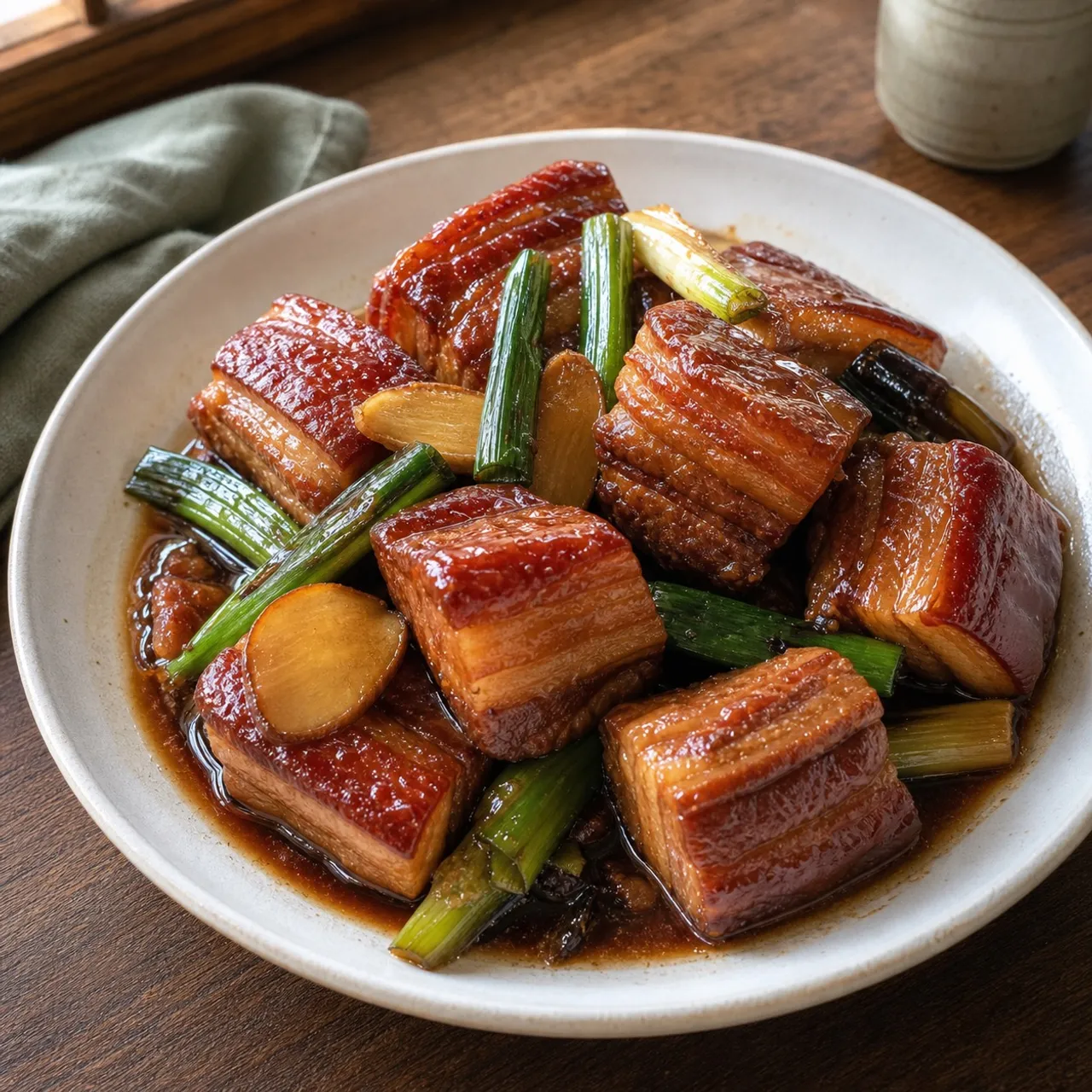
 Chinese Images are for illustrative purposes only, may be inaccurate, and do not guarantee the presence or absence of specific ingredients.
 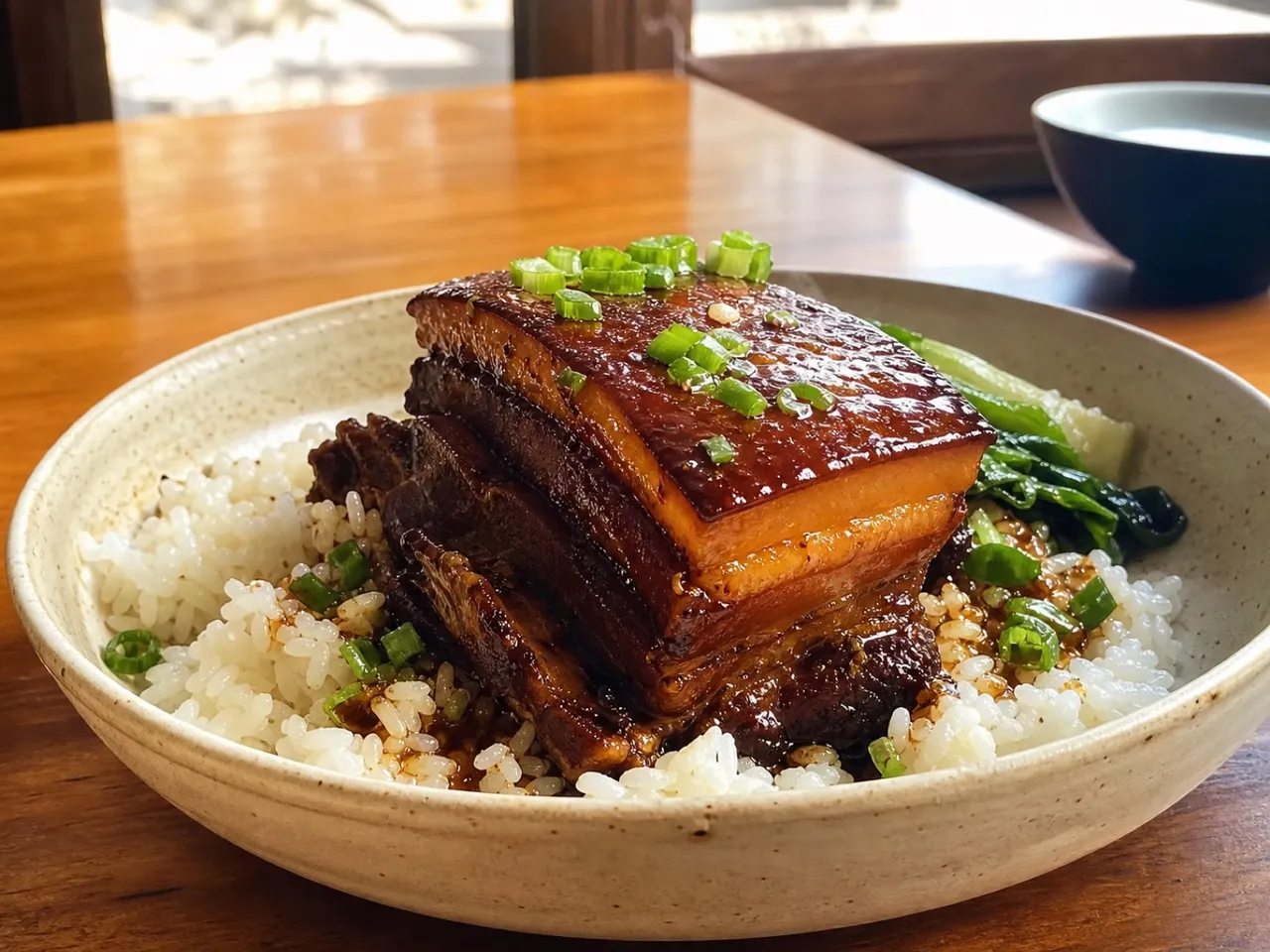 Serving Images are for illustrative purposes only, may be inaccurate, and do not guarantee the presence or absence of specific ingredients.
 Dongpo Pork
A famous Hangzhou dish of pan-fried and then braised pork belly, resulting in incredibly tender meat.
Contains common allergens
In the app, Listahan checks these against your household automatically.
Instructions
6 steps- 1
Blanch the Pork: Bring a large pot of water to a boil. Add the pork belly squares and simmer for 5 minutes. Remove, rinse under cold water, and pat dry. This removes impurities and firms up the meat.
- 2
Pan-Fry (Optional but recommended): Heat a dry wok over medium-high heat. Sear the pork squares, skin-side down, for 2 minutes just to brown the skin slightly and render a bit of fat.
- 3
Layer the Pot: Line the bottom of a heavy clay pot or Dutch oven entirely with the scallions and ginger slices (this prevents the pork from sticking to the bottom). Place the pork squares on top, skin-side down.
- 4
Add Braising Liquid: Add the rock sugar, light soy sauce, dark soy sauce, Shaoxing wine, and water. The liquid should come about halfway up the pork.
- 5
Slow Braise: Bring to a boil, then immediately reduce the heat to the absolute lowest setting. Cover tightly and simmer for 90 minutes. Flip the pork squares so the skin side is up, and simmer for another 60 minutes until the meat is incredibly tender.
- 6
Steam to Finish: Carefully transfer the pork to a heatproof serving bowl, spoon some of the reduced sauce over it, and steam over boiling water for 30 minutes. This final step gives the pork its signature melting, jelly-like texture. Serve hot.
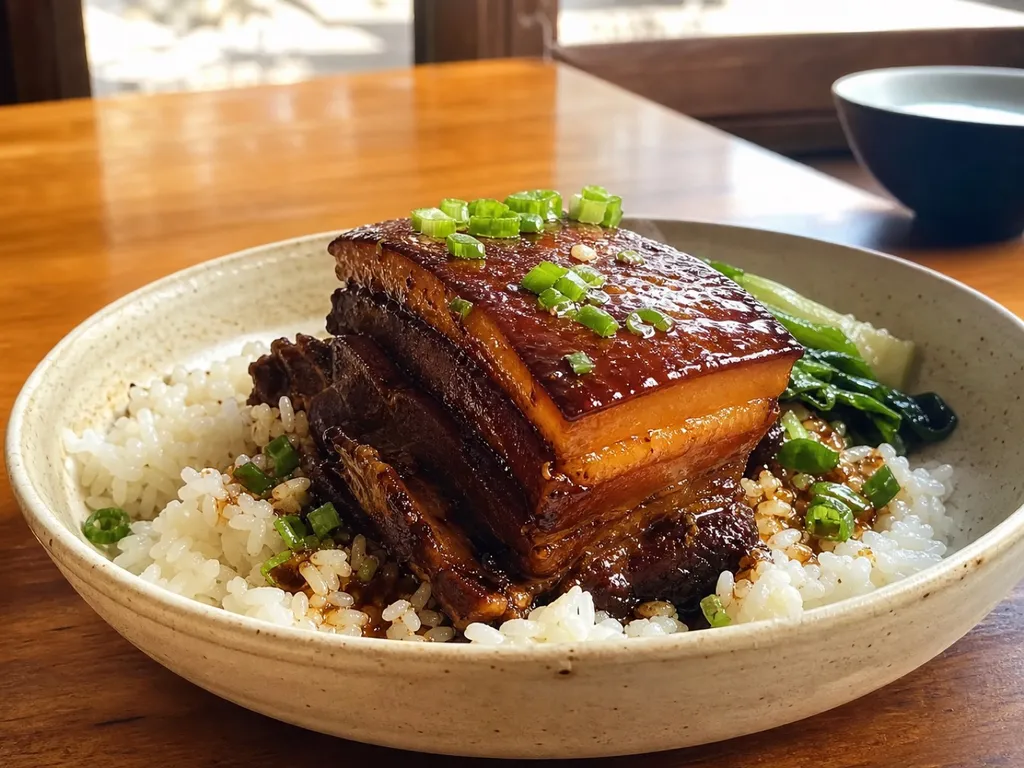 Images are for illustrative purposes only, may be inaccurate, and do not guarantee the presence or absence of specific ingredients.
 Listahan Family Score™
67/100
Works for many families
Score reflects how well this recipe fits a typical busy household. In the app, your Family Score is personalized to your household's allergens, kids, and pantry.
Nutrition
per serving520
Calories
51 g
Protein
12 g
Carbs
26 g
Fat
Estimated per serving. Actual values depend on the brands and portions you use.
Listahan cooking guide
Chef notes & practical guide
Technique notes, ingredient swaps, serve-alongside ideas, storage guidance, and equipment for this recipe.
Cultural context
Dongpo Pork takes its name from Su Dongpo, the beloved Song Dynasty poet-official who reportedly developed a fondness for slow-braised pork belly during his exile in Hangzhou around the 11th century. The dish became a hallmark of Hangzhou cuisine, celebrated for transforming an inexpensive cut into something extraordinarily silky through long, patient cooking. Its enduring popularity is a testament to how Chinese culinary tradition elevates humble ingredients through technique rather than cost.
Listahan note
This version prioritizes the classic Hangzhou method of alternating steam and braise to build the lacquer-dark glaze and melt-in-the-mouth texture the dish is famous for.
Technique cues
- Blanch the pork belly in boiling water for 5 minutes before braising to draw out impurities and prevent the braising liquid from turning murky and bitter.
- Use Shaoxing wine generously in the braise -- it provides the fruity, slightly nutty backbone that distinguishes Dongpo Pork from basic soy-braised pork; do not substitute dry sherry if you can avoid it.
- Keep the braise at a bare simmer rather than a full boil; rapid bubbling breaks down the gelatin network and you lose the quivering, custardy fat layer that defines the dish.
Kitchen flow
- Parallel prep
- While the pork blanches, measure and mix your Shaoxing wine, soy sauces, and rock sugar so the braise is ready to go immediately after the blanching step.
- Make-ahead
- Dongpo Pork is genuinely better the next day -- braise and refrigerate overnight, then skim the solidified fat from the top and reheat gently; the glaze tightens and the flavor deepens significantly.
- Leftover move
- Slice cold leftover pork belly thin and serve over plain congee or steamed white rice with a spoonful of the reheated braising sauce -- it reheats beautifully in just minutes.
- Cleanup rhythm
- Deglaze the braising pot with hot water while still warm; the sugary glaze dissolves easily when hot but sets like lacquer when cold and is difficult to scrub.
Ingredient brief
Role, handling, and swap guidance for each key ingredient.
pork belly
main protein
Purpose: The thick fat layers melt during long braising into the sauce, giving Dongpo Pork its characteristic rich, glossy coat and silky texture.
Handling: Cut into large 2-inch cubes and tie each piece with kitchen twine to hold its shape during the long braise.
Adaptation: Skin-on pork shoulder works in a pinch but produces a firmer result; avoid lean cuts entirely as the fat is essential.
Shaoxing rice wine
braising liquid base
Purpose: Shaoxing wine contributes deep umami and a fermented sweetness that caramelizes over the long cook into the signature mahogany glaze.
Handling: Use at room temperature; no special prep needed beyond measuring.
Adaptation: Dry sherry is a usable substitute, though the flavor is lighter; avoid cooking wine with added salt.
soy sauce
color and seasoning
Purpose: A mix of dark and regular soy sauce gives the pork its deep lacquered color while providing the salt balance against the sugar.
Handling: Combine dark and light soy sauce before adding to the pot for even color throughout the braise.
Adaptation: All light soy sauce produces a paler result with less caramel depth; coconut aminos makes it gluten-free but also lighter in color.
rock sugar
sweetener and glaze builder
Purpose: Rock sugar melts more slowly than granulated sugar and produces a cleaner, shinier glaze without the slight bitterness of over-reduced cane sugar.
Handling: Crush large pieces in a zip-lock bag with a rolling pin for faster dissolution.
Adaptation: Brown sugar works and adds molasses notes; use slightly less since it is sweeter than rock sugar by volume.
scallions
aromatic base
Purpose: Whole scallions steep in the braise and impart a mild onion sweetness that rounds out the soy and wine without competing with the pork.
Handling: Tie in a bundle with kitchen twine for easy removal before serving.
Adaptation: Leek whites work well as a milder substitute; skip if unavailable since the dish is still flavorful without them.
Technique notes
- Arrange the pork belly cubes skin-side down in a single layer in the braising vessel so the skin softens in the liquid rather than drying out above it.
- After the long braise, transfer the pork to a plate and reduce the remaining braising liquid over high heat until it coats a spoon -- this intensifies the glaze dramatically before you spoon it back over the pork.
- Rest the finished pork in the reduced glaze for 10 minutes off heat, turning once, to allow it to absorb the concentrated sauce and develop an even, deeply colored exterior.
Ingredient swaps
- Gluten-free direction
- Replace soy sauce with tamari and use a certified gluten-free Shaoxing-style rice wine or dry sherry; all other ingredients are naturally gluten-free.
- Lower-sodium direction
- Use reduced-sodium soy sauce and increase rock sugar slightly to compensate for the flavor gap; the long braise still produces a deeply savory result.
- Weeknight shortcut
- Use a pressure cooker or Instant Pot at high pressure for 40 minutes instead of the traditional 90-minute stovetop braise, then reduce the liquid on saute mode.
Serve alongside
- Steamed jasmine rice
- Bok choy stir-fried with garlic
- Steamed lotus leaf buns (gua bao)
- Shaoxing rice wine served warm
- Pu-erh tea
Serving suggestions only — check pairings for your household's allergens.
Storage & reheating
- Refrigerate in the braising liquid in an airtight container for up to 4 days; the fat cap that solidifies on top acts as a natural seal and preserves the pork beneath it.
- Reheat gently over low heat with the braising liquid, spooning the sauce over the pork as it warms to restore the glossy finish.
Equipment
- Heavy-bottomed clay pot or Dutch oven for even low-and-slow heat distribution
- Kitchen twine for tying pork cubes to hold their shape
- Fine mesh skimmer for removing impurities during the blanching step
Make this household-aware
Listahan Pro checks this recipe against your household's allergens, finds pantry-aware swaps, builds the shopping list, and helps you plan the week around it.
Plan it in Listahan
Add Dongpo Pork to your week, check it against your household's allergens, and build the shopping list automatically.
More Chinese recipes
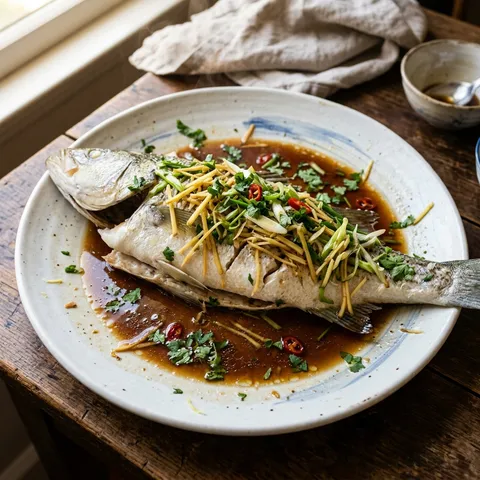 Chinese Lens Verified Images are for illustrative purposes only, may be inaccurate, and do not guarantee the presence or absence of specific ingredients.
 Steamed Fish with Soy and Ginger
A traditional banquet dish featuring delicately steamed whole fish with hot oil poured over aromatics.
 Chinese Lens Verified Images are for illustrative purposes only, may be inaccurate, and do not guarantee the presence or absence of specific ingredients.
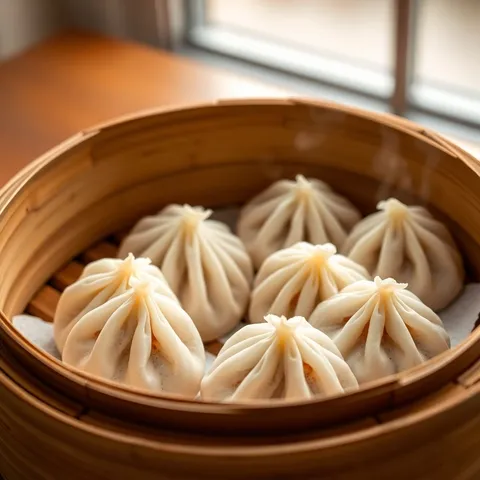
 Xiao Long Bao (Soup Dumplings)
Delicate steamed buns filled with pork and a rich, savory soup.
 Chinese Lens Verified Images are for illustrative purposes only, may be inaccurate, and do not guarantee the presence or absence of specific ingredients.
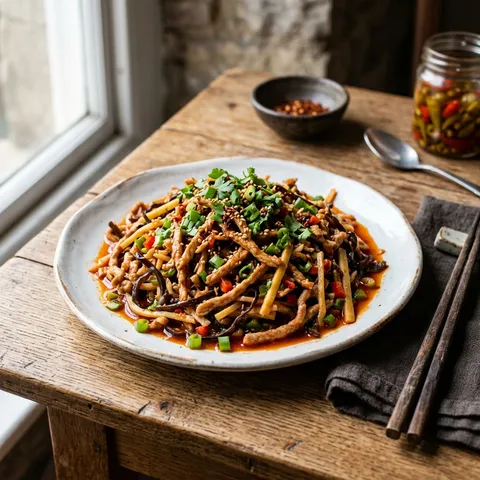
 Yuxiang Rou Si (Fish-Fragrant Pork Shreds)
A classic Sichuan dish that uses "fish-fragrant" seasoning (sweet, sour, and spicy) on pork shreds, containing no actual fish.