 Chinese Images are for illustrative purposes only, may be inaccurate, and do not guarantee the presence or absence of specific ingredients.
  Serving Images are for illustrative purposes only, may be inaccurate, and do not guarantee the presence or absence of specific ingredients.
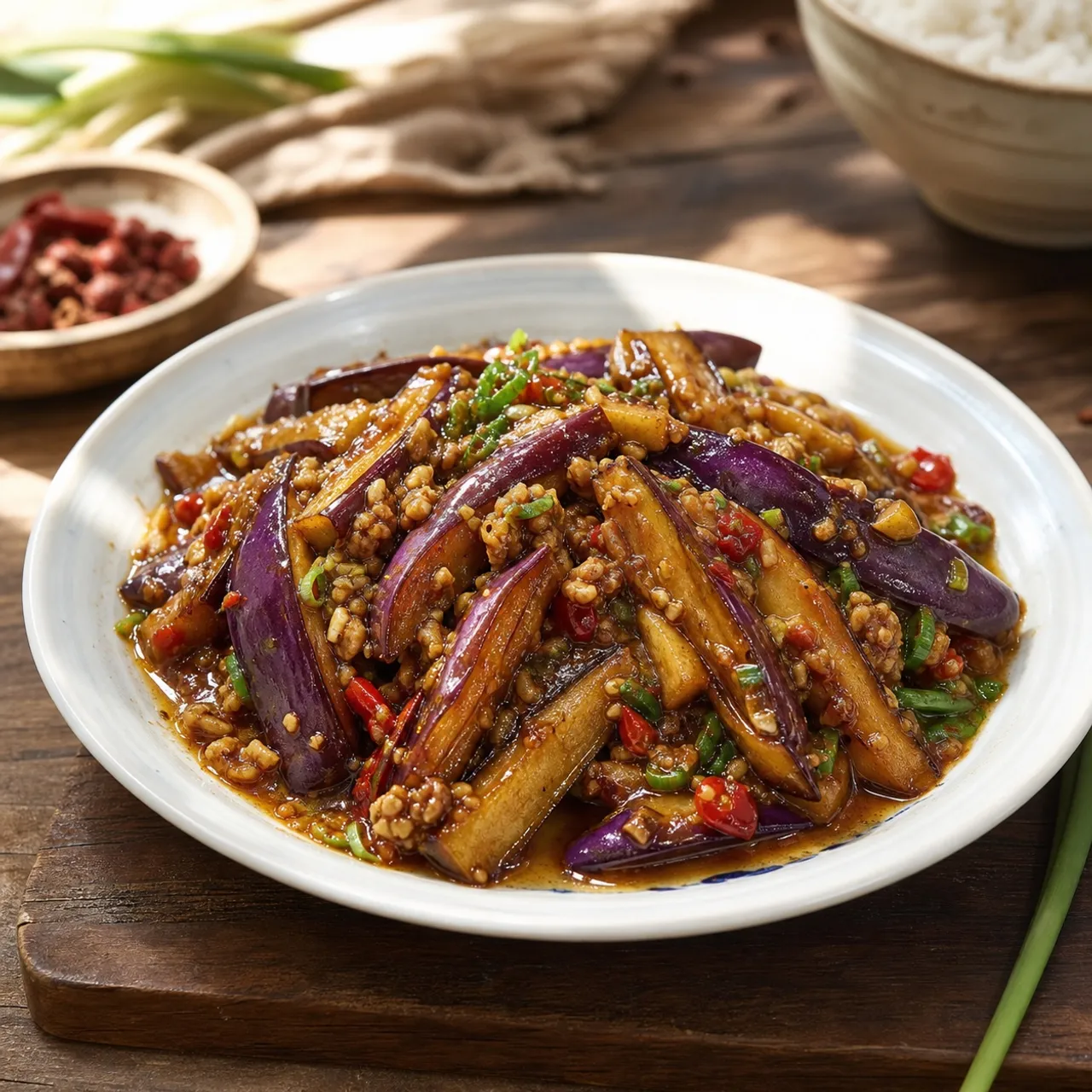
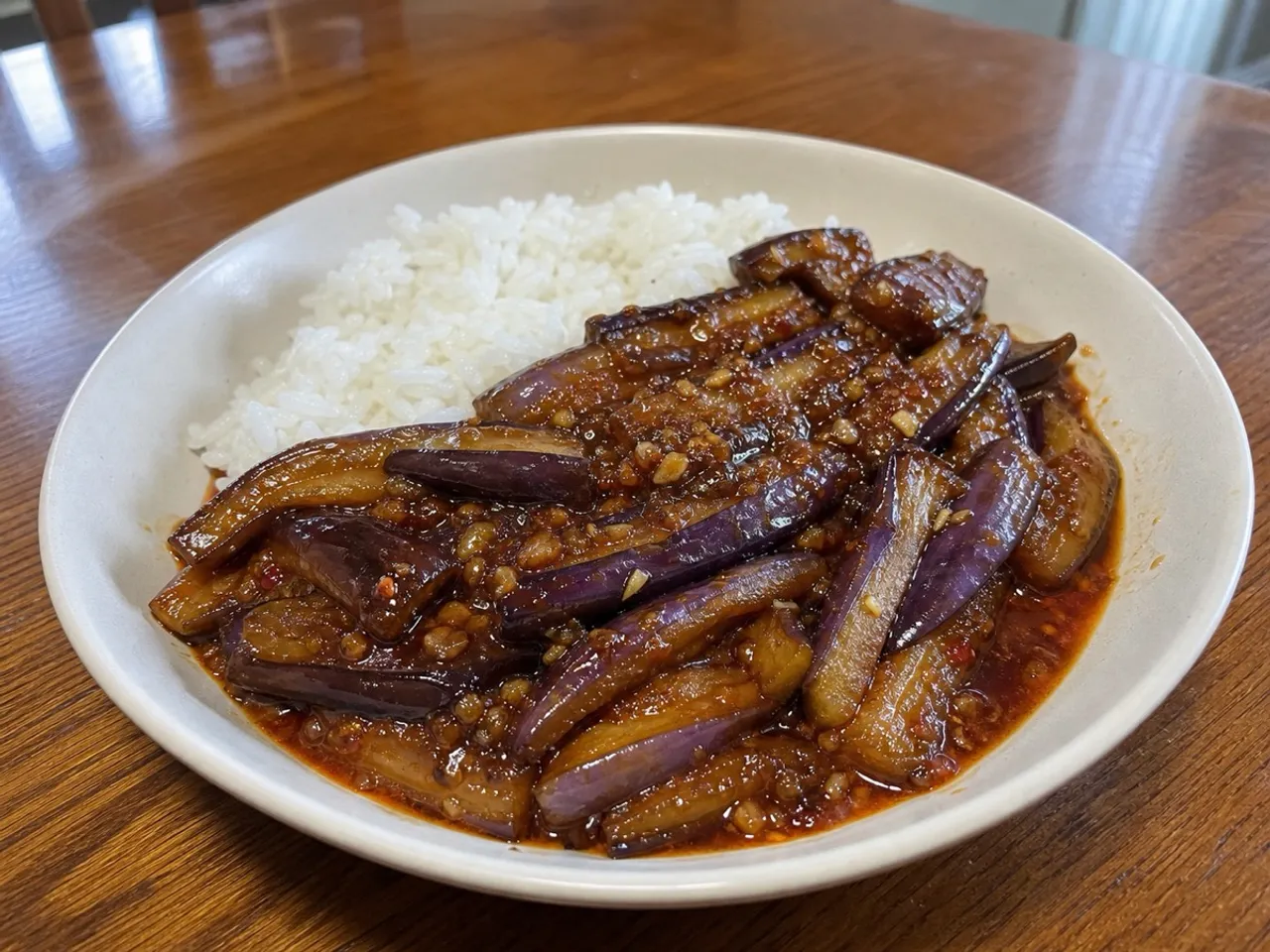
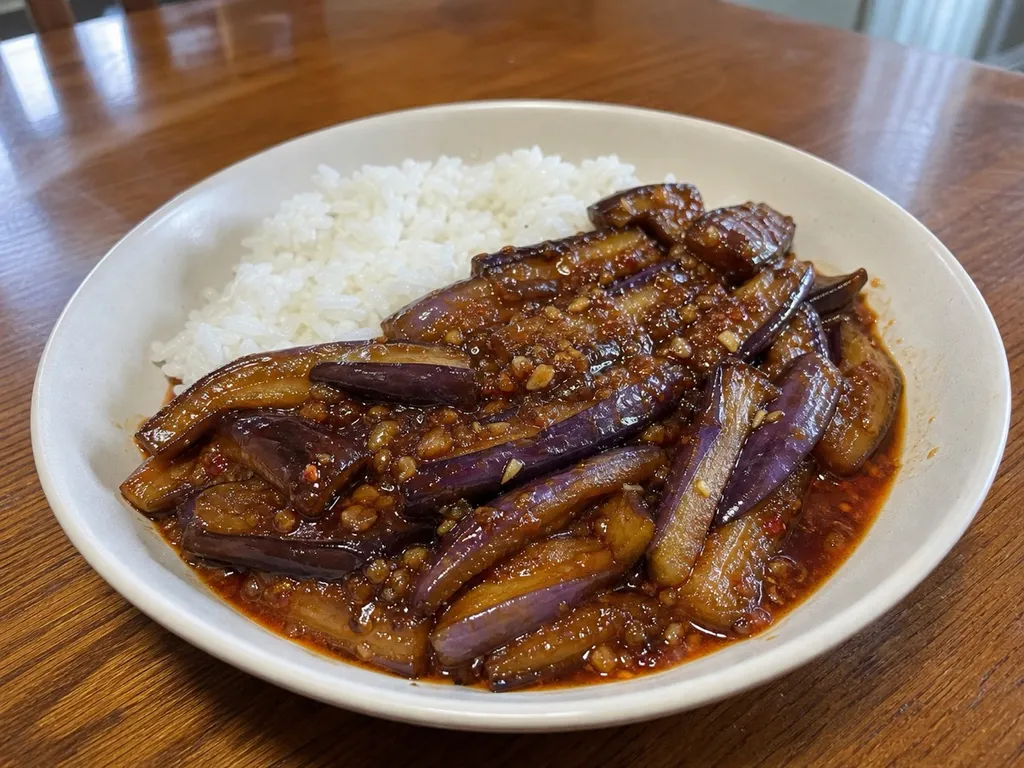
 Eggplant with Garlic Sauce (Yu Xiang Qie Zi)
Silky Sichuan eggplant in a fragrant sweet, sour, and spicy garlic sauce known as fish-fragrant flavor.
Contains common allergens
In the app, Listahan checks these against your household automatically.
Good to know
- Ready in under 30 minutes
Matched from this dish's own ingredients and timing. Browse more: 30-minute meals
Instructions
6 steps- 1
Soak the eggplant batons in lightly salted water for 10 minutes to prevent oxidation, then drain and pat completely dry.
- 2
Stir together the vinegar, sugar, soy sauce, and 1/4 cup water in a bowl to make the yu xiang sauce, then set aside.
- 3
Heat the vegetable oil in a wok over medium-high and fry the eggplant for 5 to 6 minutes, turning often, until deeply golden and meltingly soft; remove to a plate.
- 4
In the same oil, add the doubanjiang and stir-fry for 1 minute until the oil turns red and fragrant, then add the garlic and ginger and cook 30 seconds more.
- 5
Return the eggplant to the wok, pour in the sauce, and simmer for 2 to 3 minutes until the liquid reduces and coats the eggplant in a glossy glaze.
- 6
Taste and adjust the sweet-sour balance, then serve hot over steamed rice.
 Images are for illustrative purposes only, may be inaccurate, and do not guarantee the presence or absence of specific ingredients.
 Listahan Family Score™
69/100
Works for many families
Score reflects how well this recipe fits a typical busy household. In the app, your Family Score is personalized to your household's allergens, kids, and pantry.
Nutrition
per serving185
Calories
2 g
Protein
15 g
Carbs
14 g
Fat
Estimated per serving. Actual values depend on the brands and portions you use.
Listahan cooking guide
Chef notes & practical guide
Technique notes, ingredient swaps, serve-alongside ideas, storage guidance, and equipment for this recipe.
Cultural context
Yu xiang means "fish-fragrant," but the flavor does not require fish. In Sichuan cooking, the name points to a sweet-sour-garlicky seasoning pattern often used with fish: chile bean paste, garlic, ginger, vinegar, sugar, and soy. Eggplant takes especially well to this sauce because its soft interior soaks up the seasoned red oil.
Listahan note
This version keeps the sauce compact and pantry-friendly, using doubanjiang for the chile-bean depth instead of a longer list of Sichuan seasonings. The method prioritizes getting the eggplant fully soft before glazing, because undercooked eggplant will not give the dish its silky texture.
Technique cues
- Chinese eggplant cooks faster than globe eggplant because it has thinner skin and fewer seeds. Cut the batons evenly so they soften at the same pace.
- Pat the soaked eggplant very dry before it hits the wok. Extra water cools the oil and makes the pieces steam before they can brown.
- Cook the doubanjiang in the oil before adding the sauce. That short fry wakes up the paste and turns the oil red, which is where much of the dish's color and aroma come from.
Kitchen flow
- Parallel prep
- Start rice first, then soak and dry the eggplant while the rice cooks; mix the sauce before heating the wok.
- Make-ahead
- Mix the sauce and cut the aromatics earlier in the day, but cook the eggplant close to serving so it keeps its silky shape.
- Leftover move
- Spoon leftovers over rice with a soft egg or fold them into warm noodles with a splash of hot water to loosen the glaze.
- Cleanup rhythm
- Wipe any doubanjiang splatter from the stove while the sauce simmers, then soak the wok right after serving before the glaze sets.
Ingredient brief
Role, handling, and swap guidance for each key ingredient.
Chinese eggplant
Main vegetable
Purpose: Its thin skin and creamy flesh become tender quickly and hold the glossy sauce well.
Handling: Cut into 3-inch batons, soak briefly in lightly salted water, then dry thoroughly.
Adaptation: Japanese eggplant works similarly; globe eggplant can work but may need peeling in strips and a little longer cooking.
Doubanjiang
Chile-bean base
Purpose: This fermented paste brings salt, heat, bean savoriness, and the deep red color associated with the sauce.
Handling: Stir-fry it in the oil for about a minute until fragrant before adding garlic and ginger.
Adaptation: A mix of miso and chile crisp gives a different but useful savory-spicy direction when doubanjiang is unavailable.
Garlic
Primary aromatic
Purpose: Garlic is central to yu xiang flavor and gives the sauce its sharp, fragrant backbone.
Handling: Mince it finely so it spreads through the glaze, but add it after the doubanjiang so it does not scorch.
Adaptation: Garlic paste can stand in, though it browns faster and should be stirred constantly.
Fresh ginger
Warm aromatic
Purpose: Ginger lifts the heavy richness of the fried eggplant and balances the garlic.
Handling: Mince it small so no large fibrous pieces interrupt the soft texture.
Adaptation: A smaller amount of grated ginger works well and blends even more smoothly into the sauce.
Black rice vinegar
Sour balance
Purpose: It gives the sauce a rounded acidity that cuts through the oil and fermented bean paste.
Handling: Stir it with the sugar, soy sauce, and water before cooking so the sauce can go in all at once.
Adaptation: Chinkiang vinegar is a natural choice here; rice vinegar tastes lighter and sharper.
Light soy sauce
Seasoning base
Purpose: It adds salt and a clean savory note without making the sauce too dark or heavy.
Handling: Measure it into the sauce bowl before the wok work starts, because the final simmer moves quickly.
Adaptation: Regular soy sauce can be used, but start with a little less because it may taste stronger.
Technique notes
- Do not crowd the wok if your pan is small. Cook the eggplant in two batches so the pieces fry and soften instead of collapsing in a wet pile.
- Keep the garlic and ginger moving once they go in. They only need about 30 seconds, and burnt garlic will make the whole sauce taste harsh.
- The finished sauce should cling to the eggplant, not sit as a thin puddle. Simmer until the glaze looks shiny and the batons are coated on all sides.
Ingredient swaps
- No-wok path
- Use a large skillet and keep the heat high; the cooking may take a minute or two longer because the sides are lower.
- Less heat
- Use a smaller spoonful of doubanjiang and add a teaspoon more soy sauce if the sauce needs depth.
- Oil-conscious direction
- Steam or microwave the eggplant until just tender, then finish it in the wok with less oil; the texture will be softer and less glossy.
- Soy sauce alternative
- Tamari can replace light soy sauce, but taste before adding any extra seasoning because different bottles vary in saltiness.
Serve alongside
- Steamed jasmine rice
- Scallion oil noodles
- Cucumber smashed salad
- Stir-fried bok choy with garlic
- Cold jasmine tea
- Sparkling water with lime
- Light lager
Serving suggestions only — check pairings for your household's allergens.
Storage & reheating
- Refrigerate the eggplant and sauce together in a sealed container for up to 3 days.
- Reheat gently in a skillet or microwave with a small splash of water to loosen the glaze.
- Freeze only if texture is not the priority; thaw overnight and reheat until the sauce comes back together.
Equipment
- Wok or large skillet
- Wide spatula
- Mixing bowl for sauce
- Clean kitchen towel or paper towels
Make this household-aware
Listahan Pro checks this recipe against your household's allergens, finds pantry-aware swaps, builds the shopping list, and helps you plan the week around it.
Plan it in Listahan
Add Eggplant with Garlic Sauce (Yu Xiang Qie Zi) to your week, check it against your household's allergens, and build the shopping list automatically.
More Chinese recipes
 Chinese Lens Verified Images are for illustrative purposes only, may be inaccurate, and do not guarantee the presence or absence of specific ingredients.
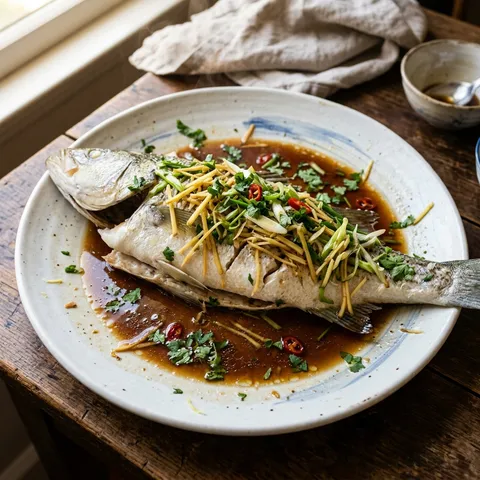
 Steamed Fish with Soy and Ginger
A traditional banquet dish featuring delicately steamed whole fish with hot oil poured over aromatics.
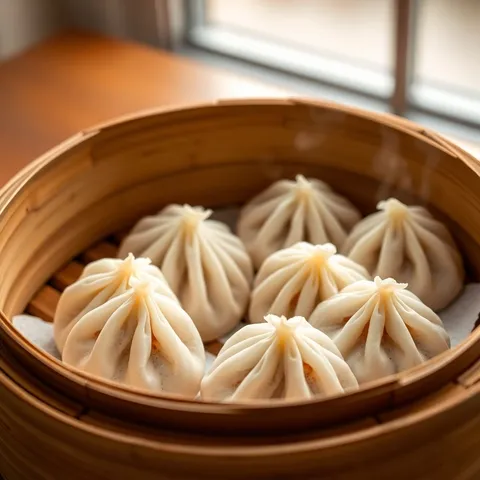 Chinese Lens Verified Images are for illustrative purposes only, may be inaccurate, and do not guarantee the presence or absence of specific ingredients.
 Xiao Long Bao (Soup Dumplings)
Delicate steamed buns filled with pork and a rich, savory soup.
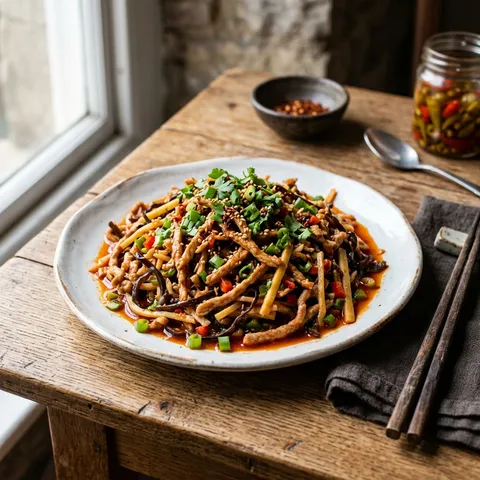 Chinese Lens Verified Images are for illustrative purposes only, may be inaccurate, and do not guarantee the presence or absence of specific ingredients.
 Yuxiang Rou Si (Fish-Fragrant Pork Shreds)
A classic Sichuan dish that uses "fish-fragrant" seasoning (sweet, sour, and spicy) on pork shreds, containing no actual fish.