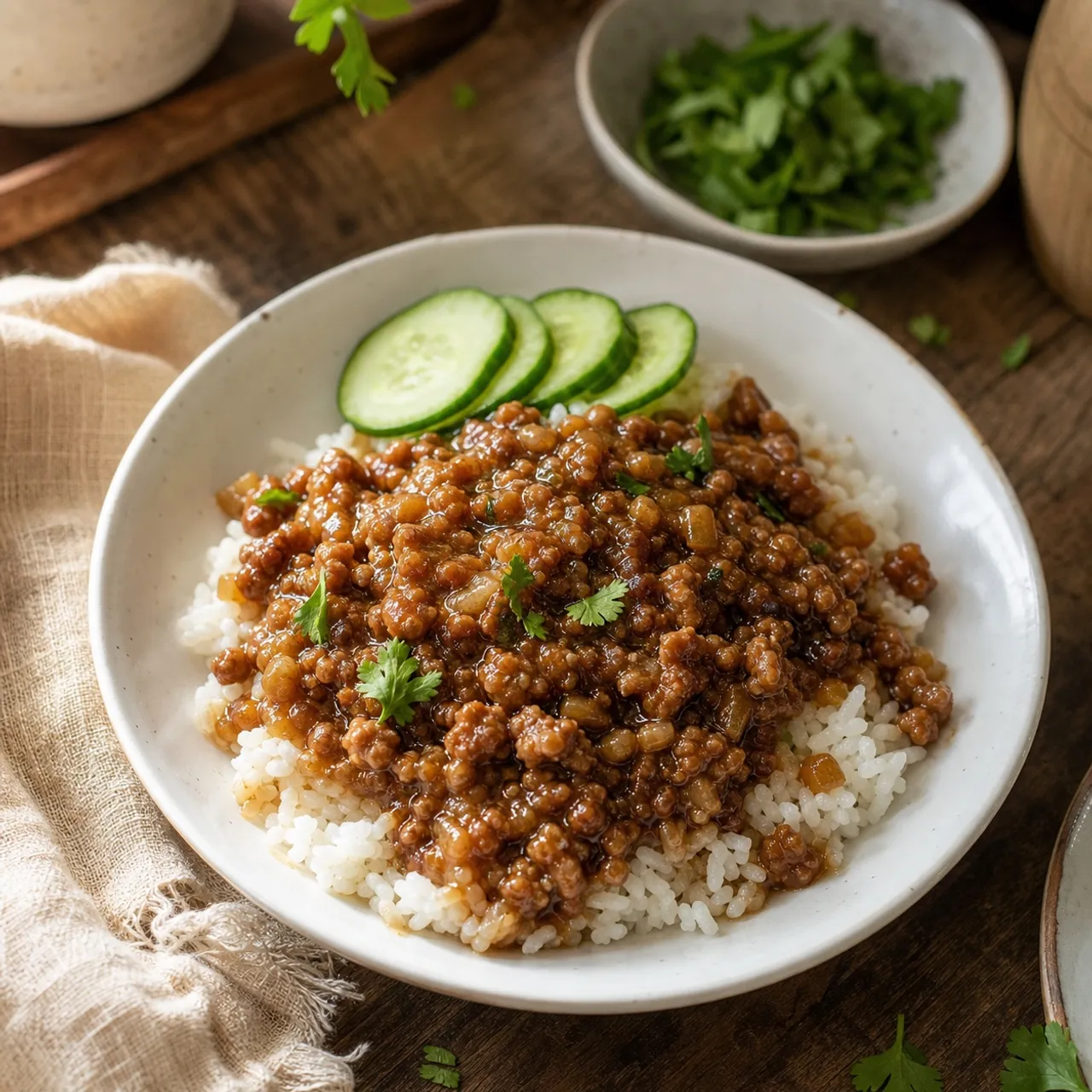
 Chinese Images are for illustrative purposes only, may be inaccurate, and do not guarantee the presence or absence of specific ingredients.
 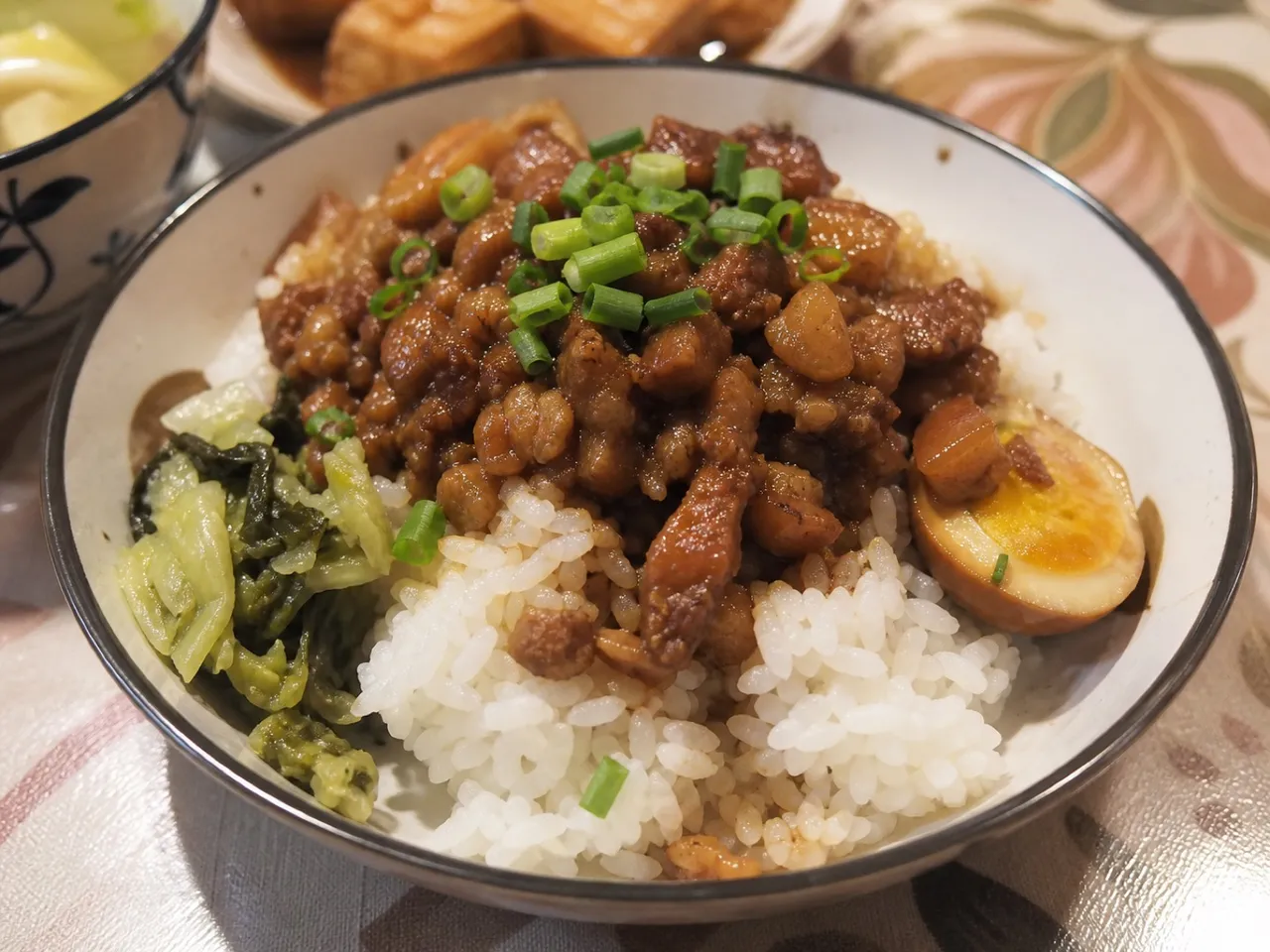 Serving Images are for illustrative purposes only, may be inaccurate, and do not guarantee the presence or absence of specific ingredients.
 Lu Rou Fan (Braised Pork Rice)
A beloved Taiwanese/Fujianese dish of rich, savory braised minced pork over rice.
Contains common allergens
In the app, Listahan checks these against your household automatically.
Good to know
- One-pot
Matched from this dish's own ingredients and timing. Browse more: one-pot dinners
Instructions
6 steps- 1
Blanch the Pork: Bring a pot of water to a boil. Add the pork belly cubes and boil for 2 minutes to remove impurities. Drain and rinse the pork thoroughly.
- 2
Brown the Pork: Heat a wok or heavy-bottomed pot over medium heat. Add the pork cubes (no oil needed) and stir-fry for 4-5 minutes until the fat begins to render and the edges turn slightly golden.
- 3
Aromatize: Add the minced garlic and the five-spice powder to the pork. Stir-fry for 1 minute until highly fragrant.
- 4
Build the Braise: Stir in the fried shallots, rock sugar, light soy sauce, dark soy sauce, and Shaoxing wine. Pour in enough warm water to just barely cover the pork.
- 5
Simmer: Bring the liquid to a rolling boil, then reduce the heat to the lowest setting. Cover the pot and simmer very gently for 1 hour.
- 6
Add Eggs and Finish: Add the peeled hard-boiled eggs to the pot, submerging them in the dark liquid. Simmer for another 30 minutes until the pork is meltingly tender and the sauce has reduced to a sticky, rich gravy. Serve hot over steamed white rice.
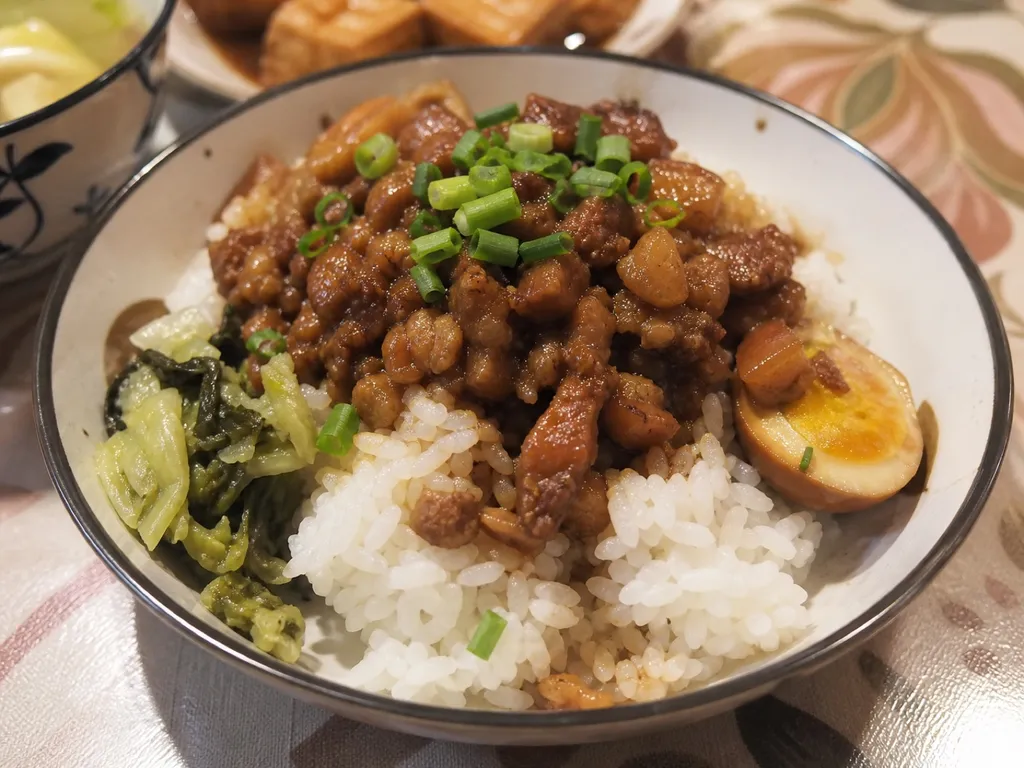 Images are for illustrative purposes only, may be inaccurate, and do not guarantee the presence or absence of specific ingredients.
 Listahan Family Score™
66/100
Works for many families
Score reflects how well this recipe fits a typical busy household. In the app, your Family Score is personalized to your household's allergens, kids, and pantry.
Nutrition
per serving525
Calories
55 g
Protein
6 g
Carbs
29 g
Fat
Estimated per serving. Actual values depend on the brands and portions you use.
Listahan cooking guide
Chef notes & practical guide
Technique notes, ingredient swaps, serve-alongside ideas, storage guidance, and equipment for this recipe.
Cultural context
Lu rou fan is the most beloved everyday dish of Taiwan, so ubiquitous that it is sometimes called Taiwan's national comfort food, though its roots stretch back to the minced meat braises of central and northern China that Mainland immigrants brought to Taiwan in the mid-20th century. The dish is pork belly braised low and slow in soy sauce, rice wine, and five spice until it becomes meltingly tender and produces a thick, glossy, rust-colored sauce that seeps into the rice below. Every household and every night market stall has a slightly different version passed down through family tradition.
Listahan note
This version uses finely diced pork belly rather than ground pork to get pockets of melted fat in the sauce that coat every grain of rice; the long braise time is non-negotiable and cannot be rushed without sacrificing the silky texture.
Technique cues
- Render the pork belly's fat by cooking it in a dry pan before adding any liquid; the rendered fat is then used to fry the shallots, building layers of flavor from the very beginning rather than adding them simultaneously.
- Add the soy sauce, rice wine, and sugar all at once rather than in stages; the sugars caramelize with the soy as the liquid reduces and produce the deep mahogany color that is visually and flavor-defining.
- The braise is done when a chopstick inserted into a pork piece meets no resistance and the sauce coats a spoon thickly; tasting for saltiness and sweetness at this point is the final adjustment before serving.
Kitchen flow
- Parallel prep
- While the pork renders in the initial step, fry the shallots in a separate pan; both elements are ready to combine at the same time without any waiting between steps.
- Make-ahead
- Lu rou fan is dramatically better the day after cooking; the fat solidifies overnight and can be skimmed, and the sauce deepens and concentrates. Cook it the day before serving.
- Leftover move
- Leftover braised pork is excellent used as a filling for steamed bao buns the next day; add a quick-pickled cucumber slice for contrast.
- Cleanup rhythm
- Deglaze the braising pot with a little water after portioning while the caramelized soy residue is still soft; left to cool and dry, dark braising sauces require extended soaking to remove.
Ingredient brief
Role, handling, and swap guidance for each key ingredient.
pork belly
main protein and fat source
Purpose: The layers of fat and meat in pork belly melt during the long braise into the unctuous, glossy sauce that is the entire point of the dish.
Handling: Dice into small cubes, about 1/2 inch; smaller than stew-sized so the fat fully renders into the braising liquid.
Adaptation: Ground pork is used in some Taiwan versions for a different texture; it cooks faster but produces a less rich sauce.
fried shallots
sweetness and complexity
Purpose: Caramelized fried shallots add a sweet, jammy depth that is one of the signature flavors distinguishing lu rou fan from a simple soy braised pork.
Handling: Fry in the rendered pork fat until deeply golden, almost to the point of concern; they should be dark for maximum sweetness.
Adaptation: Store-bought crispy shallots (available at most Asian grocery stores) work excellently and save significant time.
soy sauce
braising liquid and color
Purpose: Soy sauce is the primary braising liquid and gives the dish its mahogany color and salt level; the quality here matters significantly.
Handling: Use a combination of light soy for saltiness and dark soy for color.
Adaptation: Tamari is a direct gluten-free substitute; use the same proportions.
five spice powder
aromatic backbone
Purpose: Five spice gives the braise its warm, anise-forward complexity that is characteristic of Taiwanese and Chinese red-braised pork dishes.
Handling: Add at the beginning of the braise so the spices have time to fully bloom and mellow.
Adaptation: A combination of star anise, cinnamon, and clove approximates five spice if the blend is unavailable.
Shaoxing rice wine
braising liquid
Purpose: Shaoxing wine adds a fermented, nutty depth that is different from water or broth and lifts the entire braise.
Handling: Add along with the soy sauce at the beginning of the braising step.
Adaptation: Dry sherry is the closest widely available substitute; Japanese mirin adds sweetness and partially substitutes.
Technique notes
- Skim the surface of the braising liquid at least twice during cooking; rendered pork fat accumulates on the surface and excessive fat in the final sauce makes it feel greasy rather than glossy.
- If the sauce is reducing too fast and the pork looks like it will be exposed before it is fully tender, add 1/4 cup of water or stock and continue; low and slow is the only path to the right texture.
- A slow cooker is an excellent tool for this recipe: combine all ingredients after the initial frying step and cook on low for 6 to 8 hours; the result is nearly identical to stovetop with zero monitoring.
Ingredient swaps
- Gluten-free direction
- Substitute tamari for all soy sauce and use a gluten-free rice wine; all other ingredients are naturally gluten-free.
- Lower-fat direction
- Use pork shoulder instead of belly; it has less fat but still braises to tenderness, and skimming the surface fat during cooking reduces the richness further.
- Pressure cooker shortcut
- After the initial sear and shallot step, pressure cook on high for 35 minutes with a natural release; the pork reaches full tenderness in a fraction of the stovetop time.
Serve alongside
- soft-boiled soy-marinated egg
- blanched baby bok choy
- Taiwanese pickled mustard greens (suancai)
- cold Taiwanese bubble tea (plain milk tea)
- hot oolong tea
Serving suggestions only — check pairings for your household's allergens.
Storage & reheating
- Refrigerate in an airtight container for up to 5 days; the fat solidifies on top and is easily skimmed before reheating.
- Freezes exceptionally well for up to 3 months; thaw overnight in the refrigerator and reheat gently over low heat, thinning with a little water if needed.
Equipment
- heavy-bottomed braising pot or Dutch oven
- wooden spoon for scraping up the fond after the initial fry
- fat separator or ladle for skimming rendered fat during braising
Make this household-aware
Listahan Pro checks this recipe against your household's allergens, finds pantry-aware swaps, builds the shopping list, and helps you plan the week around it.
Plan it in Listahan
Add Lu Rou Fan (Braised Pork Rice) to your week, check it against your household's allergens, and build the shopping list automatically.
More Chinese recipes
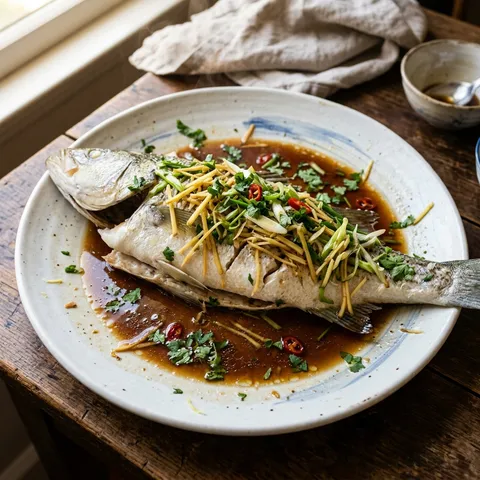 Chinese Lens Verified Images are for illustrative purposes only, may be inaccurate, and do not guarantee the presence or absence of specific ingredients.
 Steamed Fish with Soy and Ginger
A traditional banquet dish featuring delicately steamed whole fish with hot oil poured over aromatics.
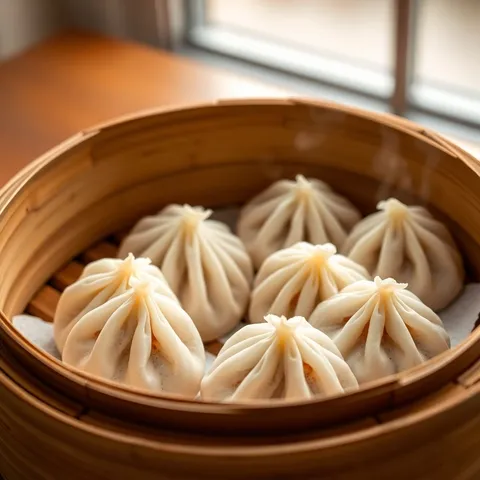 Chinese Lens Verified Images are for illustrative purposes only, may be inaccurate, and do not guarantee the presence or absence of specific ingredients.
 Xiao Long Bao (Soup Dumplings)
Delicate steamed buns filled with pork and a rich, savory soup.
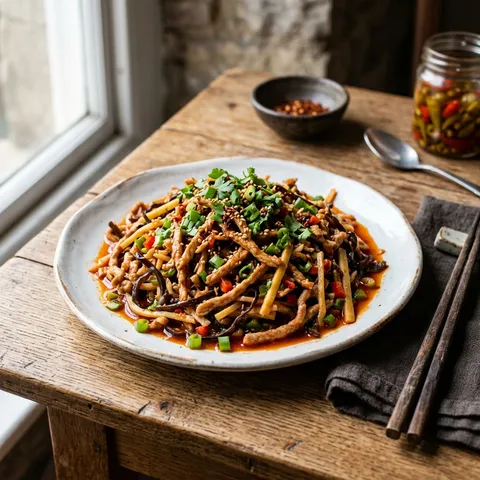 Chinese Lens Verified Images are for illustrative purposes only, may be inaccurate, and do not guarantee the presence or absence of specific ingredients.
 Yuxiang Rou Si (Fish-Fragrant Pork Shreds)
A classic Sichuan dish that uses "fish-fragrant" seasoning (sweet, sour, and spicy) on pork shreds, containing no actual fish.