 Chinese Images are for illustrative purposes only, may be inaccurate, and do not guarantee the presence or absence of specific ingredients.
  Serving Images are for illustrative purposes only, may be inaccurate, and do not guarantee the presence or absence of specific ingredients.
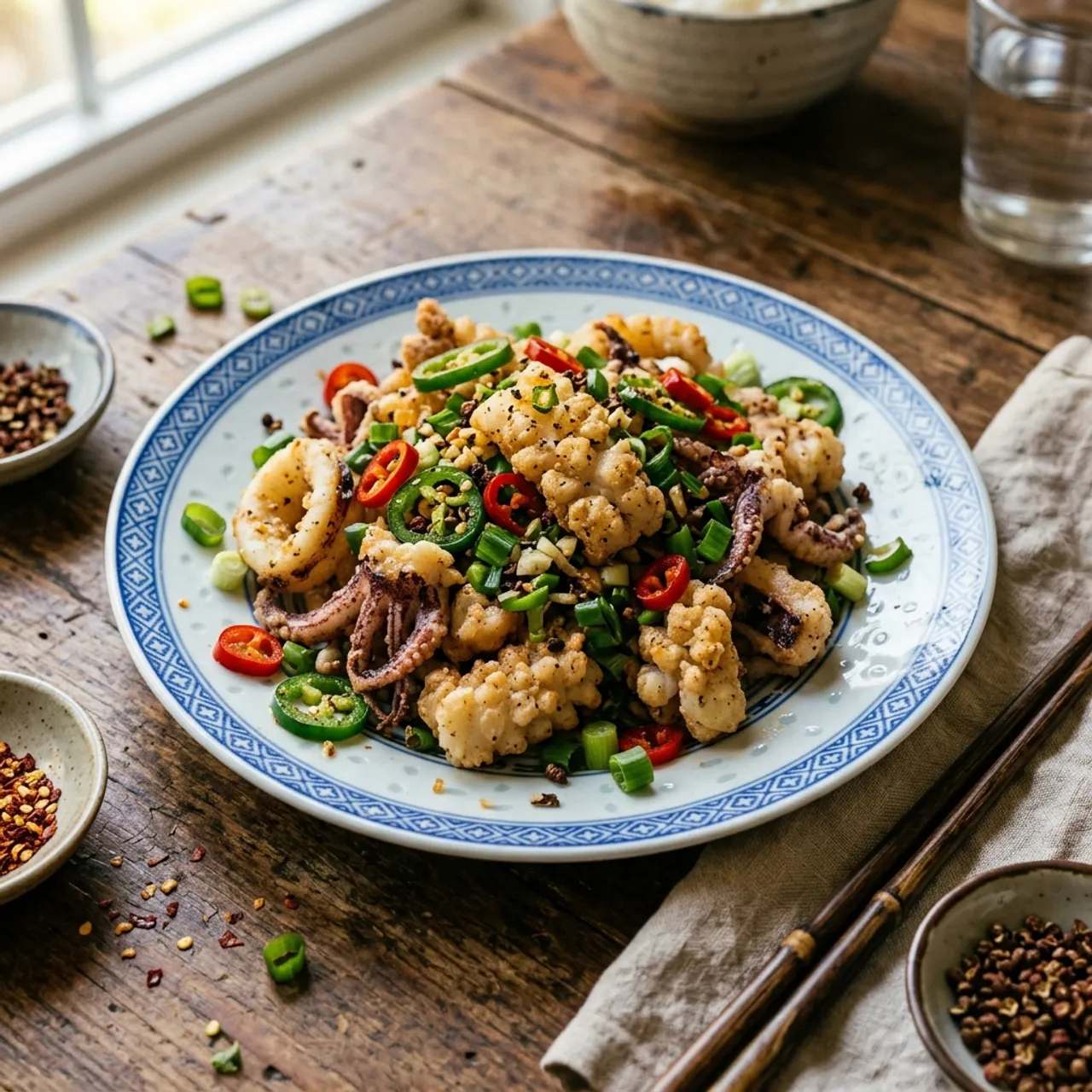
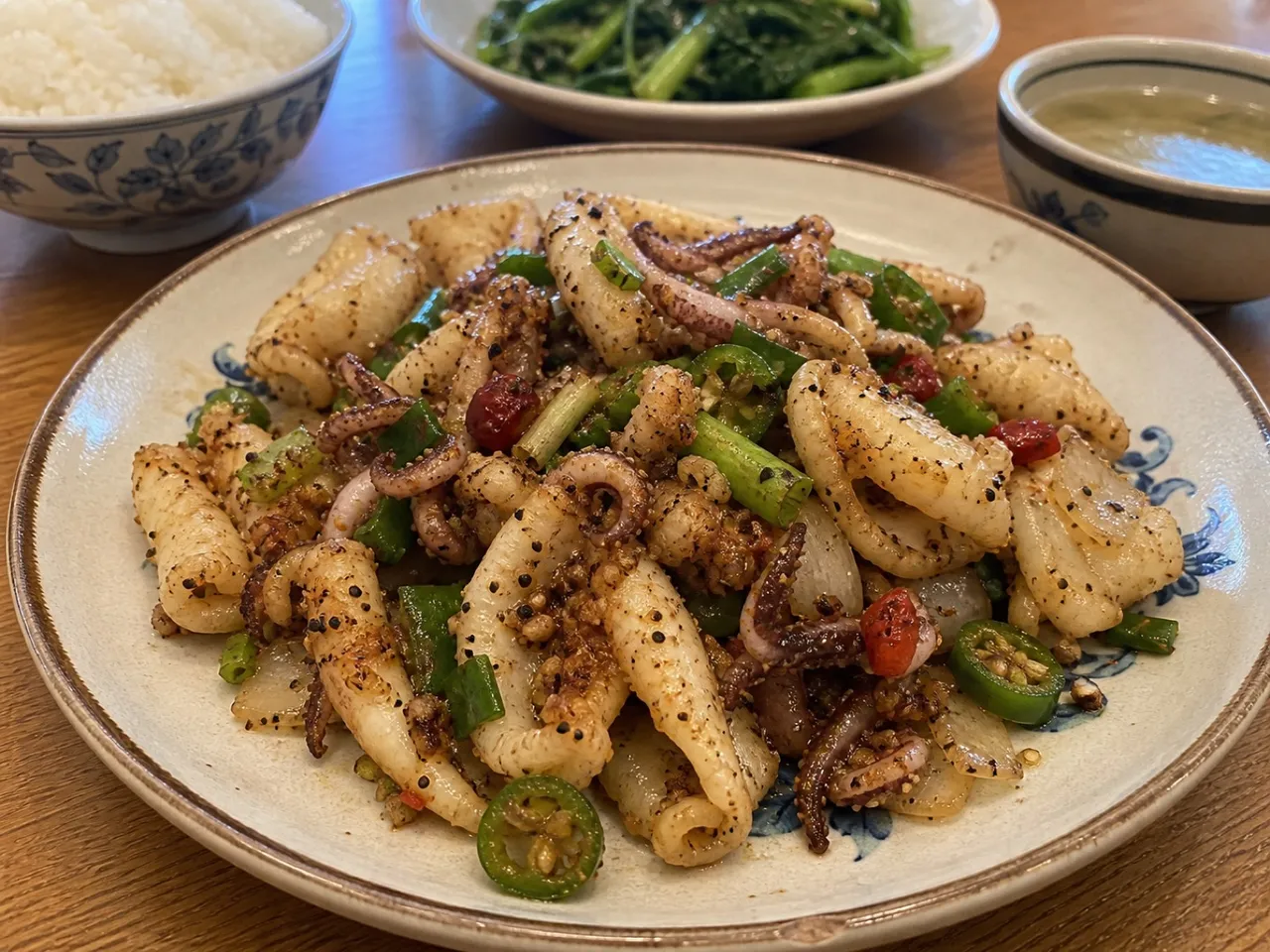
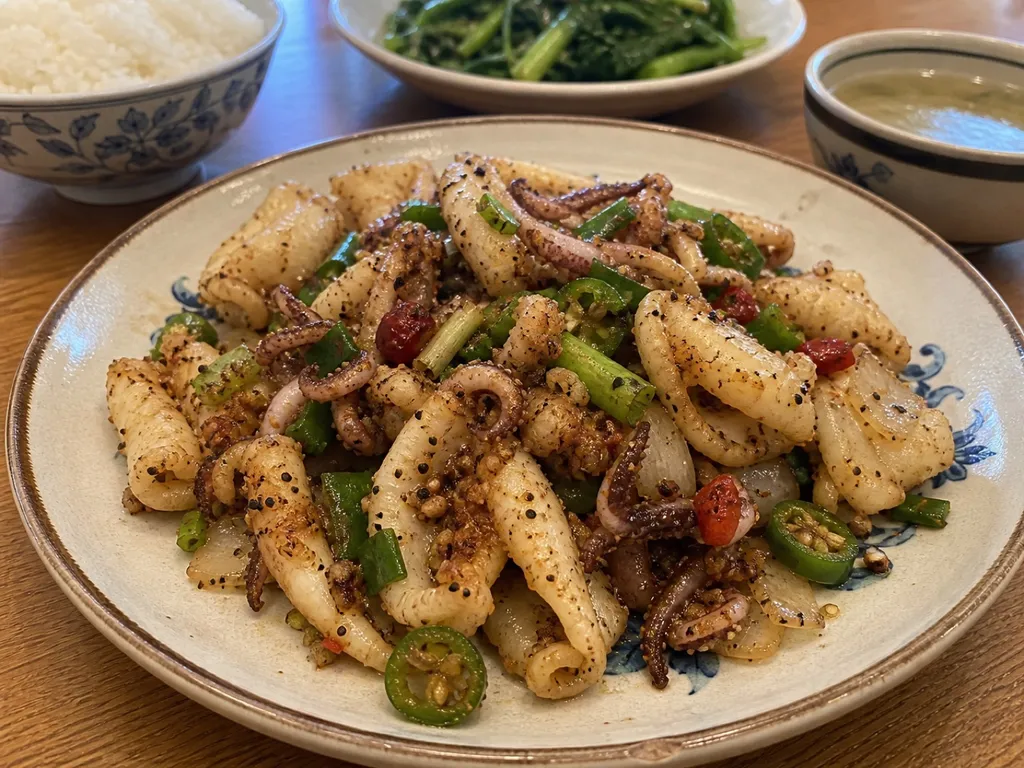
 Salt and Pepper Squid
Crispy, lightly battered squid tossed with a fragrant mix of toasted salt, pepper, and chilies.
Contains common allergens
In the app, Listahan checks these against your household automatically.
Good to know
- Crispy
- Ready in under 30 minutes
Matched from this dish's own ingredients and timing. Browse more: crispy recipes30-minute meals
Instructions
6 steps- 1
Score the Squid: Cut open the squid tubes so they lay flat. Using a sharp knife, gently score the inside of the tubes in a tight crisscross diamond pattern, being careful not to cut all the way through. Cut the scored squid into 2-inch squares.
- 2
Mix the Seasoning: In a small dry pan, toast the sea salt, white pepper, and ground Sichuan peppercorns over low heat for 2 minutes until fragrant. Set this salt-pepper mix aside.
- 3
Coat the Squid: Toss the scored squid squares in the cornstarch until thoroughly coated. Shake off any excess powder.
- 4
Deep Fry: Heat 2 inches of oil in a wok to 375°F (190°C). Drop the squid pieces in. They will immediately curl into beautiful "pinecone" shapes. Fry for only 45-60 seconds until they turn opaque and the coating is crispy. Do not overcook or they will become rubbery. Remove and drain.
- 5
Fry Aromatics: Drain the oil from the wok, leaving just 1 tsp. Over high heat, quickly fry the minced garlic, sliced jalapeño, and scallions for 15 seconds until fragrant.
- 6
Toss and Serve: Return the crispy squid to the wok. Sprinkle the toasted salt-pepper mix generously over the top. Toss everything together rapidly for 5 seconds and serve immediately.
 Images are for illustrative purposes only, may be inaccurate, and do not guarantee the presence or absence of specific ingredients.
 Listahan Family Score™
63/100
Works for many families
Score reflects how well this recipe fits a typical busy household. In the app, your Family Score is personalized to your household's allergens, kids, and pantry.
Nutrition
per serving230
Calories
25 g
Protein
26 g
Carbs
2 g
Fat
Estimated per serving. Actual values depend on the brands and portions you use.
Listahan cooking guide
Chef notes & practical guide
Technique notes, ingredient swaps, serve-alongside ideas, storage guidance, and equipment for this recipe.
Cultural context
Salt and Pepper Squid is a staple of Cantonese seafood restaurants, where the technique of frying in a dry seasoned crust rather than a wet batter is prized for letting the fresh ocean flavor of the squid come through. The dish belongs to a family of 'salt and pepper' preparations (jiao yan) applied to everything from shrimp to pork chops to soft-shell crab -- the method originates in Hong Kong's seafood houses and spread through the Chinese diaspora into Chinese-Australian, Chinese-Canadian, and Chinese-American restaurant menus. The combination of five-spice, white pepper, and flaky salt is the Cantonese seasoning template that ties all of these variations together.
Listahan note
This version uses a light rice flour and cornstarch blend for an exceptionally thin, shatter-crisp crust that stays crispy well after frying -- the textural goal that makes this dish worth the effort.
Technique cues
- Score the squid tube with a shallow crosshatch pattern before cutting into pieces -- the score causes the pieces to curl attractively and increases the surface area for the crust to adhere to.
- Dry the squid pieces thoroughly on paper towels before dredging; any surface moisture converts to steam in the oil and prevents crisping, leading to a pale and soggy result.
- Fry in small batches at 375 degrees Fahrenheit and return the oil to temperature between each batch -- overcrowding drops the oil temperature and steams rather than fries.
Kitchen flow
- Parallel prep
- Score and dry the squid while the oil heats; slice the chiles and garlic and mix the salt-and-pepper seasoning blend so the final toss happens in under 2 minutes after the squid comes out of the fryer.
- Make-ahead
- The seasoning blend can be made days ahead and stored in a small jar; the squid is best cleaned and dried in the refrigerator up to 4 hours before frying.
- Leftover move
- Re-crisp leftover squid on a wire rack in a 400-degree oven for 5 minutes; serve over a rice bowl with chili sauce rather than trying to replicate the original presentation.
- Cleanup rhythm
- Let the frying oil cool completely before straining through a fine mesh sieve; used, strained oil keeps for another fry session.
Ingredient brief
Role, handling, and swap guidance for each key ingredient.
squid (tubes and tentacles)
main protein
Purpose: Fresh or properly thawed squid has a sweet, oceanic flavor and a firm-tender bite that holds up to the high heat of deep frying without becoming rubbery if cooked quickly.
Handling: Clean, score, and cut tubes into rings or bite-sized pieces; keep tentacles whole for visual contrast.
Adaptation: Large shrimp with shells on work in the same recipe and cook in the same time; large sea scallops can also be done salt-and-pepper style.
rice flour
crust base
Purpose: Rice flour fries to a lighter, crispier crust than all-purpose flour and stays shatter-crisp longer because it absorbs less oil during frying.
Handling: Combine with cornstarch in a 2:1 ratio for the optimal crust texture; season the dredge directly so the salt and pepper bond to the crust.
Adaptation: All-purpose flour plus cornstarch works but produces a slightly thicker, chewier crust that softens faster after frying.
white pepper
primary heat element
Purpose: White pepper delivers a nasal, earthy heat that is distinctly different from black pepper and is the defining seasoning note of Cantonese salt-and-pepper dishes.
Handling: Toast whole peppercorns briefly in a dry pan and grind just before using -- freshly ground white pepper has a dramatically more aromatic impact than pre-ground.
Adaptation: Black pepper gives a sharper, less floral heat; Sichuan peppercorns add a tongue-numbing note that shifts the flavor profile toward Sichuanese territory.
fresh chiles (red and green)
garnish and heat
Purpose: Sliced chiles added to the final toss in the wok contribute fresh brightness and color that contrasts with the fried crust and makes the dish more visually lively.
Handling: Slice thinly on the diagonal; leave seeds in for more heat or remove for milder results.
Adaptation: Sliced jalapenos or Fresno chiles work well; dried chili flakes can substitute but lose the fresh, slightly grassy note.
garlic
aromatic toss element
Purpose: Thinly sliced garlic is flash-fried separately and tossed with the squid at serving time, adding crispy, aromatic bites throughout the dish.
Handling: Slice paper-thin so it crisps quickly in the oil without burning; fry just until golden, not brown.
Adaptation: Fried shallots provide a similar crispy allium element if garlic is too strong for the household.
Technique notes
- Dredge the squid right before it goes into the oil -- if it sits in the flour blend, moisture migrates outward and creates a pasty coating that will not crisp properly.
- After the first fry, let the squid drain on a rack for 30 seconds, then return to the oil for a 20-second second fry at slightly higher heat; this double-fry technique is what produces the lasting crunch.
- Toss the fried squid, chiles, garlic, and seasoning in a clean hot wok for no more than 30 seconds -- you are blooming the aromatics and adhering the seasoning, not cooking further; every second over heat softens the crust.
Ingredient swaps
- Gluten-free direction
- The standard rice flour and cornstarch blend is already naturally gluten-free; verify your five-spice powder contains no wheat-based fillers.
- Allergen direction (seafood alternative)
- Salt-and-pepper cauliflower florets or king oyster mushroom slices follow the exact same dredge-and-fry method and pair with the same seasoning blend.
- Lower-fat direction
- Air fry the dredged squid at 400 degrees Fahrenheit for 8 to 10 minutes, shaking once; the crust will not be as shatter-crisp but the seasoning profile is fully preserved.
Serve alongside
- Fried rice with egg and scallions
- Steamed bok choy with oyster sauce
- Soup dumplings (xiaolongbao) as a shared starter
- Cold Tsingtao lager
- Sparkling water with lime
Serving suggestions only — check pairings for your household's allergens.
Storage & reheating
- Salt and Pepper Squid is best eaten immediately after cooking; the crust begins to soften within 15 minutes as steam from the squid migrates outward.
- If storing, refrigerate in an airtight container for up to 1 day and re-crisp in a 400-degree oven on a wire rack -- do not microwave as this creates steam and ruins the crust.
Equipment
- Deep, heavy-bottomed wok or Dutch oven for stable frying temperature
- Wire rack over a sheet pan for draining and the optional second fry
- Instant-read thermometer for monitoring oil temperature precisely
- Spider strainer or slotted spoon for retrieving squid without breaking the crust
Make this household-aware
Listahan Pro checks this recipe against your household's allergens, finds pantry-aware swaps, builds the shopping list, and helps you plan the week around it.
Plan it in Listahan
Add Salt and Pepper Squid to your week, check it against your household's allergens, and build the shopping list automatically.
More Chinese recipes
 Chinese Lens Verified Images are for illustrative purposes only, may be inaccurate, and do not guarantee the presence or absence of specific ingredients.
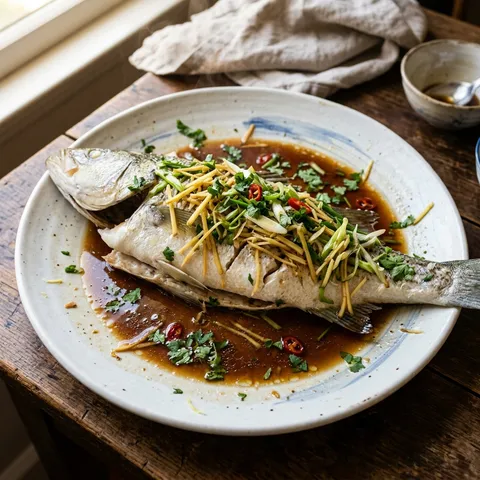
 Steamed Fish with Soy and Ginger
A traditional banquet dish featuring delicately steamed whole fish with hot oil poured over aromatics.
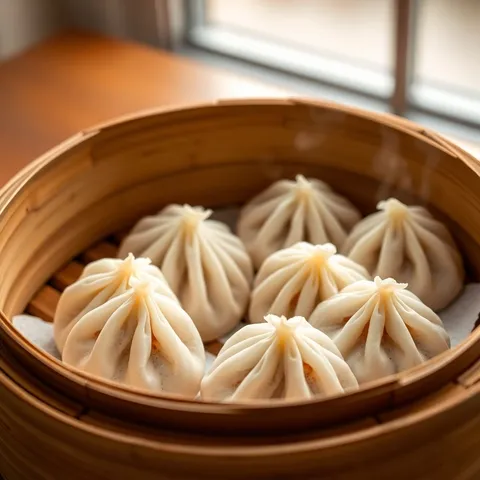 Chinese Lens Verified Images are for illustrative purposes only, may be inaccurate, and do not guarantee the presence or absence of specific ingredients.
 Xiao Long Bao (Soup Dumplings)
Delicate steamed buns filled with pork and a rich, savory soup.
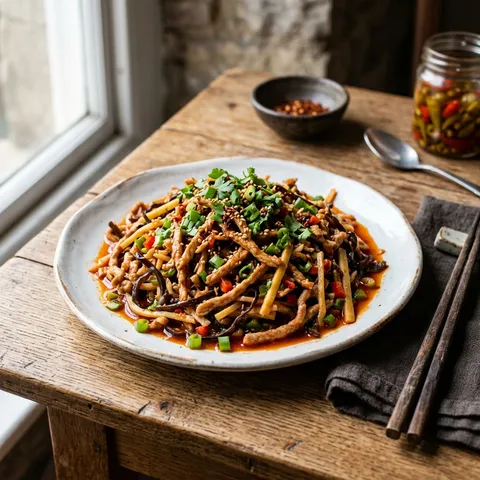 Chinese Lens Verified Images are for illustrative purposes only, may be inaccurate, and do not guarantee the presence or absence of specific ingredients.
 Yuxiang Rou Si (Fish-Fragrant Pork Shreds)
A classic Sichuan dish that uses "fish-fragrant" seasoning (sweet, sour, and spicy) on pork shreds, containing no actual fish.