 Chinese Images are for illustrative purposes only, may be inaccurate, and do not guarantee the presence or absence of specific ingredients.
  Serving Images are for illustrative purposes only, may be inaccurate, and do not guarantee the presence or absence of specific ingredients.
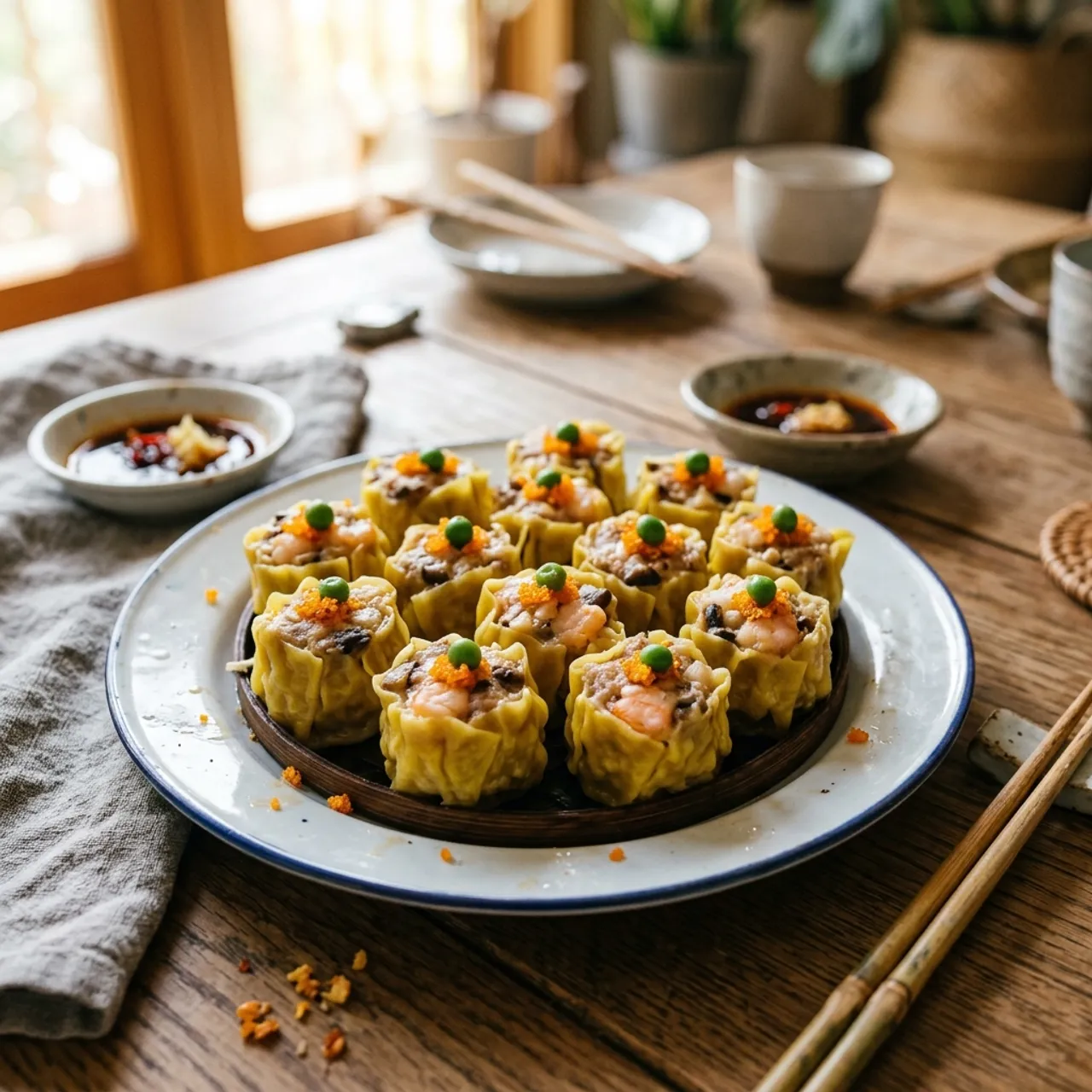
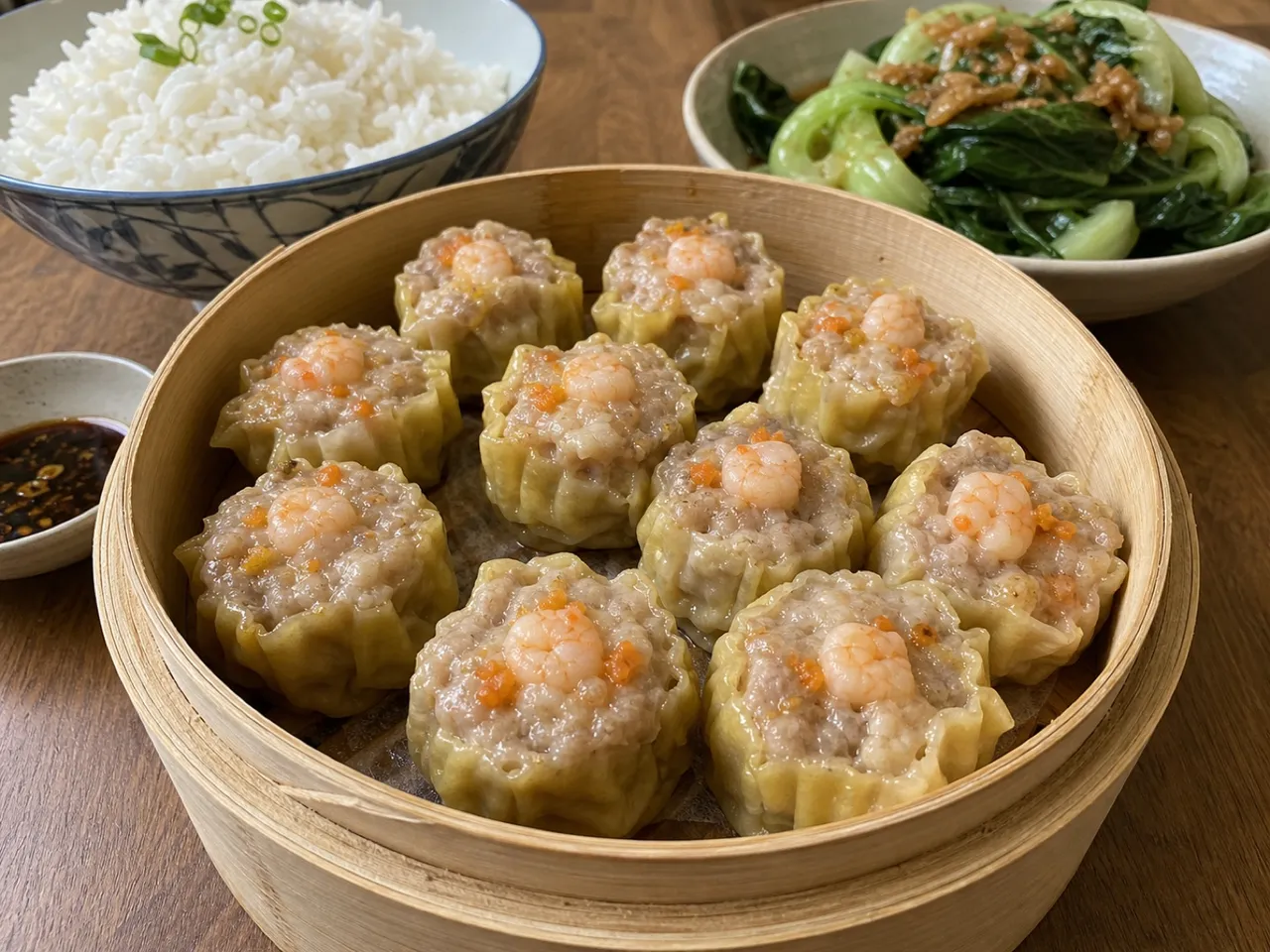
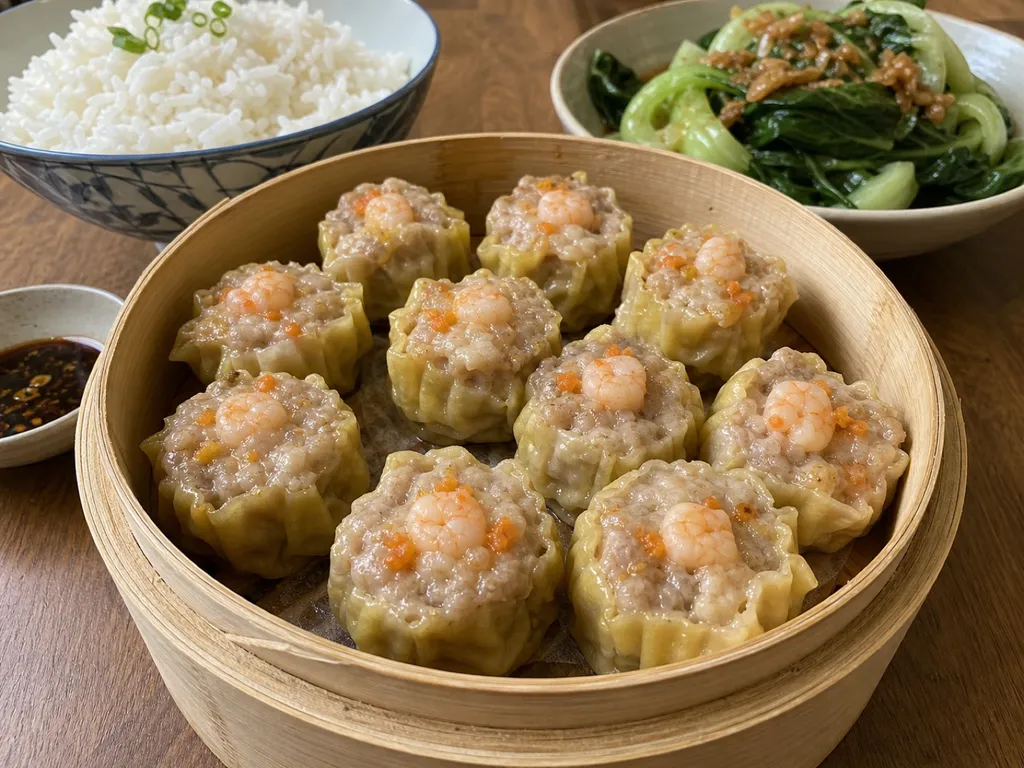
 Shumai (Pork and Shrimp Dumplings)
Open-faced steamed dumplings filled with a mixture of ground pork and chopped shrimp.
Contains common allergens
In the app, Listahan checks these against your household automatically.
Instructions
6 steps- 1
Make the Filling: In a large bowl, combine the ground pork, chopped shrimp, minced mushrooms, and bamboo shoots.
- 2
Season and Mix: Add the soy sauce, sesame oil, sugar, and white pepper. Using chopsticks, stir the mixture vigorously in one single direction for 3-4 minutes. This aligns the proteins and creates the bouncy, cohesive texture essential for dim sum.
- 3
Prepare the Wrappers: Hold a wrapper flat in the palm of your non-dominant hand. Form an "O" shape with your thumb and index finger under the wrapper.
- 4
Fill and Shape: Place a generous tablespoon of the sticky filling into the center of the wrapper. Push the filling down into the "O" of your fingers while simultaneously squeezing gently. The wrapper should pleat naturally around the sides, leaving the top of the filling exposed. Tap the bottom of the dumpling on the counter to flatten it so it stands upright.
- 5
Garnish (Optional): Top the exposed meat of each Shumai with a single frozen pea, a tiny piece of diced carrot, or fish roe for color.
- 6
Steam: Line a bamboo steamer with perforated parchment. Arrange the Shumai 1 inch apart. Steam over high heat for exactly 8-10 minutes until the pork is cooked through and the shrimp is pink. Serve immediately.
 Images are for illustrative purposes only, may be inaccurate, and do not guarantee the presence or absence of specific ingredients.
 Listahan Family Score™
63/100
Works for many families
Score reflects how well this recipe fits a typical busy household. In the app, your Family Score is personalized to your household's allergens, kids, and pantry.
Nutrition
per serving280
Calories
39 g
Protein
2 g
Carbs
12 g
Fat
Estimated per serving. Actual values depend on the brands and portions you use.
Listahan cooking guide
Chef notes & practical guide
Technique notes, ingredient swaps, serve-alongside ideas, storage guidance, and equipment for this recipe.
Cultural context
Shumai (siu mai) are open-topped steamed dumplings that originated in Inner Mongolia and traveled south along trade routes to become one of the four canonical dim sum dishes of Cantonese yum cha culture alongside har gow, cheung fun, and egg tarts. The Cantonese version standardized the filling to pork and shrimp seasoned with ginger, sesame oil, and Shaoxing wine, wrapped in a thin wheat skin and garnished with a dot of carrot or roe. Unlike har gow, which requires pristine translucent dough, shumai wrappers are forgiving and the open top means the filling is always visible.
Listahan note
This version chills the filling before wrapping so it is firm enough to shape cleanly; the shrimp is left in larger pieces rather than minced so each bite has noticeable texture.
Technique cues
- Combine the pork and shrimp filling and then slap it against the bowl 20 to 30 times to develop the myosin proteins; this creates the bouncy, springy texture that distinguishes a proper shumai from a crumbly, loose one.
- Use wrappers that are slightly thicker than har gow wrappers; thin wonton wrappers work but may split at the base during steaming since the filling expands upward with no escape vent.
- Steam shumai on a parchment-lined rack rather than directly on bamboo; unlined bamboo absorbs moisture unevenly and the wrappers can stick and tear on removal.
Kitchen flow
- Parallel prep
- Prepare the filling and refrigerate it while you set up the steamer and layout the wrappers and garnish; cold filling is much easier to portion and shape than room-temperature filling.
- Make-ahead
- Assemble and freeze shumai on a sheet in a single layer, then bag and freeze; steam directly from frozen for 15 to 18 minutes, 3 to 4 minutes longer than fresh.
- Leftover move
- Leftover steamed shumai can be pan-fried the next day in a small amount of oil, flat side down, until a golden crust forms; the potsticker treatment gives them a second life with a different texture.
- Cleanup rhythm
- Line the bamboo steamer with perforated parchment before each batch; the parchment is discarded and the bamboo needs only a brief rinse rather than soaking to remove stuck starch.
Ingredient brief
Role, handling, and swap guidance for each key ingredient.
ground pork
filling base
Purpose: Ground pork provides the fatty, savory foundation that binds the filling together and gives shumai their characteristic juicy interior.
Handling: Use pork with some fat content, around 20%; very lean ground pork produces a dry, crumbly filling.
Adaptation: Ground chicken thigh can substitute for a lighter version, though the texture will be less yielding.
shrimp
secondary protein and texture
Purpose: Shrimp folded in whole or in large pieces give shumai the signature springy, slightly sweet bites that punctuate the pork filling.
Handling: Peel, devein, and coarsely chop into pieces no smaller than half a shrimp; too fine and the shrimp disappears into the pork.
Adaptation: Omit for a pure pork shumai, which is also traditional; do not substitute with fake crab or surimi.
sesame oil
aroma
Purpose: A small amount of toasted sesame oil in the filling gives shumai their recognizable nutty undertone when steamed.
Handling: Add to the filling mixture after combining; do not heat the oil.
Adaptation: Omit for sesame-free version; the filling will still be flavorful from the pork fat and seasonings.
ginger
freshness
Purpose: Finely grated ginger counteracts the slightly heavy pork-and-shrimp profile and is a traditional seasoning in Cantonese dumpling fillings.
Handling: Grate on a microplane for the finest texture so no fibrous strands end up in the filling.
Adaptation: No close substitute; ground dried ginger lacks the fresh, bright quality needed here.
round dumpling wrappers
vessel
Purpose: Round wrappers are pleated easily into the cylindrical shumai shape without extra cutting or trimming.
Handling: Keep covered with a damp cloth while working to prevent drying and cracking.
Adaptation: Wonton wrappers trimmed into circles work; pre-made gyoza wrappers are nearly identical in thickness and size.
Technique notes
- The 'smacking' step for the filling is not optional; a filling that has not had its proteins activated will crumble when bitten and feel mealy rather than having the pleasant spring of a properly made shumai.
- Dip your thumb and index finger in water before cupping each shumai to shape the pleated sides; wet fingers slide more easily against the wrapper and prevent tearing at the pleats.
- Do not overcrowd the steamer; shumai sitting too close together stick at their sides and when pulled apart the wrappers tear, ruining both the appearance and structure.
Ingredient swaps
- Gluten-free direction
- Use rice paper wrappers dampened briefly in warm water; they need to be handled differently (no pleating, just a simple cup shape) but produce an acceptable gluten-free shumai.
- Shellfish-free direction
- Replace shrimp entirely with extra ground pork or with diced water chestnuts for a crunchy textural contrast that does not introduce a new allergen.
- Sesame-free direction
- Omit the sesame oil from the filling and substitute a few drops of neutral oil; the filling will still be savory and moist.
Serve alongside
- har gow (shrimp dumplings)
- hot and sour soup
- soy-ginger dipping sauce
- hot jasmine or oolong tea
- cold pu-erh tea
Serving suggestions only — check pairings for your household's allergens.
Storage & reheating
- Cooked shumai keep refrigerated for up to 2 days; reheat by steaming for 5 minutes or microwave with a damp paper towel cover for 60 to 90 seconds.
- Uncooked assembled shumai freeze well for up to 2 months; steam directly from frozen without thawing.
Equipment
- bamboo steamer basket
- perforated parchment liner to prevent sticking
- microplane or fine grater for the ginger
Make this household-aware
Listahan Pro checks this recipe against your household's allergens, finds pantry-aware swaps, builds the shopping list, and helps you plan the week around it.
Plan it in Listahan
Add Shumai (Pork and Shrimp Dumplings) to your week, check it against your household's allergens, and build the shopping list automatically.
More Chinese recipes
 Chinese Lens Verified Images are for illustrative purposes only, may be inaccurate, and do not guarantee the presence or absence of specific ingredients.
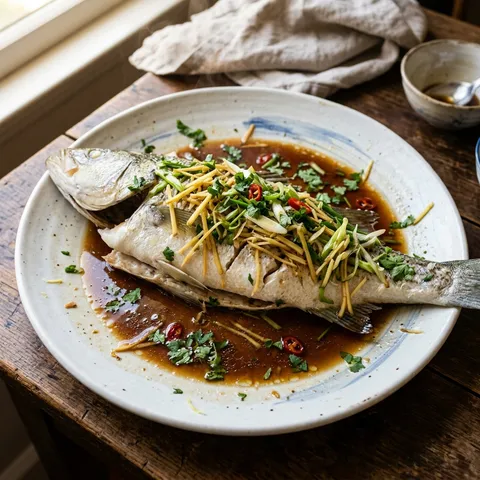
 Steamed Fish with Soy and Ginger
A traditional banquet dish featuring delicately steamed whole fish with hot oil poured over aromatics.
 Chinese Lens Verified Images are for illustrative purposes only, may be inaccurate, and do not guarantee the presence or absence of specific ingredients.
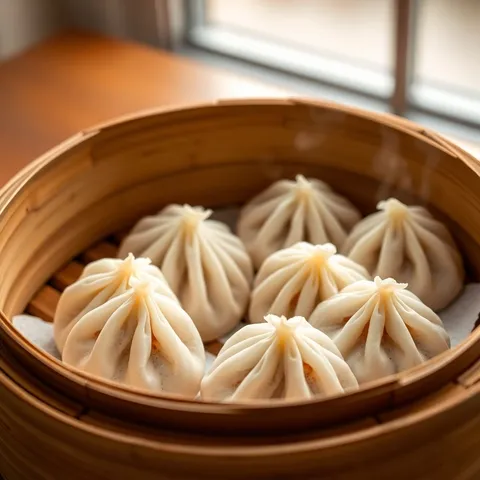
 Xiao Long Bao (Soup Dumplings)
Delicate steamed buns filled with pork and a rich, savory soup.
 Chinese Lens Verified Images are for illustrative purposes only, may be inaccurate, and do not guarantee the presence or absence of specific ingredients.
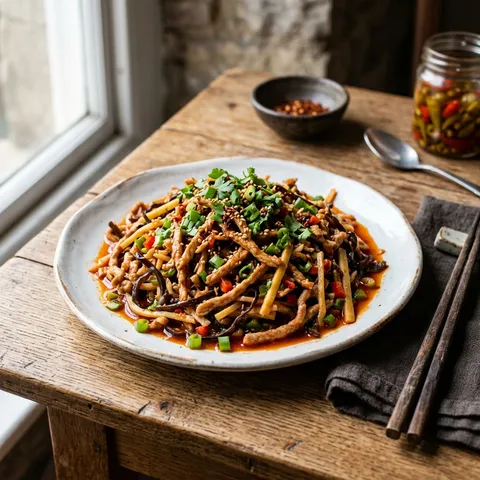
 Yuxiang Rou Si (Fish-Fragrant Pork Shreds)
A classic Sichuan dish that uses "fish-fragrant" seasoning (sweet, sour, and spicy) on pork shreds, containing no actual fish.