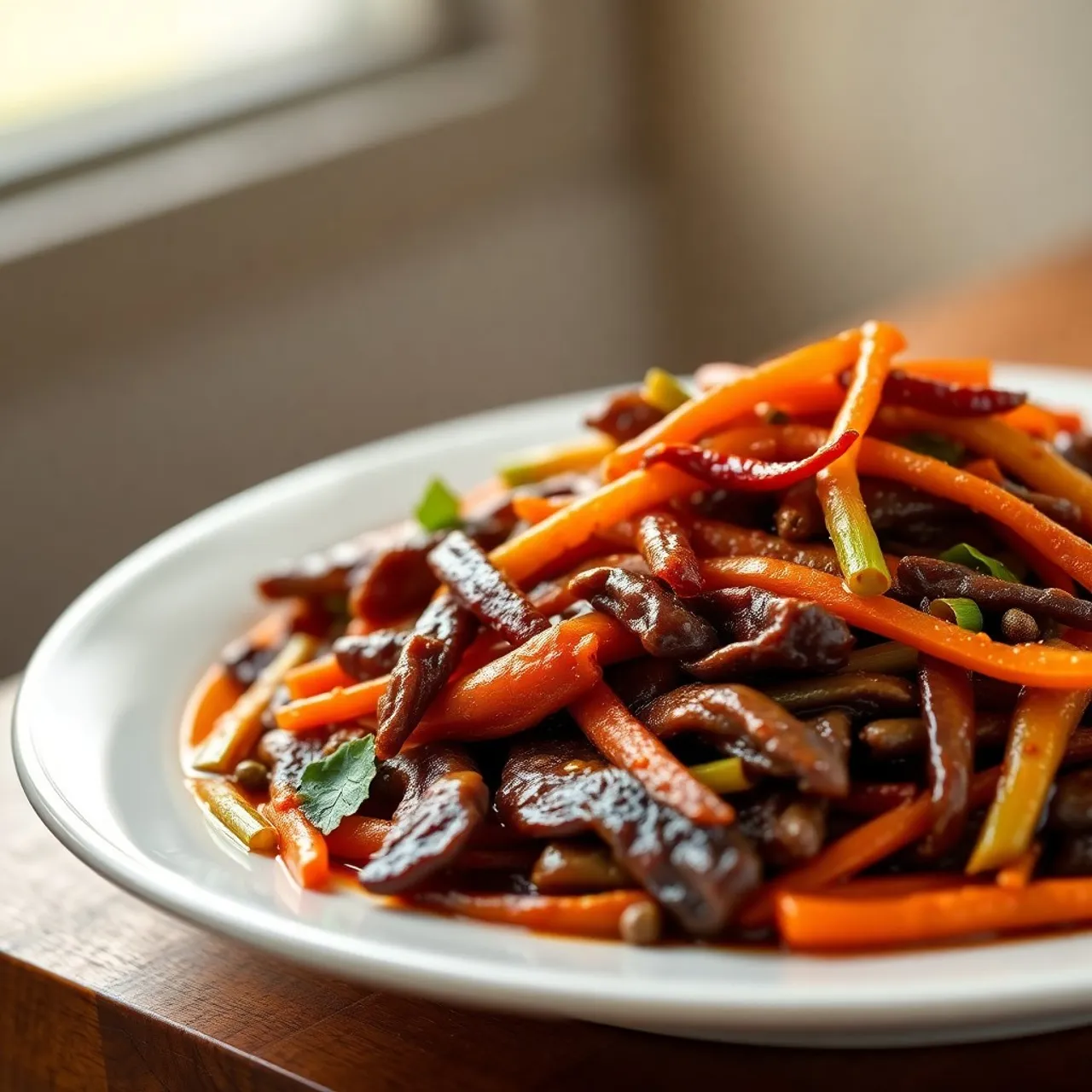
 Chinese Images are for illustrative purposes only, may be inaccurate, and do not guarantee the presence or absence of specific ingredients.
 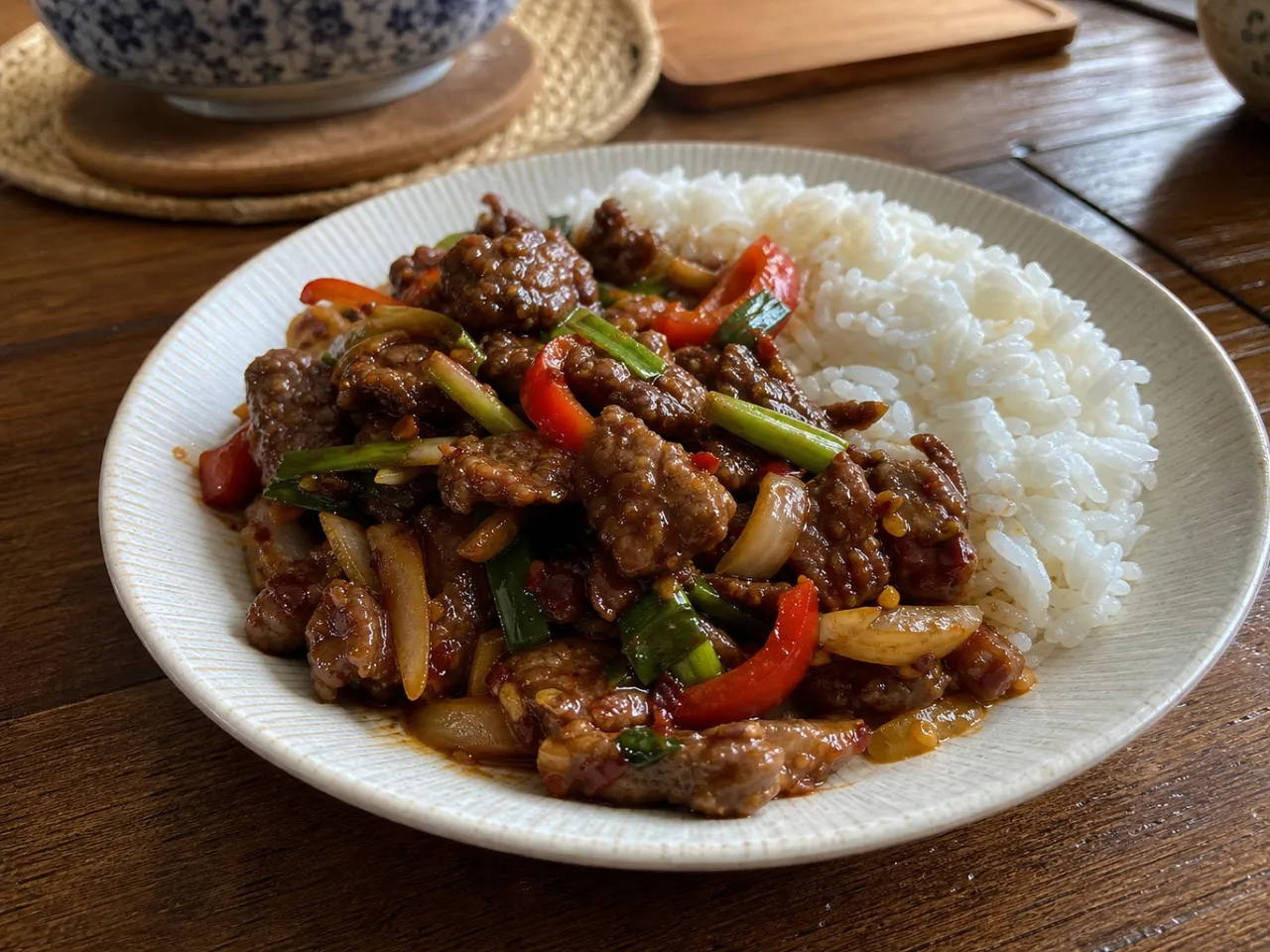 Serving Images are for illustrative purposes only, may be inaccurate, and do not guarantee the presence or absence of specific ingredients.
 Szechuan Beef
Crispy, thin strips of beef stir-fried with spicy chilies and peppercorns.
Contains common allergens
In the app, Listahan checks these against your household automatically.
Good to know
- Crispy
Matched from this dish's own ingredients and timing. Browse more: crispy recipes
Instructions
6 steps- 1
Marinate and Fry Beef: Toss the beef strips with 1 tbsp soy sauce. Heat a wok with 3 tbsp oil over high heat. Fry the beef strips vigorously for 3-4 minutes until they are slightly dry, chewy, and browned (the traditional texture for this dish). Remove the beef.
- 2
Aromatize the Oil: Leave about 2 tbsp of oil in the wok. Reduce heat to medium. Add the dried red chilies and Sichuan peppercorns. Fry for 20-30 seconds until the oil turns fragrant and the chilies darken.
- 3
Stir-Fry Vegetables: Toss in the julienned carrots and celery. Increase heat to high and stir-fry for 2 minutes until they are tender-crisp.
- 4
Add Flavorings: Push the vegetables aside and add the chili bean paste to the oil, frying for 30 seconds until the oil is red.
- 5
Combine and Season: Return the dry-fried beef to the wok. Add the remaining 2 tbsp soy sauce, black vinegar, and sugar.
- 6
Final Toss: Toss everything vigorously over high heat for 1 minute. The dish should have a dry, glossy coating rather than a thick gravy. Serve immediately.
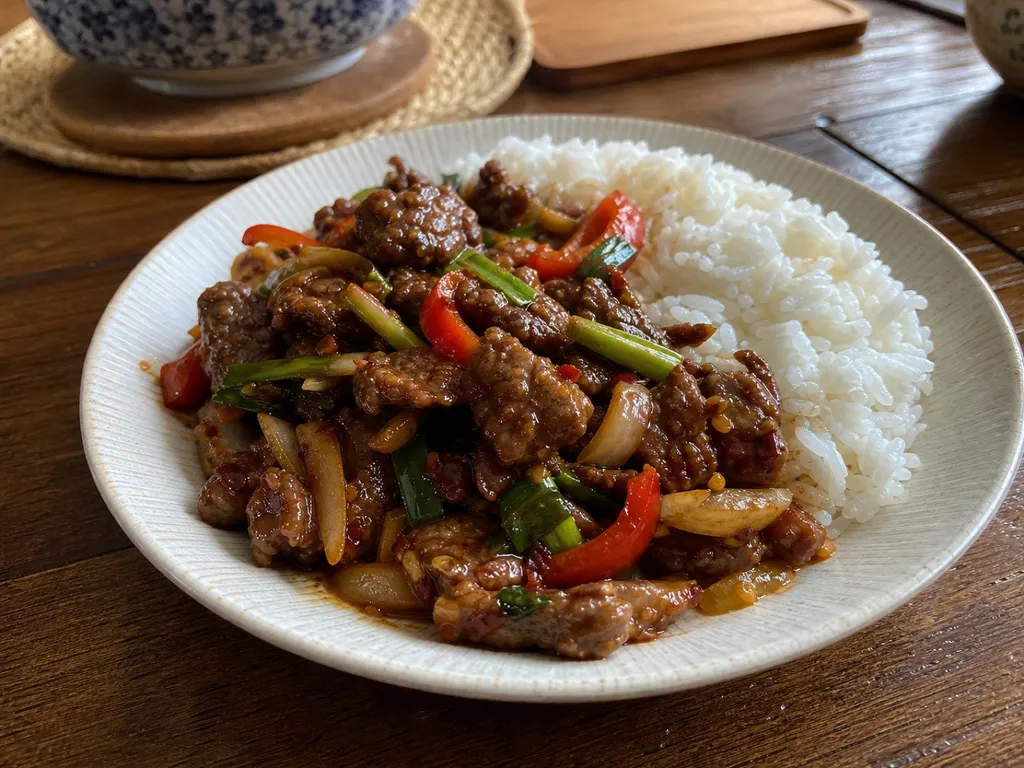 Images are for illustrative purposes only, may be inaccurate, and do not guarantee the presence or absence of specific ingredients.
 Listahan Family Score™
54/100
Works for many families
Score reflects how well this recipe fits a typical busy household. In the app, your Family Score is personalized to your household's allergens, kids, and pantry.
Nutrition
per serving455
Calories
40 g
Protein
9 g
Carbs
29 g
Fat
Estimated per serving. Actual values depend on the brands and portions you use.
Listahan cooking guide
Chef notes & practical guide
Technique notes, ingredient swaps, serve-alongside ideas, storage guidance, and equipment for this recipe.
Cultural context
Szechuan (Sichuan) cuisine is defined by the bold use of dried chilies and Sichuan peppercorns, a combination that produces the distinctive ma la (numbing-hot) sensation unique to this inland Chinese province. Szechuan Beef grew from this tradition, with thin-sliced or shredded beef stir-fried at high heat with chili bean paste (doubanjiang), dried red chilies, and Sichuan peppercorns. The dish became widely popular outside China through immigration and the expansion of Chinese restaurants across North America in the late 20th century.
Listahan note
This version balances the ma la heat so it is assertive but not punishing, keeping the numbing tingle of Sichuan peppercorn present enough to be felt without overwhelming family members who are newer to the cuisine.
Technique cues
- Slice the beef against the grain and as thinly as possible, ideally after 30 minutes in the freezer; thin slices cook in seconds in a hot wok and stay tender instead of chewy.
- Toast the Sichuan peppercorns in a dry pan for about 90 seconds until fragrant before grinding them; this activates the oils responsible for the numbing sensation.
- Cook the doubanjiang (chili bean paste) in a small amount of oil for a full minute before adding other ingredients; frying the paste rather than just adding it raw deepens its color and mellows its raw fermented edge.
Kitchen flow
- Parallel prep
- Marinate the beef and toast and grind the peppercorns while you prep the vegetables; all prep can happen simultaneously before the wok heats.
- Make-ahead
- The beef can marinate in the refrigerator overnight, which deepens the seasoning and gives you a nearly instant weeknight stir-fry.
- Leftover move
- Chop leftover Szechuan beef roughly and fold into fried rice the next day, letting the bold sauce season the entire pan.
- Cleanup rhythm
- Wipe out the wok with a paper towel while it is still warm rather than washing with soap, which strips the seasoning; a quick rinse with hot water is sufficient for most stir-fry residue.
Ingredient brief
Role, handling, and swap guidance for each key ingredient.
flank steak or sirloin
main protein
Purpose: Flank steak has long muscle fibers that slice thin across the grain into tender strips suited to quick wok cooking.
Handling: Freeze for 20 to 30 minutes to firm up, then slice as thin as possible against the grain.
Adaptation: Skirt steak works identically; chicken thighs can substitute for a lighter version.
doubanjiang (chili bean paste)
flavor foundation
Purpose: It provides the fermented, spicy, deeply savory backbone that defines Sichuan-style dishes; nothing else replicates it exactly.
Handling: Chop any large pieces finely so it disperses evenly into the oil when frying.
Adaptation: Gochujang with a pinch of fermented black bean paste gives a similar depth if doubanjiang is unavailable, though the flavor profile shifts slightly.
Sichuan peppercorns
signature numbing heat
Purpose: The hydroxy-alpha sanshool compound in Sichuan peppercorns creates the tingly, lip-numbing sensation that is the hallmark of ma la cuisine.
Handling: Toast briefly in a dry pan, then grind coarsely in a mortar or spice grinder.
Adaptation: If unavailable, use a pinch of citrus zest and extra black pepper for a rough approximation of the floral heat, though the numbing quality will be absent.
dried red chilies
heat and color
Purpose: They add a smoky, dry heat distinct from fresh chili and also stain the oil a vivid red that signals the dish visually.
Handling: Snap in half to release more of the seeds and heat; remove seeds for a milder result.
Adaptation: Crushed red pepper flakes can substitute in a pinch, though whole dried chilies give a rounder, less sharp heat.
soy sauce
seasoning and umami
Purpose: It deepens the savory quality of the marinade and the sauce without overpowering the other flavors.
Handling: Use as part of the beef marinade at least 10 minutes before cooking.
Adaptation: Tamari is a direct gluten-free substitute.
Technique notes
- The wok must be genuinely smoking before the beef goes in; a lukewarm wok steams the meat and prevents the wok hei (breath of the wok) char that makes stir-fried beef taste restaurant-quality.
- Stir constantly for the first 30 seconds then let the beef sit untouched for another 30 seconds to develop a light sear on at least one side before continuing to toss.
- Pull the beef out of the wok while it still looks slightly underdone; residual heat from the sauce and the hot wok finishes the cooking and prevents the slices from becoming tough.
Ingredient swaps
- Gluten-free direction
- Use tamari in place of soy sauce and verify that the doubanjiang brand you buy is wheat-free, as some varieties contain wheat flour.
- Mild heat direction
- Reduce the dried chilies by half, use a mild chili bean paste, and cut the Sichuan peppercorns to a pinch so the dish is flavorful but accessible to spice-shy eaters.
- Weeknight shortcut
- Buy pre-sliced beef stir-fry strips from the butcher counter to eliminate the slicing step entirely.
Serve alongside
- steamed white or brown rice
- cucumber and garlic salad
- mapo tofu
- cold Tsingtao beer
- chilled chrysanthemum tea
Serving suggestions only — check pairings for your household's allergens.
Storage & reheating
- Refrigerate in an airtight container for up to 3 days; the sauce keeps the beef moist even when cold.
- Reheat quickly in a hot skillet with a splash of water so the sauce loosens; microwaving at full power toughens the beef slices.
Equipment
- carbon steel wok or large cast-iron skillet
- mortar and pestle or spice grinder for peppercorns
- spider strainer for removing beef during the cook
Make this household-aware
Listahan Pro checks this recipe against your household's allergens, finds pantry-aware swaps, builds the shopping list, and helps you plan the week around it.
Plan it in Listahan
Add Szechuan Beef to your week, check it against your household's allergens, and build the shopping list automatically.
More Chinese recipes
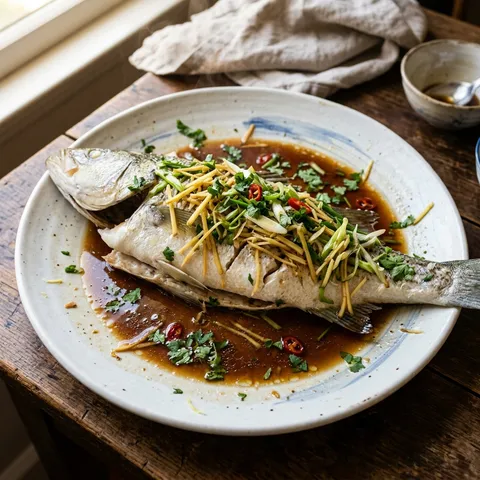 Chinese Lens Verified Images are for illustrative purposes only, may be inaccurate, and do not guarantee the presence or absence of specific ingredients.
 Steamed Fish with Soy and Ginger
A traditional banquet dish featuring delicately steamed whole fish with hot oil poured over aromatics.
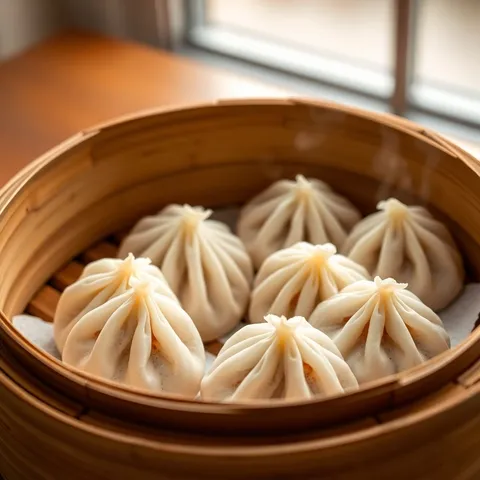 Chinese Lens Verified Images are for illustrative purposes only, may be inaccurate, and do not guarantee the presence or absence of specific ingredients.
 Xiao Long Bao (Soup Dumplings)
Delicate steamed buns filled with pork and a rich, savory soup.
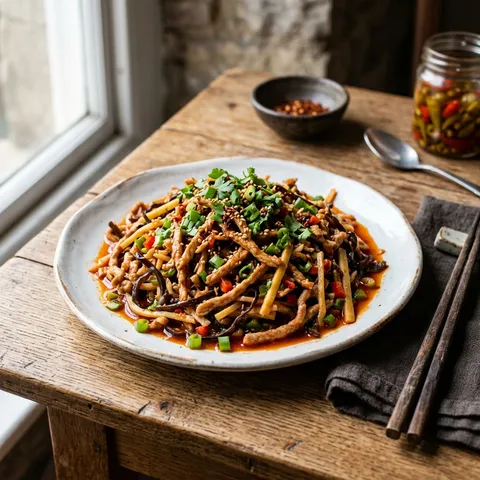 Chinese Lens Verified Images are for illustrative purposes only, may be inaccurate, and do not guarantee the presence or absence of specific ingredients.
 Yuxiang Rou Si (Fish-Fragrant Pork Shreds)
A classic Sichuan dish that uses "fish-fragrant" seasoning (sweet, sour, and spicy) on pork shreds, containing no actual fish.