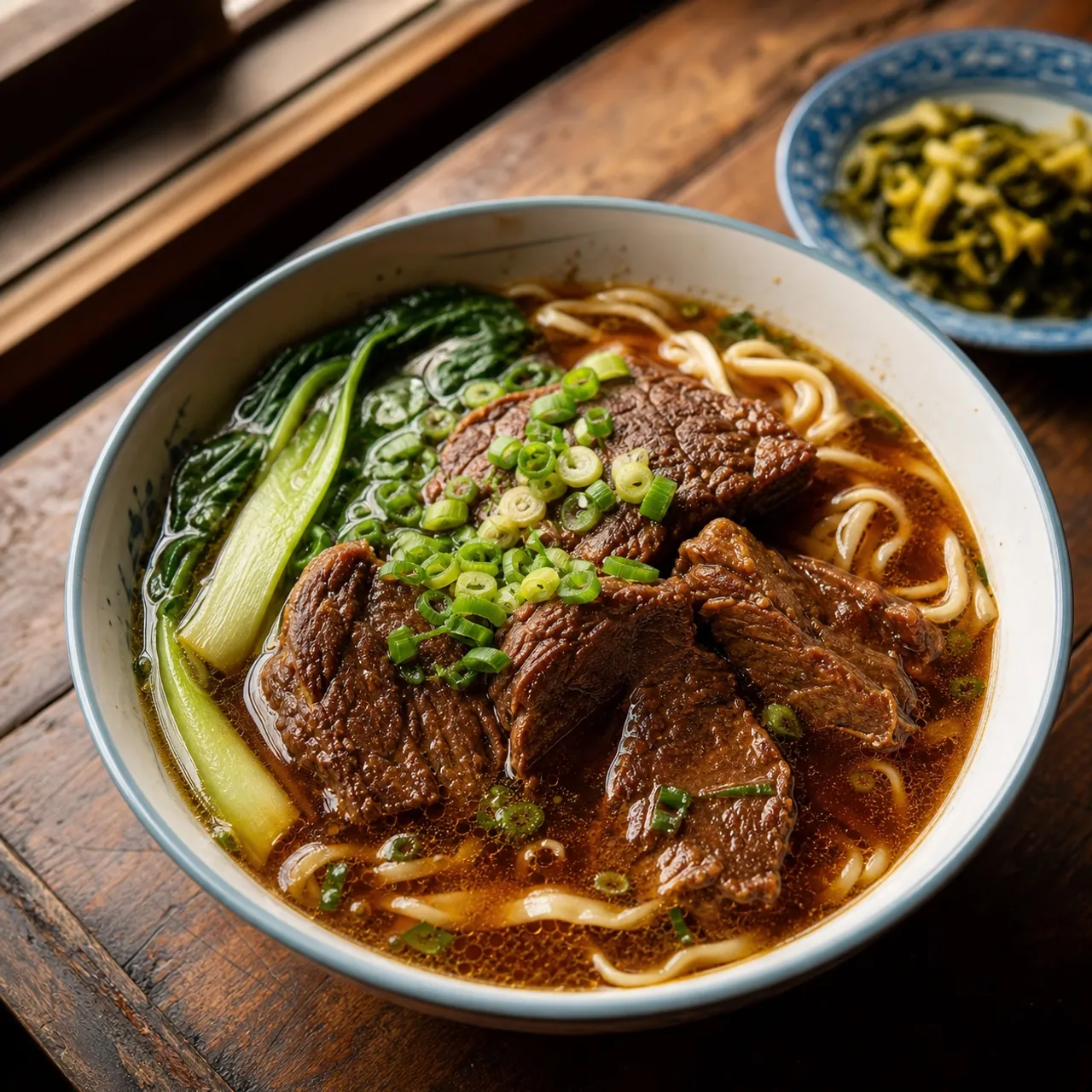
 Chinese Images are for illustrative purposes only, may be inaccurate, and do not guarantee the presence or absence of specific ingredients.
 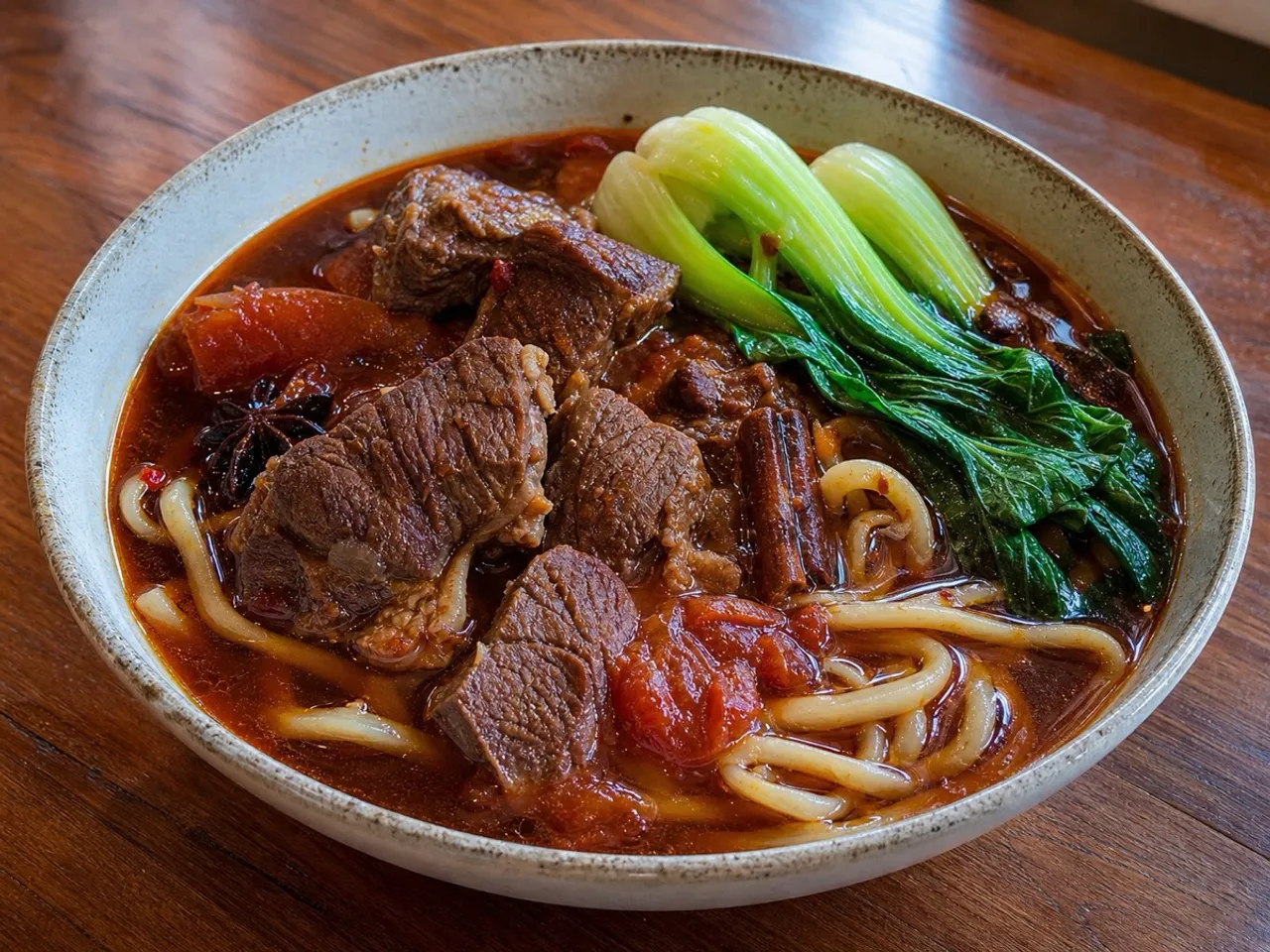 Serving Images are for illustrative purposes only, may be inaccurate, and do not guarantee the presence or absence of specific ingredients.
 Taiwanese Beef Noodle Soup
A rich, deeply spiced braised beef broth with tender shank and chewy wheat noodles.
Contains common allergens
In the app, Listahan checks these against your household automatically.
Instructions
6 steps- 1
Blanch the beef chunks in boiling water for 3 minutes to release scum, then drain and rinse the pieces clean.
- 2
Heat a heavy pot over medium, add a splash of oil, and fry the ginger and doubanjiang for 1 minute until the oil reddens, then add the tomatoes and cook 3 minutes until softened.
- 3
Return the beef to the pot with the star anise, cinnamon, soy sauce, and enough water to cover by 2 inches, then bring to a boil.
- 4
Lower the heat to a gentle simmer, cover, and braise for 1 1/2 to 2 hours until the beef is fork-tender and the broth is rich and aromatic.
- 5
Near the end, cook the wheat noodles in a separate pot of boiling water for 3 to 4 minutes until chewy, then blanch the bok choy for 1 minute and drain both.
- 6
Divide the noodles among deep bowls, ladle over the beef and broth, top with bok choy, and serve piping hot.
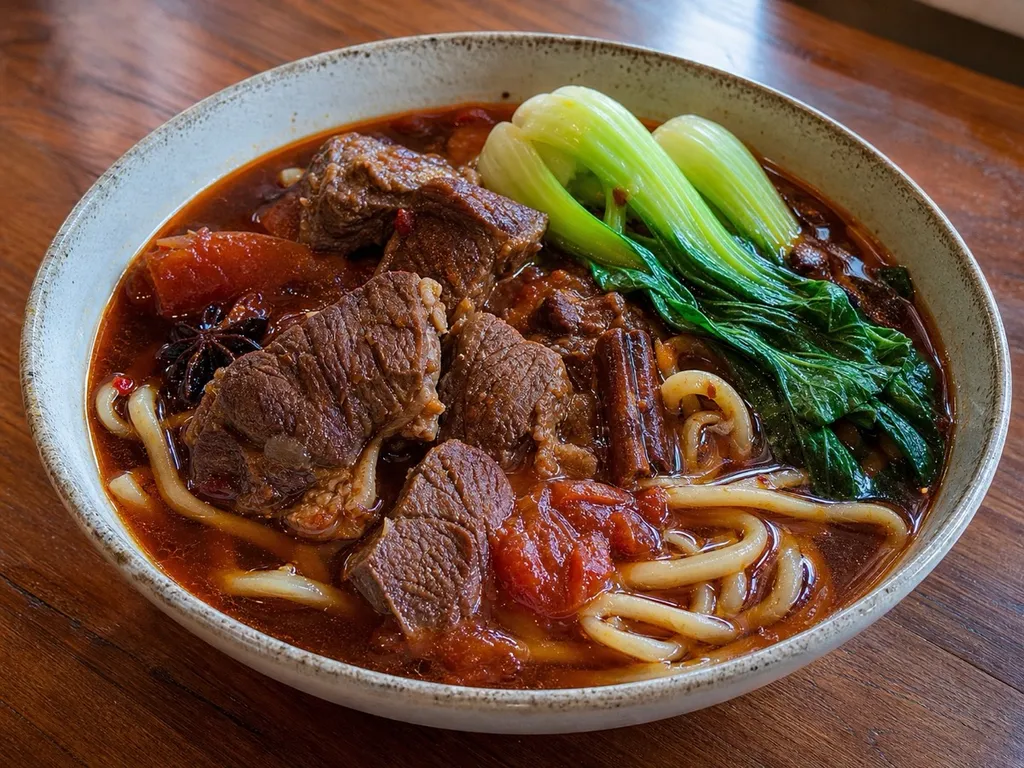 Images are for illustrative purposes only, may be inaccurate, and do not guarantee the presence or absence of specific ingredients.
 Listahan Family Score™
63/100
Works for many families
Score reflects how well this recipe fits a typical busy household. In the app, your Family Score is personalized to your household's allergens, kids, and pantry.
Nutrition
per serving825
Calories
61 g
Protein
75 g
Carbs
29 g
Fat
Estimated per serving. Actual values depend on the brands and portions you use.
Listahan cooking guide
Chef notes & practical guide
Technique notes, ingredient swaps, serve-alongside ideas, storage guidance, and equipment for this recipe.
Cultural context
Taiwanese beef noodle soup took shape through military-village cooking after the mid-20th century, when mainland Chinese braising traditions met Taiwanese markets and noodle-shop culture. The red-braised style often leans on doubanjiang, soy sauce, tomatoes, and warm spices for a broth that is savory, gently spicy, and built for chewy wheat noodles.
Listahan note
This version keeps the bowl focused: tender beef shank, a broth reddened by doubanjiang and tomato, and noodles cooked separately so they stay springy. The long simmer does the heavy lifting, but the early frying step is what makes the broth taste layered instead of flat.
Technique cues
- Blanching the beef first gives the broth a cleaner finish, especially with shank, which can release foam and small bone or sinew particles at the start.
- Fry the doubanjiang with ginger before adding water. That brief contact with hot oil wakes up the paste and carries its color through the broth.
- Cook the noodles in a separate pot, not in the braise. Starch from the noodles can cloud the broth and make leftovers turn thick quickly.
Kitchen flow
- Parallel prep
- Start heating the noodle water when the beef is nearly tender, then blanch the bok choy in the same pot after the noodles come out.
- Make-ahead
- Braise the beef and broth ahead, chill them separately from noodles, and cook fresh noodles right before serving.
- Leftover move
- Turn extra beef and broth into a quick noodle lunch with fresh greens, or spoon the beef over rice with a little reduced broth.
- Cleanup rhythm
- Rinse the blanching pot while the bowls are being assembled, then soak the braising pot after serving so the tomato and bean paste residue loosens.
Ingredient brief
Role, handling, and swap guidance for each key ingredient.
Beef shank
Main braising cut
Purpose: Shank has connective tissue that turns supple during a long simmer and gives the broth more body than lean stew meat.
Handling: Cut into even 2-inch chunks so the pieces tenderize at the same pace.
Adaptation: Beef chuck can work if shank is hard to find, though the broth will be less gelatinous and the pieces may feel softer.
Doubanjiang (spicy fermented bean paste)
Fermented chile base
Purpose: It brings salt, heat, bean savoriness, and the reddish color associated with red-braised beef noodle soup.
Handling: Fry it briefly in oil with the ginger until the oil stains red, but keep the heat moderate so the paste does not scorch.
Adaptation: Use a smaller amount for a milder broth, or add a spoonful of plain fermented bean paste if you want more depth without as much chile.
Roma tomatoes
Broth softener
Purpose: Tomatoes add acidity and sweetness that round out the beef and fermented bean paste.
Handling: Cook them until they slump before adding the beef back to the pot so they dissolve more easily into the broth.
Adaptation: Canned whole tomatoes can stand in; crush them by hand and add a little less water at first.
Fresh ginger
Aromatic sharpness
Purpose: Ginger cuts through the richness of the shank and keeps the broth from tasting heavy.
Handling: Slice it thick enough that it perfumes the pot without breaking into tiny pieces.
Adaptation: A small amount of ginger paste works in a pinch, but add it after the doubanjiang starts frying so it does not stick and burn.
Star anise pods and cinnamon stick
Warm braising spices
Purpose: They give the broth its recognizable sweet-spiced background without needing a long list of seasonings.
Handling: Keep them whole so they are easy to remove and do not make the broth gritty.
Adaptation: Use only one star anise pod for a quieter spice note, especially if your pods are very fresh.
Fresh wheat noodles
Bowl base
Purpose: Chewy wheat noodles hold up to the rich broth and make the soup feel substantial.
Handling: Boil just until springy, then drain well before placing them in bowls.
Adaptation: Dried wheat noodles work too; cook them separately and rinse briefly if they seem extra starchy.
Technique notes
- Keep the simmer gentle after the first boil. A hard boil can toughen the outside of the beef before the connective tissue has time to soften.
- Taste the broth near the end before adding more soy sauce. Doubanjiang varies a lot in saltiness, and reduction concentrates it.
- Do not overcook the bok choy. One minute keeps the stems crisp enough to contrast with the soft beef and noodles.
Ingredient swaps
- Milder bowl
- Use less doubanjiang and add a little more tomato for a rounder, less spicy broth.
- Weeknight shortcut
- Braise the beef the day before, then reheat the broth while you cook noodles and bok choy for a faster dinner.
- Noodle backup
- Use dried wheat noodles if fresh are unavailable; cook them separately and keep them slightly firm so they do not collapse in the hot broth.
- Greens variation
- Swap baby bok choy for yu choy or napa cabbage, adjusting the blanching time so the greens stay bright and tender.
Serve alongside
- Scallion pancakes
- Smashed cucumber salad
- Soy-braised eggs
- Taiwanese pickled mustard greens
- Cold barley tea
- Unsweetened iced oolong tea
- Taiwan beer
Serving suggestions only — check pairings for your household's allergens.
Storage & reheating
- Refrigerate the beef and broth in a sealed container, keeping cooked noodles separate so they do not absorb the soup.
- Reheat the broth and beef gently on the stovetop, then add freshly cooked or briefly warmed noodles to the bowl.
- Freeze the beef and broth without noodles or bok choy, then thaw in the refrigerator and simmer until the broth tastes full again.
Equipment
- Heavy Dutch oven or stockpot
- Fine-mesh skimmer
- Separate noodle pot
- Deep serving bowls
Make this household-aware
Listahan Pro checks this recipe against your household's allergens, finds pantry-aware swaps, builds the shopping list, and helps you plan the week around it.
Plan it in Listahan
Add Taiwanese Beef Noodle Soup to your week, check it against your household's allergens, and build the shopping list automatically.
More Chinese recipes
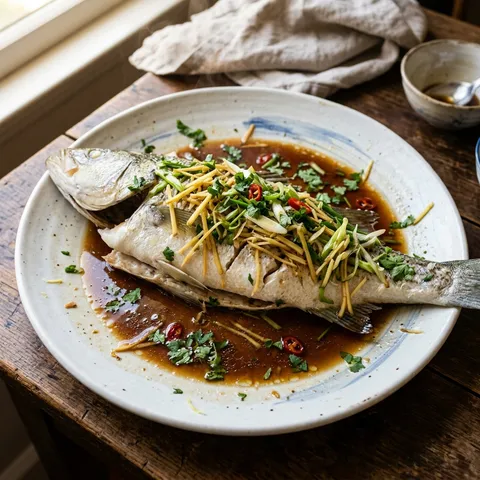 Chinese Lens Verified Images are for illustrative purposes only, may be inaccurate, and do not guarantee the presence or absence of specific ingredients.
 Steamed Fish with Soy and Ginger
A traditional banquet dish featuring delicately steamed whole fish with hot oil poured over aromatics.
 Chinese Lens Verified Images are for illustrative purposes only, may be inaccurate, and do not guarantee the presence or absence of specific ingredients.
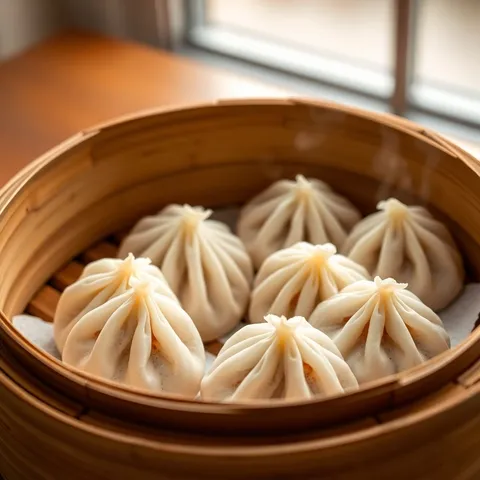
 Xiao Long Bao (Soup Dumplings)
Delicate steamed buns filled with pork and a rich, savory soup.
 Chinese Lens Verified Images are for illustrative purposes only, may be inaccurate, and do not guarantee the presence or absence of specific ingredients.
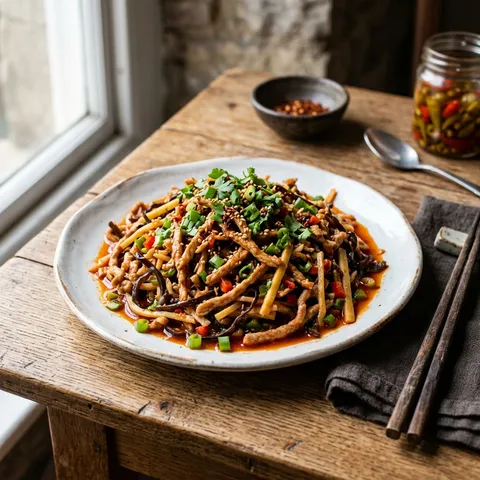
 Yuxiang Rou Si (Fish-Fragrant Pork Shreds)
A classic Sichuan dish that uses "fish-fragrant" seasoning (sweet, sour, and spicy) on pork shreds, containing no actual fish.