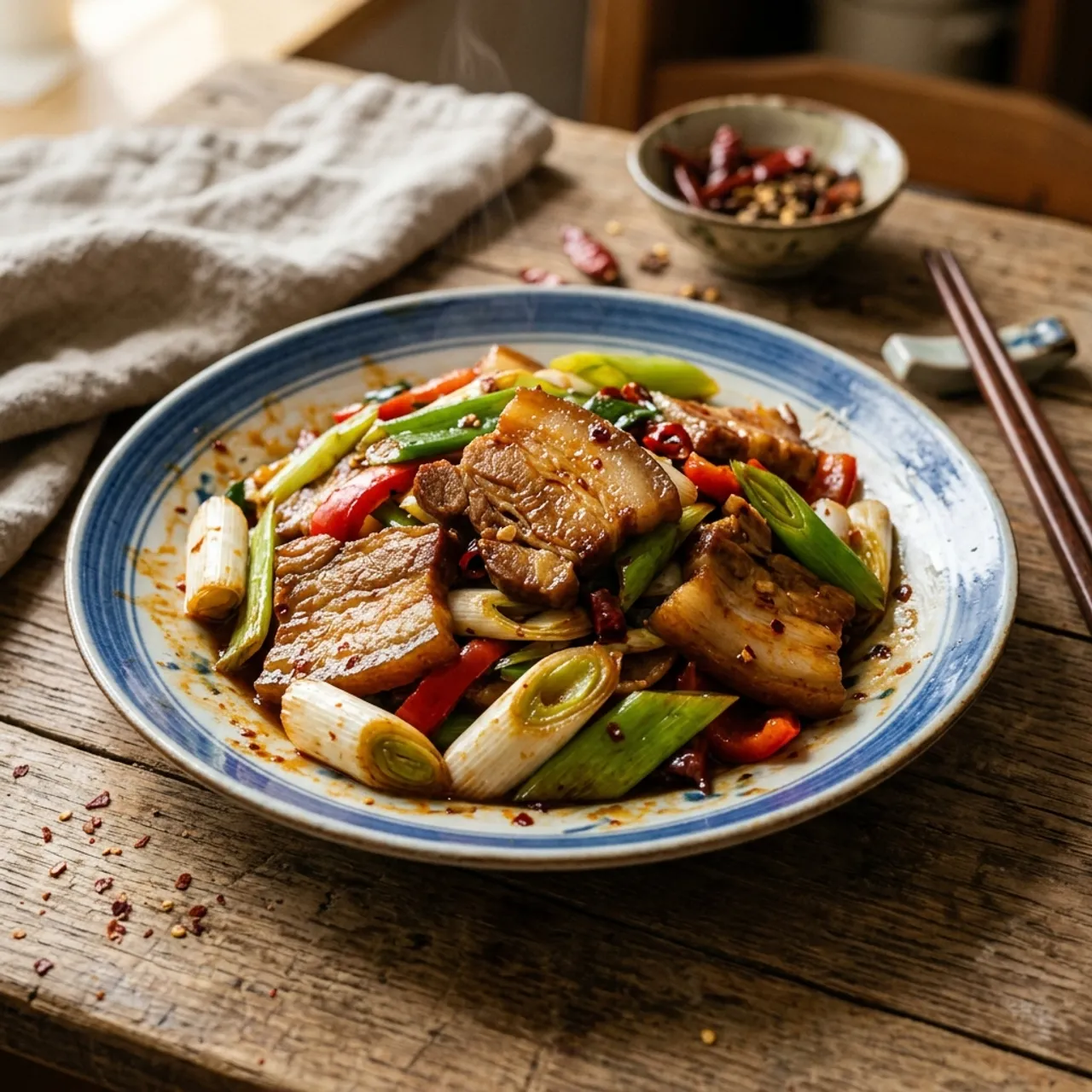
 Chinese Images are for illustrative purposes only, may be inaccurate, and do not guarantee the presence or absence of specific ingredients.
 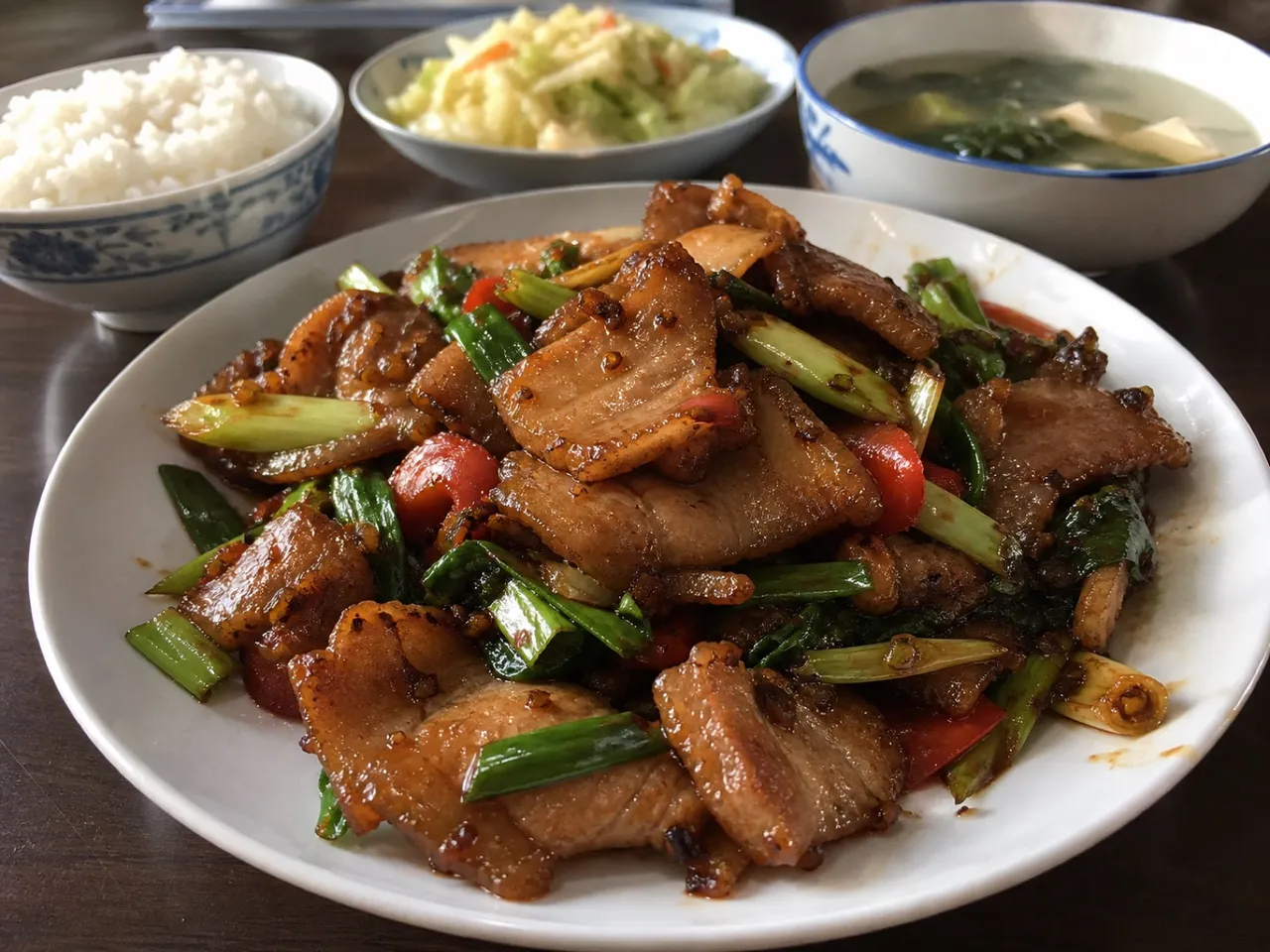 Serving Images are for illustrative purposes only, may be inaccurate, and do not guarantee the presence or absence of specific ingredients.
 Twice Cooked Pork
Slices of pork belly first boiled and then stir-fried with aromatics.
Contains common allergens
In the app, Listahan checks these against your household automatically.
Instructions
6 steps- 1
First Cook (Simmer): Bring a pot of water to a boil with the ginger slices and Shaoxing wine. Add the whole slab of pork belly, cover, and simmer over medium-low heat for 30-40 minutes until a chopstick can easily pierce the meat.
- 2
Cool and Slice: Remove the pork belly and let it cool completely (or refrigerate for 30 minutes to firm it up). Once cool, slice it as thinly as possible, ideally 1/8-inch thick pieces, keeping the fat, skin, and meat layers intact on each slice.
- 3
Render the Fat: Heat a wok over medium heat with 1 tbsp oil. Add the pork belly slices in a single layer. Fry slowly until the slices begin to curl up at the edges and turn golden brown, releasing some of their fat.
- 4
Aromatize the Pastes: Push the pork to the side of the wok. In the rendered fat, add the doubanjiang and tianmianjiang. Fry the pastes for 30-60 seconds until the oil turns bright red and incredibly fragrant.
- 5
Combine: Toss the pork slices back into the center, coating them completely in the rich red sauce.
- 6
Add the Veggies: Toss in the diagonally sliced leeks and red bell pepper. Stir-fry over high heat for 1-2 minutes until the leeks are just tender but still vibrant. Serve immediately with steamed rice.
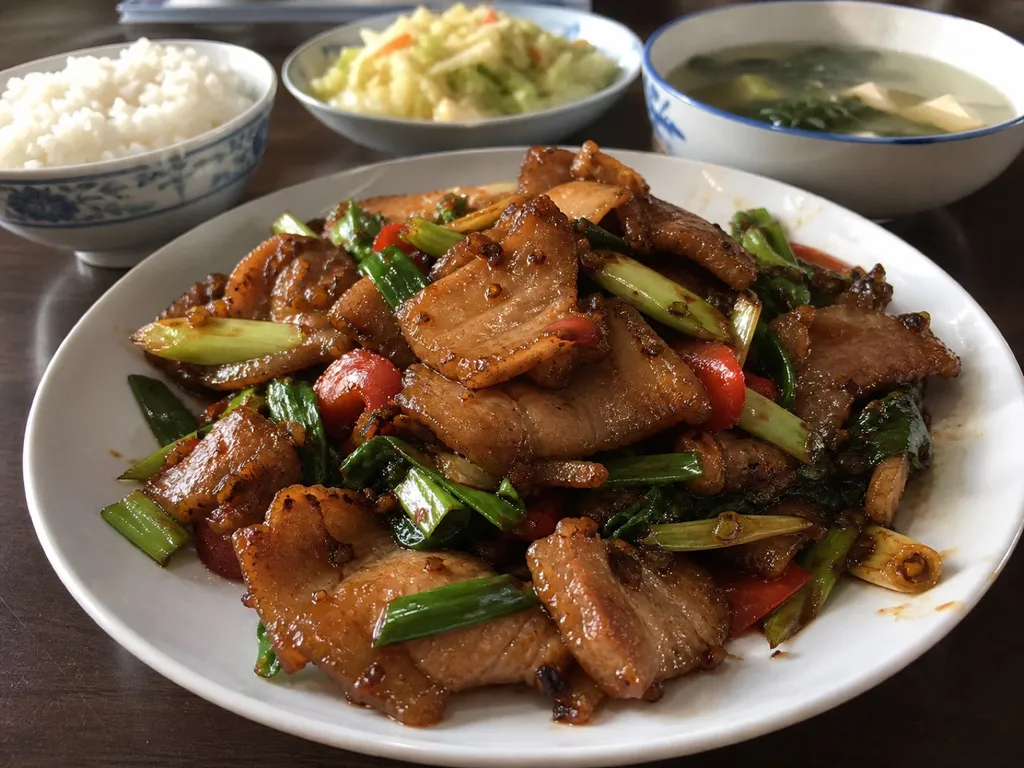 Images are for illustrative purposes only, may be inaccurate, and do not guarantee the presence or absence of specific ingredients.
 Listahan Family Score™
61/100
Works for many families
Score reflects how well this recipe fits a typical busy household. In the app, your Family Score is personalized to your household's allergens, kids, and pantry.
Nutrition
per serving455
Calories
42 g
Protein
10 g
Carbs
26 g
Fat
Estimated per serving. Actual values depend on the brands and portions you use.
Listahan cooking guide
Chef notes & practical guide
Technique notes, ingredient swaps, serve-alongside ideas, storage guidance, and equipment for this recipe.
Cultural context
Twice Cooked Pork (hui guo rou) is a signature dish of Sichuan cuisine with origins in the practice of finishing leftover boiled pork from New Year celebrations -- the second cooking in a hot wok with chili bean paste gave the already-cooked meat new life and bold flavor. The method of poaching a large piece of pork belly first and then stir-frying thin slices is counterintuitive but transforms the texture: the initial boil renders excess fat and makes slicing easy, while the hot wok then chars the surface and develops the caramelized edges that define the dish.
Listahan note
This version chills the poached pork belly in the refrigerator before slicing so the fat firms up and the cuts are clean and uniform, which is the difference between rustic and restaurant-quality presentation.
Technique cues
- Boil the pork belly in aromatics until barely cooked through (about 70 percent done internally) rather than fully tender -- the wok finish will complete the cooking and a fully soft belly falls apart when sliced.
- Slice the chilled pork belly as thin as possible (about 3mm) on the bias so each piece has an equal ribbon of fat and lean meat that curls and blisters in the hot wok.
- The leek or baby leek is added in two stages: the white base goes in with the pork to soften, the green tops go in last off heat so they stay bright and add a fresh aromatic finish.
Kitchen flow
- Parallel prep
- The pork belly must be poached and chilled first (1 to 2 hours or overnight), so this dish naturally divides into two sessions -- plan accordingly.
- Make-ahead
- Poached and chilled whole pork belly keeps refrigerated for up to 3 days before slicing and finishing; this is actually the recommended approach for the best slice quality.
- Leftover move
- Chop leftover twice-cooked pork roughly and toss with cooked rice noodles and a drizzle of chili oil for a fast next-day noodle bowl.
- Cleanup rhythm
- Soak the wok in hot water immediately after cooking -- the sweet bean paste and doubanjiang residue softens and releases within 2 minutes of soaking.
Ingredient brief
Role, handling, and swap guidance for each key ingredient.
pork belly
primary protein
Purpose: The alternating layers of fat and lean in pork belly provide both richness and texture contrast -- pure lean pork dries out, pure fat is too rich.
Handling: Poach whole in water with ginger, scallion, and Shaoxing wine; cool and refrigerate before slicing.
Adaptation: Pork shoulder is leaner and can substitute; the ratio of fat to lean will be less dramatic but the dish remains satisfying.
doubanjiang
spicy-fermented sauce backbone
Purpose: Doubanjiang provides the red color, chili heat, and fermented depth that make twice-cooked pork distinctly Sichuan rather than a generic stir-fry.
Handling: Fry in the wok oil until the oil turns red before adding any other ingredients -- this step is non-negotiable for color and depth.
Adaptation: Korean gochujang gives a similar fermented chili character but a sweeter, less complex result.
sweet bean paste (tian mian jiang)
savory-sweet balance
Purpose: Sweet bean paste adds a mollifying sweetness that keeps the doubanjiang's heat from dominating the dish.
Handling: Add after the doubanjiang has fried red, stirring constantly to prevent burning.
Adaptation: Hoisin sauce at half the quantity approximates the sweet-savory balance if sweet bean paste is unavailable.
baby leeks
vegetable counterpoint
Purpose: The mild onion sweetness and slight bitterness of leek balances the richness of the pork and the intensity of the sauce.
Handling: Separate white and green portions; cut the white on the bias into 2-inch sections and the green into thin diagonal slices.
Adaptation: Scallions in larger quantities, or a combination of scallion whites and green bell pepper, are the most common substitutes.
Technique notes
- The pork slices should cup and blister at the edges in the hot wok rather than lying flat -- if they lie flat, the wok is not hot enough and the fat is steaming rather than rendering.
- Drain the rendered fat from the wok before adding the aromatics if the belly is particularly fatty; excess oil will make the sauce greasy rather than glossy.
- Taste for balance before plating -- the dish should be salty, savory, and slightly sweet with lingering heat; a pinch of sugar corrects if the doubanjiang dominates.
Ingredient swaps
- Lower-fat direction
- Use pork shoulder instead of belly; lean slices of shoulder still blister well in the wok and absorb the sauce without the same fat content.
- Gluten-free direction
- Replace sweet bean paste with a mixture of hoisin and water (check the brand for gluten), and use tamari instead of any soy sauce; confirm doubanjiang is wheat-free.
Serve alongside
- steamed jasmine rice
- blanched spinach with garlic
- simple cucumber and vinegar salad
- Tsingtao beer
- warm Shaoxing rice wine
Serving suggestions only — check pairings for your household's allergens.
Storage & reheating
- Refrigerate for up to 3 days; the flavor improves overnight as the sauce penetrates the pork further. Reheat in a hot wok or skillet with a splash of water to loosen the sauce.
- Freeze for up to 1 month; the pork texture holds better than most stir-fries because the belly fat prevents the protein from drying during freezing.
Equipment
- carbon steel wok
- large pot for initial poaching
- sharp slicing knife
- wok spatula
Make this household-aware
Listahan Pro checks this recipe against your household's allergens, finds pantry-aware swaps, builds the shopping list, and helps you plan the week around it.
Plan it in Listahan
Add Twice Cooked Pork to your week, check it against your household's allergens, and build the shopping list automatically.
More Chinese recipes
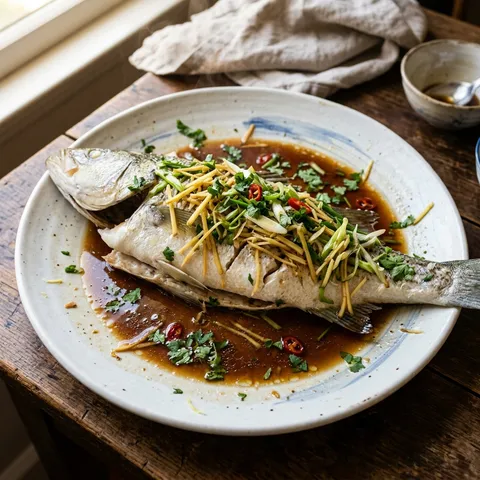 Chinese Lens Verified Images are for illustrative purposes only, may be inaccurate, and do not guarantee the presence or absence of specific ingredients.
 Steamed Fish with Soy and Ginger
A traditional banquet dish featuring delicately steamed whole fish with hot oil poured over aromatics.
 Chinese Lens Verified Images are for illustrative purposes only, may be inaccurate, and do not guarantee the presence or absence of specific ingredients.
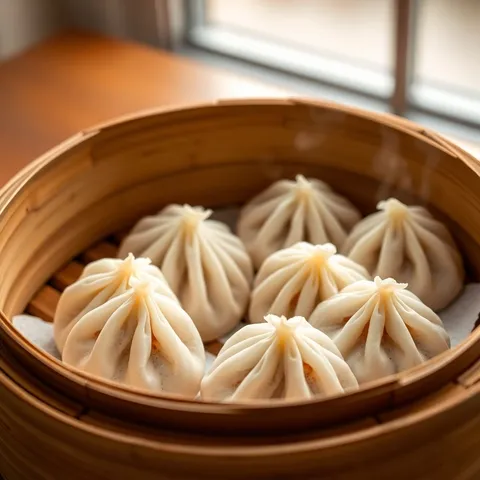
 Xiao Long Bao (Soup Dumplings)
Delicate steamed buns filled with pork and a rich, savory soup.
 Chinese Lens Verified Images are for illustrative purposes only, may be inaccurate, and do not guarantee the presence or absence of specific ingredients.
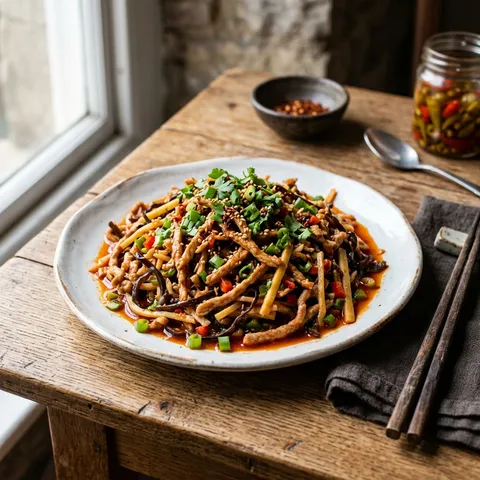
 Yuxiang Rou Si (Fish-Fragrant Pork Shreds)
A classic Sichuan dish that uses "fish-fragrant" seasoning (sweet, sour, and spicy) on pork shreds, containing no actual fish.