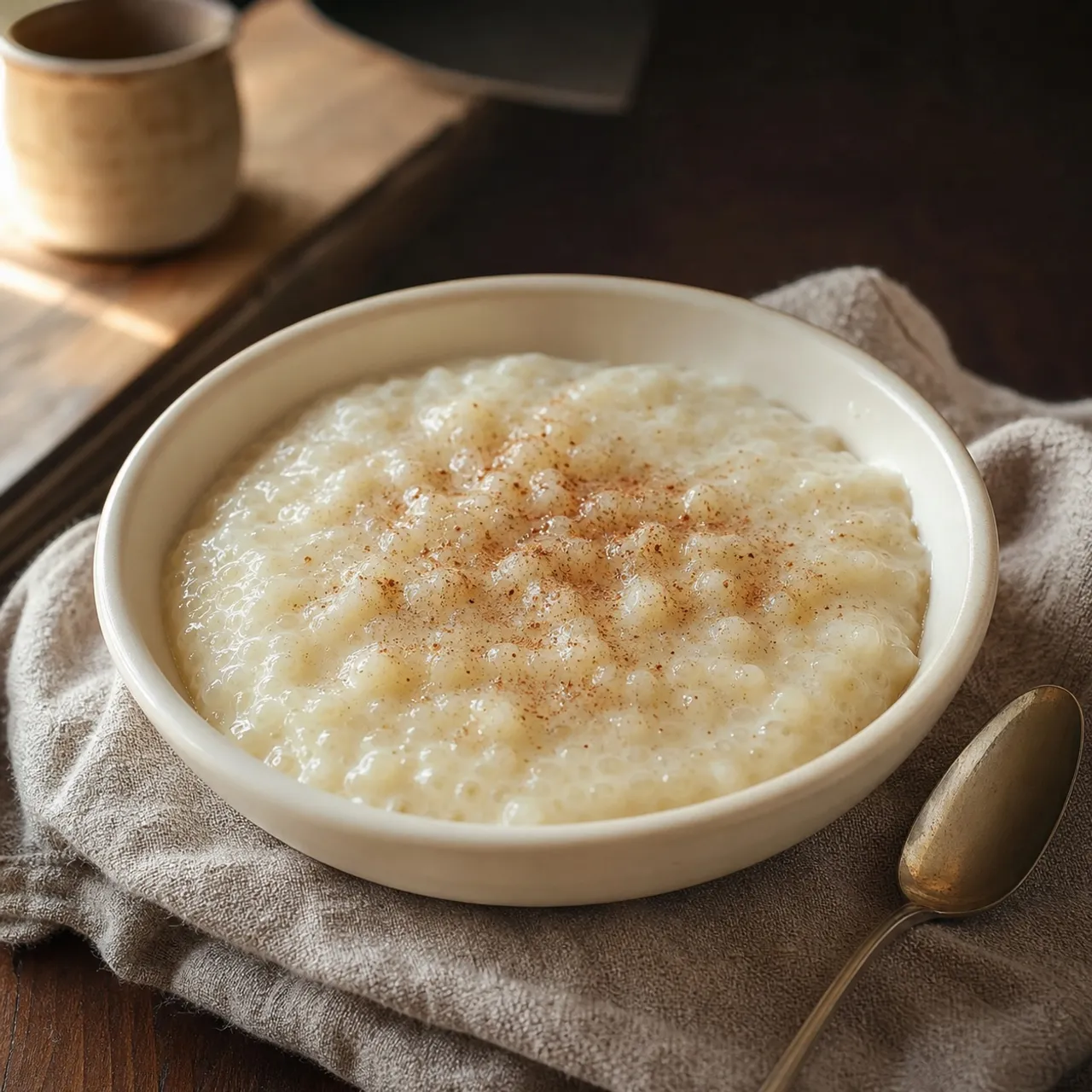
 Desserts Images are for illustrative purposes only, may be inaccurate, and do not guarantee the presence or absence of specific ingredients.
 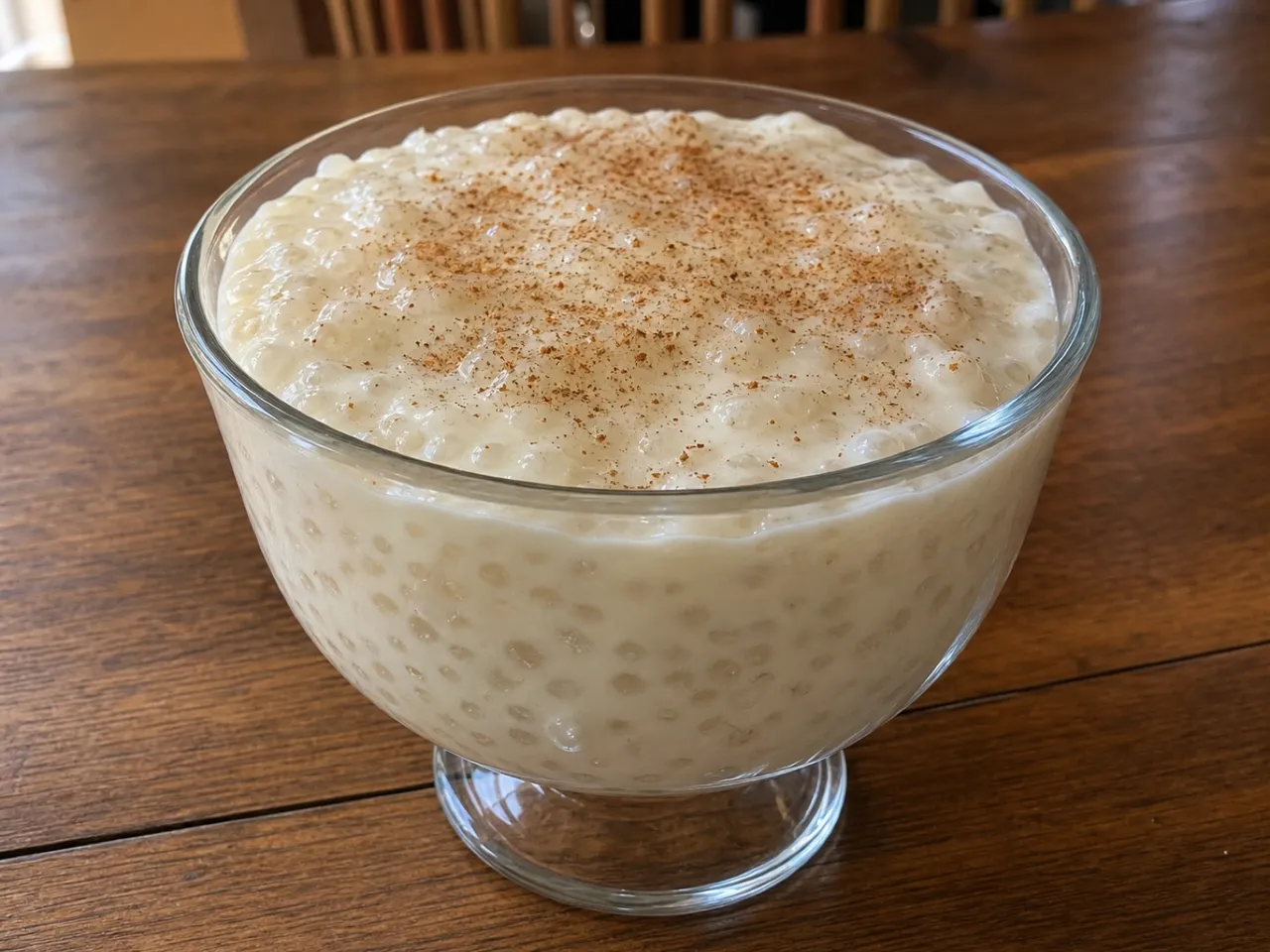 Serving Images are for illustrative purposes only, may be inaccurate, and do not guarantee the presence or absence of specific ingredients.
 Tapioca Cream
A classic old-fashioned creamy tapioca pudding, lightened with fluffy folded-in egg white.
Contains common allergens
In the app, Listahan checks these against your household automatically.
Good to know
- One-pot
- Ready in under 30 minutes
Matched from this dish's own ingredients and timing. Browse more: one-pot dinners30-minute meals
Instructions
6 steps- 1
In a clean bowl, beat the egg white with a hand mixer on medium-high speed until stiff peaks form, about 2-3 minutes, then set aside.
- 2
In the top of a double boiler set over simmering water, stir the minute tapioca into the milk. Cook, stirring frequently, until the tapioca turns transparent and the mixture begins to thicken, about 8-10 minutes.
- 3
Stir half of the sugar and the salt into the hot milk mixture. In a separate small bowl, lightly beat the egg yolk with the remaining sugar.
- 4
Slowly pour about half of the hot milk mixture into the egg yolk while whisking constantly to temper the yolk, then return everything to the double boiler.
- 5
Cook over simmering water, stirring constantly, until the mixture is thick enough to coat the back of a spoon, about 3-5 minutes. Remove from the heat and stir in the vanilla.
- 6
Gently fold the stiffly beaten egg white into the warm pudding until just combined. Spoon into serving dishes and chill thoroughly, at least 1 hour, before serving very cold.
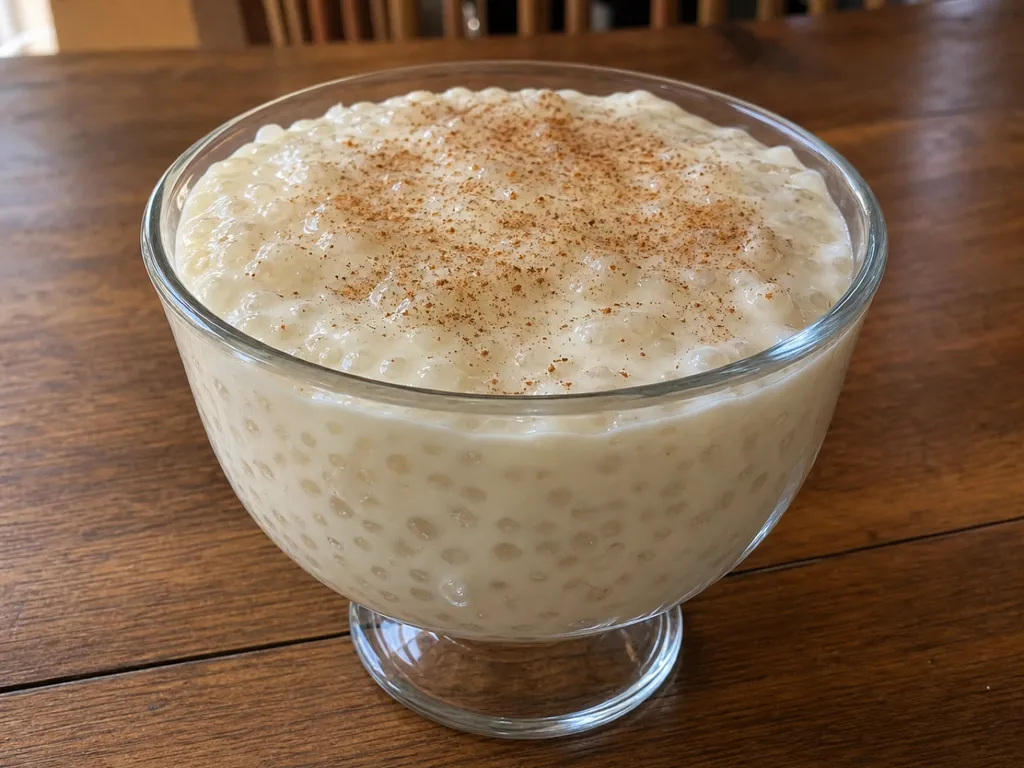 Images are for illustrative purposes only, may be inaccurate, and do not guarantee the presence or absence of specific ingredients.
 Listahan Family Score™
81/100
Good fit for most families
Score reflects how well this recipe fits a typical busy household. In the app, your Family Score is personalized to your household's allergens, kids, and pantry.
Nutrition
per serving160
Calories
6 g
Protein
23 g
Carbs
5 g
Fat
Estimated per serving. Actual values depend on the brands and portions you use.
Listahan cooking guide
Chef notes & practical guide
Technique notes, ingredient swaps, serve-alongside ideas, storage guidance, and equipment for this recipe.
Cultural context
Tapioca pudding became a fixture of American home cooking in the late 19th century after the Minute Tapioca Company, founded in 1894 in Orange, Massachusetts, began selling pre-processed quick-cooking tapioca that eliminated the overnight soaking required by traditional pearl tapioca. The starch itself comes from cassava root, which was cultivated throughout South America and the Caribbean for millennia before Portuguese traders spread its cultivation to Africa and Asia. The creamy, egg-thickened American pudding style was codified in domestic science cookbooks of the early 1900s and remained a diner and school-cafeteria staple well into the 1970s.
Listahan note
This version uses a separated egg technique -- the yolk thickens the pudding during cooking, while the whipped white is folded in at the end -- producing a lighter, airier texture than simpler whole-egg versions.
Technique cues
- Tempering the egg yolk before adding it to the hot milk is critical: add a few spoonfuls of the hot tapioca mixture to the beaten yolk while whisking constantly, then stream the warmed yolk back into the pot; adding a cold yolk directly to hot milk produces scrambled-egg streaks.
- Quick-cooking tapioca (minute tapioca) must be stirred constantly while the mixture heats; the starch granules swell rapidly and will stick and scorch on the bottom of the pan the moment stirring stops.
- Beat the egg white to soft-peak (not stiff-peak) before folding it into the warm pudding; stiff peaks deflate unevenly and create a separated, weeping pudding rather than a smooth, cohesive cream.
Kitchen flow
- Parallel prep
- While the tapioca-milk mixture heats, separate the egg and have both the yolk (in a small bowl) and the white (in a clean mixing bowl) ready before the mixture needs attention.
- Make-ahead
- The pudding can be made up to 2 days in advance; press plastic wrap directly onto the surface before refrigerating to prevent a skin from forming.
- Leftover move
- Leftover tapioca cream is excellent layered in a parfait glass with fresh berries and a spoonful of jam for a quick assembled dessert.
- Cleanup rhythm
- Rinse the saucepan immediately with cold water (not hot) to prevent the set starch from bonding to the pan; tapioca starch releases easily from a cool-rinsed pan.
Ingredient brief
Role, handling, and swap guidance for each key ingredient.
2 cups whole milk
base liquid and richness
Purpose: Whole milk provides the fat content needed for a rich, creamy set; lower-fat milks produce a thinner, less satisfying pudding.
Handling: No special prep; measure cold from the refrigerator.
Adaptation: Full-fat oat milk or full-fat coconut milk (from a can, stirred smooth) produces a dairy-free version with comparable richness.
1/4 cup minute (quick-cooking) tapioca
starch thickener
Purpose: Minute tapioca dissolves completely into the pudding as it heats, creating a slightly gelatinous, glossy set with the characteristic tiny tapioca beads.
Handling: Do not soak or rinse; add directly to the cold milk and stir before beginning to heat.
Adaptation: Traditional small pearl tapioca can be used but requires 30-60 minutes of soaking in cold water before cooking and a longer simmering time.
1 large egg (separated)
yolk for richness and set; white for lightness
Purpose: The egg yolk adds a custard-like richness and helps the pudding set; the beaten white folds in air that lightens the final texture.
Handling: Separate the egg carefully while cold; allow the white to come to room temperature before beating for maximum volume.
Adaptation: For an egg-free version, omit the separation technique and add an extra tablespoon of tapioca, accepting a slightly denser, less custardy result.
1/2 tsp pure vanilla extract
primary flavoring
Purpose: Vanilla is the dominant flavor note and determines whether the pudding tastes complex or flat; pure extract outperforms imitation significantly here.
Handling: Add off the heat after cooking is complete to preserve the volatile aromatic compounds.
Adaptation: Scrape half a vanilla bean into the milk at the start of cooking and remove before serving for a more intense, speckled version.
Technique notes
- Stir the milk and tapioca together and let them sit for 5 minutes before heating; this brief hydration head start ensures the tapioca granules cook evenly from the outside in.
- The pudding will look under-thickened at the end of stovetop cooking -- it thickens significantly as it cools; remove it from the heat as soon as it coats the back of a spoon.
- Serving the pudding warm (as opposed to chilled) gives a completely different eating experience -- the texture is lighter and more fluid; chill it for a denser, more traditional spoonable pudding.
Ingredient swaps
- Dairy-free direction
- Replace whole milk with full-fat coconut milk (one 13.5-ounce can plus enough water to reach 2 cups); the result is slightly sweeter and has a subtle coconut flavor.
- Lower-sugar option
- Reduce granulated sugar to 3 tablespoons and add a teaspoon of honey to the finished pudding off the heat; the honey's fructose reads sweeter at the same calorie level.
- Vegan direction
- Omit the egg entirely, use plant-based milk, and increase tapioca to 6 tablespoons; the pudding will be denser but still pleasantly thick and creamy.
Serve alongside
- fresh sliced strawberries with a pinch of sugar
- thin gingersnap cookies
- warm poached peaches with a cinnamon stick
- simple shortbread for dipping
- cold brew iced coffee
- hot jasmine tea
- warm whole milk with a pinch of nutmeg
Serving suggestions only — check pairings for your household's allergens.
Storage & reheating
- Cover the surface with plastic wrap pressed directly onto the pudding and refrigerate for up to 3 days.
- Stir gently before serving to recombine any liquid that has separated; do not reheat on the stove as the starch can break down and become gluey.
- Tapioca pudding does not freeze well -- the starch structure collapses upon thawing, producing a watery, grainy result.
Equipment
- medium heavy-bottomed saucepan
- hand mixer or whisk for the egg white
- rubber spatula for folding
- individual serving cups or a medium bowl for chilling
Make this household-aware
Listahan Pro checks this recipe against your household's allergens, finds pantry-aware swaps, builds the shopping list, and helps you plan the week around it.
Plan it in Listahan
Add Tapioca Cream to your week, check it against your household's allergens, and build the shopping list automatically.
More Desserts recipes
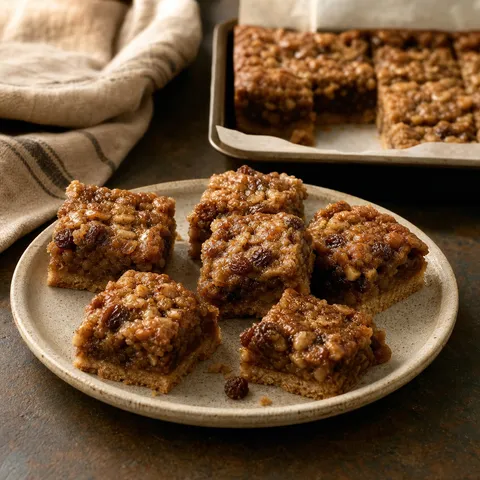 Desserts Lens Verified Images are for illustrative purposes only, may be inaccurate, and do not guarantee the presence or absence of specific ingredients.
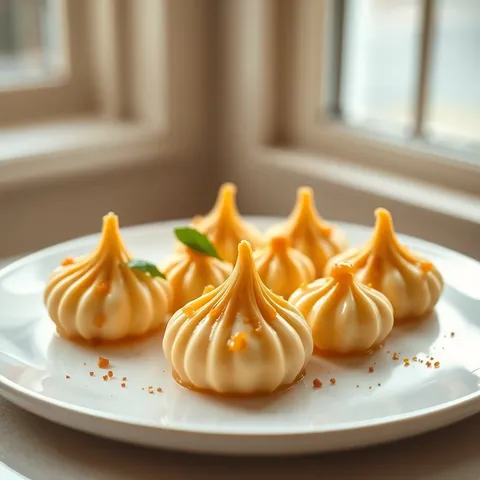
 Buttertart Squares
Chewy butter tart squares with a shortbread base and a gooey brown sugar, raisin, and walnut topping.
 Desserts Lens Verified Images are for illustrative purposes only, may be inaccurate, and do not guarantee the presence or absence of specific ingredients.
 Amber and Zach's Kisses
Light, crisp meringue kisses that melt in your mouth and make a pretty edible decoration.
 Desserts Lens Verified Images are for illustrative purposes only, may be inaccurate, and do not guarantee the presence or absence of specific ingredients.
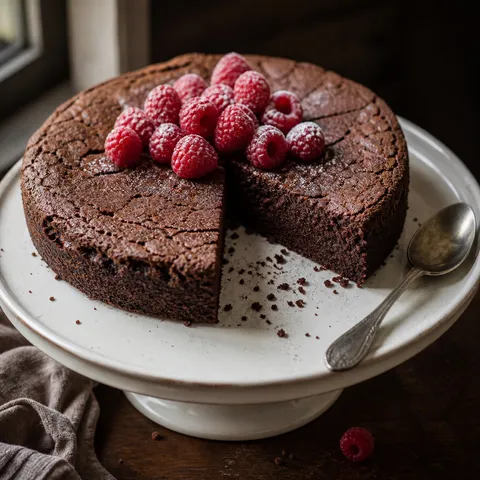
 Passover Flourless Chocolate Cake
A rich, dense flourless chocolate cake with no flour, matzo meal, or leavening — a naturally kosher-for-Passover dessert perfect for the seder table.