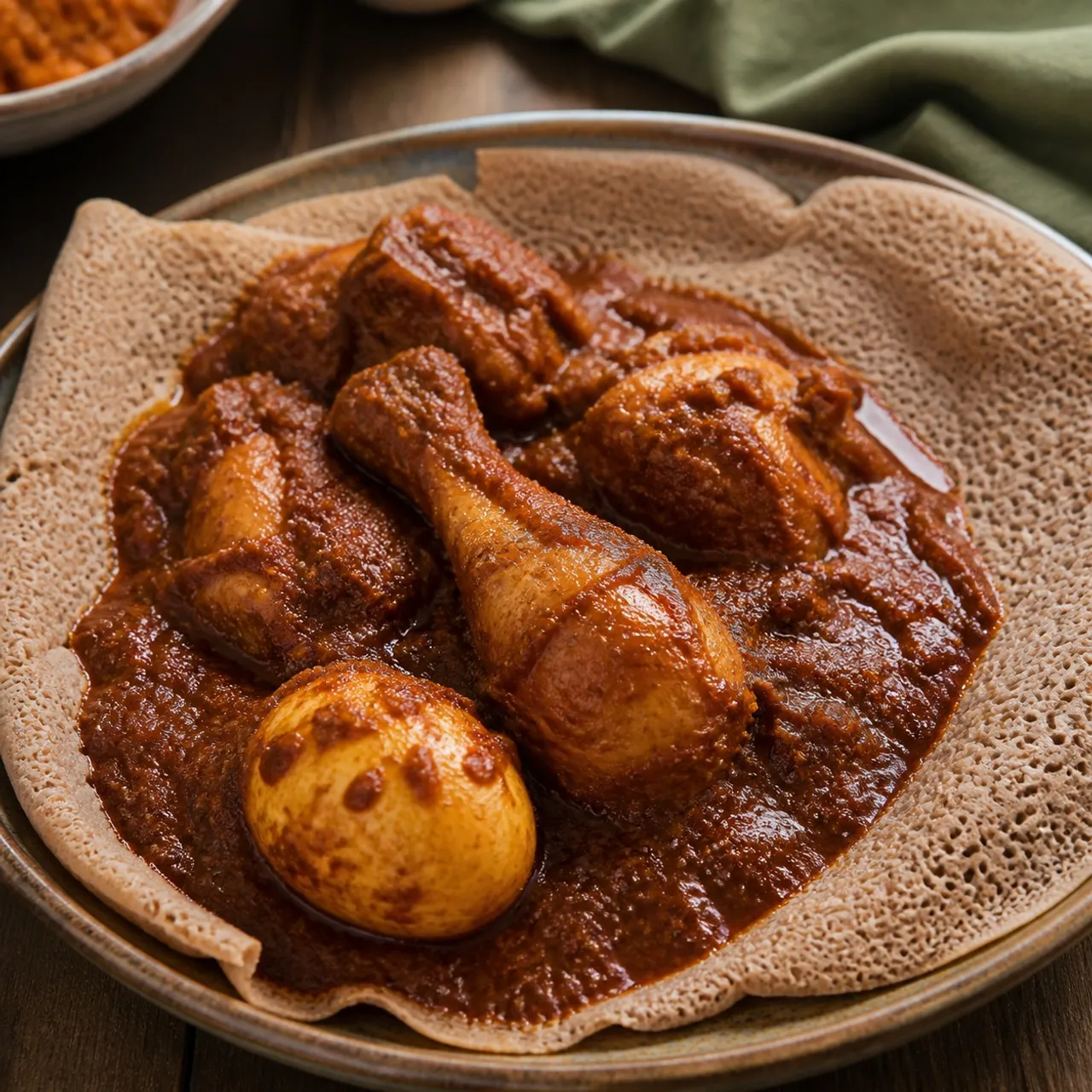
 East African Images are for illustrative purposes only, may be inaccurate, and do not guarantee the presence or absence of specific ingredients.
 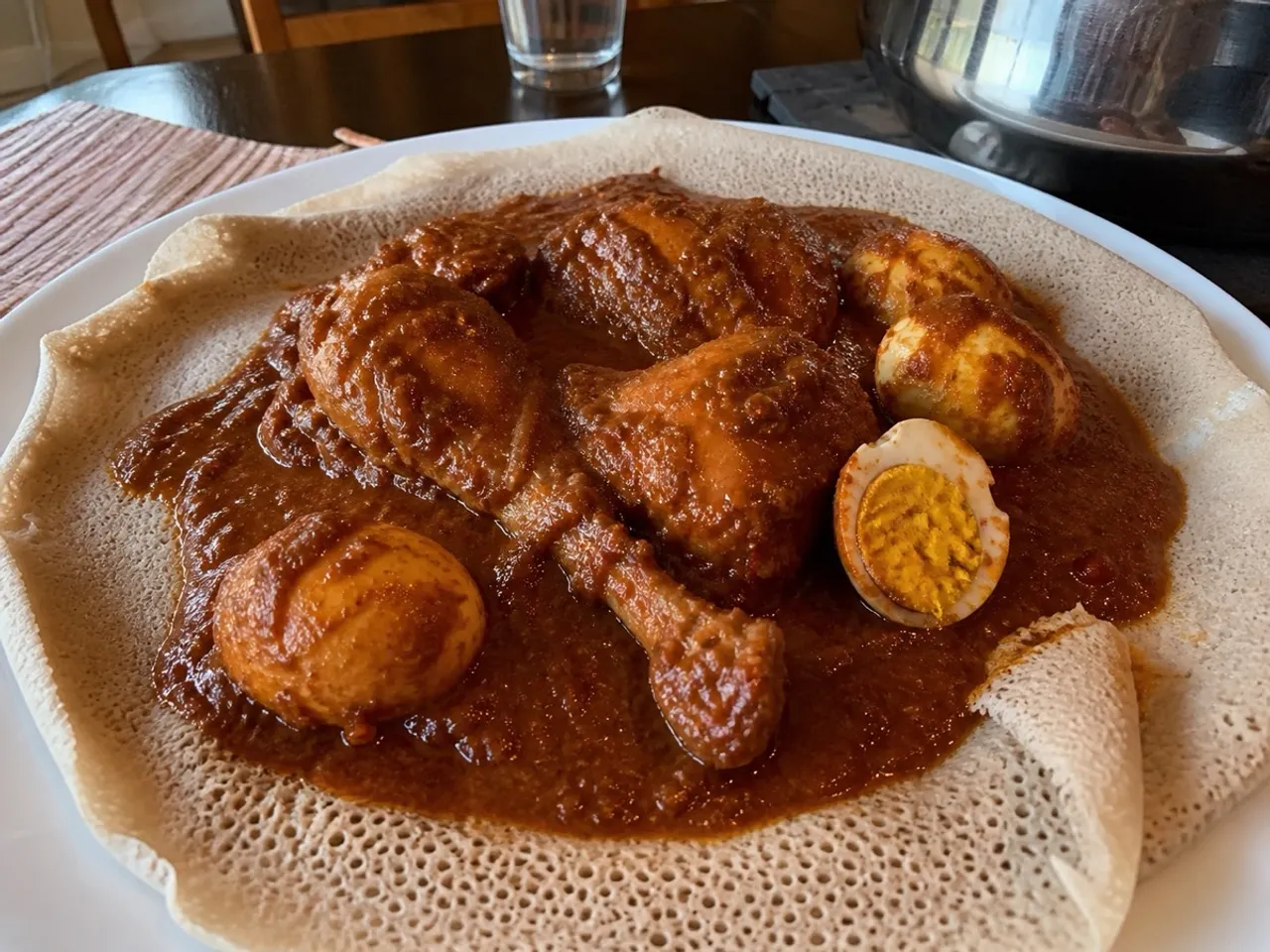 Serving Images are for illustrative purposes only, may be inaccurate, and do not guarantee the presence or absence of specific ingredients.
 Doro Wat
Ethiopia's queen of stews — fall-off-the-bone chicken slow-braised in a deep, fiery berbere and caramelized onion sauce with whole boiled eggs nestled inside.
Contains common allergens
In the app, Listahan checks these against your household automatically.
Good to know
- One-pot
Matched from this dish's own ingredients and timing. Browse more: one-pot dinners
Instructions
6 steps- 1
Place the finely minced onions in a large, dry Dutch oven over medium heat. Cook them without oil for 20-30 minutes, stirring frequently, until their moisture evaporates and they turn deep brown.
- 2
Add the niter kibbeh (spiced butter) to the onions and sauté for 5 minutes until fully incorporated.
- 3
Stir in the garlic, ginger, and berbere spice blend. Toast the spices for 2-3 minutes, then add 1/4 cup of water to prevent burning.
- 4
Add the chicken pieces to the pot, turning them to coat thoroughly in the thick, spicy onion paste.
- 5
Cover and simmer gently for 45-60 minutes, adding small splashes of water if necessary, until the chicken is tender and falling off the bone.
- 6
Gently slide the peeled, pierced hard-boiled eggs into the sauce. Simmer for a final 10 minutes to allow the eggs to absorb the flavors. Serve hot over injera.
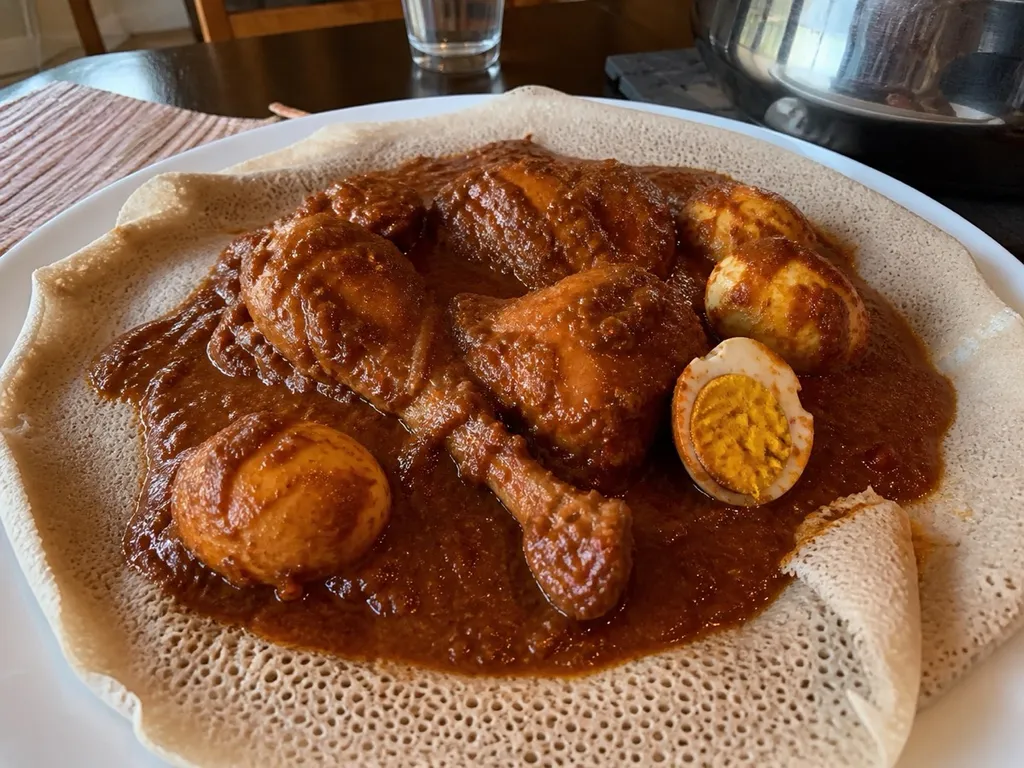 Images are for illustrative purposes only, may be inaccurate, and do not guarantee the presence or absence of specific ingredients.
 Listahan Family Score™
65/100
Works for many families
Score reflects how well this recipe fits a typical busy household. In the app, your Family Score is personalized to your household's allergens, kids, and pantry.
Nutrition
per serving440
Calories
47 g
Protein
9 g
Carbs
25 g
Fat
Estimated per serving. Actual values depend on the brands and portions you use.
Listahan cooking guide
Chef notes & practical guide
Technique notes, ingredient swaps, serve-alongside ideas, storage guidance, and equipment for this recipe.
Cultural context
Doro Wat is Ethiopia's national dish and the most celebrated preparation in the Ethiopian kitchen — a slow-cooked chicken and egg stew built on a base of caramelized onion, niter kibbeh (spiced clarified butter), and berbere spice blend. It is the dish prepared for major holidays including Ethiopian Christmas (Genna) and New Year (Enkutatash), and the hard-boiled eggs added at the end are a distinctive element that symbolize wholeness and festivity. The unusual technique of dry-cooking enormous quantities of onion without oil before adding the butter creates a depth of flavor that distinguishes doro wat from any other braised chicken dish.
Listahan note
This version builds flavor through the traditional dry-onion technique — four pounds of minced onion cooked without fat until they reduce to a deep, jammy paste — which is the non-negotiable foundation of authentic doro wat.
Technique cues
- The dry-onion technique (cooking finely minced onions in a dry pot over medium heat for 20-30 minutes before adding any fat) is unique to Ethiopian cuisine: the onions steam in their own moisture, then gradually caramelize without burning, concentrating into a sweet, dark paste that provides the structural flavor base of the stew.
- Niter kibbeh is Ethiopian spiced clarified butter infused with onion, garlic, ginger, turmeric, cardamom, and fenugreek; it contributes a complexity that neither plain butter nor oil can replicate — making or sourcing it is the single highest-impact step in this recipe.
- Pierce the hard-boiled eggs all over with a fork before adding them to the stew; this allows the berbere-and-butter sauce to penetrate and season the eggs from the outside in, turning them from a garnish into a true component of the stew.
Kitchen flow
- Parallel prep
- Mince the onions and start them cooking before doing anything else — the 30-minute dry-cook period gives you time to skin and score the chicken, measure spices, and prepare injera if making it fresh.
- Make-ahead
- Doro wat is better the next day; make it up to 2 days ahead and refrigerate — the berbere and niter kibbeh flavors deepen significantly overnight, and the eggs absorb more of the sauce.
- Leftover move
- Shred leftover chicken off the bone, return it to the sauce, and use as a filling for Ethiopian-style firfir with torn injera, or serve over white rice as a weeknight repurposing.
- Cleanup rhythm
- The dry-onion stage will leave fond (brown residue) on the bottom of the pot; deglaze with 2-3 tablespoons of water when adding the niter kibbeh to release it and incorporate that flavor into the stew.
Ingredient brief
Role, handling, and swap guidance for each key ingredient.
4 large red onions (finely minced)
dry-cooked aromatic base
Purpose: The massive quantity of onion, dry-cooked until deeply reduced, is the textural and flavor foundation of doro wat — it is not a background note but the body of the stew.
Handling: Mince as fine as possible (food processor is practical for this quantity); cook in a completely dry heavy pot over medium heat, stirring frequently, for 20-30 minutes until reduced by at least two-thirds and turning golden-brown.
Adaptation: Yellow onion works; avoid sweet onions, which caramelize too quickly and add excessive sweetness.
1/2 cup niter kibbeh (spiced butter)
cooking fat and secondary flavor layer
Purpose: Niter kibbeh carries the aromatic spices that define Ethiopian cooking and provides richness that makes the sauce clinging and complex.
Handling: Add niter kibbeh to the dry-cooked onion paste and stir over medium heat for 5 minutes before adding berbere — the fat blooms the spices in both the kibbeh and the spice blend simultaneously.
Adaptation: Plain clarified butter (ghee) is the closest substitute; add 1/2 tsp each turmeric, ground fenugreek, and cardamom to approximate the spice profile.
1/2 cup berbere spice blend
primary spice component and color
Purpose: Berbere is the complex Ethiopian spice blend (chili, fenugreek, coriander, cardamom, nigella, and more) that gives doro wat its deep red color and layered heat.
Handling: Add to the onion-butter mixture and cook for 2-3 minutes, stirring constantly, to bloom the spices before adding any liquid.
Adaptation: No single substitute replicates berbere; in a pinch, use equal parts paprika and ground cumin with a small amount of cayenne and ground cardamom for a rough approximation.
3 lbs bone-in chicken pieces (skinned)
primary protein
Purpose: Bone-in pieces contribute gelatin to the sauce as they braise, giving the stew its characteristic body; skinning is essential because the skin creates an oily layer that separates from the sauce.
Handling: Score each piece deeply with a knife to allow the berbere sauce to penetrate to the bone, and pat dry before adding to the stew.
Adaptation: Bone-in thighs only work well for a uniform cook time; boneless chicken will cook faster but produce a leaner, less gelatinous sauce.
4 hard-boiled eggs (peeled and pierced)
festive garnish and secondary protein
Purpose: Whole eggs simmered in the stew absorb the sauce and add a ceremonial quality that is integral to doro wat's identity as a celebration dish.
Handling: Hard-boil, cool, and peel the eggs, then pierce each one deeply in 6-8 places with a fork or skewer before adding to the stew.
Adaptation: Eggs can be omitted for a simpler everyday version; there is no direct substitute for the visual and ceremonial role they play.
Technique notes
- The stew should be thick enough that a spoon dragged across the bottom of the pot leaves a clear line that holds for 2-3 seconds — if it is too soupy, simmer uncovered for 10-15 minutes; doro wat is never a thin broth.
- Add the chicken in a single layer if possible so each piece makes contact with the onion-berbere base rather than steaming on top of other pieces — brown the surface of the chicken briefly (2 minutes per side) before adding water if you want additional depth.
- Taste the berbere before committing to the full half cup — the heat level varies enormously between brands; start with 1/4 cup, cook for 2 minutes, taste, and add more gradually to control the spice level for your table.
Ingredient swaps
- Dairy-free direction
- Replace niter kibbeh with coconut oil and add 1/2 tsp each turmeric, ground fenugreek, cardamom, and minced garlic to the oil before cooking the onions.
- Gluten-free direction
- Already gluten-free; verify your berbere spice blend does not contain any anti-caking agents with gluten.
- Lower-heat option
- Reduce berbere to 2-3 tablespoons and use sweet paprika to make up the volume — the stew will still be red and flavorful but mild enough for children or heat-sensitive diners.
Serve alongside
- Injera (Ethiopian sourdough flatbread for scooping)
- Shiro Wat as a plant-based accompaniment on the same platter
- ayib (fresh Ethiopian cottage cheese) to cool the heat
- tikel gomen (cabbage, carrot, and potato in turmeric)
- tej (Ethiopian honey wine) or dry mead
- cold hibiscus tea (karkade) with honey
Serving suggestions only — check pairings for your household's allergens.
Storage & reheating
- Refrigerate in an airtight container for up to 4 days; the flavor improves after the first day.
- Reheat over low heat, stirring gently and adding 2-3 tablespoons of water to loosen the sauce as it thickens when cold.
- Freeze without the eggs for up to 3 months; thaw overnight in the refrigerator and add freshly cooked eggs when reheating.
Equipment
- Large Dutch oven or heavy-bottomed pot (at least 5-quart) for the dry-onion stage and braise
- Sharp knife or food processor for mincing 4 large onions finely
- Fork or skewer for piercing the hard-boiled eggs
- Ladle for serving
Make this household-aware
Listahan Pro checks this recipe against your household's allergens, finds pantry-aware swaps, builds the shopping list, and helps you plan the week around it.
Plan it in Listahan
Add Doro Wat to your week, check it against your household's allergens, and build the shopping list automatically.
More East African recipes
 East African Lens Verified Images are for illustrative purposes only, may be inaccurate, and do not guarantee the presence or absence of specific ingredients.
 Viazi Karai
A Zanzibari street favorite of soft boiled potatoes coated in a turmeric-yellow batter and deep-fried until crackling, served with fiery tamarind sauce.
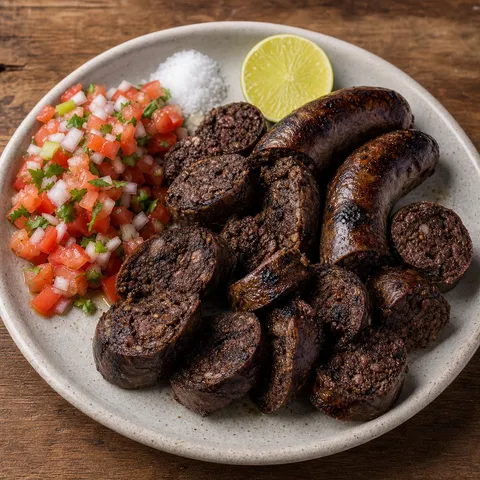 East African Lens Verified Images are for illustrative purposes only, may be inaccurate, and do not guarantee the presence or absence of specific ingredients.
 Mutura
Kenyan spiced blood sausage stuffed with meat, onion, and herbs, then grilled until the casing crisps and snaps — a bold, smoky roadside delicacy.
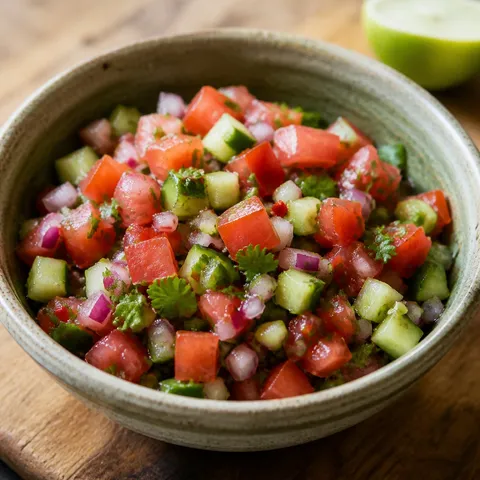 East African Lens Verified Images are for illustrative purposes only, may be inaccurate, and do not guarantee the presence or absence of specific ingredients.
 Kachumbari
Bright, refreshing salad of ripe tomatoes and sharp raw onion, spiked with chili and lime — the cool, crisp counterpoint to rich East African grills.