 East African Images are for illustrative purposes only, may be inaccurate, and do not guarantee the presence or absence of specific ingredients.
  Serving Images are for illustrative purposes only, may be inaccurate, and do not guarantee the presence or absence of specific ingredients.
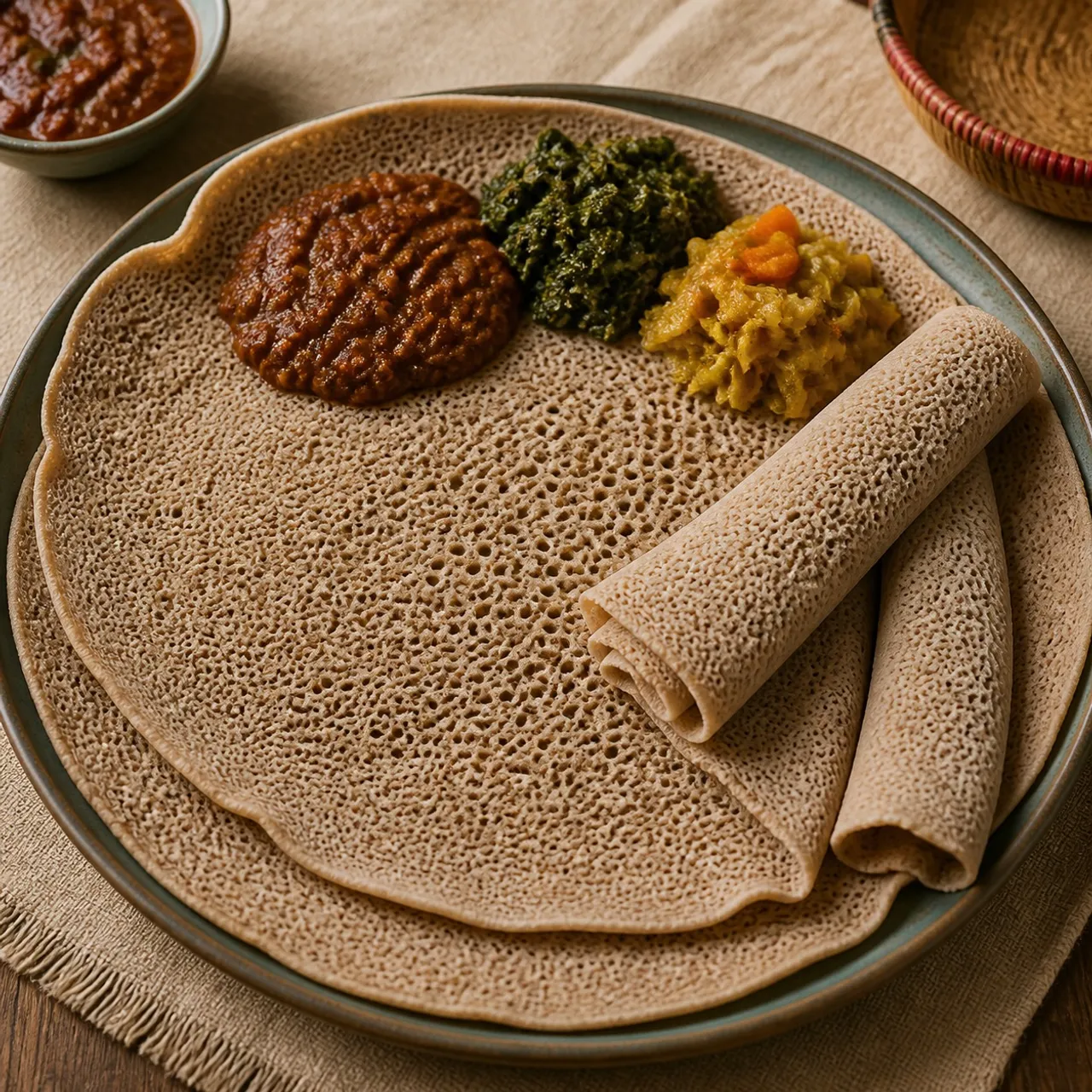
 Injera
Ethiopia's tangy, spongy teff flatbread with a bubbly, porous surface that soaks up stews and sauces — the edible plate at the heart of every Ethiopian meal.
Contains common allergens
In the app, Listahan checks these against your household automatically.
Instructions
6 steps- 1
In a large glass or plastic bowl, mix the teff flour with 2.5 cups of lukewarm water until smooth. Cover loosely with a towel and let sit at room temperature for 3 days until it smells sour and is bubbly.
- 2
On day 3, carefully pour off any clear liquid that has risen to the top. Stir the batter.
- 3
Stir in 1/2 tsp salt. Then, slowly whisk in 1/4 cup of boiling water to activate the batter and thin it to the consistency of crepe batter. Let it rest for 1 hour.
- 4
Heat a large non-stick skillet or a traditional *mitad* over medium-high heat. Do not use oil.
- 5
Starting from the outside edge and moving in a continuous spiral towards the center, pour about 1/2 cup of batter into the hot pan.
- 6
Wait until bubbles form and pop all over the surface (about 1-2 minutes). Cover the pan with a tight-fitting lid to steam the top for another 1 minute. Remove the injera without flipping and let it cool on a clean cloth.
 Images are for illustrative purposes only, may be inaccurate, and do not guarantee the presence or absence of specific ingredients.
 Listahan Family Score™
73/100
Good fit for most families
Score reflects how well this recipe fits a typical busy household. In the app, your Family Score is personalized to your household's allergens, kids, and pantry.
Nutrition
per serving230
Calories
6 g
Protein
48 g
Carbs
1 g
Fat
Estimated per serving. Actual values depend on the brands and portions you use.
Listahan cooking guide
Chef notes & practical guide
Technique notes, ingredient swaps, serve-alongside ideas, storage guidance, and equipment for this recipe.
Cultural context
Injera is the foundational bread of Ethiopian and Eritrean cuisine, made from teff — a tiny ancient grain native to the Horn of Africa that has been cultivated in Ethiopia for at least 3,000 years. The sourdough fermentation process gives injera its characteristic tang and spongy, bubble-pocked surface, which acts as both plate and utensil in communal meals where diners tear pieces of bread to scoop up wat and other stews. Teff is one of the most nutritionally dense grains in the world, providing iron, calcium, and fiber at levels uncommon in staple bread crops.
Listahan note
This version uses a 3-day fermentation at room temperature, which is the minimum for a properly sour, well-aerated injera — the small addition of boiling water (absit) before cooking is the traditional Ethiopian technique for producing the right batter viscosity.
Technique cues
- Teff fermentation is a wild yeast and lacto-bacterial process: the batter will bubble and develop a pleasant sour smell over 2-3 days, but if it smells strongly of acetone or mold appears, discard it and start over — the room temperature must stay above 65°F (18°C) for fermentation to proceed reliably.
- The absit technique (cooking a portion of the batter in boiling water before adding it back to the main batter) gelatinizes some of the starch and is what gives injera its uniquely spongy, eye-covered surface — skipping this step produces a denser, flatter bread.
- Injera is cooked only on one side, covered, so the steam cooks the top — the holes (eyes) form as gases from the fermentation escape upward through the batter; a consistent medium heat is essential, because too hot and the holes close before the top sets, too cool and the bread is gummy.
Kitchen flow
- Parallel prep
- Start fermentation 2-3 days before the meal; on cooking day, prepare the absit while the griddle preheats — injera cooks fast (2-3 minutes per round) so stagger pours to avoid a bottleneck.
- Make-ahead
- Cook all injera up to 1 day ahead; stack cooled rounds between parchment squares, cover tightly with plastic wrap, and store at room temperature for up to 24 hours.
- Leftover move
- Day-old injera is used in the Ethiopian dish firfir — torn into pieces, sauteed with niter kibbeh, berbere, and leftover wat — it actually tastes better after it has dried out slightly.
- Cleanup rhythm
- The griddle just needs a quick wipe with a dry cloth between rounds — no oil or soap — since the fermented batter is naturally non-stick on a properly preheated surface.
Ingredient brief
Role, handling, and swap guidance for each key ingredient.
2 cups teff flour
primary flour and fermentation substrate
Purpose: Teff is the only traditional grain for injera; its fine texture and native wild yeast enable the fermentation that gives the bread its tang, aeration, and dark color.
Handling: No pre-processing needed; combine with water and mix thoroughly to prevent lumps, then cover loosely with cloth and leave at room temperature to ferment for 2-3 days.
Adaptation: A 50/50 blend of teff flour and all-purpose flour produces a milder, lighter injera that is more accessible to new eaters; pure teff has the most authentic flavor and nutrition.
3 cups lukewarm water
hydration and fermentation medium
Purpose: Water at roughly 80-90°F activates the wild yeasts in the teff without killing them; tap water that is chlorine-heavy can inhibit fermentation.
Handling: If your tap water is heavily chlorinated, use filtered water or let tap water sit uncovered for an hour before mixing.
Adaptation: No substitute — water is the only liquid used in the ferment.
1/4 cup boiling water
absit (starch gelatinizer)
Purpose: The boiling water is mixed with a portion of fermented batter and cooked briefly to create absit, a thickened paste that, when reincorporated, produces the signature bubbly, porous surface of injera.
Handling: Bring to a full boil immediately before using; whisk it into 2-3 tablespoons of the batter and cook it in a small saucepan over medium heat for 1-2 minutes, stirring, until it thickens into a paste.
Adaptation: No substitute — this step is the technical key to the correct texture.
Technique notes
- Pour the batter onto the griddle in a single outward spiral motion from the center, as fast as you can, tilting the pan if needed — this is how Ethiopian cooks achieve a uniformly thin, even round in one pour rather than spreading with a tool.
- Cover the pan immediately after pouring with a lid or foil dome and do not lift it until the top of the injera looks dry and matte with no wet sheen — typically 2-3 minutes depending on your burner.
- A cast iron skillet produces the most consistent heat, but a non-stick pan works if cast iron is unavailable; season cast iron with oil only occasionally, since injera fermentation acids will strip heavy seasoning over time.
Ingredient swaps
- Gluten-free direction
- Pure teff injera is naturally gluten-free; confirm your teff flour is processed in a GF-certified facility to avoid cross-contact.
- Milder flavor for new eaters
- Ferment for only 1 day instead of 3 for a less sour batter, or substitute up to half the teff with all-purpose flour for a more neutral bread.
- Vegan direction
- Already vegan — teff, water, and salt only.
Serve alongside
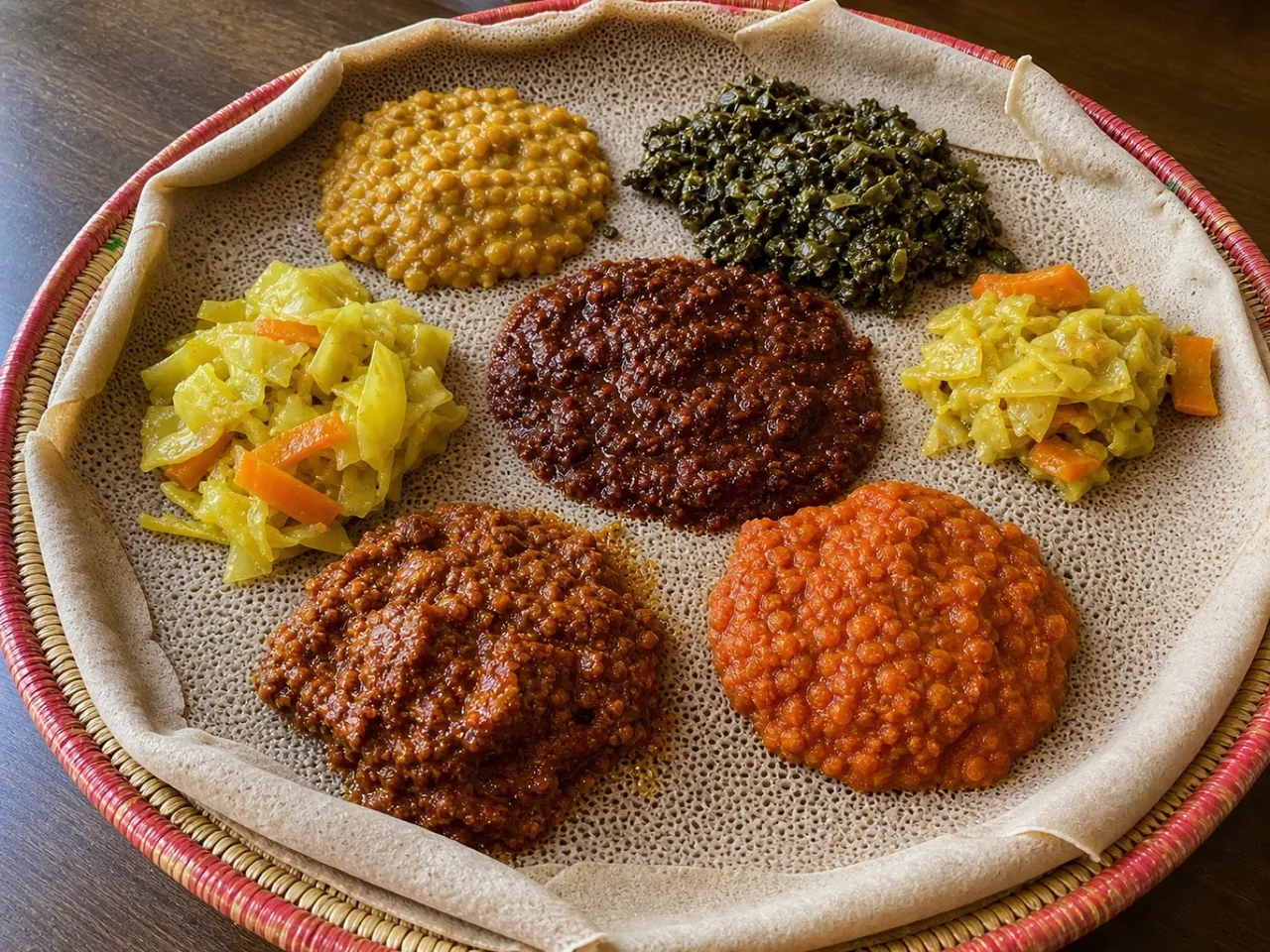
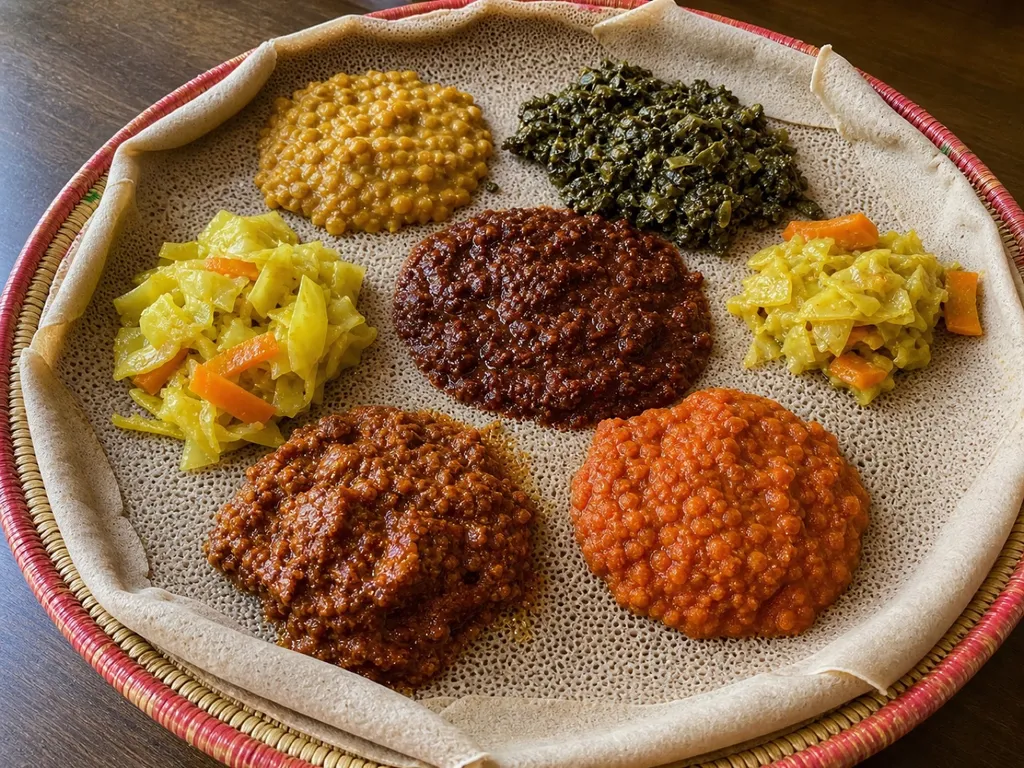
- Doro Wat (Ethiopian spiced chicken stew)
- Shiro Wat (spiced chickpea-flour stew)
- Tibs (sauteed spiced beef or lamb)
- simple cucumber and tomato salad with lemon
- tej (Ethiopian honey wine) or dry mead
- cold tej-style ginger-honey lemonade for a non-alcoholic option
Serving suggestions only — check pairings for your household's allergens.
Storage & reheating
- Store cooked injera stacked between parchment squares in an airtight bag at room temperature for up to 2 days, or refrigerate for up to 5 days.
- To refresh, briefly warm injera in a dry pan over low heat for 30 seconds per side or wrap in a damp paper towel and microwave for 15-20 seconds.
- Freeze cooked injera separated by parchment for up to 1 month; thaw at room temperature for 30 minutes before using.
Equipment
- 10-12-inch cast iron skillet or non-stick crepe pan
- Lid or foil dome to cover the pan while the injera steams
- Small saucepan for preparing the absit
- Wide, flat spatula for removing the injera without tearing
Make this household-aware
Listahan Pro checks this recipe against your household's allergens, finds pantry-aware swaps, builds the shopping list, and helps you plan the week around it.
Plan it in Listahan
Add Injera to your week, check it against your household's allergens, and build the shopping list automatically.
More East African recipes
 East African Lens Verified Images are for illustrative purposes only, may be inaccurate, and do not guarantee the presence or absence of specific ingredients.
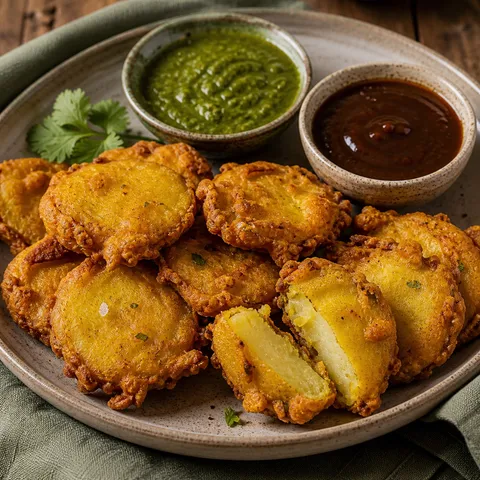
 Viazi Karai
A Zanzibari street favorite of soft boiled potatoes coated in a turmeric-yellow batter and deep-fried until crackling, served with fiery tamarind sauce.
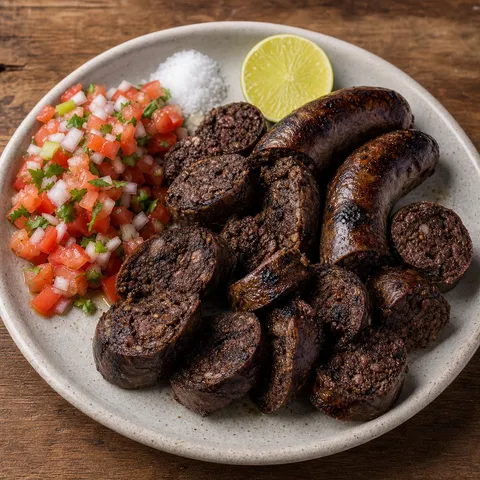 East African Lens Verified Images are for illustrative purposes only, may be inaccurate, and do not guarantee the presence or absence of specific ingredients.
 Mutura
Kenyan spiced blood sausage stuffed with meat, onion, and herbs, then grilled until the casing crisps and snaps — a bold, smoky roadside delicacy.
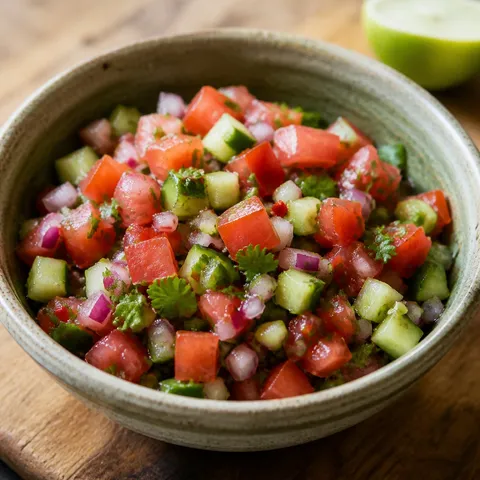 East African Lens Verified Images are for illustrative purposes only, may be inaccurate, and do not guarantee the presence or absence of specific ingredients.
 Kachumbari
Bright, refreshing salad of ripe tomatoes and sharp raw onion, spiked with chili and lime — the cool, crisp counterpoint to rich East African grills.