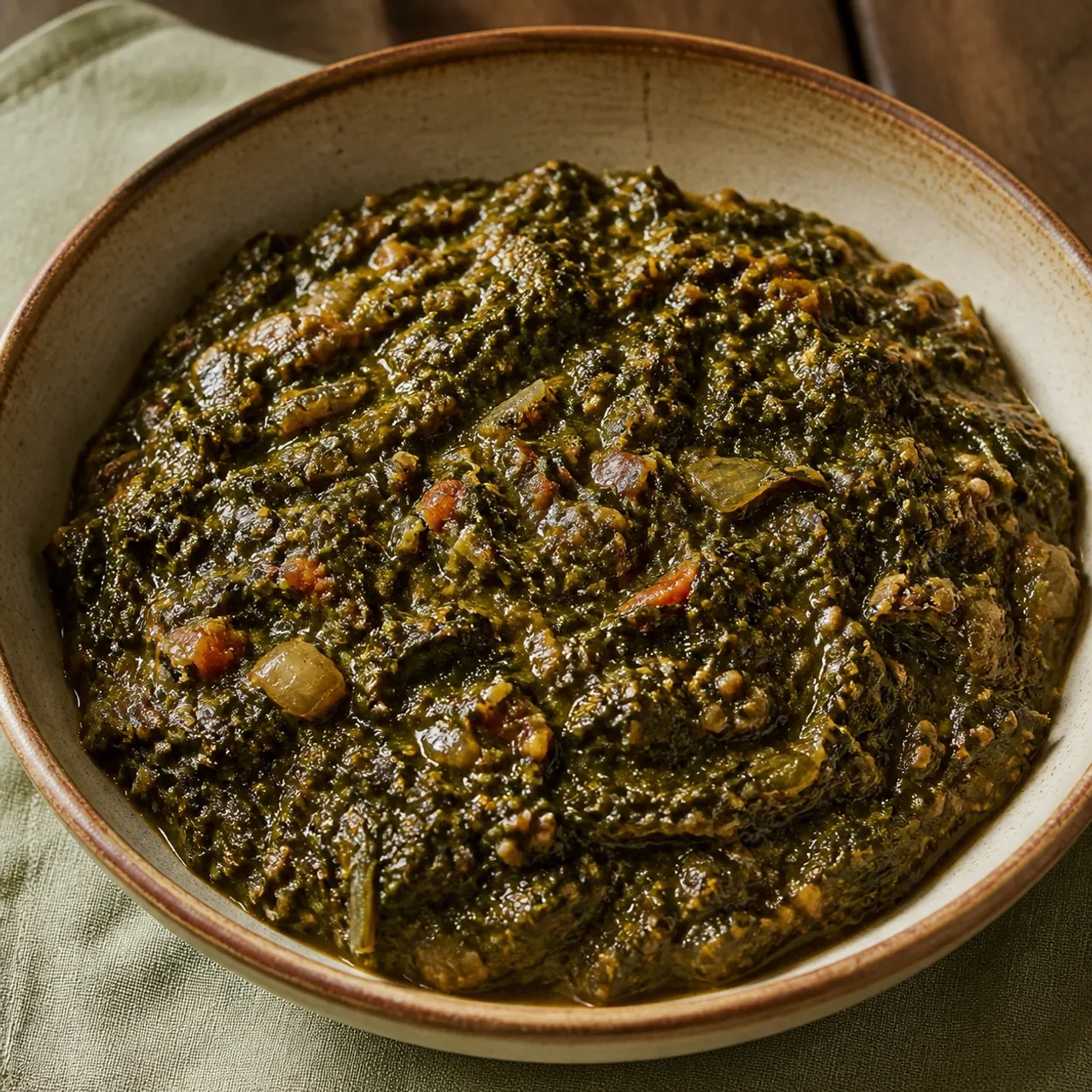
 East African Images are for illustrative purposes only, may be inaccurate, and do not guarantee the presence or absence of specific ingredients.
 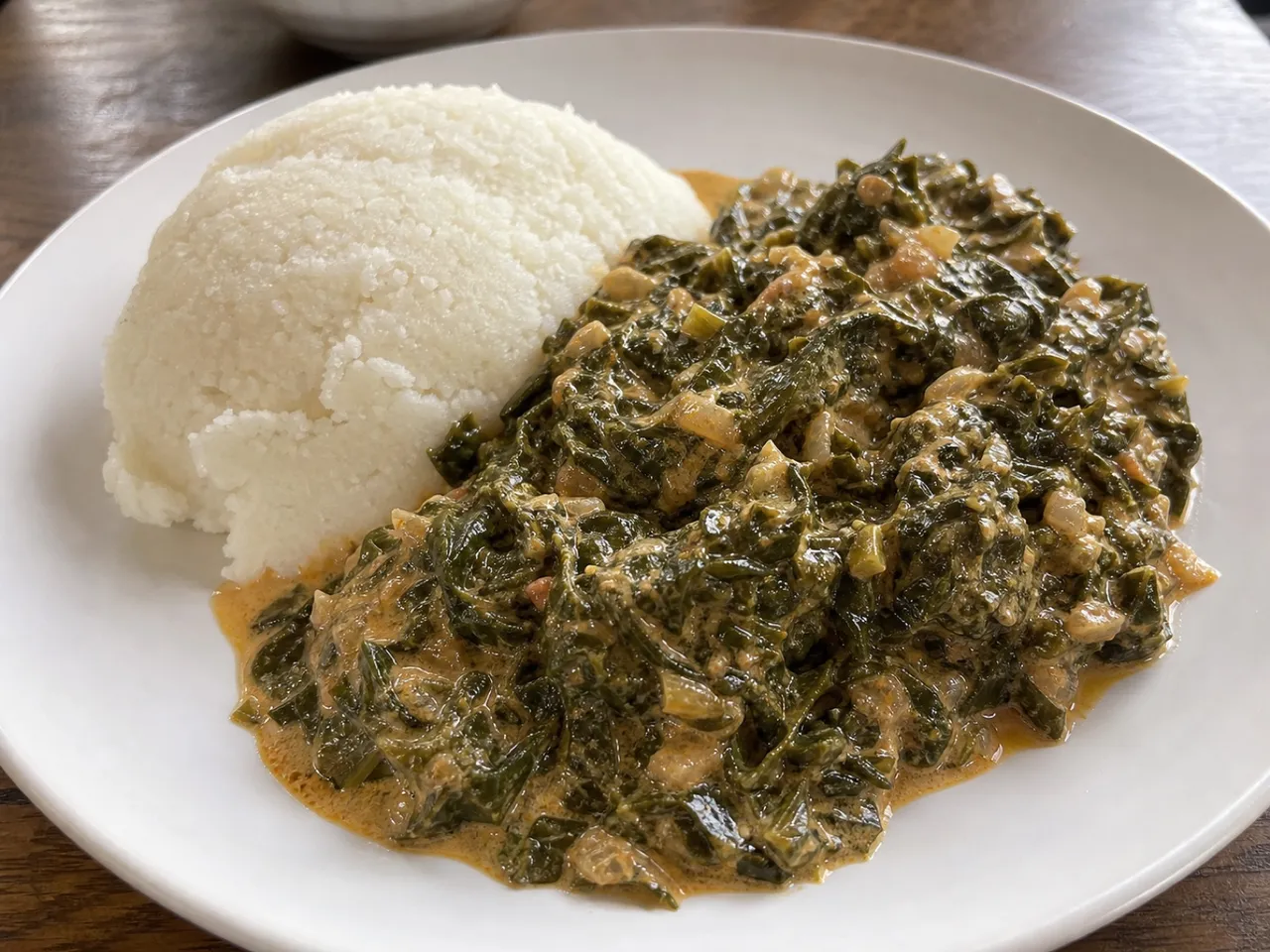 Serving Images are for illustrative purposes only, may be inaccurate, and do not guarantee the presence or absence of specific ingredients.
 Kunde
Tender cowpea leaves stewed with tomato and onion in coconut milk, an earthy Kenyan side dish that pairs perfectly with ugali.
No common allergens detected
Based on this recipe's ingredient list. Always verify with your own brands and labels.
Good to know
- Ready in under 30 minutes
Matched from this dish's own ingredients and timing. Browse more: 30-minute meals
Instructions
5 steps- 1
Heat 2 tablespoons of oil in a wide pan over medium heat and sauté the chopped onion for 4 minutes until softened and lightly golden.
- 2
Add the chopped tomatoes and cook for 5 to 6 minutes, stirring, until they break down into a thick pulpy sauce.
- 3
Stir in the chopped cowpea leaves with the salt, cover, and let them wilt down for about 5 minutes, stirring once.
- 4
Pour in the coconut milk and simmer uncovered for 8 to 10 minutes until the greens are tender and the sauce has thickened slightly.
- 5
Taste and adjust salt, then serve hot alongside ugali or rice.
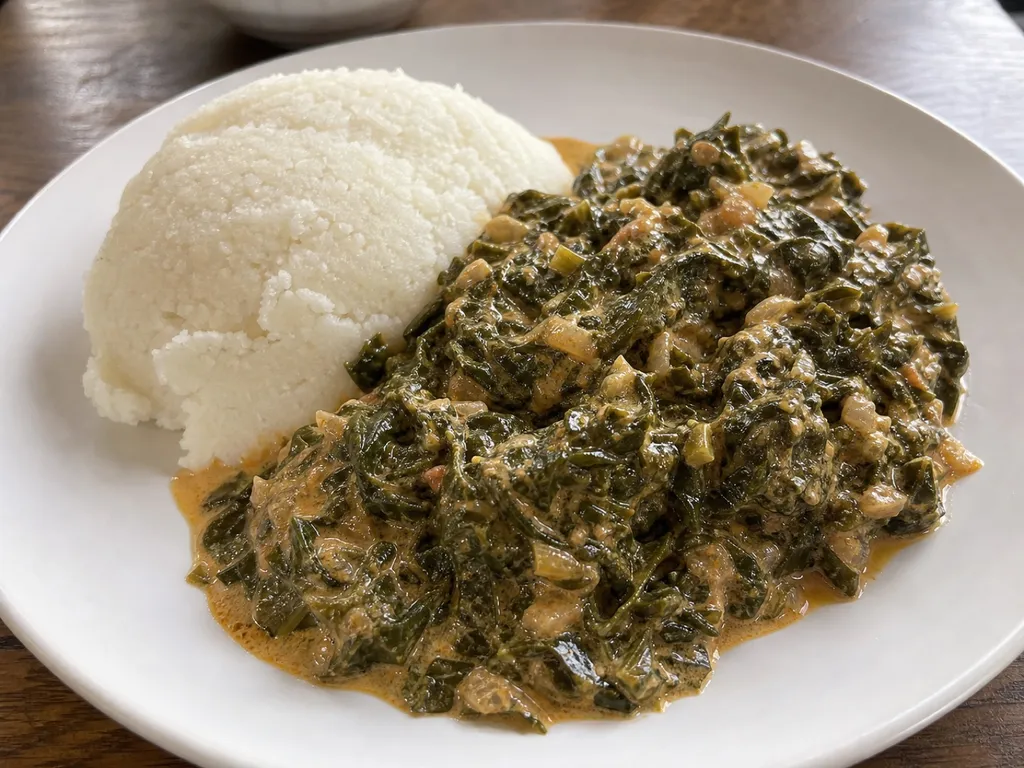 Images are for illustrative purposes only, may be inaccurate, and do not guarantee the presence or absence of specific ingredients.
 Listahan Family Score™
75/100
Good fit for most families
Score reflects how well this recipe fits a typical busy household. In the app, your Family Score is personalized to your household's allergens, kids, and pantry.
Nutrition
per serving160
Calories
2 g
Protein
8 g
Carbs
15 g
Fat
Estimated per serving. Actual values depend on the brands and portions you use.
Listahan cooking guide
Chef notes & practical guide
Technique notes, ingredient swaps, serve-alongside ideas, storage guidance, and equipment for this recipe.
Cultural context
Kunde refers to cowpea leaves cooked in coconut milk, a dish deeply embedded in Kenyan coastal and western Kenyan cooking traditions. Cowpeas (black-eyed peas) and their leaves have been cultivated in sub-Saharan Africa for thousands of years, making this one of the oldest continuous food traditions on the continent. Along the Kenyan coast, the Swahili influence is felt in the coconut milk base; in western Kenya and among Luo communities, the dish is cooked with tomatoes and onion without coconut, as a paired vegetable alongside ugali and fish.
Listahan note
This version uses the coastal coconut-milk approach, which yields a creamy, subtly sweet sauce that transforms the slightly bitter cowpea leaves into a balanced, comforting side dish.
Technique cues
- Cowpea leaves wilt dramatically — what looks like a large quantity raw will reduce by three-quarters during cooking; do not reduce the raw volume before wilting, and add the leaves in two or three batches so the pot is not overwhelmed.
- The coconut milk is added after the tomatoes and onion have formed a sauce base; adding it too early prevents the tomatoes from concentrating properly and produces a dilute, watery result.
- If using spinach as a substitute, add it at the very end of cooking — spinach overcooks in under 2 minutes and turns from bright green to a dull, muddy color if simmered with the coconut milk for more than 3 minutes.
Kitchen flow
- Parallel prep
- Start the ugali or rice first as it takes longer; the kunde can be finished in 20 minutes and kept warm covered while the starch finishes.
- Make-ahead
- The tomato-onion base can be made up to 2 days ahead; reheat it, add coconut milk, then add the fresh greens just before serving.
- Leftover move
- Leftover kunde can be stirred into scrambled eggs or used as a filling for chapati wraps with a drizzle of chili sauce.
- Cleanup rhythm
- One skillet does the whole dish; deglaze with a splash of water while warm to release any coconut milk that has stuck to the bottom.
Ingredient brief
Role, handling, and swap guidance for each key ingredient.
1 lb cowpea leaves (or substitute spinach), washed and chopped
main vegetable
Purpose: Cowpea leaves are slightly bitter and have a firmer texture than spinach, holding up to the simmering coconut sauce while absorbing its flavor.
Handling: Wash thoroughly in multiple changes of cold water to remove grit; remove any tough stems and chop roughly into 2-inch pieces.
Adaptation: Fresh spinach is the most common substitute; sweet potato leaves or amaranth greens (where available) are more authentic than spinach and worth seeking out.
1 cup coconut milk
sauce and richness
Purpose: Coconut milk tempers the bitterness of the cowpea leaves and creates the coastal-style sauce that distinguishes this version from inland preparations.
Handling: Shake or stir the can before using; add after the tomato-onion base has cooked down for 5-7 minutes.
Adaptation: Light coconut milk produces a thinner, less rich sauce; oat milk can substitute for a dairy-free, nut-free option though the flavor is significantly different.
2 medium tomatoes, chopped
acid and sauce base
Purpose: Tomatoes provide the acidity that balances the coconut milk's sweetness and form the sauce base into which the greens are stirred.
Handling: Chop roughly; no need to peel or seed for this preparation as they will break down fully during cooking.
Adaptation: A 14 oz can of diced tomatoes can substitute for fresh; drain off about half the liquid before adding.
1 medium onion, chopped
aromatic base
Purpose: Onion provides the savory foundation that balances both the sweetness of coconut and the bitterness of cowpea leaves.
Handling: Chop medium-fine and cook until soft and translucent before adding tomatoes.
Adaptation: Two large shallots can replace the onion for a more delicate, slightly sweeter base.
Technique notes
- Season with salt only after the coconut milk has been added and has simmered for a few minutes — the salt level reads differently in a watery tomato base versus a finished coconut sauce.
- A tight-fitting lid during the first stage of wilting the greens traps steam and speeds up the cooking without needing to add water, preserving more of the greens' color and nutrients.
- Taste the greens for bitterness before serving; a small extra squeeze of lime juice stirred in off the heat can balance any residual bitterness from cowpea leaves.
Ingredient swaps
- Vegan direction
- This recipe is naturally vegan; pair with a protein such as fried fish or beans to make a complete meal.
- Lower fat option
- Replace coconut milk with vegetable broth and finish with a teaspoon of coconut extract for flavor at a fraction of the fat.
- Greens variation
- A combination of spinach and kale provides some of the bitterness of cowpea leaves and holds up better to simmering than spinach alone.
Serve alongside
- ugali (stiff maize porridge)
- fried whole tilapia with lime
- plain white rice
- cold tamarind juice
- hot black tea with milk
Serving suggestions only — check pairings for your household's allergens.
Storage & reheating
- Refrigerate in a covered container for up to 3 days; the greens absorb more of the sauce and become softer over time.
- Reheat gently in a covered saucepan over low heat with a splash of water or coconut milk to prevent the sauce from breaking.
- Not recommended for freezing as the greens turn mushy after thawing.
Equipment
- large skillet or wide saucepan with a lid
- wooden spoon or silicone spatula
- sharp knife and cutting board for prepping the greens
Make this household-aware
Listahan Pro checks this recipe against your household's allergens, finds pantry-aware swaps, builds the shopping list, and helps you plan the week around it.
Plan it in Listahan
Add Kunde to your week, check it against your household's allergens, and build the shopping list automatically.
More East African recipes
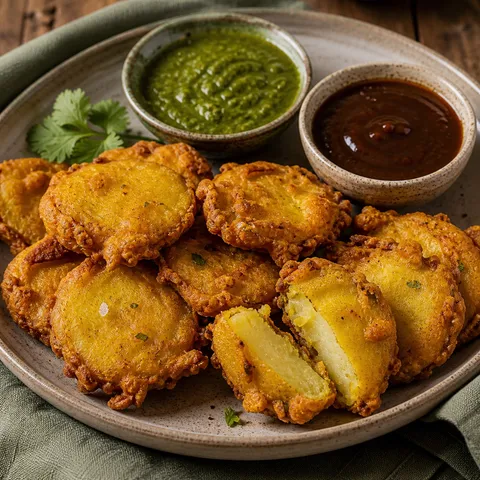 East African Lens Verified Images are for illustrative purposes only, may be inaccurate, and do not guarantee the presence or absence of specific ingredients.
 Viazi Karai
A Zanzibari street favorite of soft boiled potatoes coated in a turmeric-yellow batter and deep-fried until crackling, served with fiery tamarind sauce.
 East African Lens Verified Images are for illustrative purposes only, may be inaccurate, and do not guarantee the presence or absence of specific ingredients.
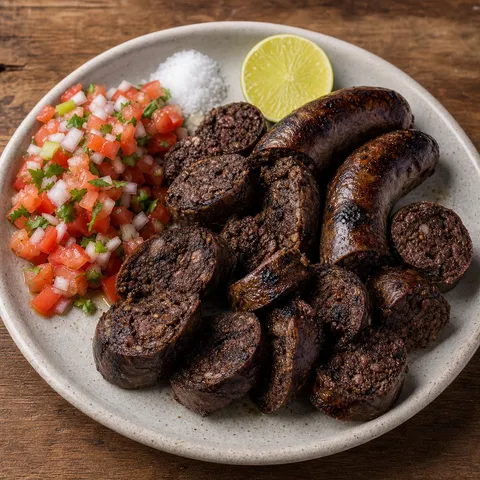
 Mutura
Kenyan spiced blood sausage stuffed with meat, onion, and herbs, then grilled until the casing crisps and snaps — a bold, smoky roadside delicacy.
 East African Lens Verified Images are for illustrative purposes only, may be inaccurate, and do not guarantee the presence or absence of specific ingredients.
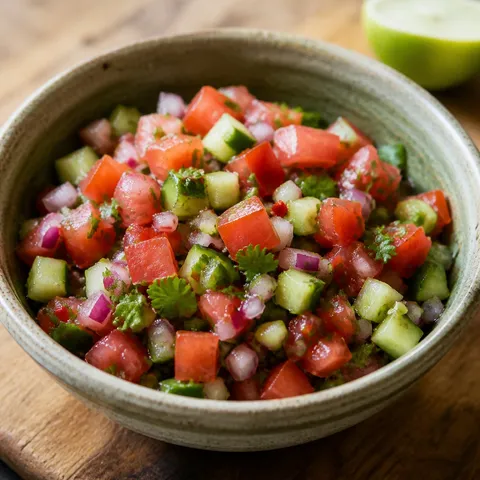
 Kachumbari
Bright, refreshing salad of ripe tomatoes and sharp raw onion, spiked with chili and lime — the cool, crisp counterpoint to rich East African grills.