 East African Images are for illustrative purposes only, may be inaccurate, and do not guarantee the presence or absence of specific ingredients.
 Serving Images are for illustrative purposes only, may be inaccurate, and do not guarantee the presence or absence of specific ingredients.
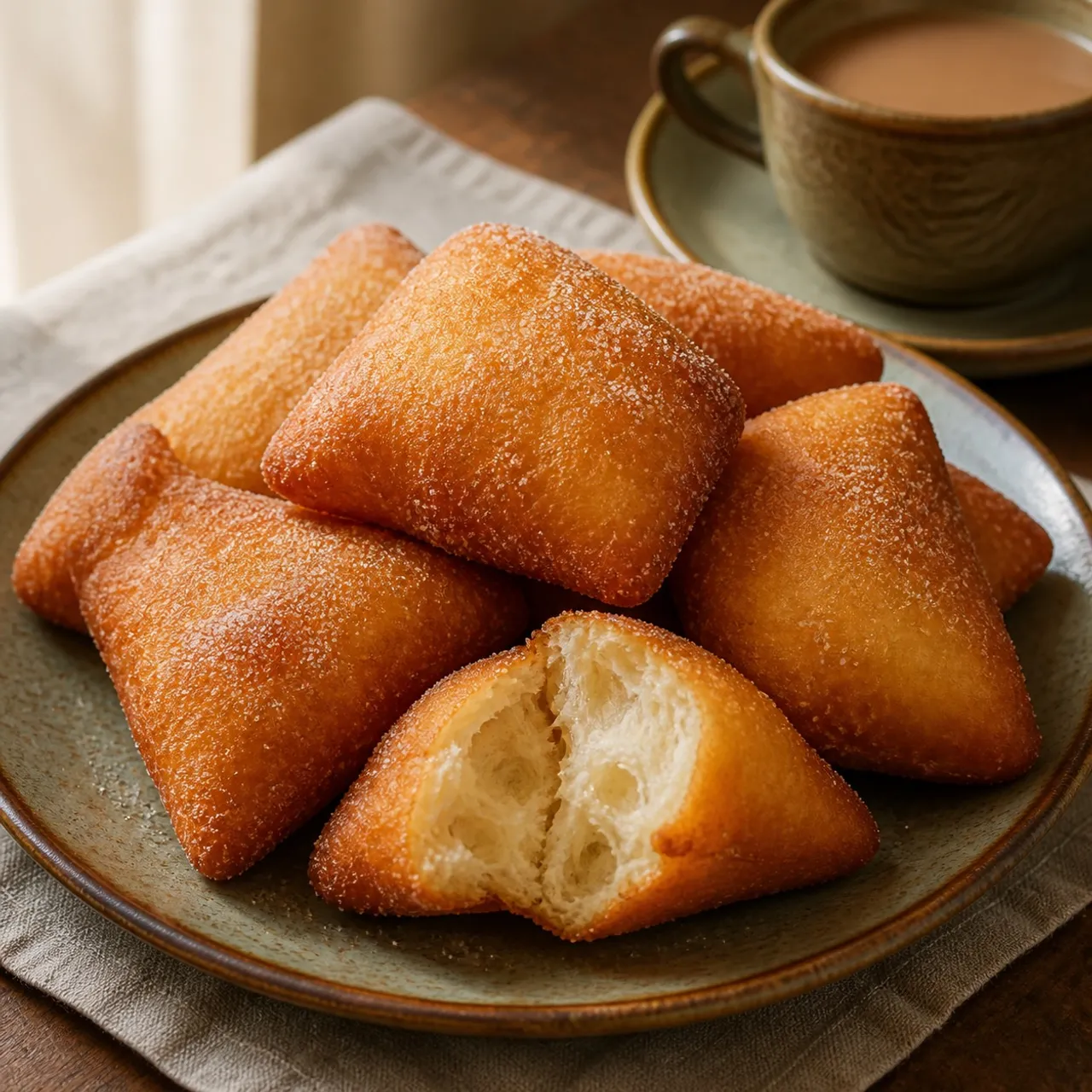
Mahamri
Pillowy Swahili coconut-cardamom doughnuts, golden and lightly sweet, traditionally enjoyed with spiced tea or coconut bean stew.
Contains common allergens
In the app, Listahan checks these against your household automatically.
Instructions
6 steps- 1
In a large bowl, whisk together the flour, sugar, ground cardamom, instant yeast, and a pinch of salt until evenly combined.
- 2
Pour in the warm coconut milk (about 110°F) and mix, then knead on a floured surface for 8 to 10 minutes until you have a smooth, soft, slightly tacky dough that springs back when poked.
- 3
Cover the bowl with a damp towel and let the dough rise in a warm spot for 1 to 1.5 hours, until it has roughly doubled in size.
- 4
Punch down the dough, divide it into 4 balls, and roll each into a 1/4-inch-thick circle, then cut each circle into 4 triangular wedges and let them rest uncovered for 15 minutes.
- 5
Heat 2 inches of vegetable oil in a deep pan to 350°F and fry the triangles a few at a time, flipping once, for about 2 minutes per side until puffed and deep golden brown.
- 6
Drain the mahamri on paper towels and serve warm, dusting with extra sugar if you like a sweeter bite.
 Images are for illustrative purposes only, may be inaccurate, and do not guarantee the presence or absence of specific ingredients.
Listahan Family Score™
71/100
Good fit for most families
Score reflects how well this recipe fits a typical busy household. In the app, your Family Score is personalized to your household's allergens, kids, and pantry.
Nutrition
per serving530
Calories
11 g
Protein
88 g
Carbs
15 g
Fat
Estimated per serving. Actual values depend on the brands and portions you use.
Listahan cooking guide
Chef notes & practical guide
Technique notes, ingredient swaps, serve-alongside ideas, storage guidance, and equipment for this recipe.
Cultural context
Mahamri are yeasted, cardamom-scented doughnuts from the Swahili coast of Kenya and Tanzania, closely tied to the Swahili-speaking Muslim communities who have traded across the Indian Ocean for centuries. The use of coconut milk reflects centuries of Arab and South Asian culinary influence on the East African littoral. Traditionally eaten at breakfast or during Ramadan alongside mbaazi (pigeon peas in coconut sauce), they are fried fresh and served warm.
Listahan note
This version uses instant yeast and warmed coconut milk for a reliable rise without long fermentation windows, producing a lightly crisp exterior and a soft, layered interior.
Technique cues
- The coconut milk must be warm — around 100-110 F — to activate the yeast; too hot kills it, too cool and the dough barely rises, producing dense, doughy results.
- Mahamri dough is wetter and richer than standard bread dough; resist adding extra flour if it feels sticky after kneading — the fat from the coconut milk tenderizes the crumb and excess flour toughens it.
- Roll the dough no thicker than half an inch and cut into triangles or rounds before frying; thicker pieces risk a raw center while the exterior over-browns in the 350 F oil.
Kitchen flow
- Parallel prep
- While the dough rises (30-45 minutes), heat the frying oil and prepare any accompaniments such as mbaazi or a simple dipping sauce.
- Make-ahead
- The dough can be made the night before and cold-proofed in the refrigerator overnight; bring to room temperature for 20 minutes before rolling and frying.
- Leftover move
- Day-old mahamri can be split and warmed in a dry skillet over medium heat for 2-3 minutes per side, regaining a crisp exterior.
- Cleanup rhythm
- Let the frying oil cool completely before straining through a fine-mesh sieve into a jar for reuse; wipe the pot while still warm.
Ingredient brief
Role, handling, and swap guidance for each key ingredient.
3 cups all-purpose flour
structure base
Purpose: All-purpose flour provides enough gluten for a slightly chewy, puffed dough without the density of bread flour.
Handling: Spoon and level the flour rather than scooping from the bag to avoid a compacted, heavy dough.
Adaptation: For a slightly more tender result, substitute 1/4 cup with cornstarch; gluten-free all-purpose blends do not work well here as the dough relies on gluten for structure.
1 cup coconut milk, warmed
liquid fat and flavor base
Purpose: Full-fat coconut milk replaces dairy, contributing richness and the characteristic subtle sweetness of the Swahili coastal style.
Handling: Warm gently on the stovetop or in a microwave until barely steaming — shake or stir the can first as coconut fat separates.
Adaptation: Whole dairy milk can be substituted for a less pronounced coconut flavor; oat milk works for a dairy-free alternative but adds less richness.
1/4 cup granulated sugar
sweetener and yeast food
Purpose: Sugar lightly sweetens the dough and gives the yeast fermentable material for a faster, stronger rise.
Handling: Dissolve in the warm coconut milk before adding to the flour to distribute evenly.
Adaptation: Light brown sugar adds a mild molasses note that works well here; reduce to 3 tablespoons if you prefer a more savory mahamri.
1 tsp ground cardamom
defining spice
Purpose: Cardamom is the signature flavor of mahamri — its floral, citrusy heat sets these apart from plain fried dough.
Handling: Use freshly ground green cardamom if possible; pre-ground cardamom loses its volatility quickly once opened.
Adaptation: A pinch of ground nutmeg plus a small amount of ground cinnamon can approximate the warmth if cardamom is unavailable, though the flavor profile shifts.
2 tsp instant yeast
leavening agent
Purpose: Instant yeast can be mixed directly into the dry ingredients without proofing, cutting down the preparation window.
Handling: Add directly to the flour mixture; ensure the coconut milk is not above 115 F when it contacts the yeast.
Adaptation: Active dry yeast works at the same quantity but must be proofed in the warm coconut milk with a pinch of sugar for 5-10 minutes first.
Technique notes
- Test the oil temperature with a small scrap of dough before frying the first batch — it should sizzle immediately and float to the surface; if it sinks and sits, the oil is too cool and the mahamri will absorb grease.
- Fry in batches of 2-3 pieces to avoid crowding the pot, which drops the oil temperature and leads to pale, greasy results instead of golden, puffed ones.
- Drain finished mahamri on a wire rack set over paper towels rather than directly on towels — the rack allows steam to escape and keeps the bottoms from going soggy.
Ingredient swaps
- Vegan direction
- Mahamri is already plant-based; use refined coconut oil for frying if you want a neutral-flavored oil, or unrefined for added coconut aroma.
- Gluten-free direction
- Standard gluten-free flour blends do not replicate the airy, layered crumb well here; this recipe is best kept wheat-based.
- Lower sugar
- Reduce sugar to 2 tablespoons for a more savory version that pairs well with spiced bean stews.
Serve alongside
- mbaazi wa nazi (pigeon peas in coconut milk)
- masala chai with whole milk
- sliced ripe mango or papaya
- spiced chai tea
- black coffee with cardamom
Serving suggestions only — check pairings for your household's allergens.
Storage & reheating
- Store cooled mahamri in an airtight container at room temperature for up to 2 days; they lose crispness but remain soft.
- Reheat in a dry skillet over medium heat for 2-3 minutes per side, or in a 350 F oven for 5 minutes to restore some exterior crispness.
- Fried mahamri can be frozen in a single layer, then transferred to a bag, for up to 1 month; thaw at room temperature and reheat in a skillet.
Equipment
- heavy-bottomed medium pot or Dutch oven for frying
- instant-read thermometer to monitor oil temperature
- rolling pin
- wire rack set over a sheet pan for draining
Make this household-aware
Listahan Pro checks this recipe against your household's allergens, finds pantry-aware swaps, builds the shopping list, and helps you plan the week around it.
Plan it in Listahan
Add Mahamri to your week, check it against your household's allergens, and build the shopping list automatically.
More East African recipes
 East African Lens Verified Images are for illustrative purposes only, may be inaccurate, and do not guarantee the presence or absence of specific ingredients.
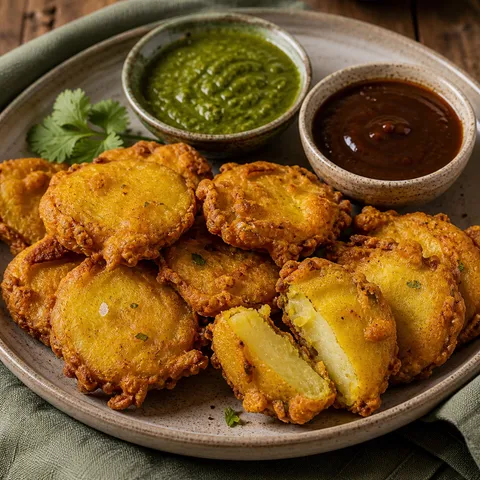
Viazi Karai
A Zanzibari street favorite of soft boiled potatoes coated in a turmeric-yellow batter and deep-fried until crackling, served with fiery tamarind sauce.
 East African Lens Verified Images are for illustrative purposes only, may be inaccurate, and do not guarantee the presence or absence of specific ingredients.
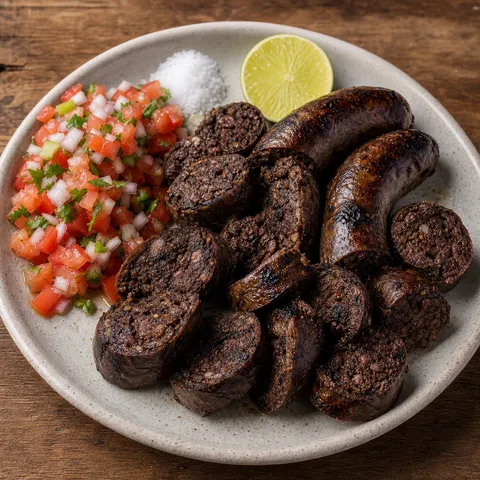
Mutura
Kenyan spiced blood sausage stuffed with meat, onion, and herbs, then grilled until the casing crisps and snaps — a bold, smoky roadside delicacy.
 East African Lens Verified Images are for illustrative purposes only, may be inaccurate, and do not guarantee the presence or absence of specific ingredients.
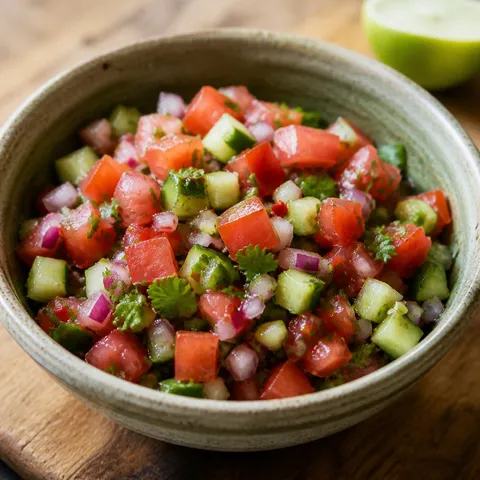
Kachumbari
Bright, refreshing salad of ripe tomatoes and sharp raw onion, spiked with chili and lime — the cool, crisp counterpoint to rich East African grills.