 East African Images are for illustrative purposes only, may be inaccurate, and do not guarantee the presence or absence of specific ingredients.
  Serving Images are for illustrative purposes only, may be inaccurate, and do not guarantee the presence or absence of specific ingredients.
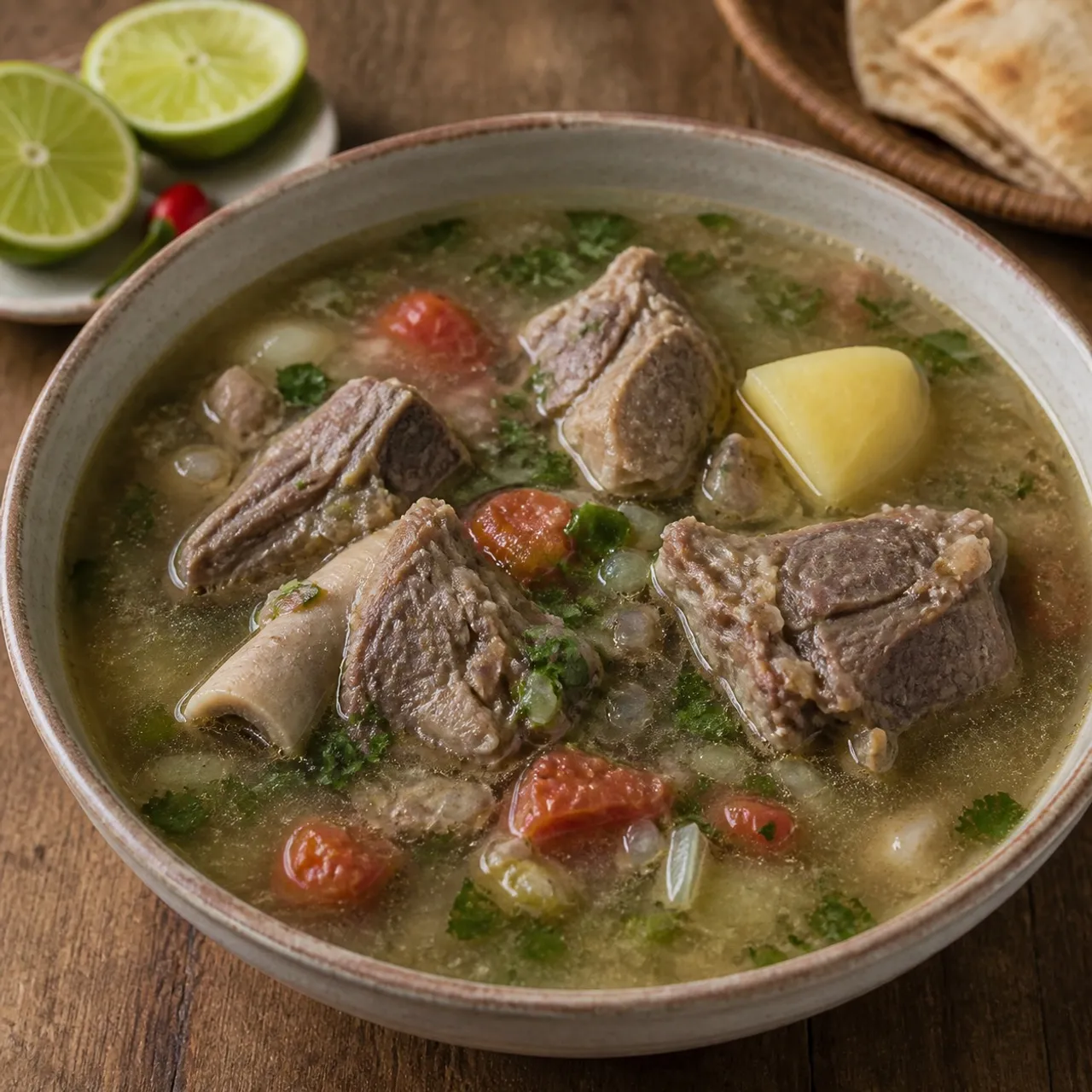
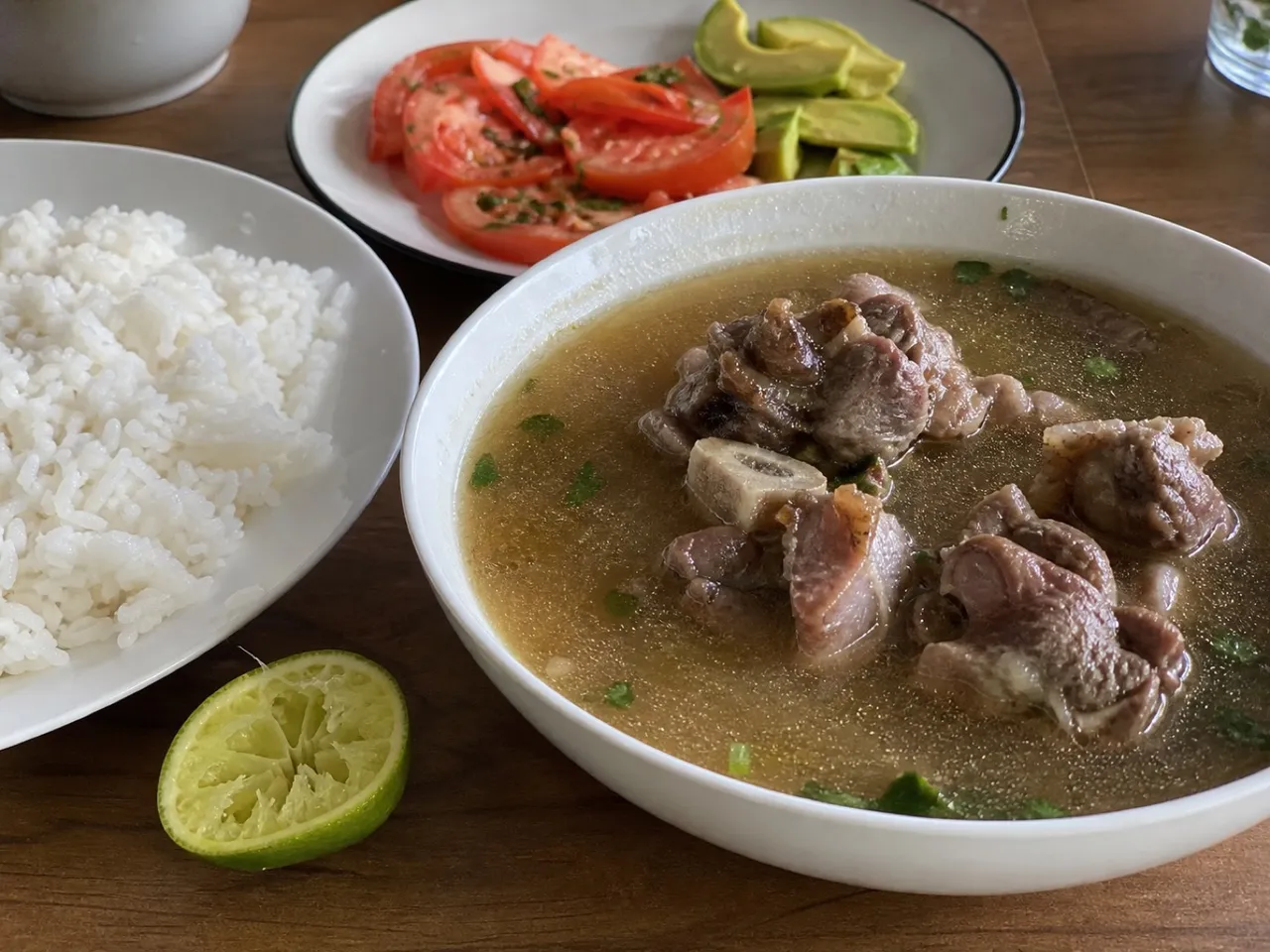
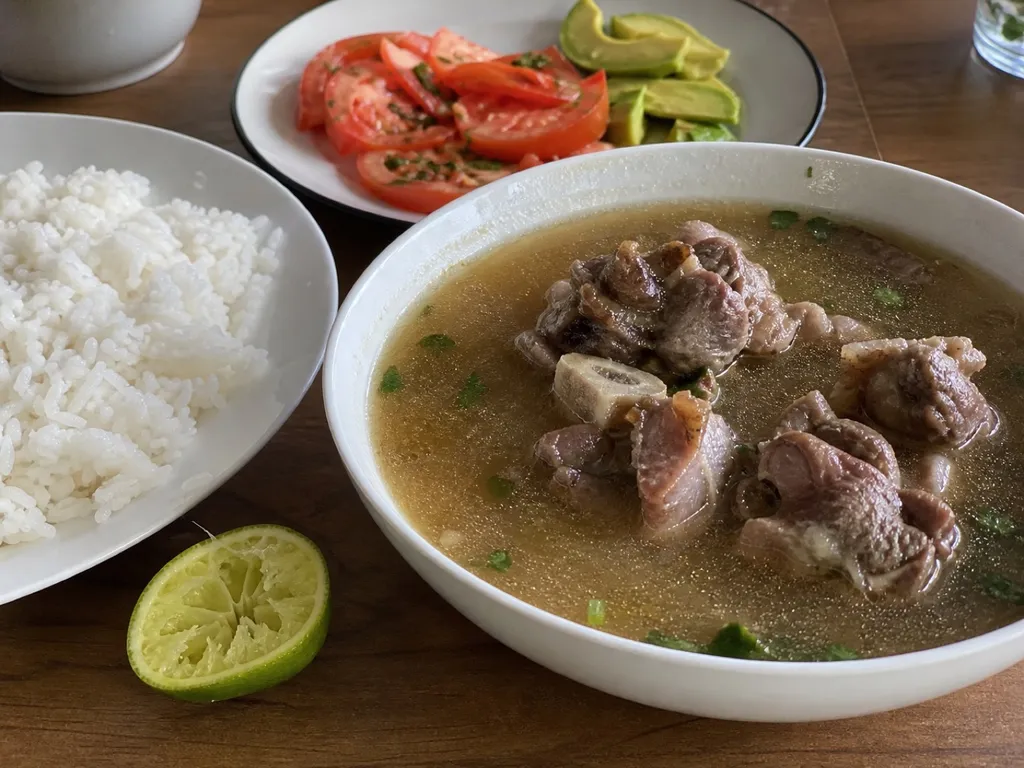
 Supu ya Mbuzi
A restorative Swahili goat soup rich with bone marrow, black pepper, and lime, traditionally sipped early in the morning to fortify the day.
No common allergens detected
Based on this recipe's ingredient list. Always verify with your own brands and labels.
Good to know
- One-pot
Matched from this dish's own ingredients and timing. Browse more: one-pot dinners
Instructions
5 steps- 1
Rinse the goat pieces well and place them in a large pot with the onion, garlic, ginger, peppercorns, and 8 cups of cold water.
- 2
Bring to a boil over high heat, then skim off any foam that rises to the surface for the first 10 minutes to keep the broth clear.
- 3
Reduce to a low simmer, cover partially, and cook for 1.5 to 2 hours until the meat is fall-off-the-bone tender, topping up water as needed.
- 4
Season the broth with 1.5 teaspoons of salt and simmer uncovered for a final 10 minutes to concentrate the flavor.
- 5
Ladle the soup into bowls, finishing each with a generous squeeze of fresh lime and a scattering of chopped cilantro and green chili.
 Images are for illustrative purposes only, may be inaccurate, and do not guarantee the presence or absence of specific ingredients.
 Listahan Family Score™
70/100
Good fit for most families
Score reflects how well this recipe fits a typical busy household. In the app, your Family Score is personalized to your household's allergens, kids, and pantry.
Nutrition
per serving465
Calories
48 g
Protein
3 g
Carbs
29 g
Fat
Estimated per serving. Actual values depend on the brands and portions you use.
Listahan cooking guide
Chef notes & practical guide
Technique notes, ingredient swaps, serve-alongside ideas, storage guidance, and equipment for this recipe.
Cultural context
Supu ya mbuzi — goat broth soup — is a fundamental dish in Kenyan and Tanzanian cooking, particularly along the Swahili coast and in the interior towns where goat is the most commonly eaten meat. Bone-in goat pieces are simmered with aromatics for an extended period to draw out collagen and marrow from the bones, producing a deeply flavored, lightly gelatinous broth. The soup is eaten throughout East Africa as a restorative, at celebrations such as weddings and Eid, and as the morning accompaniment to nyama choma.
Listahan note
This version builds depth through a long, low simmer with minimal aromatics so that the goat itself provides the primary flavor, with lime stirred in at the end to lift and brighten the broth.
Technique cues
- Goat meat has less intramuscular fat than lamb but more connective tissue in the bone-in cuts typically used for supu; a low, steady simmer of at least 90 minutes — not a boil — is required to break down this collagen into gelatin and produce a silky broth.
- Skimming the foam that rises in the first 10-15 minutes of simmering is important for a clear, clean-tasting broth; once skimmed, keep the heat low so the broth barely trembles rather than rolling, which clouds it.
- Finishing the soup with fresh lime juice just before serving adds acidity that makes the goat flavor bloom without changing the overall character of the broth — add it off the heat so the citrus brightness is preserved.
Kitchen flow
- Parallel prep
- Once the soup is simmering and skimmed, it needs no attention; prepare rice, ugali, or chapati while it cooks.
- Make-ahead
- Supu ya mbuzi improves overnight; make a day ahead, refrigerate, and skim off the solidified fat from the surface before reheating.
- Leftover move
- Strip any remaining meat from the bones of leftover soup, shred it, and add back to the broth with cooked rice for a hearty one-pot meal.
- Cleanup rhythm
- Strain the broth through a fine-mesh sieve into a bowl, then clean the pot while it is still warm; bone-in meat soups leave a light residue that releases easily with hot soapy water.
Ingredient brief
Role, handling, and swap guidance for each key ingredient.
2 lbs bone-in goat meat, cut into chunks
primary protein and broth base
Purpose: Bone-in cuts release collagen and marrow during the long simmer, creating a rich, naturally full-bodied broth that boneless meat cannot replicate.
Handling: Rinse the meat in cold water, then place directly in the pot without browning — supu ya mbuzi is intended to be a clear, pale broth, not a seared roast soup.
Adaptation: Bone-in lamb shoulder pieces are the closest substitute; bone-in goat is widely available at halal butchers and Latin American grocery stores.
1 large onion, quartered
aromatic base
Purpose: Onion provides a gentle sweetness and background savoriness to the broth without the more aggressive note of garlic-first browning.
Handling: Quarter but do not peel for a fuller flavor; the skin adds color to the broth.
Adaptation: Two large shallots quartered can replace the onion for a slightly more delicate aromatic base.
4 cloves garlic, smashed
depth and savory note
Purpose: Smashed raw garlic added to the cold pot mellows and sweetens during the long simmer rather than contributing sharp, raw garlic flavor.
Handling: Smash with the flat of a knife; leave the peel on for a milder, sweeter garlic infusion.
Adaptation: Garlic paste (1 teaspoon) can be stirred in midway through cooking for a stronger garlic presence.
1-inch piece ginger, sliced
aromatic warmth
Purpose: Ginger adds a clean warmth to the broth and cuts through any gamey notes in the goat meat.
Handling: Slice thinly with the skin on; leave in the pot for the entire simmer.
Adaptation: Galangal can substitute for a more floral, piney warmth that works well in the East African context.
1 tsp whole black peppercorns
background heat
Purpose: Whole peppercorns simmer gently into the broth, providing a slow-building heat that does not make the soup sharp or spicy.
Handling: Add whole to the pot at the start; strain the broth at the end to remove them along with other solids.
Adaptation: Coarsely cracked black pepper at the end of cooking can replace whole peppercorns with a more immediate heat.
2 limes
acid and brightness
Purpose: Lime juice squeezed into the finished soup is not just a garnish — it makes the goat flavor more vivid and lightens what would otherwise be a very rich, heavy broth.
Handling: Roll the limes on the counter before cutting to release more juice; squeeze directly into the pot off the heat.
Adaptation: Lemon juice can substitute for lime, though the flavor is slightly different; in coastal Kenya, tamarind dissolved in warm water is sometimes used instead.
Technique notes
- Start the pot with cold water and the raw meat together — this draws more flavor and collagen out of the bones than adding the meat to boiling water.
- The soup is done when the meat is completely tender and pulls from the bone without resistance; this can take anywhere from 90 minutes to 2.5 hours depending on the age and cut of the goat.
- Taste the broth for salt only in the last 15 minutes of cooking — the broth concentrates as it reduces, and early heavy salting leads to an over-salted finished soup.
Ingredient swaps
- Alternative protein
- Bone-in lamb neck or shoulder provides a very similar result; lamb is more widely available at standard supermarkets.
- Lower acid option
- For those sensitive to citrus, replace the lime juice with a splash of white wine vinegar at the very end for a gentler acid lift.
- Spice-forward variation
- Add a cinnamon stick and 2 whole cloves to the pot for a Swahili-spiced pilau-adjacent broth popular in coastal areas.
Serve alongside
- ugali (stiff maize porridge)
- kachumbari (tomato and onion salad with chili and lime)
- chapati or plain white rice
- hot black tea with milk
- cold tamarind water
Serving suggestions only — check pairings for your household's allergens.
Storage & reheating
- Refrigerate in a covered pot or container for up to 4 days; the broth will gel when cold due to natural gelatin from the bones.
- Reheat gently on the stovetop over medium-low heat; add a splash of water if the soup has reduced significantly.
- Freeze the broth (strained, meat shredded) for up to 3 months; thaw overnight in the refrigerator and reheat before serving.
Equipment
- large heavy-bottomed pot (at least 6-quart capacity)
- fine-mesh strainer for skimming and straining
- ladle
- instant-read thermometer (optional, to verify simmer temperature)
Make this household-aware
Listahan Pro checks this recipe against your household's allergens, finds pantry-aware swaps, builds the shopping list, and helps you plan the week around it.
Plan it in Listahan
Add Supu ya Mbuzi to your week, check it against your household's allergens, and build the shopping list automatically.
More East African recipes
 East African Lens Verified Images are for illustrative purposes only, may be inaccurate, and do not guarantee the presence or absence of specific ingredients.
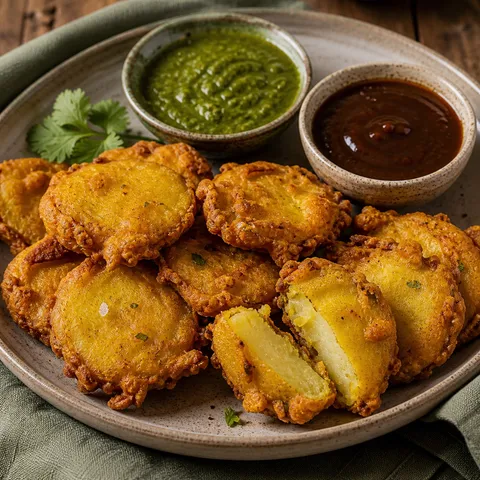
 Viazi Karai
A Zanzibari street favorite of soft boiled potatoes coated in a turmeric-yellow batter and deep-fried until crackling, served with fiery tamarind sauce.
 East African Lens Verified Images are for illustrative purposes only, may be inaccurate, and do not guarantee the presence or absence of specific ingredients.
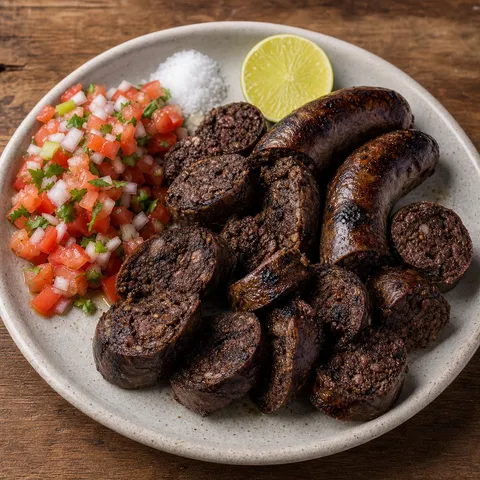
 Mutura
Kenyan spiced blood sausage stuffed with meat, onion, and herbs, then grilled until the casing crisps and snaps — a bold, smoky roadside delicacy.
 East African Lens Verified Images are for illustrative purposes only, may be inaccurate, and do not guarantee the presence or absence of specific ingredients.
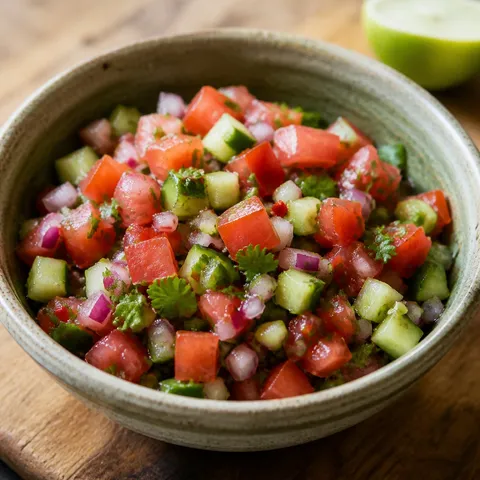
 Kachumbari
Bright, refreshing salad of ripe tomatoes and sharp raw onion, spiked with chili and lime — the cool, crisp counterpoint to rich East African grills.