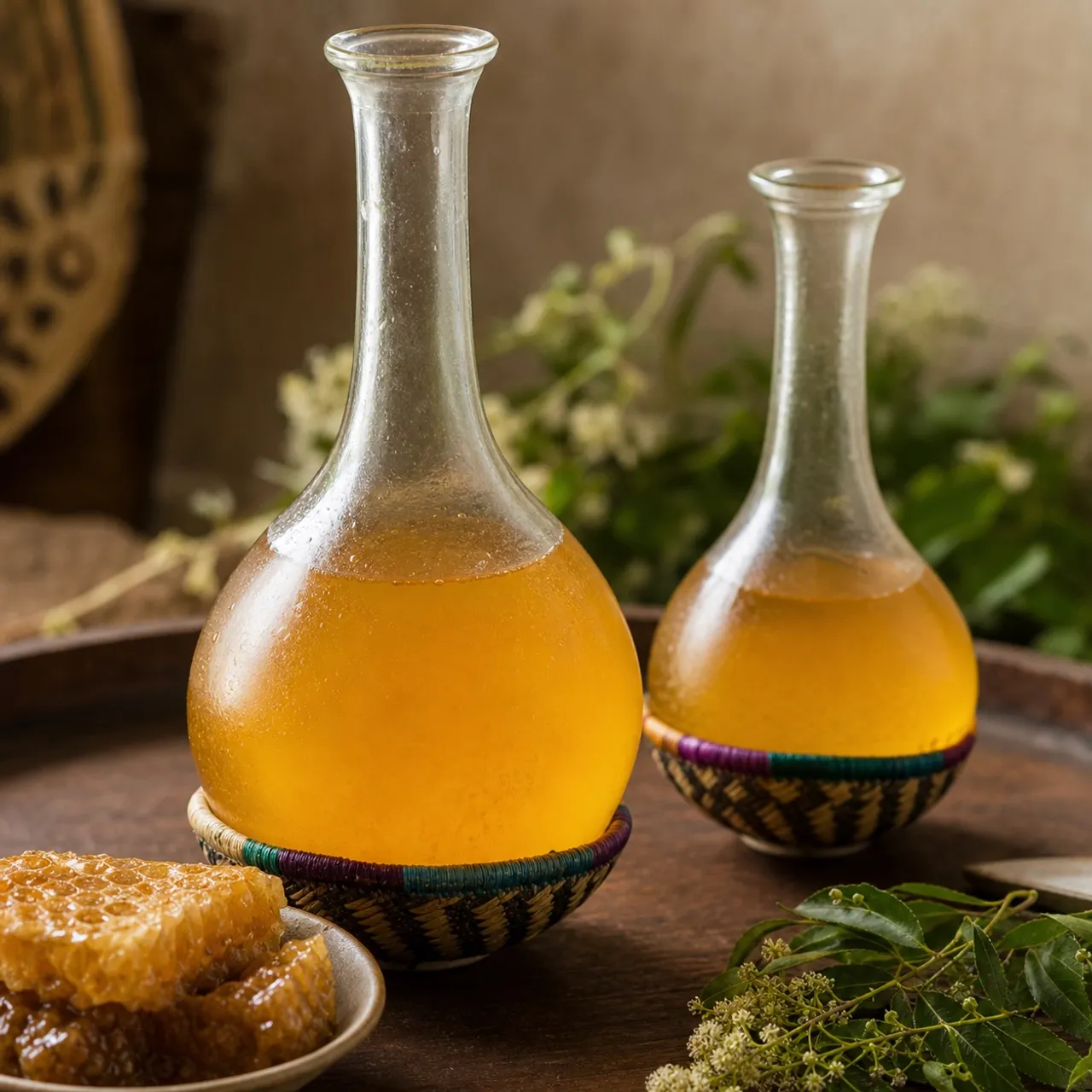
 East African Images are for illustrative purposes only, may be inaccurate, and do not guarantee the presence or absence of specific ingredients.
 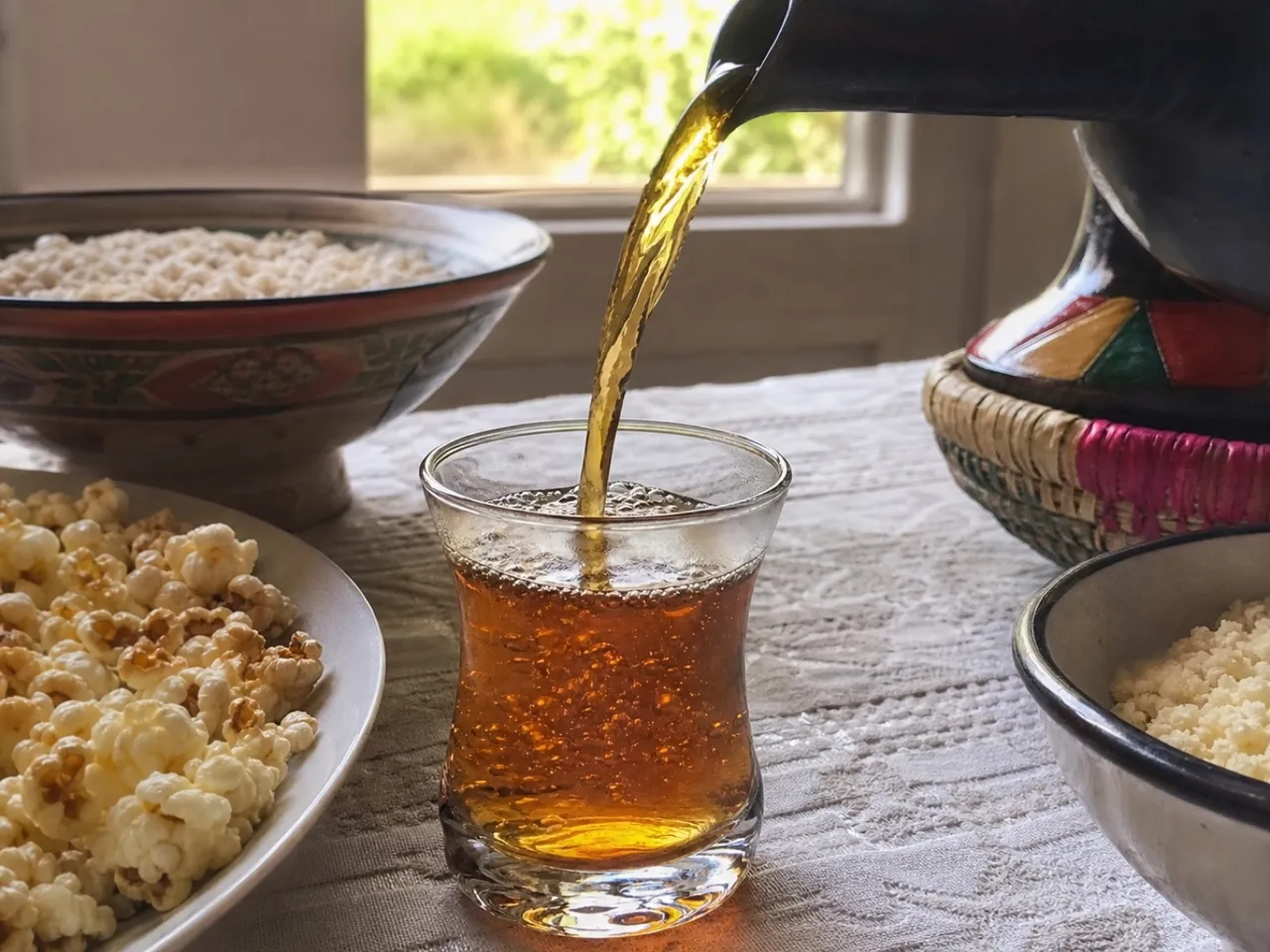 Serving Images are for illustrative purposes only, may be inaccurate, and do not guarantee the presence or absence of specific ingredients.
 Tej
Ethiopia's traditional honey wine, gently fermented with the bittersweet leaves of gesho, served chilled in a rounded berele flask.
No common allergens detected
Based on this recipe's ingredient list. Always verify with your own brands and labels.
Good to know
- Ready in under 30 minutes
Matched from this dish's own ingredients and timing. Browse more: 30-minute meals
Instructions
5 steps- 1
Warm 2 cups of the water gently (not boiling) and dissolve the honey into it completely to make a smooth must, then stir in the remaining cool water.
- 2
Pour the honey-water into a clean, sanitized jar or jug, leaving several inches of headspace at the top.
- 3
Add the dried gesho and sprinkle in the wine yeast, then stir briefly and cover the mouth loosely with cheesecloth to allow gases to escape.
- 4
Let the mixture ferment in a cool, dark place for 7 to 10 days, stirring gently once a day, until it stops bubbling actively.
- 5
Strain out the gesho through a fine sieve, transfer the tej to a clean bottle, and refrigerate for at least 3 days to clarify before serving cold.
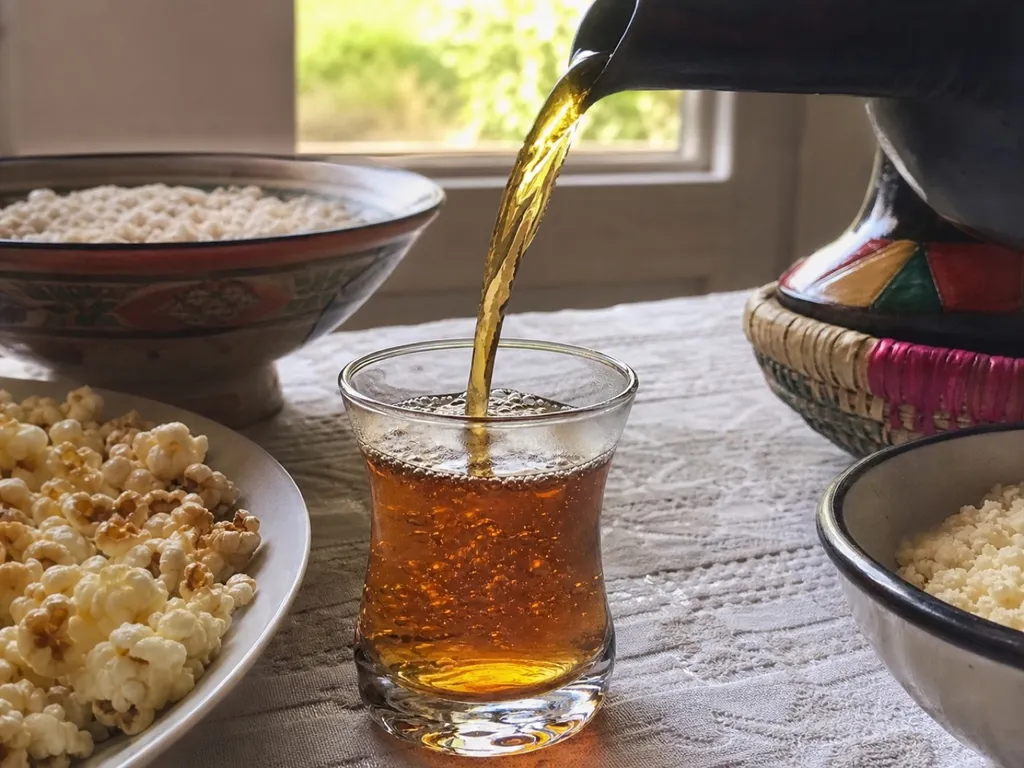 Images are for illustrative purposes only, may be inaccurate, and do not guarantee the presence or absence of specific ingredients.
 Listahan Family Score™
73/100
Good fit for most families
Score reflects how well this recipe fits a typical busy household. In the app, your Family Score is personalized to your household's allergens, kids, and pantry.
Nutrition
per serving1035
Calories
1 g
Protein
279 g
Carbs
0 g
Fat
Estimated per serving. Actual values depend on the brands and portions you use.
Listahan cooking guide
Chef notes & practical guide
Technique notes, ingredient swaps, serve-alongside ideas, storage guidance, and equipment for this recipe.
Cultural context
Tej is Ethiopia's ancient honey wine, known as mead in European brewing traditions but distinct in its use of gesho — the dried leaves and stems of Ethiopian buckthorn — which provide a bitter, hop-like counterpoint to the sweetness of the honey. Tej has been brewed in Ethiopia for at least a thousand years and is mentioned in medieval Ethiopian royal chronicles; it was consumed at the courts of Ethiopian emperors and remains a central drink at weddings, religious celebrations, and in the tej bets (tej houses) of Addis Ababa today.
Listahan note
This version uses wine yeast for a more controlled, predictable fermentation than the traditional wild-yeast method, producing a drinkable tej in 1-2 weeks rather than the month-long traditional process.
Technique cues
- Gesho is the defining ingredient of authentic tej — it provides the bitter, slightly piney, hop-like character that distinguishes tej from plain honey wine; dried hops are the most accessible substitute but produce a different, more aggressively bitter flavor.
- Honey variety significantly affects the finished tej: a light, neutral honey such as clover produces a clean, floral mead, while a darker honey such as buckwheat adds earthy, robust complexity closer to traditional tej made with Ethiopian forest honey.
- Fermentation speed depends on temperature — at 70-75 F, active fermentation (visible bubbling) should begin within 24-48 hours; in a cooler kitchen, it may take 3-4 days to start; do not refrigerate during active fermentation.
Kitchen flow
- Parallel prep
- Steep the gesho in the honey-water mixture while you sanitize the fermentation vessel; both steps take about the same amount of time.
- Make-ahead
- Tej requires 1-2 weeks of fermentation; plan ahead and start a batch well before any occasion; it only gets better with an additional week of conditioning after primary fermentation.
- Leftover move
- Leftover tej can be used in marinades for lamb or goat — the honey and bitterness make an excellent glaze base when reduced with garlic and butter.
- Cleanup rhythm
- Sanitize all fermentation equipment with a no-rinse sanitizer (available at homebrew stores) rather than soap, which can leave residue that off-flavors the tej; rinse equipment immediately after use to prevent honey residue from hardening.
Ingredient brief
Role, handling, and swap guidance for each key ingredient.
2 cups raw honey
fermentable base and primary flavor
Purpose: Raw honey contains trace minerals and residual wild yeasts that contribute complexity to tej; processed honey produces a cleaner but less nuanced fermentation.
Handling: Dissolve in the filtered water — warm water (around 90 F) makes this easier without damaging the honey's aromatic compounds; stir until fully incorporated.
Adaptation: Processed liquid honey can substitute if raw honey is unavailable; the flavor will be simpler. Do not substitute sugar, which produces a plain mead without honey's distinctive aromatic character.
6 cups filtered water
dilution and fermentation medium
Purpose: Filtered or spring water removes chlorine, which can inhibit yeast activity and contribute off-flavors to the finished tej.
Handling: Use filtered or bottled spring water; if using tap water, let it sit uncovered for 1 hour to allow chlorine to dissipate before using.
Adaptation: Boiled and cooled tap water is an acceptable substitute if filtered water is not available.
1/4 cup dried gesho
bitterness and defining flavor
Purpose: Gesho is irreplaceable for authentic tej; it provides the bitter, tannic counterpoint that prevents the finished drink from being cloying.
Handling: Steep the dried gesho in the honey-water mixture for 24-48 hours before adding yeast; strain it out before active fermentation begins for a milder flavor, or leave in for a more bitter tej.
Adaptation: Dried hops (pellets or whole cones, 1-2 tablespoons) are the most accessible substitute; they produce a more aggressively bitter, beer-like note — start with half the amount and taste.
1 packet (1/4 oz) wine yeast
fermentation agent
Purpose: Wine yeast provides a predictable, controlled fermentation that produces a cleaner, more consistent tej than wild yeast; it also tolerates higher alcohol concentrations.
Handling: Rehydrate in a small amount of the honey-water mixture (around 90 F) for 10 minutes before adding to the main vessel.
Adaptation: Champagne yeast produces a drier, crisper tej; bread yeast works as an emergency substitute but produces off-flavors and dies at lower alcohol concentrations.
Technique notes
- Sanitation is the most important step in home brewing; a clean vessel and tools prevent wild bacteria from competing with the wine yeast and producing vinegar or off-flavors.
- Cover the fermentation vessel with a cloth or an airlock rather than sealing it airtight; CO2 produced by fermentation needs to escape, and a sealed jar can build dangerous pressure.
- Tej is ready when bubbling has slowed to almost nothing and the liquid has clarified from cloudy-yellow to a clearer amber; strain through a fine-mesh cloth before bottling for a cleaner presentation.
Ingredient swaps
- Authentic gesho source
- Dried gesho is available at Ethiopian grocery stores in most North American cities with East African communities; it stores well in a sealed bag for many months.
- Drier style
- Reduce honey to 1.5 cups and use champagne yeast for a drier tej with more pronounced gesho bitterness, closer to the tej served in Addis Ababa tej bets.
- Non-alcoholic direction
- A non-fermented approximation can be made by dissolving honey in warm water, steeping gesho or hops for 30 minutes, straining, and serving chilled with a squeeze of lime — it is a very different drink but captures the flavor profile.
Serve alongside
- injera with doro wat (Ethiopian chicken stew)
- tibs (sauteed lamb or beef with vegetables)
- ayib (fresh Ethiopian cheese) with honey
- tej is typically served on its own in a berele (bottle-shaped glass)
- cold sparkling water as a palate cleanser between pours
Serving suggestions only — check pairings for your household's allergens.
Storage & reheating
- Store finished, strained tej in sealed glass bottles in the refrigerator for up to 3 weeks; it continues to slowly ferment and dry out if left at room temperature.
- Serve chilled or at cool room temperature in traditional berele glasses or small wine glasses.
- Do not freeze — freezing damages the yeast-produced flavor compounds and is unnecessary given the refrigerator shelf life.
Equipment
- 1-gallon glass jug or food-safe fermentation vessel
- fine-mesh cloth or cheesecloth for straining
- fermentation airlock or clean cloth cover secured with a rubber band
- hydrometer (optional, for measuring alcohol by volume)
Make this household-aware
Listahan Pro checks this recipe against your household's allergens, finds pantry-aware swaps, builds the shopping list, and helps you plan the week around it.
Plan it in Listahan
Add Tej to your week, check it against your household's allergens, and build the shopping list automatically.
More East African recipes
 East African Lens Verified Images are for illustrative purposes only, may be inaccurate, and do not guarantee the presence or absence of specific ingredients.
 Viazi Karai
A Zanzibari street favorite of soft boiled potatoes coated in a turmeric-yellow batter and deep-fried until crackling, served with fiery tamarind sauce.
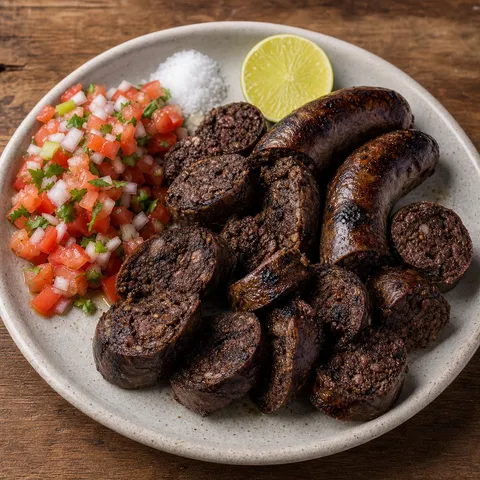 East African Lens Verified Images are for illustrative purposes only, may be inaccurate, and do not guarantee the presence or absence of specific ingredients.
 Mutura
Kenyan spiced blood sausage stuffed with meat, onion, and herbs, then grilled until the casing crisps and snaps — a bold, smoky roadside delicacy.
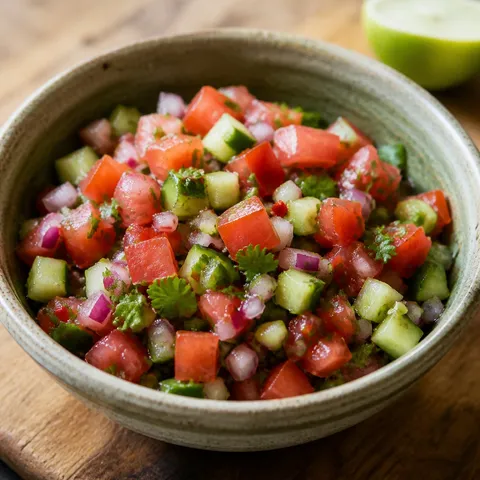 East African Lens Verified Images are for illustrative purposes only, may be inaccurate, and do not guarantee the presence or absence of specific ingredients.
 Kachumbari
Bright, refreshing salad of ripe tomatoes and sharp raw onion, spiked with chili and lime — the cool, crisp counterpoint to rich East African grills.