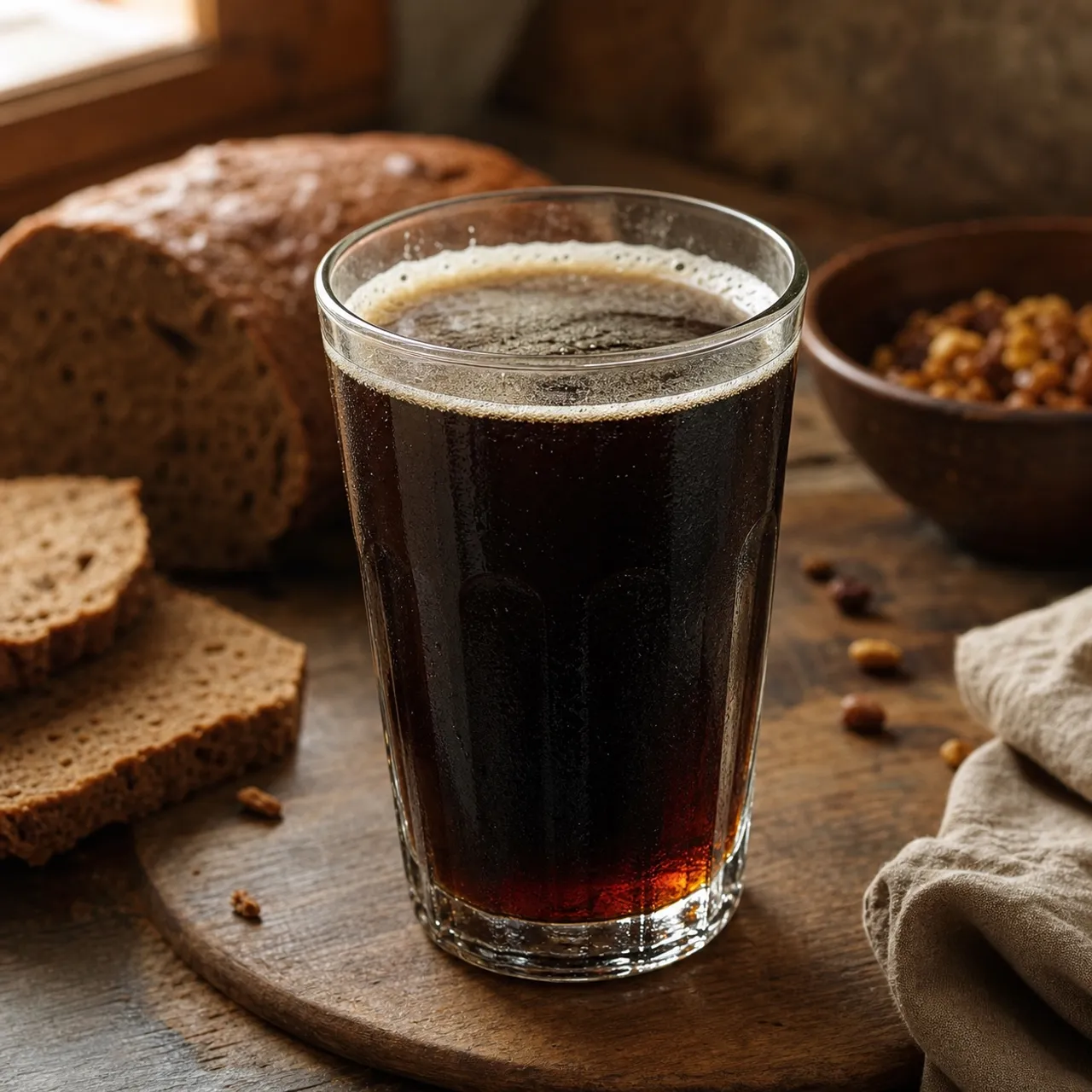
 Eastern European Images are for illustrative purposes only, may be inaccurate, and do not guarantee the presence or absence of specific ingredients.
 Kvass
A lightly fermented, mildly tangy beverage made from dark rye bread, popular throughout Eastern Europe in summer.
Contains common allergens
In the app, Listahan checks these against your household automatically.
Instructions
5 steps- 1
Cut the rye bread into thick slices and toast them in a 350 F oven for 10 to 15 minutes until dry and deeply browned at the edges, which develops the signature toasty color and flavor.
- 2
Place the toasted bread in a large heatproof jar or pot, pour over 8 cups of boiling water, then cover and let steep at room temperature for 8 hours.
- 3
Strain the infusion through a fine sieve, pressing the bread to extract liquid, then stir in the sugar until fully dissolved and let cool to lukewarm (about 100 F).
- 4
Sprinkle the yeast over the lukewarm liquid, add the mint leaves, cover loosely with a cloth, and ferment at room temperature for 24 to 36 hours until pleasantly tangy and fizzy.
- 5
Strain again into clean bottles, dropping a few raisins into each, then seal and refrigerate for another 8 hours; the raisins boost carbonation and the kvass is ready once well chilled.
Listahan Family Score™
70/100
Good fit for most families
Score reflects how well this recipe fits a typical busy household. In the app, your Family Score is personalized to your household's allergens, kids, and pantry.
Nutrition
per serving955
Calories
21 g
Protein
203 g
Carbs
7 g
Fat
Estimated per serving. Actual values depend on the brands and portions you use.
Listahan cooking guide
Chef notes & practical guide
Technique notes, ingredient swaps, serve-alongside ideas, storage guidance, and equipment for this recipe.
Cultural context
Kvass comes from the practical Eastern European habit of turning rye bread into something drinkable, especially in warm months when a lightly tangy, cold beverage makes sense at the table. Versions vary by household and region: some taste mostly like toasted bread, some are sweeter, and some pick up herbal or fruit notes from additions like mint, berries, or raisins.
Listahan note
This version keeps the method approachable by steeping toasted dark rye like a strong bread tea, then using a small amount of yeast for gentle fizz. The main priorities are deep browning, a clean strain, and chilling long enough for the raisins to help the bottles feel lively.
Technique cues
- Toast the rye until the edges are deeply browned, not just dry. That darker toast is what gives kvass its bread-crust color and mellow bitterness.
- Let the bread steep fully before straining. Pressing it gently gives more flavor, but hard squeezing can make the drink cloudy and bready in a heavy way.
- Add the yeast only once the liquid is lukewarm. Hot liquid dulls fermentation, while cool liquid makes the timeline slower and less predictable.
Kitchen flow
- Parallel prep
- Toast the bread while the water comes to a boil, then set up the sieve, bottles, and cloth cover during the long steep.
- Make-ahead
- Start the kvass two days before serving; most of the time is hands-off steeping, fermenting, and chilling.
- Leftover move
- Use extra chilled kvass as the base for a cold beet or cucumber soup, where its tang can stand in for part of the usual sour note.
- Cleanup rhythm
- Rinse the sieve and jar right after straining the bread infusion, before the rye starch dries into a paste.
Ingredient brief
Role, handling, and swap guidance for each key ingredient.
Dark rye bread
Toasty grain base
Purpose: It gives kvass its bread-crust flavor, dark color, and earthy backbone.
Handling: Cut into thick slices and toast until dry with browned edges so the steep tastes roasted instead of soggy.
Adaptation: Pumpernickel-style rye gives a darker, deeper drink; lighter rye makes a paler, milder kvass.
Granulated sugar
Fermentation fuel and sweetness
Purpose: It feeds the yeast and leaves the finished drink lightly sweet rather than sharply sour.
Handling: Stir it into the strained warm infusion until fully dissolved before adding yeast.
Adaptation: A little honey can replace part of the sugar, but it brings a floral note that changes the clean bread flavor.
Active dry yeast
Fermentation starter
Purpose: It creates the gentle tang and fizz that make the drink feel alive instead of like sweet bread tea.
Handling: Sprinkle it over liquid around 100 F and cover loosely so gas can escape during the first ferment.
Adaptation: Instant yeast can work in the same amount, though it may start bubbling a little faster.
Raisins
Bottle carbonation helper
Purpose: They add a small extra push of sugar in the bottle and give a faint dried-fruit roundness.
Handling: Drop only a few into each clean bottle before chilling so the flavor stays subtle.
Adaptation: A few dried currants give a similar effect with a slightly sharper fruit note.
Fresh mint leaves
Cooling herbal accent
Purpose: Mint lifts the toasted rye flavor and makes the drink read more refreshing when served cold.
Handling: Add the leaves during fermentation, then strain them out before bottling.
Adaptation: Fresh lemon balm gives a softer herbal note; skip the herb if you want the rye flavor to stay central.
Technique notes
- Use a container with plenty of headroom during fermentation. Kvass can foam as the yeast wakes up, especially in a warm kitchen.
- Strain twice if you want a cleaner pour: once after steeping the bread, and again before bottling to remove mint and sediment.
- Taste before bottling. If it is still very sweet and flat, give it a few more hours at room temperature before moving it to the fridge.
Ingredient swaps
- Darker bread direction
- Use a dense pumpernickel-style rye for a deeper color and more roasted flavor.
- Less sweet direction
- Reduce the sugar slightly, but expect a drier, less rounded drink with a slower build of fizz.
- Herb-free path
- Leave out the mint for a more straightforward rye-bread kvass that pairs better with savory foods.
Serve alongside
- Pierogi with browned onions
- Cold beet soup
- Cucumber-dill salad
- Rye toast with farmer cheese
- Black tea with lemon
- Sparkling mineral water
- Chilled berry kompot
Serving suggestions only — check pairings for your household's allergens.
Storage & reheating
- Refrigerate the bottled kvass and enjoy it within a few days while the fizz and bread aroma are fresh.
- Do not reheat; serve it cold, pouring slowly so any sediment stays near the bottom of the bottle.
- Freezing is not useful for kvass because it flattens the carbonation and changes the texture after thawing.
Equipment
- Rimmed baking sheet
- Large heatproof jar or pot
- Fine-mesh sieve
- Clean bottles with tight lids
Make this household-aware
Listahan Pro checks this recipe against your household's allergens, finds pantry-aware swaps, builds the shopping list, and helps you plan the week around it.
Plan it in Listahan
Add Kvass to your week, check it against your household's allergens, and build the shopping list automatically.
More Eastern European recipes
 Eastern European Lens Verified Images are for illustrative purposes only, may be inaccurate, and do not guarantee the presence or absence of specific ingredients.
 Shashlik
Smoky, charred cubes of marinated lamb or pork threaded on skewers and grilled over embers — Central Asia's festive open-fire classic, fragrant with onion and spice.
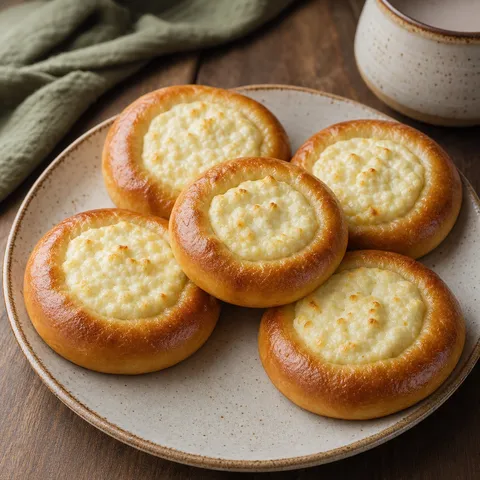 Eastern European Lens Verified Images are for illustrative purposes only, may be inaccurate, and do not guarantee the presence or absence of specific ingredients.
 Vatrushka
Soft, pillowy Russian buns filled with a sweetened quark or farmer's cheese center — lightly golden and gently sweet, perfect alongside tea or coffee.
 Eastern European Lens Verified Images are for illustrative purposes only, may be inaccurate, and do not guarantee the presence or absence of specific ingredients.
 Kurtosh Kalach
Hungary's iconic chimney cake — sweet yeast dough spiraled around a spit, rolled in cinnamon sugar, and roasted until the outside caramelizes into a crackly, warm shell.